Getting fit with Eastport’s hot ladies

There I was complaining about not being able to continue swimming laps since Covid curtailed everything, especially followed by my relocation from Dover and its wonderful indoor pool. I certainly wasn’t getting in any regular exercise routine once I moved up here, and one month of yoga down by the waterfront did impress me with just how much this body’s deteriorated from 50 years of neglect. Geeze, how humbling!

I’ve never been one to pursue a solo fitness regime.

But then, when some enlightened souls opened the high school gym for walkers in the early morning, I stepped up, apologies for the pun, but it was something and definitely not at the mall, not that we have anything like that anywhere around. Well, I have posted some photos of Shead High’s gym. Maybe I was getting into shape for some summer hiking?

In the process, I met some interesting folks, all women – guys my age rarely seem to recognize how out of shape they’ve become, apart from maybe weight lifting – and the suggestion kept arising that I should try the twice-a-week fitness sessions at the, uh, senior center. (I really hate that term and definitely prefer to call it the Old Firehouse.)

Most of the time, though, once I started attending, I was the only male in the circle. What a revelation! Yes, I remember ages ago when I would have killed for such odds in my favor, yet these days I’m definitely married. (Got mine!) But still, you wouldn’t believe what I hear. It could be a highly rated TV series, if we could find a focus. Oh, well. As they say, laughter is the best medicine.

The hour-long class is definitely well planned, a blend of stretches, isometrics, cardios, and the like. It can challenge the beginner and adept equally well.

Nonetheless, when the temperature approaches 60 or so, indoors or out, they insist on opening the windows. Claim it’s too hot.

I am, on the other hand, still freezing.
 

Were they or weren’t they friends?

Back in my undergrad days, I was hired by a retired jazz musician or some such insider to gleam through microfilm copies of the Indiana Daily Student and other sources as research for a bio or history book he was writing in New York.

The project opened my eyes to a wide range of 1920s’ history revolving around Bloomington, especially the legendary cornet player Bix Biederbecke and the Hoosier native Hoagy Carmichael. Yes, the place was a jazz hothouse, hard as that might be to believe.

I wish I still had carbon copies of my correspondence on that effort, but I do remember learning of a hitchhiking trip to a Harvard-Indiana University football game that Carmichael shared with Ernie Pyle, editor-in-chief of the Indiana Daily Student.

Seems it took them three weeks or maybe six to get back to campus from Massachusetts.

It’s a great story, no question, kind of pre-hippie, in this case two future celebrities back before they became famous.

The only problem, I’m not finding any corroboration online. Worse yet, I’m not sure how much Pyle and Carmichael’s timelines overlap. Besides, they were members of different fraternities, lessening the likelihood of a joint spree.

The game happened in October 1927, the same time Carmichael was making the premiere recording “Star Dust” in Richmond, Indiana. Pyle, meanwhile, was likely employed by either the New York Post or Evening World and had married. Some of his details get fuzzy.

I don’t remember who the writer was or whether his book ever came out.

By the way, IU lost, in a 26-6 rout.

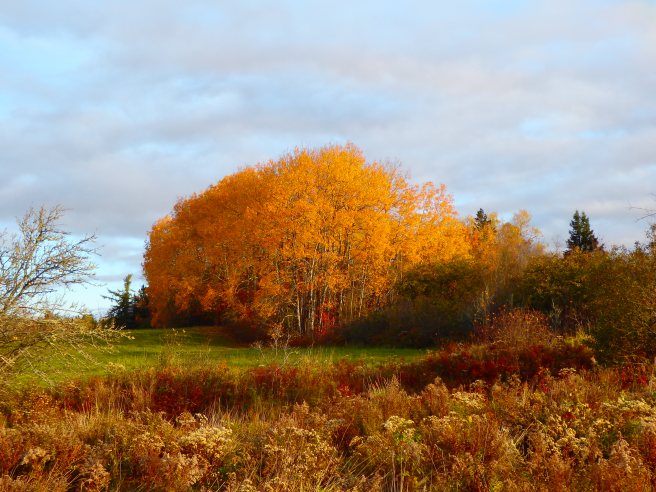
Any number of things can happen with the color

Golden perfection.

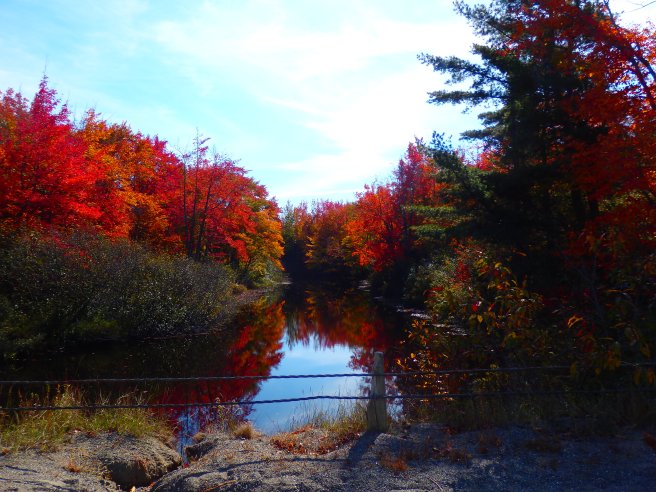
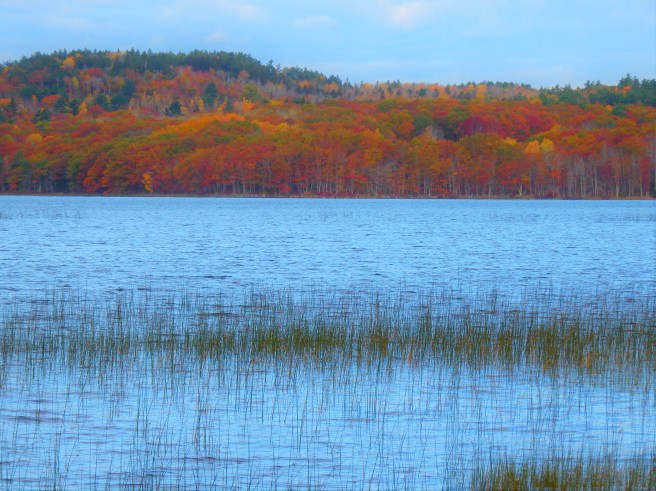
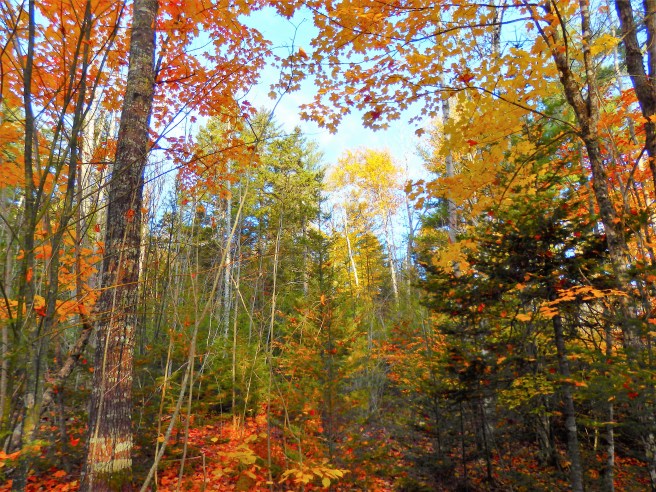
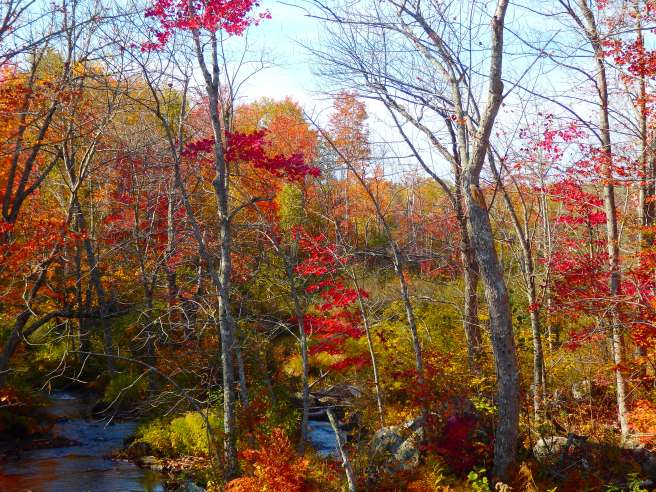
As you likely know, trying to record the changing colors is a challenge. Does your camera ever get the hues and shades to match what you’re seeing? Or is it usually either too cool or too garish? How about those of you who are instead using watercolors, oils, pastels, or acrylic?

One spoiler for a photo, as I’ve found the hard way, is utility lines along most roadways. They’re the prime culprit among a host of other distractions your eyes don’t catch but the lenses do. This year, I was on guard and enjoyed the color in those stretches without stopping to take a shot.

Since most of Maine’s forests is evergreen, I scoped out stretches of deciduous trees free of those intrusions before the color change and kept checking in weekly, at minimum. In my case, the core of the route was an unpaved lane in the Baring district of the Moosehorn National Wildlife Refuge, as well as the country roads getting there.

There’s no way of predicting how things will develop. Drought, blight, storms can take a toll.

But we know what will follow. Boy, do we.

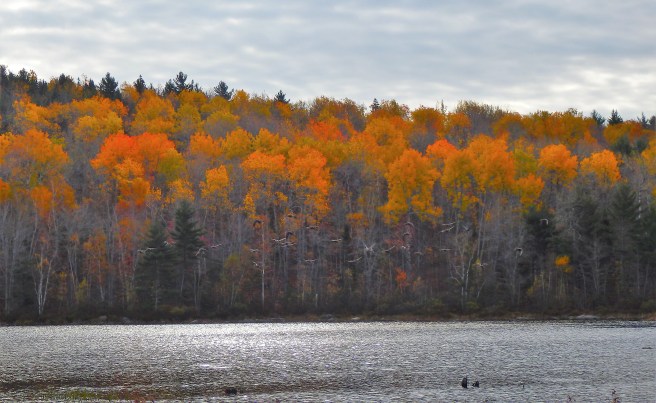
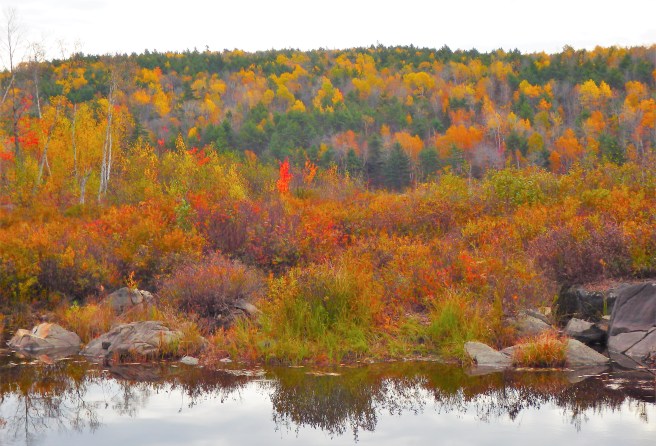
Here’s a look at how it all unfolds here.

It is an invitation to kayak.
Round Pond.
How swiftly it passes.
Even when half of the leaves have already fallen, there’s more to come.
Loud geese take flight. Quaking aspen and birches give the forest a dominant range of yellows.
By midmonth, the palette is turning somber.

And if you want to see what I experienced in New Hampshire, go to my Chicken Farmer blog, where I’ve also posted in-depth reflections on the soul of New England itself. The posts and slideshows appear in the New England Spirit category from August through October 2013.


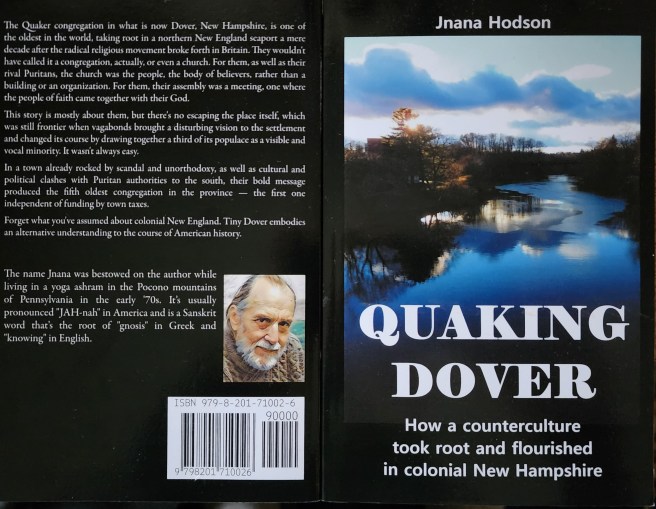
Having a back cover, too

One big difference between paper books and ebooks is the back cover. The digital versions simply don’t have one – the blurb has to go on the retailer’s website instead.

Yes, the two formats have their differences. An ebook is more like a scroll, but one that can be easily searched and rewound.

A paper book, on the other hand, is more like a box, with the covers working like the wrapping on a present, full of enticement. Even the lettering on the spine can work that way.

Better yet, the back cover can start talking to you even before you open the pages. “Come on in,” you can hear it address you, even in a crowded bookstore.

How the Cocheco Mills reshaped Dover

My history of Dover, focused on its Quaker Meeting, begins trailing off about the time the textiles mills prosper at the Lower Falls in the Cochecho River. There’s no escaping the fact that the mills completely reshaped the direction of the emerging city, then and now.

  1. The complex began with the Dover Cotton Factory in 1812, but the surviving buildings were constructed between the 1880s and early 20th century. The downtown is built around them. The mills even span the river below the falls.
  2. A clerical error in the company’s 1827 reorganization, as the Cocheco Manufacturing Company, dropped the second h from Cochecho, leading to ongoing confusing about the proper spelling of the river’s name.
  3. In 1828, the mill was the site of one of the earliest labor strikes in the nation, the first to be conducted entirely by women. They were protesting a pay cut.
  4. The mills brought waves of immigrants to the city, especially from Ireland, Quebec, and Greece. The complex eventually employed 1,200 workers, most of them women.
  5. At its height in the 1880s, the mills shipped 65 million yards of printed calico worldwide annually, with esteemed designs from the associated printing operation on the site of today’s Henry Law Park.
  6. The buildings were subject to disastrous fires and floods. They were also noisy and cold in winter, hot in summer.
  7. The company owned lakes upstream to ensure water power through the year.
  8. The mills operated as the Cocheco Manufacturing Company and then the Cocheco Mill Company until 1908, when the operation was bought by the Pacific Mill Works of Lawrence, Massachusetts, which shuttered everything in 1937. The buildings were then bought at auction by the city.
  9. In the early 1980s, entrepreneur Joseph Sawtelle purchased the largest vacant building in the county and began a visionary restoration that uncovered the boarded windows and led to offices, entrepreneurial incubators, and retail stores in the heart of the city. After his death in 2000, Eric Chinburg acquired the properties and added trendy apartments to the mix.
  10. The mills were placed on the National Register of Historic Places in 2014.

Check out my new book, Quaking Dover, available in an iBook edition at the Apple Store.

Even in a housing shortage

Yup, home prices went through the roof in most of the country – but not here.

A common sight throughout Downeast Maine is abandoned housing in varying stages of decay. Seeing an old dwelling like that, your initial impulse is that somebody, somewhere, ought to save it. You know, live out in the woods, free from hassles, and all that. It’s gotta have a charming history, right?  (Rusting trailers and mobile homes somehow get less sympathy, if any.)

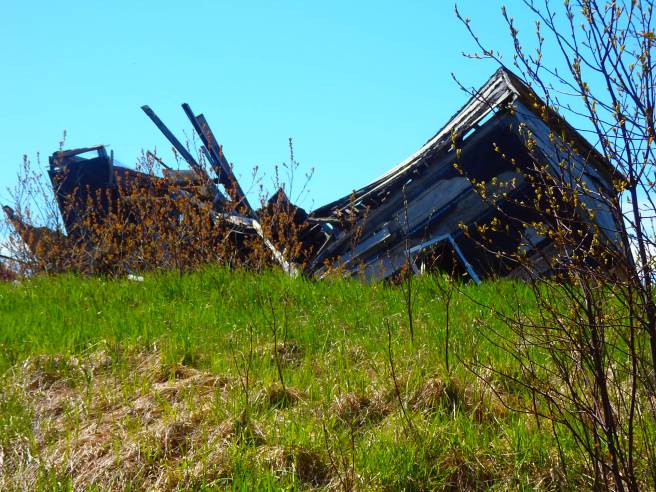
Abandoned housing comes in varying stages of collapse.

Then reality kicks in. Most of these would cost a ton to renovate – and many are tiny. Insulation, plumbing, and wiring are only the beginning. It’s cheaper to start fresh, if you can. Jobs are scarce, often towns away, if you can find work, so unless you’re retired, that’s another strike. And if you are retired, you might check out far to the nearest doc or clinic. I have to wonder, too, why anyone would want to live that close to the highway and its noisy traffic, other than maybe getting priority plowing after a snowfall. As for the mosquitos and black flies?

Others might tell you it gets boring. No malls or big-box stores, much less neighbors or a real supermarket.

Even as a summer home, then, there are drawbacks. Wouldn’t you rather be on a lake or the ocean?

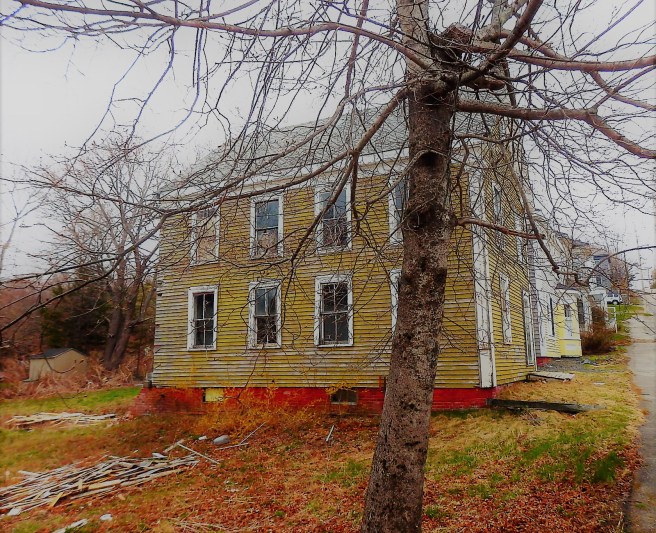
It’s not all out in the wilds, either. Eastport has three in a row here.
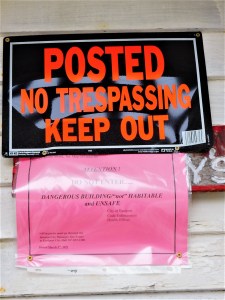
Each with this notice attached, declaring a building dangerous, unsafe, and not habitable.

This side of being an author is all new to me

Eastport’s senior center has invited me to talk about my new book, and that’s what I’ll be doing Friday, October 21, at 1 pm.

I’ll be focusing on Maine’s Nicholas Shapleigh, who was not a Quaker but played a crucial role in sheltering the missionaries who came to Dover. As a powerful lumber merchant, magistrate, and leader of the provincial militia, he was an important figure in what would become the Pine Tree State. His manor on the Piscataqua River sat directly across the water from Hilton Point, where the action began 400 years ago.

The overall content of Quaking Dover has been generating interest in a way I haven’t encountered with my novels or poetry. Having a handsome paper edition from the start is another plus. As much as I love aspects of ebooks, they are much harder to promote than a physical copy in your hand.

Dover may be a five-plus hour drive from Eastport, but there have long been connections.

The center’s at 9 Boynton Street, where I’ll be greeting friends and neighbors.

It’s the first in a series of presentations I’ll be announcing over the next few months. Please stay tuned!