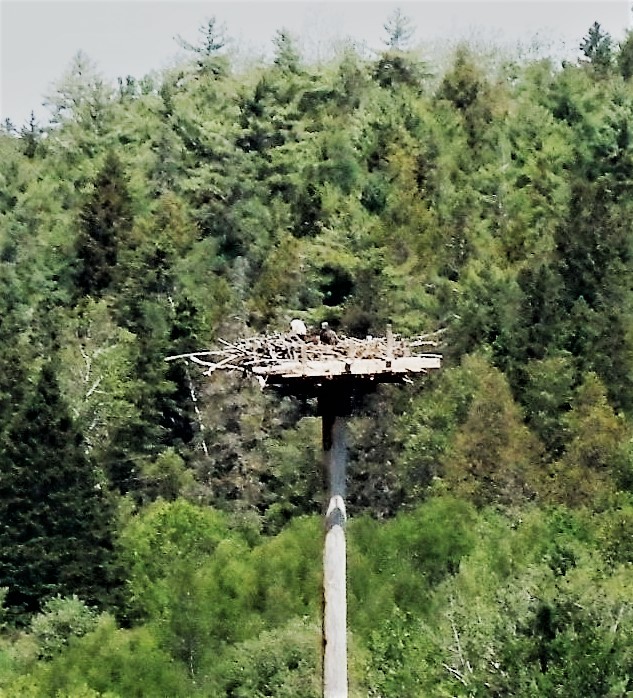
Not just moose but a murder mystery, too

The joke is that moose don’t have horns, they have antlers. The Moosehorn National Wildlife Refuge excuses itself by noting that it’s named after a brook that meanders through the preserve. Not that it’s the only fine body of water.
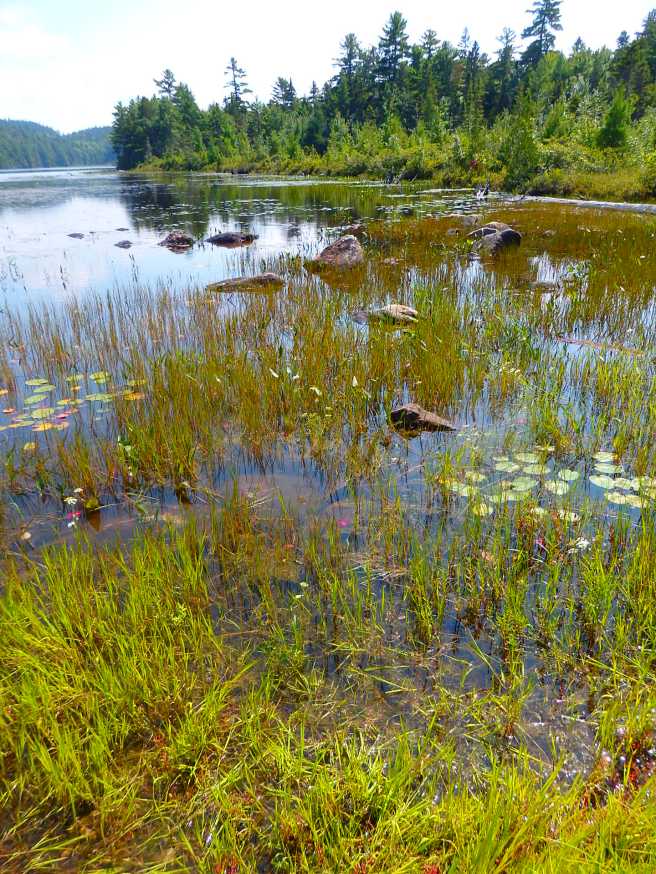
Canoeing, kayaking, and fishing are welcome.
The marked lanes make for some lovely strolls.

And the U.S. Fish and Wildlife Service adds that the preserve is home to much more than moose, bear, beaver, and deer. For example, some 223 bird species have been identified in its two divisions – the 31-square-mile Baring Division to our northwest and the 13-square-mile Edmunds Division to our west, both within a half-hour drive from Eastport.

The terrain is varied, much of it wetlands, and a third is protected as wilderness.

I especially appreciate the miles of hiking trails, some along former roads.

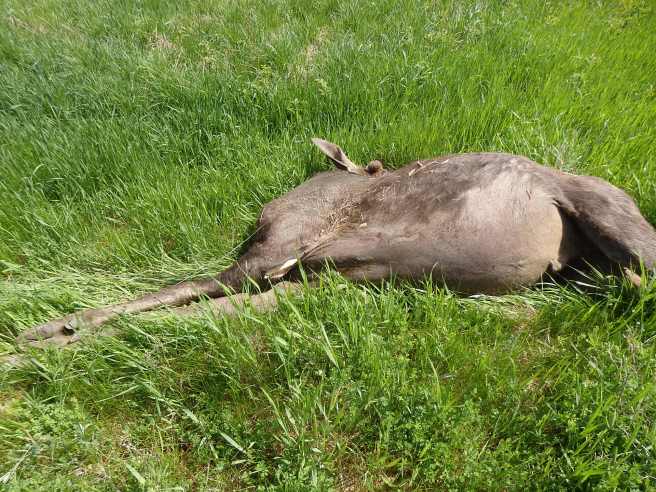
What I wasn’t expecting on one outing was the moose I encountered on a grassy roadside near a flowage.

When I first spotted the tawny hump amid the green, I thought it might have been one bent over grazing, in which case I’d need to approach cautiously, or else just a big rock.

Instead, it became a mystery.
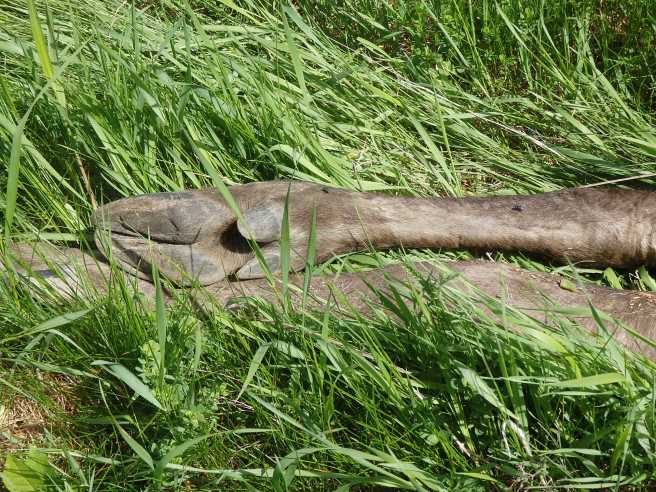
The hooves and legs.
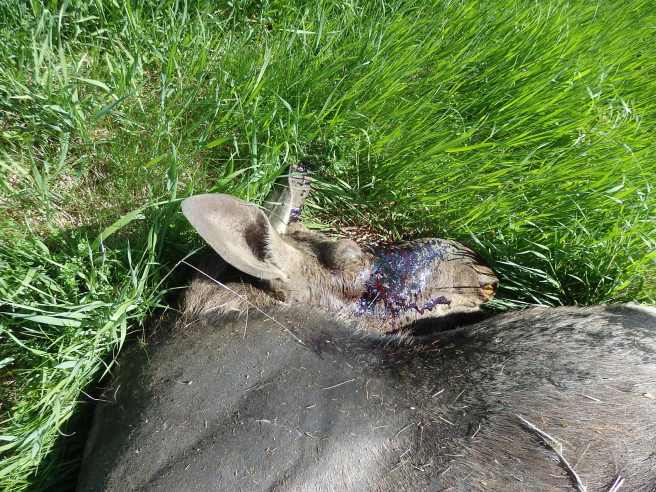
Apart from the head injury, the body was in fine shape – no mat of ticks, for one thing.
It really is a big, powerful jaw.

Tire tracks in the grass had me wondering if a ranger driving down the gated-access lane had tried to veer away from the animal on the roadway, only to have it bolt into the oncoming vehicle.

The carcass was fresh enough that a solitary vulture overhead wasn’t even taking notice.

Later, back in town, I began picking up details. Everybody seemed to have more to add, most of it from Facebook.

Seems the baby male was hit on Charlotte Road earlier in the morning. (Baby? It was bigger than me.) Folks were wondering what took the wildlife officers so long to clear the road. They then took the remains into the preserve, to return to the food chain. Mama Moose, meanwhile, spent the rest of the day wandering forlornly.

It is a relief to know that moose collisions aren’t so common around here that they’re taken for granted. Deer, on the other hand, as everyone will remind me – keep your eyes open.
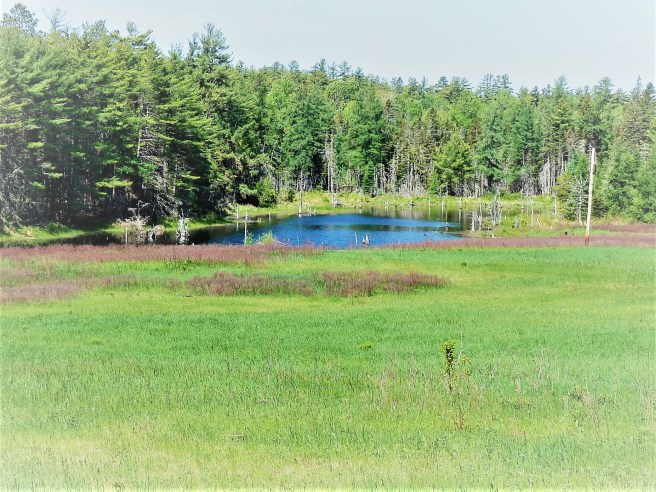
For my entire hike, I was the sole human experiencing sights like this.

What’s the most surprising thing you’ve ever encountered out on a walk? Or even a drive?
What values continue after a family leaves a tradition?

One thing that fascinates me in regards to religion is the distinction between faith, based on a holy experience, and a culture, handed down within a family.

Among the Dover families that belonged to Meeting are the Tuttles, long known for their Red Barn market. Yes, Red Barn, like the name of this blog.

Three Dover Combination signers shared a tragic introduction to the New World when their ship, the Angel Gabriel, broke up in the August 14 “Great Colonial Hurricane of 1635,” either in the harbor at Pemaquid, Maine, or at the Isles of Shoals.

One was John Tuttle, who was about 17 years old at the time of the disaster. After their rescue, he arrived in Chebasco (in Essex or Ipswich, Massachusetts). By 1638 Tuttle settled in Dover, where he was known as Shipwreck John and had a farm on today’s Bellamy River – one that grew into what was long known as America’s oldest family-owned and operated enterprise. (Never mind that Thomas Roberts’ heirs nearby would have a longer claim.) Tuttle’s son Thomas was killed by a falling tree while still a young teenager, leaving John Jr. to continue the family name.

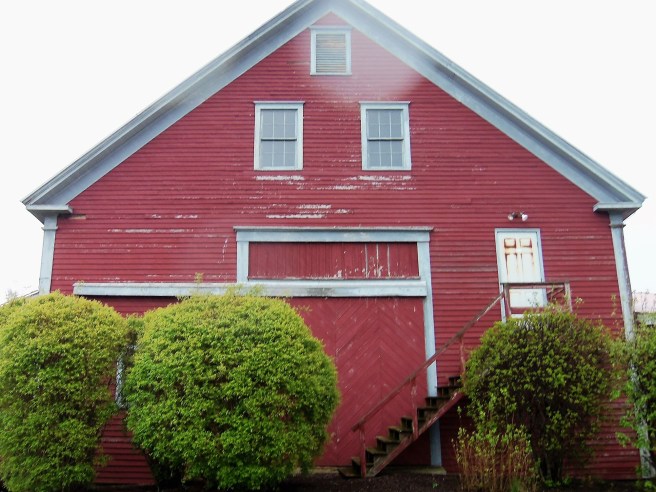
Tuttles’ Red Barn along Dover Point Road remains a landmark, even after the family finally sold the farm.

Shipwreck John’s grandson, James Tuttle (1683-1707), is believed to be the first Quaker in the family. He married Rose Pinkham (1682-1728) and they had two children before his death – Elijah Tuttle and Phebe, who married Moses Varney. Yes, these Quaker families quickly intermix.

The next four generations were very active in Dover Friends Meeting, according to William Penn Tuttle, who added that their home was always a resting place for visitors during Quarterly Meeting.

And some of the family even went abroad in missionary service.

Their farm on Dover Point Road, with its red barn, was long noted as a marketplace for fresh produce.

Across the river in Maine, one line still produces remarkable cider each fall – King Tut’s. Yes, short for Tuttle’s.

~*~

Check out my new book, Quaking Dover, available in an iBook edition at the Apple Store.

Welcome to Dover’s upcoming 400th anniversary.

Querido Pedro

what should imbibe a tone of its own at least the dialogue you know back to the earth or center city I’d say boho was largely suburban youths trying to head simultaneously in opposite directions ill equipped for either but rife with contradictions of youthful rebellion, colorful partying, prankster mentality as well as individuals in search of authentic and lasting values as the whole outbreak proves you know how much I still miss it