
You never know what we'll churn up in cleaning a stall
Somehow, this past winter I got struck by a sustained sense of cabin fever. Should that be “stuck”? To my thinking, that’s not necessarily a “bad” thing and was not unexpected, given my relatively isolated situation combined with the continuing Covid precautions and the usual northern New England long nights and winter snow, ice, sleet, and unassisted general deep cold. I do believe there’s value in periodically clearing some of the clutter from one’s life and regaining a sense of direction, and I have found a huge difference between solitude and loneliness, so here I was.
Mostly, I was feeling a bit directionless, having completed a big revision of the Dover history and wanting to move forward with its publication but not yet having clarity on exactly how that would go. I mean, as books go, this was one more niche item, not likely to hit the bonanza list, no matter how original the findings. Emotionally, then, I was feeling stuck, not my best mental state. It even leads to fidgetiness.
Breaking that up was a visit by family – or should I say invasion – that included time with movies and TV series on the 40-inch screen I usually leave dark. Me? I’d usually read and listen to the radio. I’ve tried to avoid television series, seeing them as addictive couch-potato time-sucks.
A year ago, though, they hooked me on the first season of Mad Men, which we had on DVD. Whew! I was free only after admitting there is some quality writing and performing available and losing a full weekend in full immersion.
This Christmas, they hooked me with Murders Only in the Building, which again fortunately had only one season.
But during a return visit a few weeks later, we shared a phone conversation with the daughter in California who had just made our son-in-law his favorite meal for his birthday, and that mention of brisket led to my memories of being introduced to the cut as a Jewish tradition by my almost parents-in-law, if only, and those stories now had us sitting down in front of streamed episodes of The Marvelous Mrs. Maisel. The fam scooted off, leaving me to catch up on all of the available seasons, and I’m now miffed I have to wait for more on the way. I hate being left dangling. Worse yet, I was told Prime had the remaining Mad Men episodes – so I caught the final six seasons in a bit over a week, how many hours did I squander there? And the last two of Mozart in the Jungle plus all but one season of the Secret Diary of a Call Girl, which was quite sassy but not nearly as hot as touted. There may have been another series I’m overlooking.
Said family was highly amused by my engagement with works they deeply appreciate, but I am still appalled the hours I lost and by one more manifestation of my obsessive side.
For the record, I’m blaming the younger daughter and her brisket for this latest outbreak. Now, just when is the last time I’ve had a slice of one?
What do you suggest I stream next?


The narrow, mile-wide island, claimed by both Canada and the U.S., is treasured by many birdwatchers for having the largest colony of nesting puffins along the Maine coast.
Trips to the island are limited, so much so that when online reservations for daily summer visits opened at 8 a.m. on January 10, all the tickets were booked in 45 minutes – at $180 a seat.
Sounds like a real bucket-list item, even if the boat sails from Cutler in my own Sunrise County.
Be warned, too, that the weather can be iffy, meaning that reservation might be cancelled on short notice.
Should I start considering a trip to Newfoundland if I really want to see any of the distinctive birds?
Eastport is a city, after all, and many of the homes are packed in close together. Not that it matters to our local wildlife.


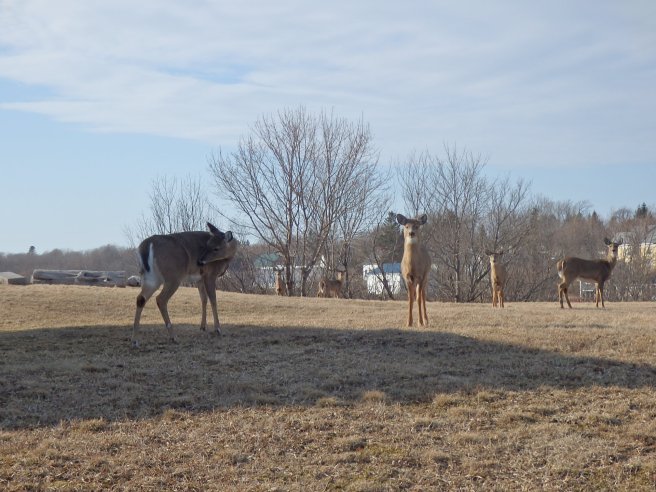


They’re so much a part of the place they even have their own Facebook page, Deer Eastport, and it is very active.
No matter how cute, though, they’re a gardening challenge. As are the raccoons.
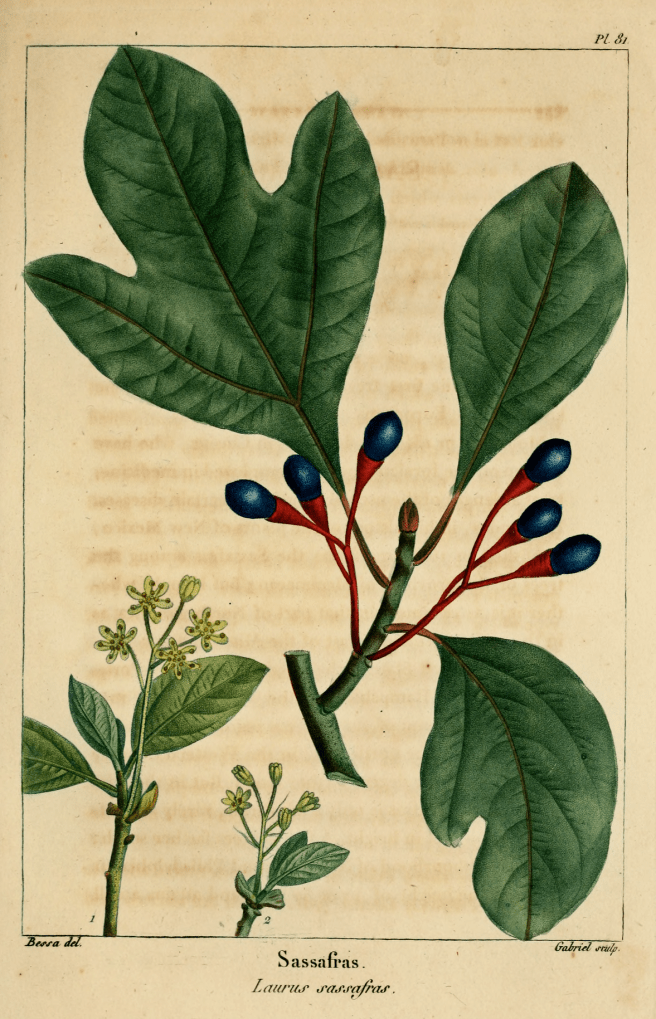
Martin Pring, after becoming the first known European explorer of the Piscataqua River in 1603, then continued south to Cape Cod, where his party engaged in harvesting sassafras tree bark and roots, “a plant of sovereign virtue for the French pox,” as he elaborated in his journal. It was highly lucrative back in Europe and would handsomely repay the Bristol investors backing his journey.
French pox, do note, was what we now call syphilis. If only it worked as a remedy or a cure.
Sassafras was also touted as “good against the plague and many other maladies,” as well, just in case. And you thought it was merely a “tonic” served as tea or the flavoring for root beer?
During their six weeks ashore at Truro, Pring’s crew built a barricaded encampment. It was often visited by as many as 60 Wampanoag at a time, sometimes bringing different kinds of food to the party.
In one instance, in response to the playing of a kind of guitar, groups of up to 20 broke into dancing in a ring and singing “lo, la, lo, la, la, lo,” which works when you don’t know the words. For his part, the young musician was rewarded with gifts of tobacco and pipes, fawn skins, and snake skins up to six feet long, “which they used for girdles.”
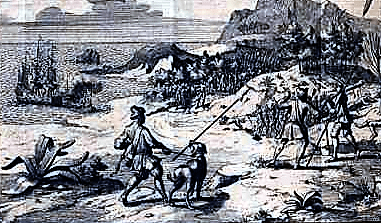
But it was an uneasy relationship. Pring’s two mastiffs in particular terrorized the Natives. Anytime the sailors felt threatened, they’d release the big canines. As Pring recorded, the Wampanoag were more afraid of the two dogs than they were of 20 men.
The tension finally exploded when about 140 “savages armed with their bows and arrows” approached the barricade and a “a piece of great ordinance” was shot off in response as a warning and call to arms.
Recognizing that they’d worn out their welcome, the Englishmen quickly packed up and scooted off behind the protection of the mastiffs and set off for home while the Wampanoag set a mile-width of forest aflame and chased the ship in their canoes.
Of course, we’re never told what so soured the relationship. I doubt that the mariners were very tidy or respectful in their ravaging the forest, and I suspect that may have had something to do with their reaction.
Still, when the Pilgrims arrived in 1620, remains of Pring’s palisades were still visible.
What do you imagine had so enraged the Wampanoags?
Whatever it was, it seemed to set the pattern for much of what followed.
~*~
The episode is rarely told in American history, and, when it is, it’s quickly skimmed over.
Like so much of the New England record that follows, we’re rarely given the Natives’ side of the events.
One thing we can be sure of, though, is that there were huge differences in expectations and values, to say nothing of hygiene or manners.
For instance, as I’ve heard, the Wampanoag word for “treaty” translates as “making relatives,” which is hardly what English settlers had in mind for their part. Far from it. Something similar no doubt happened when the colonists “purchased” land from a sachem.
As the Wampanoag believed, “the land knows you,” more than the other way around.
Quite simply, from their end of these transactions, they were betrayed.
~*~
These days, residing in Downeast Maine – that is, Passamaquoddy country, which stretches over into Canada as well – I’m learning of another series of these one-sided deals.
Joe Clabby’s excellent A History of Eastport, Passamaquoddy Bay, and Vicinity chronicles much of the federal and state maltreatment, misrepresentation, and mismanagement regarding the tribe and its members. One instance, by no means the most outrageous, is this, from 1950: Indian Agent “Hiram Hall allowed the state to charge the Passamaquoddy Fund $8,000 per home for home construction (the homes are worth only $2,500).” This came more than a year after the tribe requested that the state remove him for misappropriation of state aid, favoritism, and disinterest in tribal government.
Driving to and from Eastport, I pass many of these houses, now in serious need of repair. Don’t blame the residents.
As I relate in my new book New England relations with the Natives got off on the wrong foot, starting with the kidnapping of Squanto and four others. (Virginia hadn’t done any better.)
Shame, shame, shame.
 Jnana's Red Barn