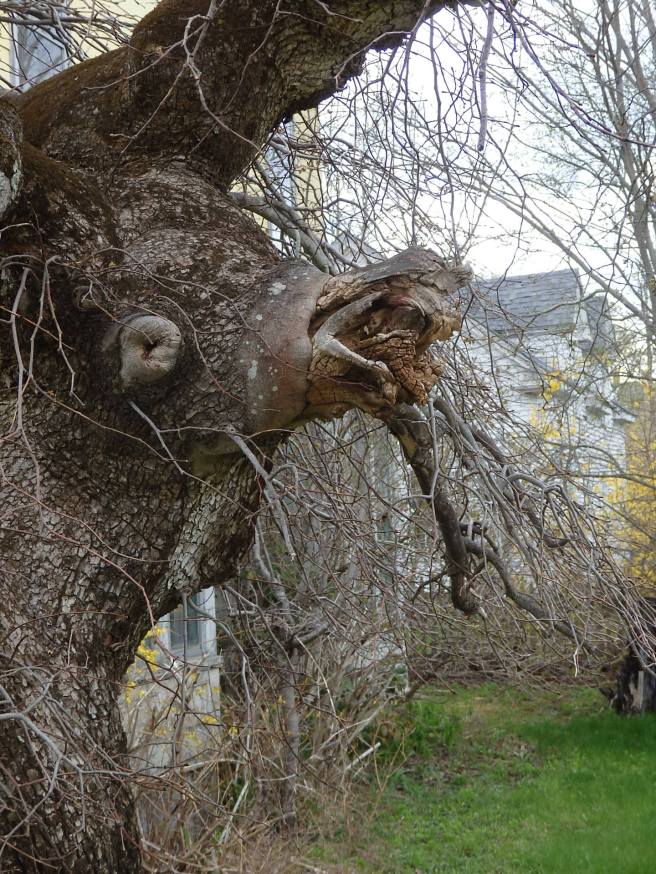
How beastly!
You never know what we'll churn up in cleaning a stall
tracing the contours of a phantom state accounted for relentless confessions her glances endorsed the mountain ice fields above clouds juggling a chaste topography climax or spring tide shattered in a brutal outburst of emancipated crescendos how swell I thought sonatas scaling the savage exhilarating tempests . still she sought cinematic relics shelved along slender promontories where I stood wary of early snowfall or lightning in countless triangles or gale-force gusting with sleet we barely escape being tossed overboard or disemboweled on crags above tree line, its keepsakes reminding of her mercy when she sat on my lap in echoing climax
If you’re a reader of ebooks and fascinated by history, I’d love for you to get an advance copy of my new book, Quaking Dover.
In fact, as a follower of this blog, you’re getting a limited-time invitation to pick up a copy of the book for free.

All you have to do is speak up in the comments section of this post, and assuming that your address includes an email (visible only to me) or other contact info, I’ll send you a coupon to download the book in the digital format of your choice within the next 30 days.
It’s one of the advantages of ebook publication at Smashwords.com.
In the world of commercial book publishing, a printed edition typically appears in an Advanced Reading Copy run that allows reviewers, bookstore dealers, and other insiders a chance to hop on before the official publication. In the meantime, the author and editor have time to make fixes and set the stage for an auspicious opening day, one boosted by the buzz of the ARC readers.
So what I’m doing is the equivalent for a digital edition.
The release date on this book isn’t until September 8, but folks who preorder now can get in the front of the line at half-price. That strategy is one step for boosting the book in the crucial first-week sales algorithm.
Today’s offer, however, gives you a chance to own a copy now. In a way, you’ll even be getting involved with the preparations for the tiny city’s upcoming 400th anniversary.
My hope, of course, is that you’ll be excited by my story and happily post a brief review or two in response. If you don’t like it, of course, you can tell me directly and we’ll still have time to rectify that. It won’t even change my perception of you (insert Smiley Face.) From your end, it’s a no-risk proposition.
From my end, I might even gain a fan.
Now, who’s first?
One of the first thing the colonists typically built was a sawmill. From what I’ve seen to date, it always came before a gristmill. I would have thought food would have been the priority, but there are suggestions they imported their flour or even bread instead.
That raises questions of just exactly what their meals were. The Puritans were devoted to their beer and tobacco – and that extended to even their children.
For that matter, how early was Beantown a synonym for Boston?
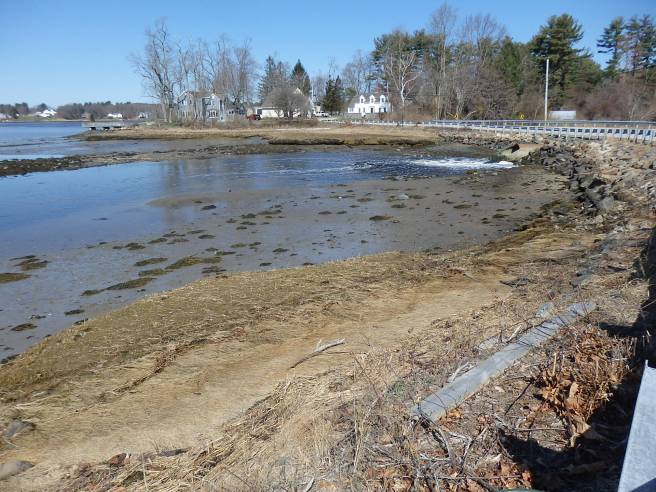
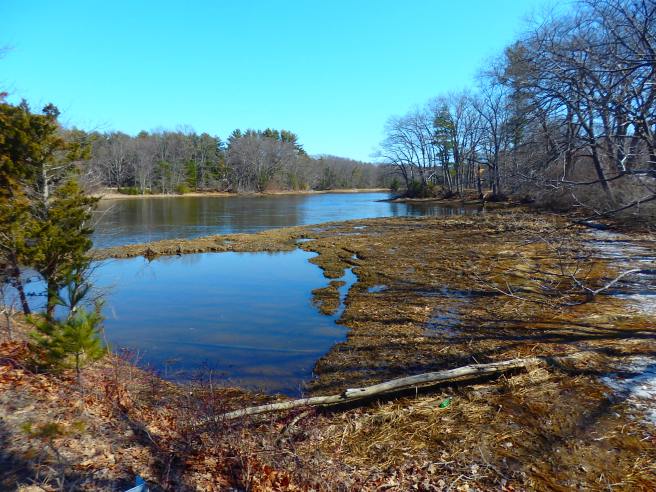
So why sawmills? The early settlers along the Piscataqua apparently erected log cabins, along with fortifications. For that matter, the sole surviving garrison house, preserved at the Woodman Institute, was essentially a log cabin built around 1675.
But flat boards were needed for shipbuilding, wharf planking and bridges, and barrels – for shipping dried fish, especially. Perhaps lumber itself was also an export to Barbados, the Bahamas, and the West Indies.
Let’s remember, too, the construction of dams and mills and their operation required sophisticated skills.
I’m guessing that few of the early English settlers along the Piscataqua were menial day laborers.
~*~
Welcome to Dover’s upcoming 400th anniversary.
I had no idea how we’d sound as an ensemble or even whether I’d measure up. Officially, I’ve been a member of the choir more than a year now, but all of that time, we gathered only on Zoom. We soon learned to mute ourselves for even the warmups, and our director did accomplish a miracle in taking our individual home-recorded stabs at two pieces and blending them into a virtual performance that wound up sounding better than we had any right to expect, especially considering my horrid best efforts. I simply assumed he used only the finest voices in his studio note-by-note studio wizardry while mercifully sidelining the rest of us or at least me. I wouldn’t say that any of the other pieces recorded before Covid really offered a clue of what we’d be like now.
So Monday night was a kind of debut for us, our return to weekly live, in-the-flesh rehearsals at the arts center, nary a laptop in sight.
When we sat down in our semi-circle, just 15 of us, I had reason to be dubious. For starters, like the population in general around here, our median age skewers topside. Voices do change as they age. For another, a small body like this leaves no room for error, each member is more exposed and requires more precise breathing than we’d face in a group of 50 to 80, as I’d been privileged to have before. Five individuals were absent, all with decent excuses. Twenty can make for a fine professional chorus, but we’re amateurs of varying degrees.
I’d already met one of the basses and knew of a third, the one who can hit notes four steps lower than I’ll ever manage even with a heavy cold. And then, praise be, I was introduced to a fourth section member. Go team!
We were all masked as a Covid precaution, but even after ordering special singers’ coverings, we had no idea how freely we’d be able to breathe and enunciate.
I didn’t even know how well I could follow our conductor. You get adjusted to different styles of leadership and expression. On Zoom, he was always trying to juggle a keyboard, a score, maybe a screen-sharing insertion or a recorded track, plus beat time and throw cues to the little squares at the top of the screen while we wound up a half count off the beat as a consequence of delays in transmission or electronic hiccups.
All that was now irrelevant. Taa-taa! The time of launch arrived. We got our first pitch and then the upbeat, and when we opened our mouths and uttered the first notes, everything melted gloriously. And that was just in warmup exercises.
When we turned to the pieces we’ve been practicing at home, we were joined by a pianist who had already impressed me with a recent recital. Our director could turn his full attention to leading us cleanly and expressively. Yes, his mask prevented his mouth from conveying the words, but not every conductor does that anyway.
There were rough edges and other imperfections, but there was also a palpable feeling of support through the presence of each other and a certainty that we can accomplish what needs to be reached in time for two concert performances a month from now.
It’s exciting. Making music with them was one of the big reasons I had moved to Eastport. I liked their repertoire, akin to what I’d done in Boston, and I like the fact I can walk to our performance space. Learning something new about music, my own abilities, and us as a community is invigorating.
What are you especially enjoying as we come out of Covid restrictions?
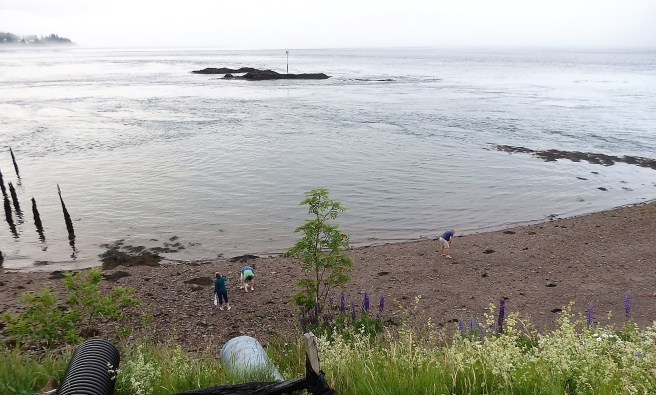
The kid was so stubborn that if he fell in the river, he’d drown, trying to swim upstream.


Here are a few more.
~*~
See how my mind and heart work? Really?
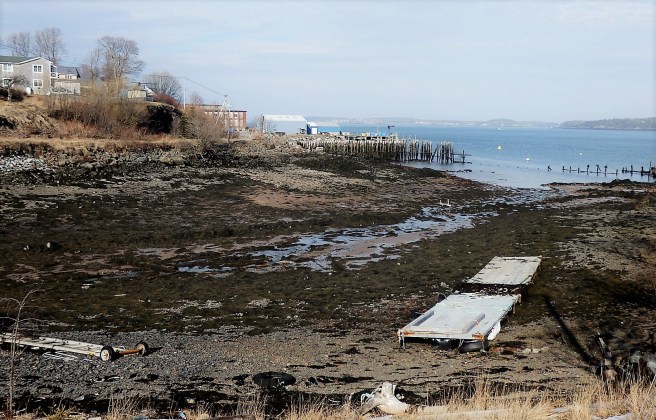
A third-generation shipbuilder, C.S. Huston at one point owned four shipyards on Shackford Cove – his father’s, on the south side of the water, and the William H. Hall and Jacob Shackford yards on its north side, as well as Aymar’s spar shop at the South End bridge, which has long since been filled in.
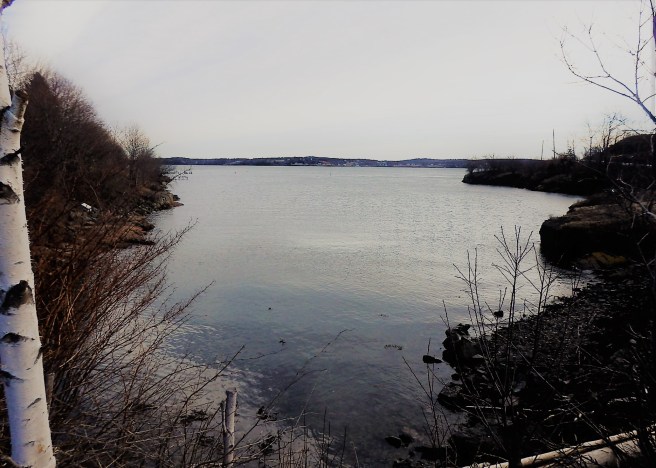
As an innovative entrepreneur, he early on erected a steam capstan to haul boats out of the water, along with a 600-foot marine railway made of thick beams set up as interlocking boxes filled with stones.
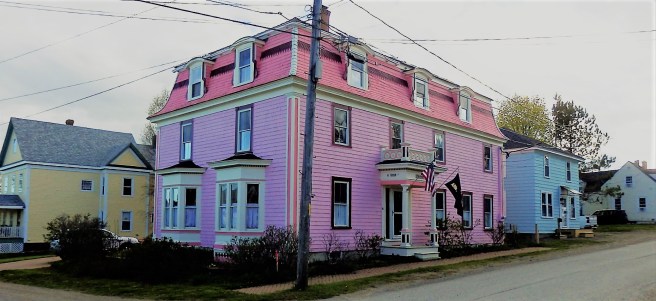
Huston lived in a Second Empire style house overlooking the yards, which he purchased from Hall in the late 1850s.
The shift to ships built of steel rather than wood changed everything. Maine had seemingly endless lumber at hand, but not steel. That also allowed for bigger vessels, meaning fewer could suffice for shipping. Finally, with the advent of the automobile, passengers stopped relying on steamships and that, too, ceased at the corner of this cove. But not before the world’s largest sardine cannery extended from its shore – a building 250 feet long.
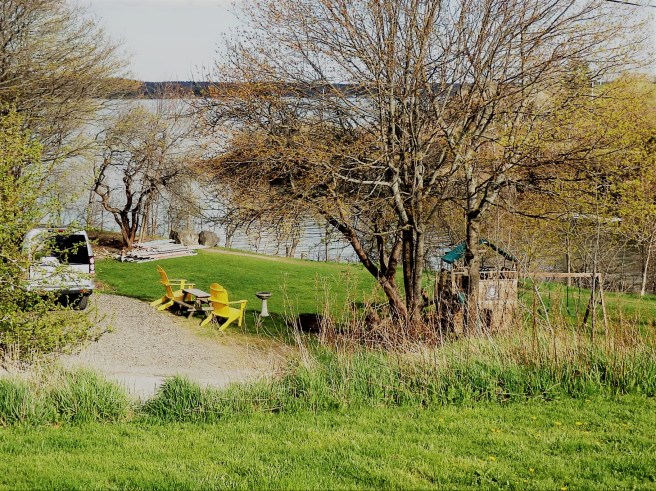
It seems so quiet today.
 Jnana's Red Barn