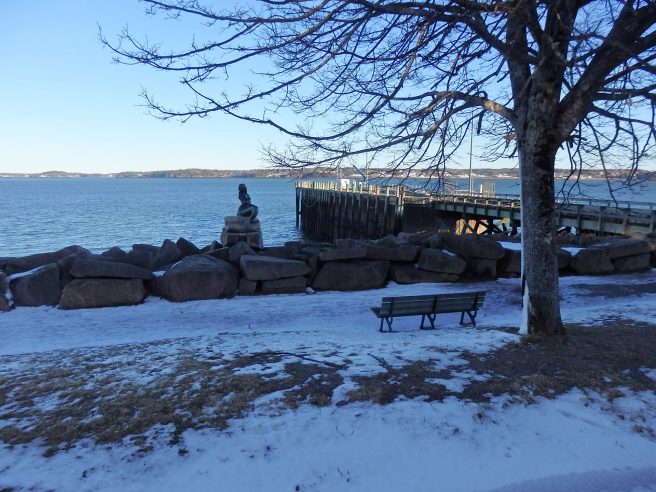
How can the weather shift from cloudless and gloriously blue sky to overcast and snowing in just four hours?
Don’t try to answer that, but similar questions are definitely welcome!
You never know what we'll churn up in cleaning a stall
How can the weather shift from cloudless and gloriously blue sky to overcast and snowing in just four hours?
Don’t try to answer that, but similar questions are definitely welcome!
Some time ago I discovered that to write poetry I had to be sitting in meditation every day.
Or sometimes a good walk would do.
Or even a little simmering in the spa.
What works for you?

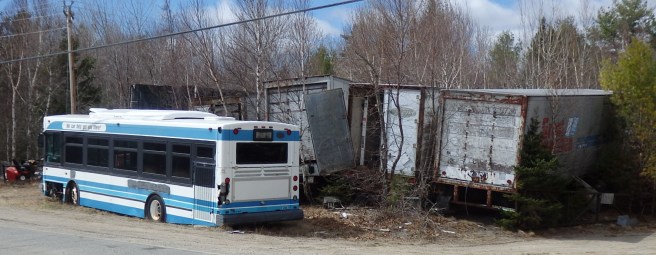
In my book The Secret Side of Jaya, her sojourn in the Ozarks introduces her to a magical vale in the woods just beyond their house. It’s also the site of a water-powered grist mill she begins to frequent in her free time.
Here are ten facts about the historic industry.
Maine is bigger than you’d think, and half of it is still unpopulated.
In fact, the easternmost county in the USA is more than twice the size of Rhode Island or New York’s Long Island – or, if you prefer, bigger than the two of them put together. And it’s merely half of Downeast Maine, with Hancock County comprising most of the western flank.
Washington County, aka “Sunrise County,” has a population of only 32,000 – about the size of Juneau or Fairbanks, Alaska, or Dover, New Hampshire, my home of the previous 21 years. You know, the one I repeatedly referred to as a small city. My, how my perspective’s changing!
Most Downeast folks live near the rugged coastline, with the largest municipality in Washington County being Calais, the connection to mainland Canada, followed by Machias-East Machias, Eastport, Lubec, and Jonesport.
The four largest public high schools have about a hundred graduates a year – combined.

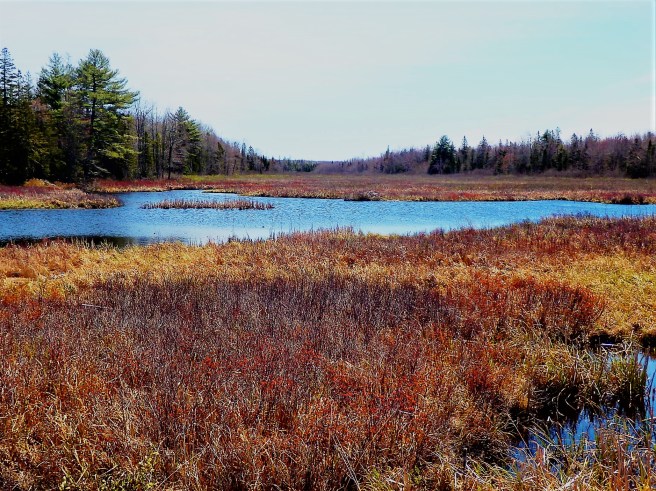
There are many reasons Downeast reminds me of the Far West, though it’s generally much wetter. In fact, 21 percent of the county is covered with water, much of it as big ponds running along the valleys between the low-elevation mountains. Many of these often island-specked bodies extend two to five miles in length and at least a mile across. And that’s before getting to the bogs and fens or wild rivers and tide meadows or marshes and swamps or prolific beaver ponds. The technical definitions vary, depending perhaps on how wet your shoes get. Quibble as folks might, the northern half of the county seems to be more lakes and wetlands than solid ground. I’m not sure if the Atlantic bays and coves even count in this tally. Quite simply, we’re surrounded by a lot of liquid, so watch where you step.

What also strikes me is how little development rings the shoreline of the lakes. Many have only a few “camps,” as we New Englanders call the cabins, trailers, or cottages and their docks, with the remainder in full, unspoiled forest. Make a bid, if you must.
It does make for a lot of unspoiled tranquility, for those who are so inclined, if you can deal with black flies and mosquitos. Moose often come as a bonus.
Among the artists-in-residence the Tides Institute invited to town last year was tintype photographer John DiMartino from Brooklyn.
He was certainly the most visible, with his big camera and tripod everywhere and his workaholic hours. He was enthralled with the place, its light, and its people.
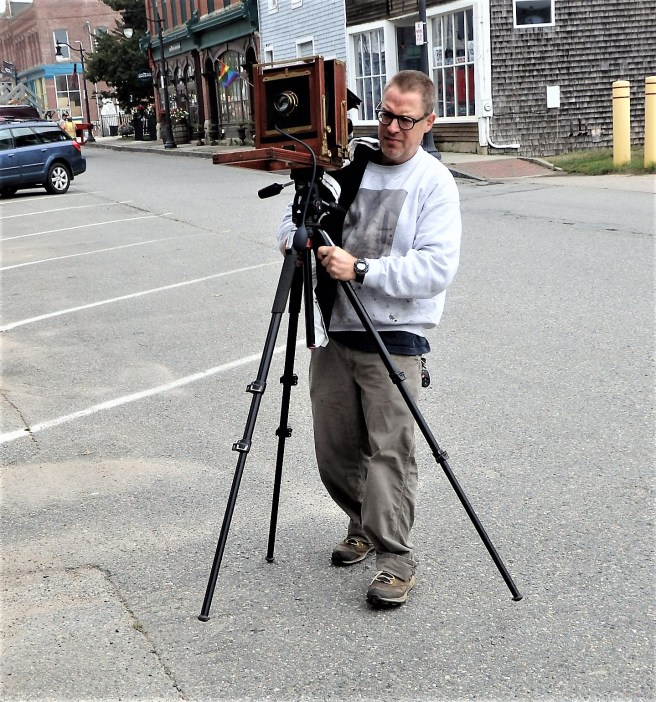
Curiously, his medium gave everything he shot a back-in-history quality, as well as reversing the subject before him.
Here’s what he did to me.
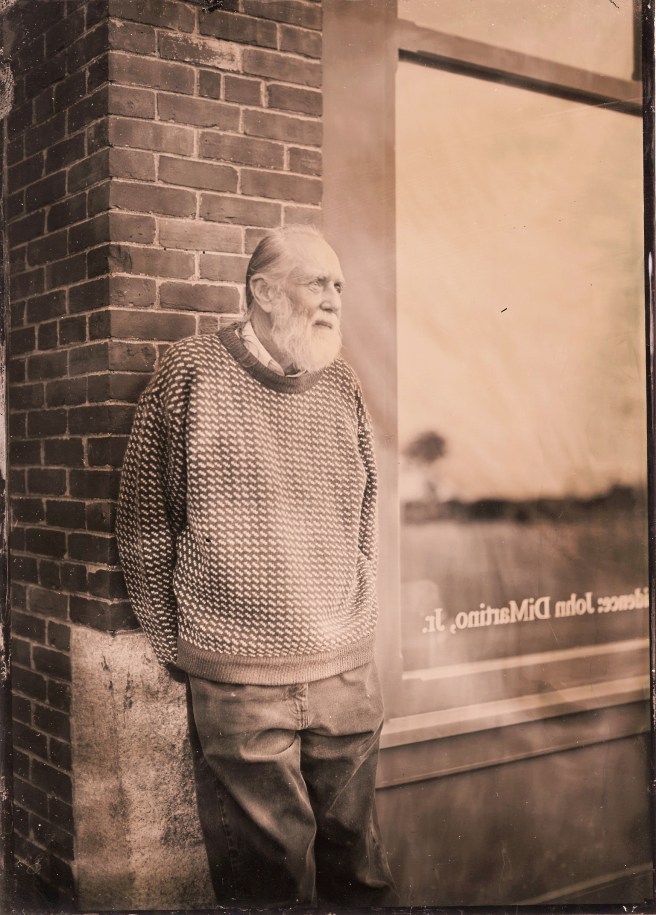

For more of his portfolios and other characters he captured in town, check out his website, johndimartinojr.com.
ream the medicine cabinet, fill penny rolls for the coffee exchange, throw out old prescriptions and that old slide rule, already obsolete, then it’s off to the office supply store for carbon paper and metal bookends, return editions and LPs to the public library before the art stack goes to my ex-wife’s aunt where I’ll hear how her latest opening went screwy . back home, have a beer, phone my lover, take a call from the watch repairman warning if I don’t pick up her metronome they’ll sell it off, so once more out I go, how ’bout you?
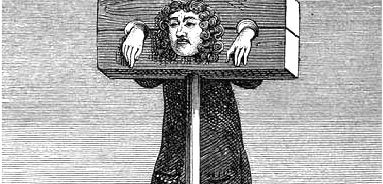
Dover Friends have long relied on the story of the three Quaker missionaries who came to town in 1662 as the origin of Dover Friends Meeting. They were severely persecuted and whipped, the subject of a well-known John Greenleaf Whittier protest poem, yet they were promptly followed by more itinerant ministers and soon a third of the population was Quaker.
The Puritan authorities had enacted harsh anti-Quaker laws. Anyone who even listened to a Quaker for an hour or owned a Friends book or tract could be imprisoned, fined, have an ear loped off, or have the flesh mutilated with a red-glowing branding iron. By the time the three women – accompanied by two men – came to Dover, four Quakers had been hanged in Boston. Yet in some places, a few people listened and even hosted them.
Dover, obviously, was one – and, as I find, had welcomed Friends even earlier than we’d thought. In 1659, some residents were fined for neglecting public worship, meaning the Puritans’ services, and attending Quaker Meeting instead.
My central question keeps asking what made Dover, of all places, so responsive to the controversial Friends message? What made some residents so willing to defy the prohibitions and risk the consequences?
My upcoming book delves into the findings, but quite simply, the town had been rocked by divisions for much of its then-short existence. At one point there had even been an armed skirmish between rival ministers for the town’s tax-funded pulpit.
~*~
Some grudges are harbored a long time, awaiting the right opportunity to flare up again.

Another factor to consider is the ways that Dover’s settlers differed from the majority of the Puritans to the south. Dover’s came overwhelmingly from Devon, a large shire in South West England, while the Puritans were rooted in East Anglia, to the other side of London. Culturally, they differed strongly, from accents and cuisines to courting and marriage patterns to superstitions and social customs. It’s something Dover shared with two Quaker hotbeds nearby – Salem, in Massachusetts, and Hampton, down the coast of New Hampshire.
Frankly, I’ve been surprised by the degree to which Dover was a center of controversy and scandal in the mid-1630s and a bit on, all so early in New England’s history.
Much of the Atlantic coastline hadn’t yet been settled. What happened in Dover fuels a big part of my big book and definitely sets the stage for what follows.
Maybe you’ll be as startled as I’ve been.
 Jnana's Red Barn