Month: December 2021
Some breathtakingly beautiful places I’ve been
- Mount Rainier, Washington: Not just its high country and flanks (I’ve been as high as Camp Muir, 10,188 feet elevation), but also the valleys and surrounding ridges. Living four years to its east allowed me many opportunities to see aspects many of its more urban neighbors rarely encountered. (I’ll let this one stand as a representative of what could easily become a Tendril of other Cascades Range experiences.)
- West Quoddy State Park, Maine, after a big storm: Like a smaller scale Acadia, but far less crowded and more intimate.
- Outer Cape Cod, Massachusetts, on the Atlantic side: Especially pleasant in the shoulder season, when we were staying at Grandpa’s Jim’s place. The beach and dune just run on forever.
- Mount Cochura, New Hampshire: Not one of the state’s higher peaks, but a strenuous and varied ascent all the same, with fantastic views from the peak. Noted in Native lore even before the celebrated lovers’ leap.
- Stillwater Quaker meetinghouse, Barnesville, Ohio: Built in 1877 along timeless classical proportions and designed to house yearly meeting sessions as well as weekly Meeting for Worship, the site always felt much older and more hallowed to me, even after living in New England.
- Music Hall, Cincinnati: Some of my greatest concerts in my memory were in this large, horseshoe-shaped Italianate auditorium. The acoustics in the second balcony were razor-sharp. (Gilded Severance Hall in Cleveland deserves an honorable mention.)
- Hancock Tower observation deck, Boston: The panoramic view from the top of the city’s tallest building was amazing. Alas, it has been closed for security reasons since the 9/11 flights took off from Logan International Airport across Boston Harbor, a very prominent feature in the view.
- Butchart Gardens, Vancouver Island, British Columbia: This flower-lover’s 55-acre paradise attracts more a million visitors a year for good reason. The blooming beds are perfection of horticulture and color, but there’s no preparation for the stunning sunken garden in the former limestone quarry just beyond.
- Roan High Knob, North Carolina-Tennessee: I was a 12-year-old Boy Scout nearing the end of a week’s backpacking on the Appalachian Trail when we came upon this 6,286-foot-high mountain crowning a nearly tree-barren highland punctuated by rhododendron in full bloom. I’d never before seen a rhododendron, as far as I know, but have always associated the shrub since with that unanticipated, perfectly timed encounter.
- Ohio Caverns, West Liberty: You just don’t expect the crystalline underground wonder to exist under an otherwise pedestrian Ohio landscape. (Mammoth Cave, Kentucky, is grander and more spectacular, but sometimes, as the saying goes, Small Is Beautiful.)
~*~
Your turn to pipe up!
They’re not necessarily pipe dreams
The hippie movement redefined Cassia’s extended family. And then their dreams led them in redefining small-business practices.
What would you most like to see happen in the business world where you are?
Kinisi 84
from watching old movies
to peeling shrimp
in a twenty-two-year span
of Sunday afternoons
Classy clowns
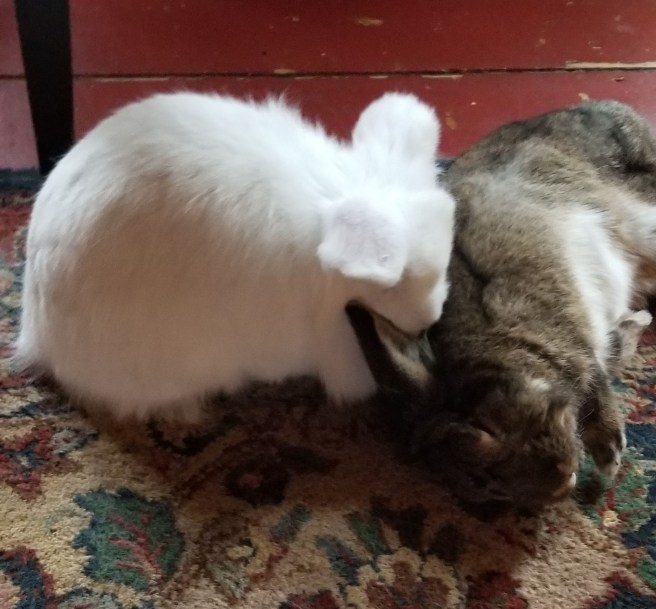
How can I not be delighted by this?
Writing often feels like working in a vacuum. Believe me, feedback from real readers – positive or negative – makes a huge difference.
How can I not savor a review like this by Girlpower at Amazon:
You’ll enjoy reading all of Jnana’s books, you won’t be disappointed.
Her reaction to Daffodil Uprising continues:
Jnana draws me back into the counterculture past we have in common. The book flows and takes you back into everything hippie during the seventies where most of the baby boomers found themselves. It was an exciting time, a revolution, fueled by peace and love, we were very different than our fathers and mothers.
His characters are people who reminded me of friends during that time. We experimented with drugs, and had more than one partner but it was an empowering time for women. Our fathers were of the silent generation who kept their heads down, we were no longer. We allowed ourselves the time to have a little fun. [It was also] the birth of organic food, which is now coming to bear fruit. The progressive generation gave birth to many of the things today that started back during those days.”
She turns to Kenzie’s days at Daffodil University, where he finds his bearings and has more than a few relationships and that unique casual sex that lived for itself and asked for nothing more.
Jnana in his free-flowing style gets down to it, explaining relationships. Kenzie got caught up in an affair with a woman who’s cheating …It took me back in time on a magic carpet ride. … Many generations are interested in how the hippie generation lived back then.
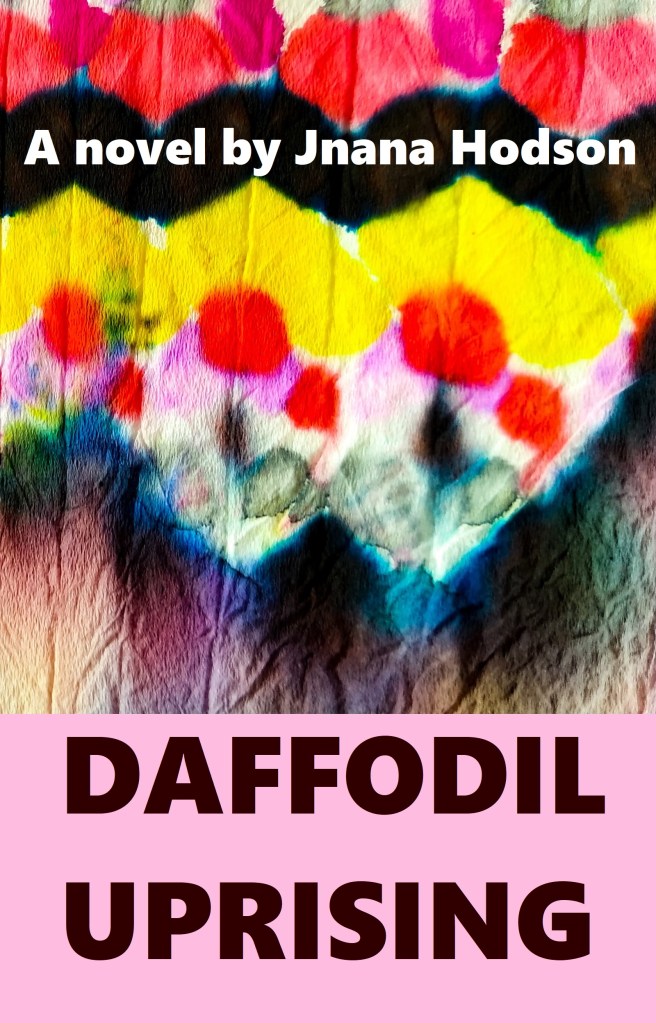
Available at the Apple Store, Barnes & Noble’s Nook, Scribd, Smashwords, Sony’s Kobo, and other fine ebook retailer and at Amazon in both Kindle and paperback.
You were just getting to know the place, in a way I never will
losing everything would have been a disaster (fire, the author’s deep fear, can engulf a building in five minutes – thirteen, we counted) and then once outside, realizing smoke in a neighboring apartment was turning to flames within the building no explanation why the threat of losing my worldly goods didn’t upset me as much as the basic ineptitude that causes delays like that to happen goodbye, manuscripts, notebooks, early drafts, letters, addresses . a writer’s constant fear against the slow art itself, you know, civilly
A few more of my favorite art museums
Let me say the big Metropolitan in Manhattan is not on this list for a reason. It’s too big and too crowded, OK? I’ve never felt so claustrophobic as I did the last time I visited.
Also, I see I did a rundown on New England museums and college galleries back in 2015, so you can go to the Red Barn archive for those.
With that, let’s turn the spotlight.
- Cleveland: The city was once the home of some powerful industrialists, including the Rockefellers, and this collection reflects that. It has some stellar old masters and a leading Asian collection. Plus, admission is free.
- Chicago: Masterpieces by the mile. A muscular feast for the eyeballs.
- National Gallery: The third of the truly encyclopedic collections on my list, I always feel it should have been built in Pittsburgh, where Andrew Mellon amassed his fortune. Still, it feels more leisurely to me than many others, and the Rothko court is my favorite. But don’t overlook the two rare Vermeers.
- Phillips Collection: Also in Washington, D.C., this assembly of old houses in the Dupont Circle neighborhood has an intimate feel and some stunning Impressionists and modern works, including major Americans.
- Dayton: I grew up with this then-free collection at hand. What makes it remarkable was the astute decision to go after masterworks by lesser known painters rather than third-rate works by the big names, a strategy the New York Times hailed.
- The Taft: This modest collection in the family homestead just off downtown Cincinnati is a disarming salute to personal collecting, one strong on period French like Corot.
- Baltimore: The famed Cone sisters’ collection of Impressionists and early modern masters is featured at the Baltimore Museum of Art on the edge of the Johns Hopkins campus. Don’t confuse it with the Walters, down by the Washington Monument in Mount Vernon Place, which goes more for antiquity and doodads. My bedroom in Bolton Hill looked out toward the apartment building where the sisters once crowded their assembly into a few rooms.
- Brooklyn: Way too overlooked, even with its major Asian galleries, among the best in America. Check the schedule before you go, since its budgeting closes halls on a rotating basis.
- Victoria, British Columbia: The Royal BC Museum, situated downtown by the ferry landing, focuses on natural history, but its presentation of indigenous culture is stunning. Pacific Northwest Native totem poles, lodges, clothing and costuming are reverently displayed, gallery after gallery. Tell me this isn’t a visual masterpieces experience. It really is a vast art installation.
- MOMA: Don’t know what it’s like now, but I did get to view the panoramic Monet, back before the fire, as well as Picasso’s Guernica, now returned to Spain. All this was before the Museum of Modern Art expanded its home.
Unpacking in a new place
This year, the Barn’s largely been cleaning up with posts reflecting my two decades in Dover, a span that brought about a culmination in my life. Marriage, children, an active Quaker Meeting, publication of my novels and much poetry, ocean beaches. It was a rich mix and put me on a huge learning curve, thanks in no small part to my brilliant spouse and said kids.
With my latest Big Project wrapping up and heading (I hope) toward release, I’m in a reflective mood. Why not?
Actually, I’m also feeling at loose ends, before a new routine emerges. I’ll look at that another time.
What I’m not feeling is retired, even if I’m not getting dressed for the office every day. Again, we can delve into that in a future post.
It’s also been a year of big transition for me, holding down the fort aka beach house, camp, summer home before the renovations are in progress and then done.
I’ve been having to master cooking again, which has been a lot of fun, considering the expert advice I can get with a simple phone call, and the reality that I’m quite willing to eat the experiments that fail. (So this is what she means when she says …)
A lot of memories have been stirred up in the process.
Sometimes Eastport reminds me of Port Townsend, Washington, back in the late ‘70s, where Puget Sound collides into the Strait of San Juan de Fuco. It was both a working fishing town and an arts center. And memories, too, of my second Summer of Love, not that coupling was part of the equation here but rather all the chance new introductions.
Downsides?
There’s no nightlife to speak of here, apart from the occasional play or concert. Post-Covid fully, we’ll likely be back to dancing and singing and classic films. And an absence of a number of other things, as I’ll explain sometime in the future.
OK, I do wish our IGA grocery were a Trader Joe’s, and less pricy, but it’s still more varied than an Aldi, at least in summer, when there are far more people in town. We’re way too small for a Market Basket, even if that frugal New England chain ever gets up this far along the New England coast. Practicalities do intrude.
With most of our possessions in storage for now, I’m feeling rather liberated in my spare surroundings. There are days when I wish a certain book or recording were at hand, but I’ve been busy enough to let that pass. We’ll see how much longer that continues.
Admitting the place of geography in a piece
Much of my literary writing has attempted to capture the unique sense of particular landscapes, sometimes to the extent that the locale becomes a character of its own. Serious wine drinkers might see this as a matter of terroir, meaning distinctive local flavor.
In my novel What’s Left, I tried to avoid this touchstone but wound up developing the neighborhood around the family restaurant anyway.
In placing it in a college town in southern Indiana, I created an inside joke all the same. If you’re familiar with the region, you’ll know the Ohio River is much more than an hour from Indianapolis. The college town where she lives is defined by both, and thus in a site uniquely its own. If only it actually existed!
Still, I think the flavor is right.
~*~
I know I’m not alone here.
Tell me of a favorite book or movie where you think the location becomes a character in its own right. Let’s make this a long list!
~*~

 Jnana's Red Barn