Think of this as a referendum. No nation can be great if its soul is ugly. Stand up for factual truth rather than unsupported claims.
As the bumper sticker says:

Love this bumper sticker. And to think, these days it’s a political statement.
You never know what we'll churn up in cleaning a stall
Think of this as a referendum. No nation can be great if its soul is ugly. Stand up for factual truth rather than unsupported claims.
As the bumper sticker says:
Love this bumper sticker. And to think, these days it’s a political statement.
When it comes to election results in most of the locales I’ve lived in, I’ve awakened to find myself in the minority. Sometimes, discouraged, I’ve wondered if it’s even made sense to show up to cast my ballot.
On the other hand, believe me, being victorious can feel unbelievably vindicating.
That said, let me argue that casting your vote is not about winning. It’s about taking a stand.
Here are ten reasons you need to do it – especially if you live in the United States today.
~*~
What reasons would you add?
How far can a restaurant extend its business base? Its “brand,” as they say. This passage is prompted by meals at restaurants that expanded into new revenues, even though I cut this from the final version of my new novel, What’s Left:
Still, the playful concept feeds into what emerges around the corner as an elegant multi-purpose restaurant, plus a bookstore, art gallery, gift shop, and even a small greenhouse.
And that’s before the bakery or brewery comes into sight. For whatever reason, though, I shied away from launching Carmichael’s own brand of bottled products.
This has me thinking of a couple of specialty food markets on the tourist trail that include a cafe featuring their products. Turns the concept I’m discussing around, in effect.
The identity, of course, is built on something that makes us go gaga. Something that makes us want to return again and again.
What’s someplace that features your favorite comfort food or special treat? Would you wear a T-shirt proclaiming it? What do you think of restaurants that have a gift shop attached? Does it add or detract from the mission?
~*~
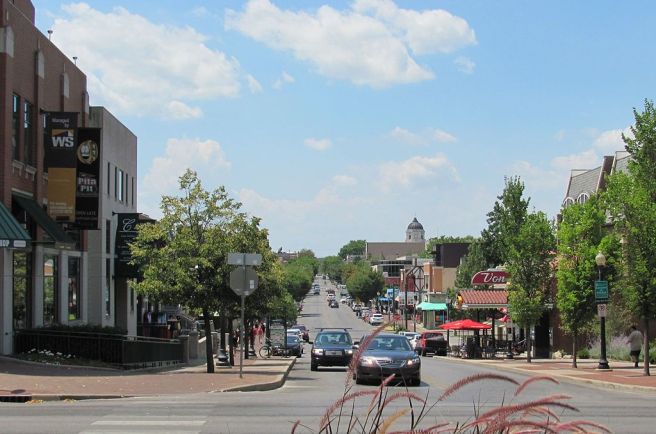
Her hometown may have been something like this.
I had long been perplexed why my modern American poetry class in the late ’60s had spent so much time on Edwin Arlington Robinson, especially since we never got up to more pressing figures like Kenneth Rexroth, Lawrence Ferlinghetti, Allen Ginsberg, or Gary Snyder.
I made a jab at this plaint in my Daffodil Sunrise novel, where our budding photographer was panicking while typing away on his take on Robinson.
More recently, when reworking that manuscript into Daffodil Uprising, I found myself running with the poet more fully.
For one thing, I had to admit he was more contemporary than I’d allowed back in college. His lines and insights are clean, prescient of new approaches, even snippy.
For another, he could be bitter, sarcastic, depressed – as were many beats and budding hippies.

His parents themselves weren’t that far from bohemian, either. His mother couldn’t even come up with a name for him, after all, and that fell to a circle of “summer people” visiting Maine. They put names in a hat or whatever and the slip of paper that came up was Edwin. The woman was from Arlington, Massachusetts. Bingo. We have a middle name.
His eldest brother went from being a successful businessman to bankrupt and alcoholic to die in poverty with tuberculosis.
His other brother, a physician, became addicted to morphine and died of what might have been an intentional overdose.
Living the past 31 years in northern New England, I’m now familiar with the culture Robinson grew up within. Gardiner, Maine, is a few hours up the road from us. I have friends whose roots are there.
Without giving a spoiler, let me say Robinson is now an active figure in the new novel. He infuses some wonderful, if sardonic, perspectives to the younger generation, and becomes a foil for similar spirits from the Edwardian past that sway the photographer’s girlfriend, too.
Would he talk this way, though? Who knows.
By now we’re dealing with fantasy, anyway, and that’s so unlike the concrete details of his verse. Again, we’ll excuse ourselves with poetic license.
 Jnana's Red Barn