Another measure I apply in meeting White House hopefuls:
Does this candidate look presidential?
Or simply lightweight?
You never know what we'll churn up in cleaning a stall
Another measure I apply in meeting White House hopefuls:
Does this candidate look presidential?
Or simply lightweight?
An argument’s been made that November has the loveliest sunsets of the year.

Water-powered mills, once the backbone of American industrial might, run as an emblem throughout Big Inca versus a New Pony Express Rider. The novel overlaps layers of history and ambition, geography and resettled ethnicity, growth and decay as they center in the once bustling town of yrubBury, where Bill is dispatched fresh out of college.
His mission is vague, misty, constantly shifting – and highly lucrative – even when he has no clue where it’s going. His coded messages to and from his boss in corporate HQ are his lifeline to the outside world.
It’s exciting, of course, to see preservation take shape. As what’s old becomes new again when his international conglomerate starts recasting a backwater town for its own ends, however clandestine. As we discover, behind the renovation of the decaying mills is a design for an isolated facility for a military-industrial behemoth.
At the heart of it all, Bill’s a solitary innocent puppet at the bidding of a distant boss pulling the strings from afar – a station agent out on the frontier. And then, running frantically along it.
Will he survive? And what of the mills?
Everything depends on the confrontation with the rival Big Inca.

~*~
The novel is available here.
When it comes to launching a product, smart companies have long relied on test markets – small metropolitan areas where they can experiment with their advertising and sample consumer response before taking their new line national or global. They’ve learned it’s better than risking everything only to fall flat at the end of years of research and development.
In the political arena, New Hampshire’s first-in-the-nation presidential primary comes as close as we can to a test market for the candidates. Regardless of the state’s demographics, the reality remains: if you can’t win here – or finish toward the top – you’re not going to win much of the rest of the country. It’s the values that resonate.
The state is small enough the candidates can get out and meet people without having to have an enormous treasury. An advertising budget can be focused on a relative handful of newspapers and broadcasters, plus all the yard signs and buttons.
South Carolina, while small, is also nasty – and falls far to the right of the rest of the nation. Iowa, another early contender, is huge by comparison and requires much more media investment. Delaware is simply too small and unrepresentative. Any other other nicely contained possibilities? I’d like to know.
The other part of the New Hampshire tradition that’s often overlooked is that the election has legs – it originated as part of the annual town meeting day in March. As long as folks were out to do their exercise in democracy, they could also cast their votes for their party’s nominee. Besides, we didn’t have to pay to heat the town hall again. (You know that penny-pinching characteristic of our state.)
Too bad we can’t hold it all back to March, though. Christmas is way too early for this decision.
 Time flies. And how!
So there they were, well after dark, telling of the gluten-free boxed brownie brand they’d selected to make the pot-laced squares they were munching as they sipped their third bottle of beer.
Wait. Isn’t beer full of gluten?
As she said later, “They’re so dumb.”
Think of a food a child in your life refuses to eat. Or glance back to your own childhood. Something you, as an adult, now find heavenly as you anticipate that first bite.
I’ve long held a theory that there are certain items that should be made adults-only, you kiddies keep your hands away.
We could begin with asparagus, Brussels sprouts, clams and mussels. Coffee, beer, and wine are no-brainers. Maybe even lobster or lamb or Swiss cheese or spinach or salmon.
What would you add to that list?
After recently coming across some now-historic Playboy centerfold playmates online – models we adolescent boys worshiped – I was struck by how average they were in retrospect. Not surgically enhanced nor abnormally thin waists nor even fashionably tall, as we’ve come to expect. Even their hair looked like the girls we knew – or dreamed of knowing.
Looking back, let me say it was the smile, more than anything, that got us.
And then, in the midst of the sexual revolution of the hippie era came a feminist rejection of Hugh Hefner’s free-love philosophy, even as events pushed far beyond his now pathetically comic hedonism. Quite simply, he went one way and we went another.
Yes, the glossy periodical was a rich patron for short-story writers and novelists, interviewers, and cartoonists, no matter the reality they were window dressing all along. Still, in many ways, Playboy appeared as a hip rival to the more staid New Yorker. For a while, it was even Chicago versus Manhattan in the realm of publishing.
And then Penthouse and Hustler attacked Hefner’s little empire from the other side of the respectability divide.
Oh, how long ago that all seems!
These days I’m reflecting on the magazine’s admission it can no longer compete with the nudity that’s readily available online for free and its decision to go more respectable, as Esquire did decades earlier. No more centerfold? Wasn’t that the magazine’s identity? What else has been stripped away?
In light of today’s world of publishing, let me say, Best wishes!
Especially considering Tinder and the rest of the new social-media lifestyle.
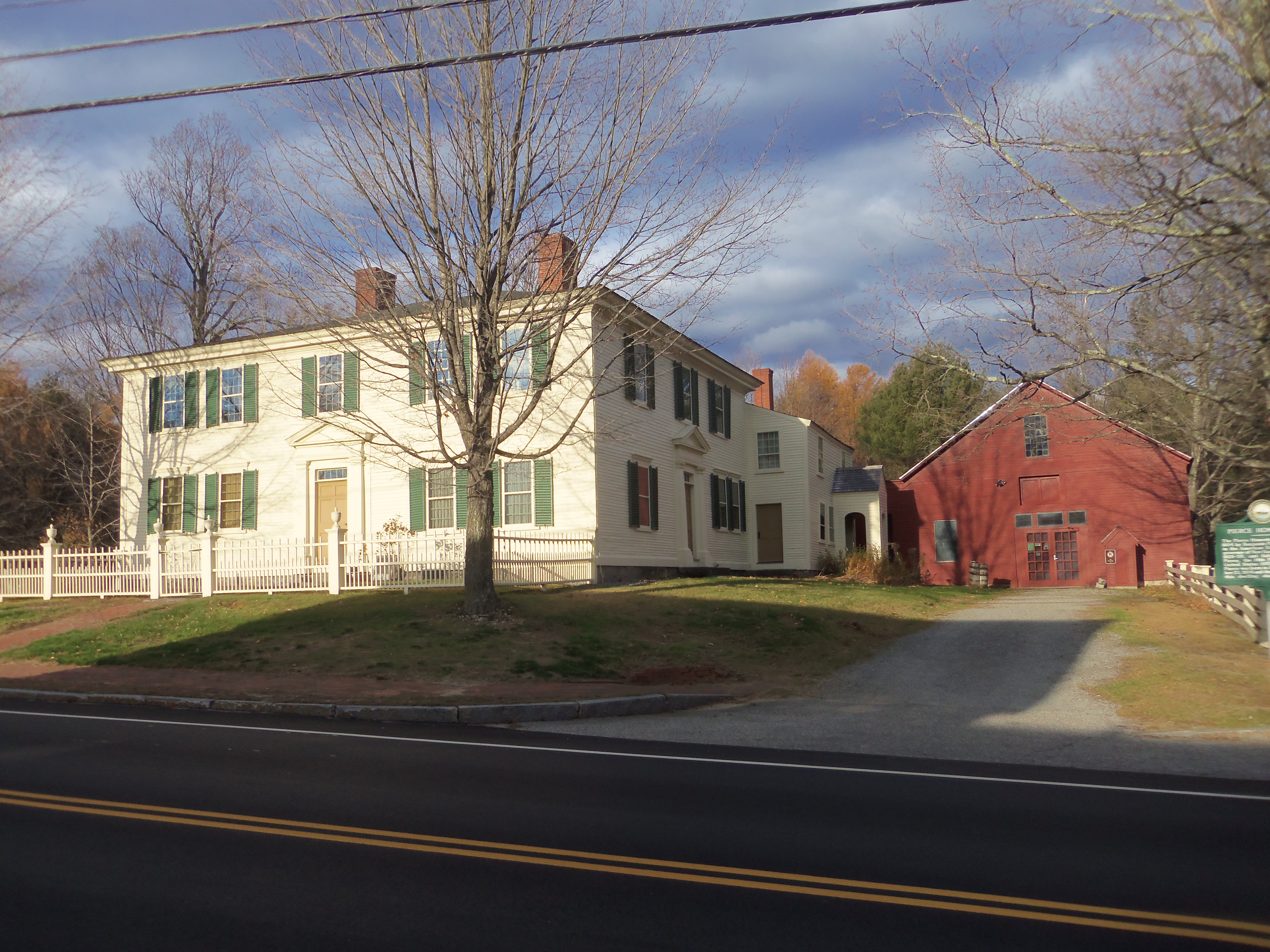 The presidency of Franklin Pierce (1853-1857), with its tilt toward powerful slave owners, left the nation headed for Civil War.
While he was born in a humble dwelling nearby, this Hillsborough, New Hampshire, estate is where the family moved in his infancy.
As I said at the time …
A constant challenge in any artwork is how do we shape the material so that it enters some other place from the one where it originates? What form or structure is appropriate or helpful? How much abstraction? Do we stay general or become specific? (I notice that you don’t identify what kind of turtles these are!) How much elaboration? What does it take for the unexpected force to appear, that third enterprise apart from the author and the reader? How transparent or center-stage should the author be? Never easy answers!
I have many fond memories of Cincinnati, once I was able to drive down to escape Dayton for an evening or weekend, back before I finally got away to Bloomington and points beyond. Maybe you’re ready to do a poem about Erchenbrecker and Vine, the address of the zoo?
I love the cover. A good feel to that turtle art. And the Revolutionary War-era American composer William Billings (who’s also a kind of Yankee grandfather to the Southern “Sacred Harp” style of hymn-singing) has a wonderful part-setting of the Song of Solomon citation you use.
Thanks for the reactions – and for giving the shoes a good home.
Catch you later – Namaste.
~*~
This was to small-journal editor Troy Teegarden, who’d sent me a copy of his latest poetry chapbook, Reflections on the Elkhorn (1997).
 Jnana's Red Barn