FROM SCRATCH WITHOUT A RECIPE

Here’s a novel that could never have been written from an outline. I had to pour all the ingredients into a mixing bowl and start cooking.

No outline? No recipe! And no formula, either. Here are the ingredients, what are you gonna do with ’em? In this case, it starts out fantasy, of a sort, goes through steampunk, of a sort, and ends up dystopian, of a sort. Or somewhere close with a happier end?

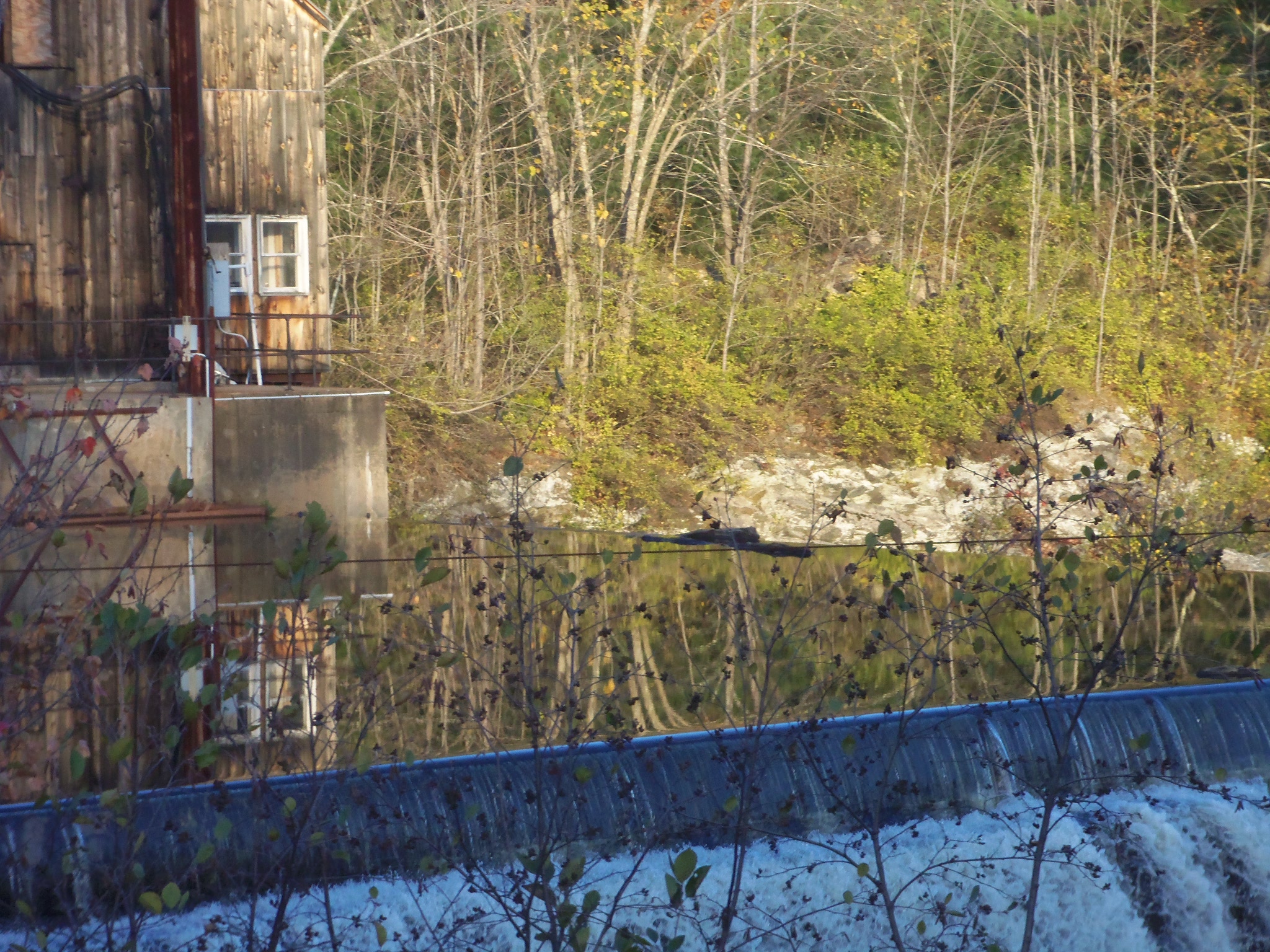
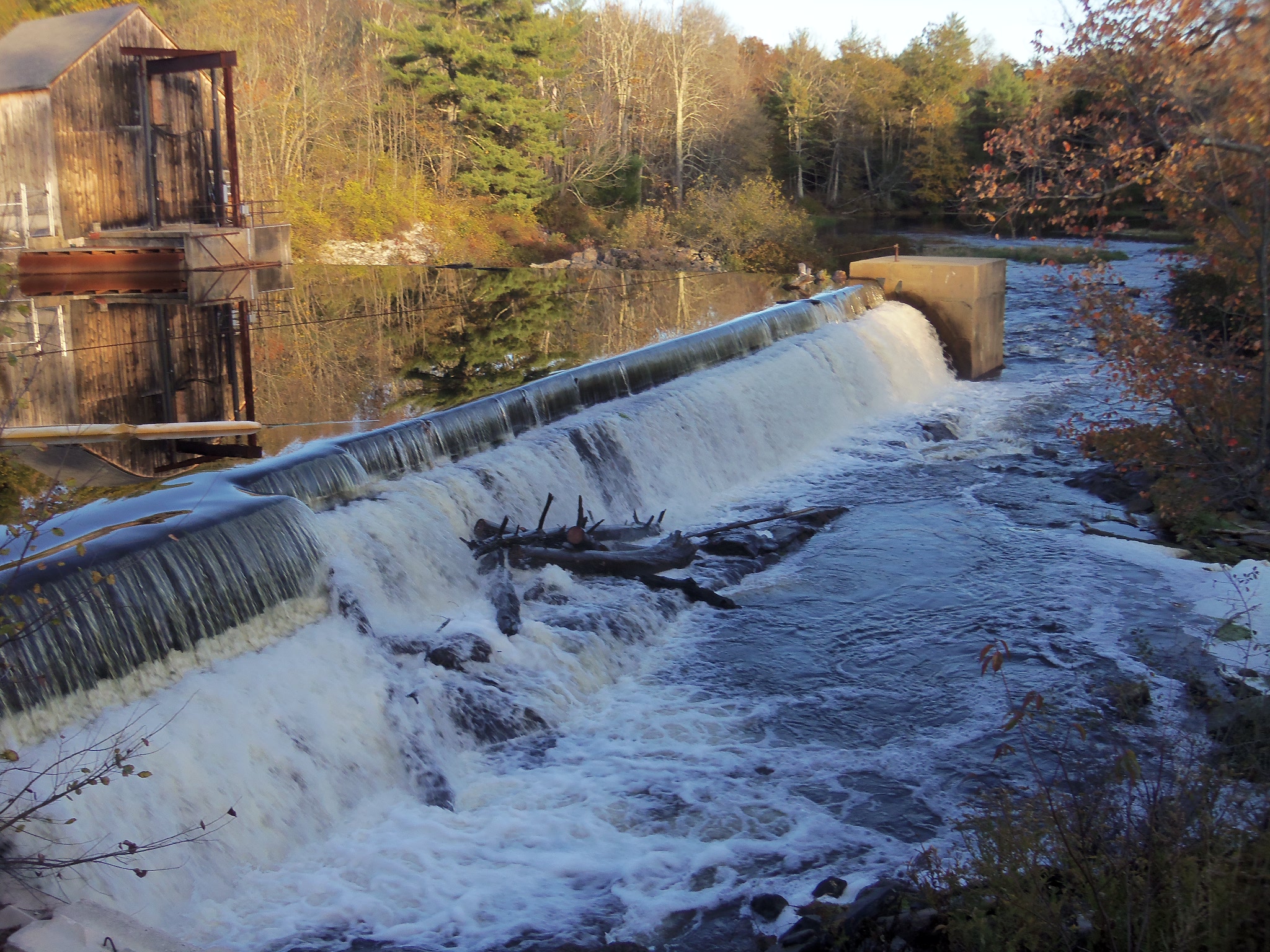
The framework’s simple enough. Daily coded electronic dispatches between Bill, in the field, and his boss, in corporate headquarters – back in the days just prior to emails and the Internet – are soon augmented by a few trusted colleagues as Bill infiltrates the once bustling town of yrubBury. The goal is to covertly buy up the decaying riverside mills and, under the pretext of historic preservation, transform them into maximum security high-tech manufacturing.

For the record, I pursued the renovation angle from the earliest drafts of the novel, long before savvy investors bought up similar sites for small-business launch pads. In that regard, I feel vindicated by developments – including those where I now live.

As the conversations that shape the novel evolved, however, the conflict between small-is-beautiful and international conglomerates came into the fray.

When I first envisioned Big Inca, I was covering 14 states as a field representative for a Fortune 500 company. Or at least one of its subsidiaries. And I’d already been involved in management politics and thinking. Memos and checking in from the boondocks were already part of my repertoire. So all of that went into the stew.

There are other conflicts, of course, to contribute.

In the story, Bill’s a generalist in an age of specialists and fresh out of college when he’s sent into the field as a kind of entrepreneurial anthropologist. He’ll need detailed help along the way. He definitely can’t do it alone.

The town itself is populated with ancient ethnic rivalries – as well as some new ones, as Big Inca will demonstrate. The Old World and the New World are bound to collide, as they always have, especially in the most unanticipated places.

There’s even what’s legal and what’s shady to confront.

We have basic issues of making a living and making a difference and romance and intrigue to deal with. All thrown into the steaming cauldron.

Over the course of the novel, give them three years to simmer and boil.

Even if it took three decades to come together.

Inca 1~*~

The novel is available here.


MEMORY, IMAGINATION, AND LITERARY INTENT

A passage in an essay by Joyce Carol Oates stopped me cold in my tracks:

Literature is not a medium that lends itself well to the Surrealist adventure of disponibilite. Even radically experimental fiction requires some strategy of causation, otherwise readers won’t trouble to turn pages. Unlike most visual art, which can be experienced in a single gaze, fiction is a matter of subsequent and successive gazes, mimicking chronological time, as it is locked into chronological time. … (“Inspiration and Obsession in Life and Literature,” New York Review of Books, August 13)

So that’s been my “problem” as a poet and novelist? A surrealist adventure? Oh, my! I’ve long been fond of surrealism, often because I often see and hear life in that vein. While stopping short of subscribing to any manifesto, including those that gave rise to dada and surrealism, their ambitions continue to suggest possibilities for artistic exploration and discovery. As for chronological narrative, certainly there must be other ways to relate an event. Right? Well, even the alternative realities of dreams seem to emerge along timelines of some sort, even if they overlap from episode to episode that form what is remembered as a single dream event. A poem, moreover, can aspire to exist purely within a given moment it expresses, even if the reader returns to the lines repeatedly.

Maybe my saving grace here is in my assumption of invisible roots – everything happens for a reason, even accidents. (You don’t have to impute divine intervention there, either.) Perceiving these underlying currents, as some would suggest, demands something other than Aristotelian logic. Hence, the surrealist option, among others.

I do like Oates’ sense of gazes adding up into a quilt-work pattern, though, especially when they can bounce off each other to create yet something more.

And then her essay takes a remarkable turn that reinforces my invisible-roots assumption:

The hypocampus is a small, seahorse-shaped part of the brain necessary for long-term storage of factual and experiential memory, though it is not the site of such storage. Short-term memory is transient, long-term memory can prevail for many decades … If the hypocampus is injured or atrophied, there can be no further storage of memory in the brain – there will be no new memory. I have come to think that art is the formal commemoration of life in its variety – the novel, for instance, is “historic” in its embodiment of a specific place and time, and its suggestion that there is meaning in our actions. It is virtually impossible to create art without an inherent meaning, even if that meaning is presented as mysterious and unknowable.

Again, I’ve long viewed my writing as an attempt to remember what’s right in front of me in my life. Let’s face it, everything often seems chaotic. Times of reflection and self-evaluation are crucial. It’s easy to leap from there, as I’ve found, into meditation and the Quaker practice of group worship grounded in silence itself. Along these lines, Oates puts all this into another framework:

Without the stillness, thoughtfulness, and depths of art, and without the ceaseless moral rigors of art, we would have no shared culture – no collective memory. As if memory were destroyed in the human brain, our identities corrode, and we “were” no one – we become merely a shifting succession of impressions attached to no fixed source. As it is, in contemporary society, where so much concentration is focused upon social media, insatiable in its fleeting interests, the “stillness and thoughtfulness” of more permanent art feels threatened. As human beings we crave “meaning” – which only art can provide; but social media provide no meaning, only this succession of fleeting impressions whose underlying principle may simply be to urge us to consume products.

The motive for metaphor, then, is a motive for survival as a species, as a culture, and as individuals.

Of course, I would see true religion, not art, as the provider of “meaning.” And now the conversation would turn lively.

NEW POTATOES

We’ve tried growing them in barrels, but that’s a long story. Sometimes we’ve just harvested them from rows in the garden.

Either way is always an experience.

~*~

dig up the last of the potatoes
fill a large basket

roasted with garlic
the marble-sized ones quite tasty
along with the softest skin

another year
I empty two of our five potato barrels
amid spitting snow

poem copyright 2015 by Jnana Hodson

BIG STATES AS CORRECTIVE BALLAST

When the most populous states try to butt up in the presidential primary scheduling, they actually lose much of their potential power. They should be holding back, as the last line of correction, in case the field goes haywire. Whatever happened to Favorite Son nominations, anyway? The placeholders who could wheel and deal at the convention?

Instead, we’re faced with what happens when it’s all Big Money and Slick Packaging.

Just as we need a rudder to steady the course, something has to be at the back end of the boat.

CRITICS AND A MODEL OF POETIC INTENT

Arts critics are often portrayed in the negative. Listen, for example, to the excerpts of voices who denigrated what became symphonic mega-hits or operatic standards. It’s a long list.

On the other hand, some critics (when it comes to classical music, dramatist Bernard Shaw and composer Virgil Thomson come to mind) have proved invaluable in sifting through artistic output and finding those jewels who would otherwise be lost in the volume before us and the drive for monetary success. Quite simply, good critics glean value from gems lost in the estimation of box-office success, bestseller popularity, and high audience ratings. With an eye for lasting quality, they guide individuals to work – and workers – they esteem.

As I look at the flood of artistic output on the Internet in our time, the role of good critics appears to be more crucial than ever.

Let me add that good critics are also teachers. I’m deeply indebted to people like Hub Meeker of the Dayton Journal Herald or Winthrop Sargeant of the New Yorker for their role in shaping my artistic awareness. As I’ve found over the years, reading a familiar critic becomes an active dialogue.

This leads me to a recent essay by the poet Charles Simic, long a star on the University of New Hampshire campus one town over from where I live. In “The Incomparable Critic” (New York Review of Books, August 13), he touts a collected volume of reviews by Helen Vendler and her examination of contemporary poets, centering down to her high estimation of one in particular:.

However none of these [William Carlos Williams, Gertrude Stein, Robert Frost, even the Beats] had the audacity, she points out, to switch back and forth between the sublime and the ignobly ridiculous as [A.R.] Ammons did. … for Ammons there is a “continuo of the personal – the ‘noise’ of the everyday mind – from which the lyric rises and into which it subsides.” This setting “of the lyric moment within its non-lyric ‘surround,'” Vendler writes, “is the fundamental device of modern poetry, from The Waste Land to this day.

That, in itself, is an audacious insight, of one reviewer to another.

Apart from any specific works, what is described is an ideal I admire – one I’ve sensed present in the works of Philip Whalen I’ve admired. And so we continue, writing and reading, in whatever quest we follow.

KIDDIE CORNER TREATS

Having voiced my theory about adults-only food, let me now counter it with kids-only tastes. Things you loved to eat as a kid but would rather avoid now.

(Dirt doesn’t count. I’m serious.)

Velveeta would be on my list, now that I’ve discovered real cheese in all varieties.

Angel food cake would be another.

We were even given slices of raw potato sprinkled with salt as a treat while dinner was cooking.

You get the picture. Now it’s your turn to add to that list.

HALLE STREET, AS I’VE CALLED IT

Big or little, it’s a city, after all, with daily encounters. Along the street. From the porches. In third-floor apartments. It’s broken glass on cracked pavement. Parking along the curb, maybe requiring a permit. It’s the bakery, Laundromat, or bar around the corner. It’s decay and repair over the years imbedded in the floors, walls, and ceilings. It’s a stale cigarette in the morning of love.

~*~

To see more, click here.

Riverside 1


REGARDING POPULATION AND OVERSIZE POLITICAL SWAY

Those suspicious of small-state influence in the early stages of the American presidential race should also be alarmed by the disproportionate clout of the biggest states in the final count. I’m talking about the Electoral College, which has – even in modern times – given the presidency to the second-place winner in the popular vote, possibly even played into fraudulent results. Think of the George W. Bush “victories,” for starters.

For a starker perspective, consider that it’s theoretically possible for a tad over 25 percent of the American voters to elect a president. All it takes is 50 percent of the ballots, plus one vote, in each of the 11 states that hold 50 percent of the Electoral Votes. Yes, that’s 11 states in total: California, Texas, Florida, New York, Illinois, Pennsylvania, Ohio, Georgia, Michigan, North Carolina, and New Jersey.

The only thing that’s spared us so far is that these states haven’t lined up together and seem unlikely to so in the near future. But I still find the possibility scary.