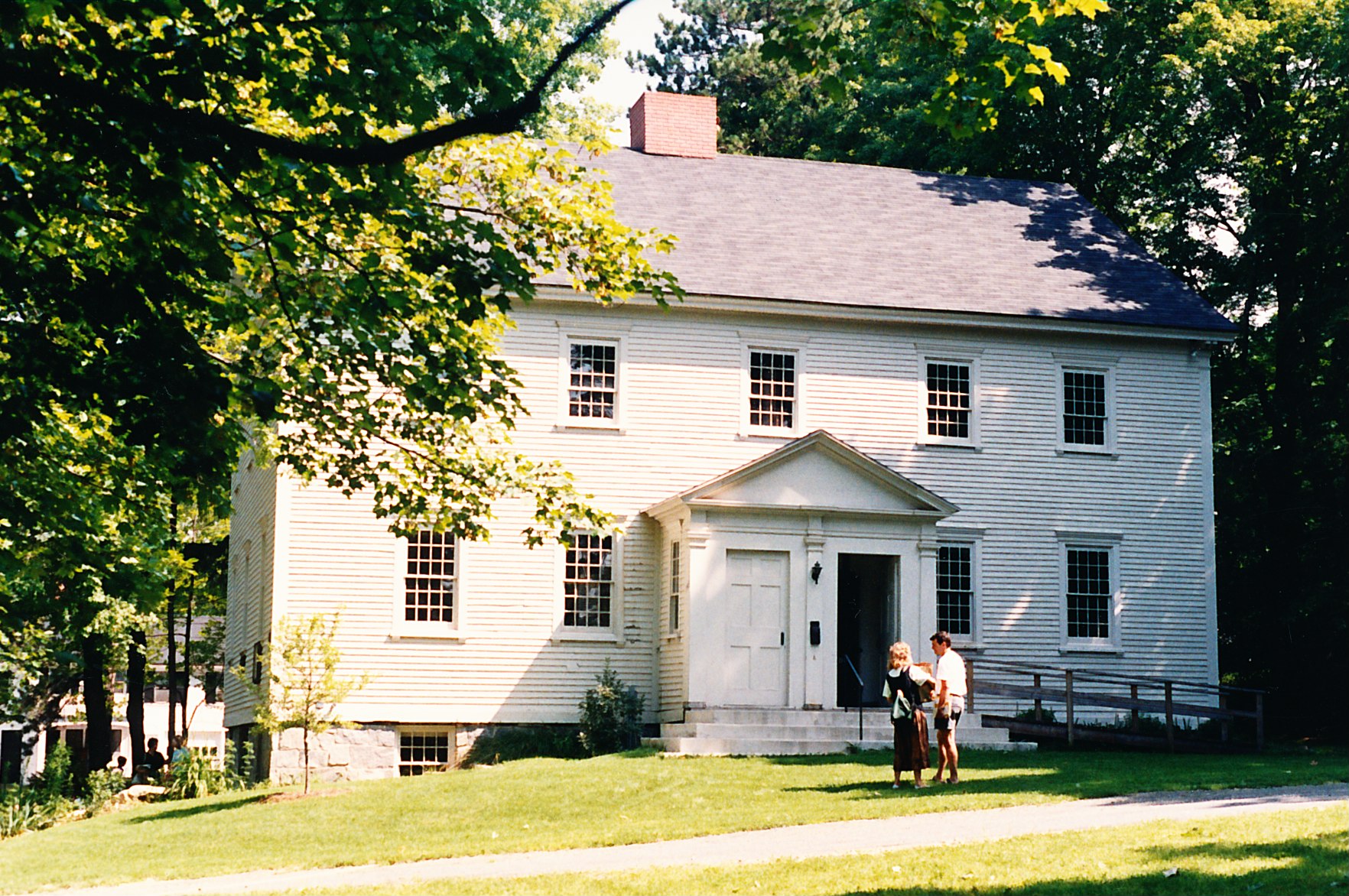
Today commemorates the 247th anniversary of the erection of our meetinghouse. And to think, this was Dover Friends’ third house of worship, coming a little more than a century after the first Quaker convincements along the Cocheco River. The structure covers a lot of history, as we would see if we created timelines of those years – the entire life of our nation, for starters. Add to that science, the arts and leisure, religion, education, economics … the overlays become mind-boggling.
It’s hard for us to envision that day, with its swarm of activity, everyone seemingly knowing the tasks to be done. Cookbook writer Marcia Adams says it takes at least 100 to 150 men to raise an Amish barn, and then recites a menu that fed 175 men in the 1800s. Oxen and strong horses or mules would have been part of the scene, with pulleys and poles lifting the posts and beams into place. Many of the skills used have likely been lost to antiquity. A similar number of women would have busily arranged the accompanying feast, and children would have been assisting everywhere. Today, Jehovah’s Witnesses do something similar when they construct a new Kingdom Hall, which like the Amish barn or our meetinghouse, goes up in a single day.
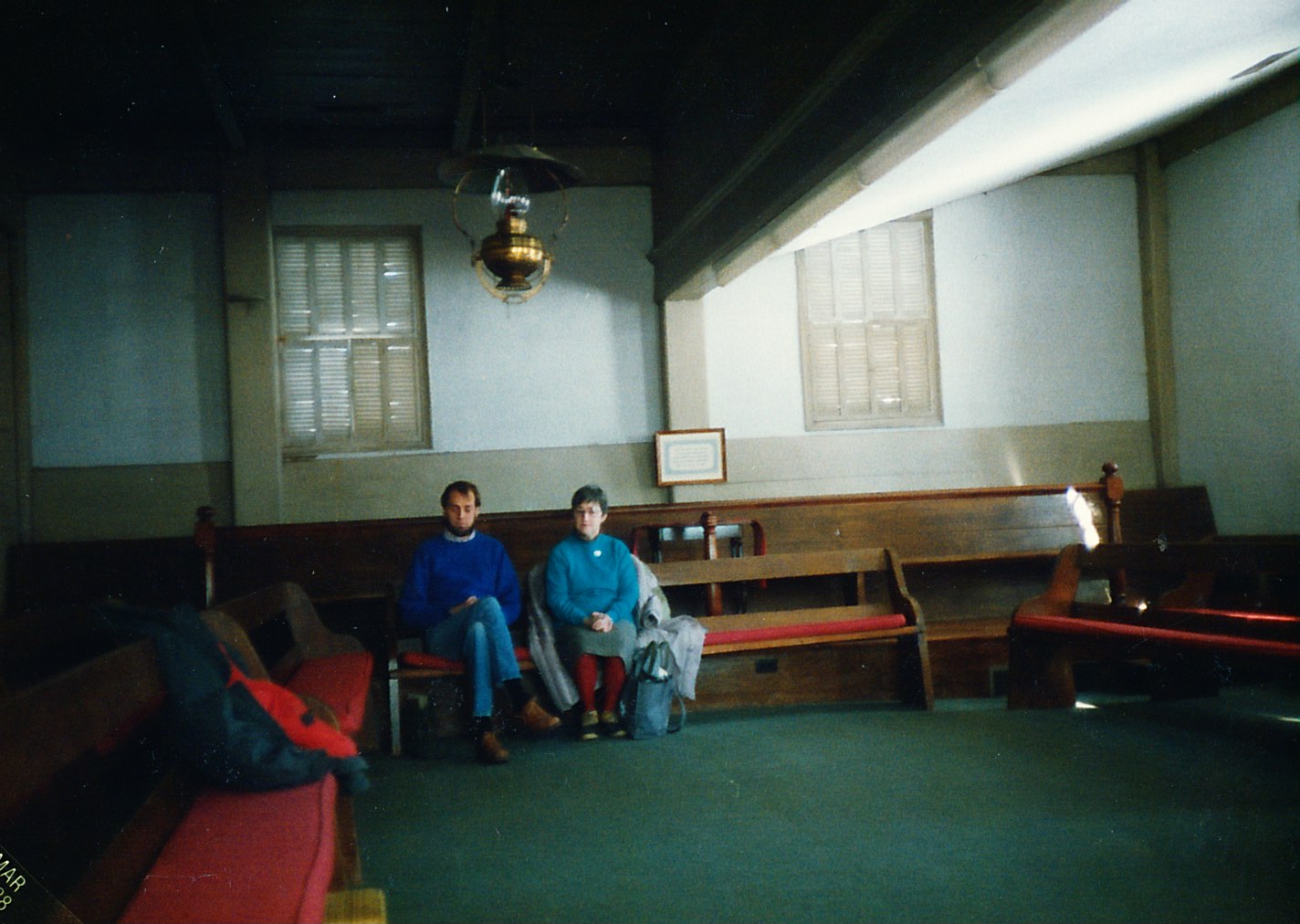
Settling into worship, I once again regard our Quaker ancestors’ application of classical proportions, pleasing to the eye. The additional touches others have added across the years. Plumbing, heating, wiring, the classrooms upstairs and down. I also realize how much my own perception of the building has changed, now that I’ve become a New England homeowner. How much responsibility we carry for the upkeep of this legacy or how difficult it would be to replace what we have.
In the background, I hear an echo of an old Friend in Iowa, viewing the beautiful curly maple shutters in a meetinghouse about to be shipped by rail car to another part of the state. “It will be a good thing if they be not too proud of it,” she said, with a curious balance of humility and admiration. The advice, of course, extends to us, as well. The fact remains that Friends do not worship in a temple but a house, with all of its Biblical sense of extended family and even their domestic animals. Welcome to our house.

 Jnana's Red Barn
Fascinating Jana, I always wondered why there are two front doors?
In the old days, the men sat on the right side as you entered; the women, on the left. The wall separating them actually opens, so that the preaching would be from either side — not just the men’s. It would be lowered for business meetings, the only place in the English-speaking world where women selected their own officers, approved expenditures, and the like. The separation actually freed wives from their husbands in their spiritual experiences and insights. The practice largely faded from the second half of the 1800s.
How fascinating, Jnana! Thank you for the insights.
Interesting that there was a need and advantage for the women in separation. And amazing that Quaker practice did allow for equality even with the wall.mit looks like a simple but elegant house to meet in.
Reblogged this on A Simple Life Freely Chosen and commented:
Thanks for this its lovely to read
Hi Jnana thanks for this, its lovely to read. Out Meeting House in Huddersfield dates from 1770 and has a Victorian addition – will be writing about it at some stage. Ann