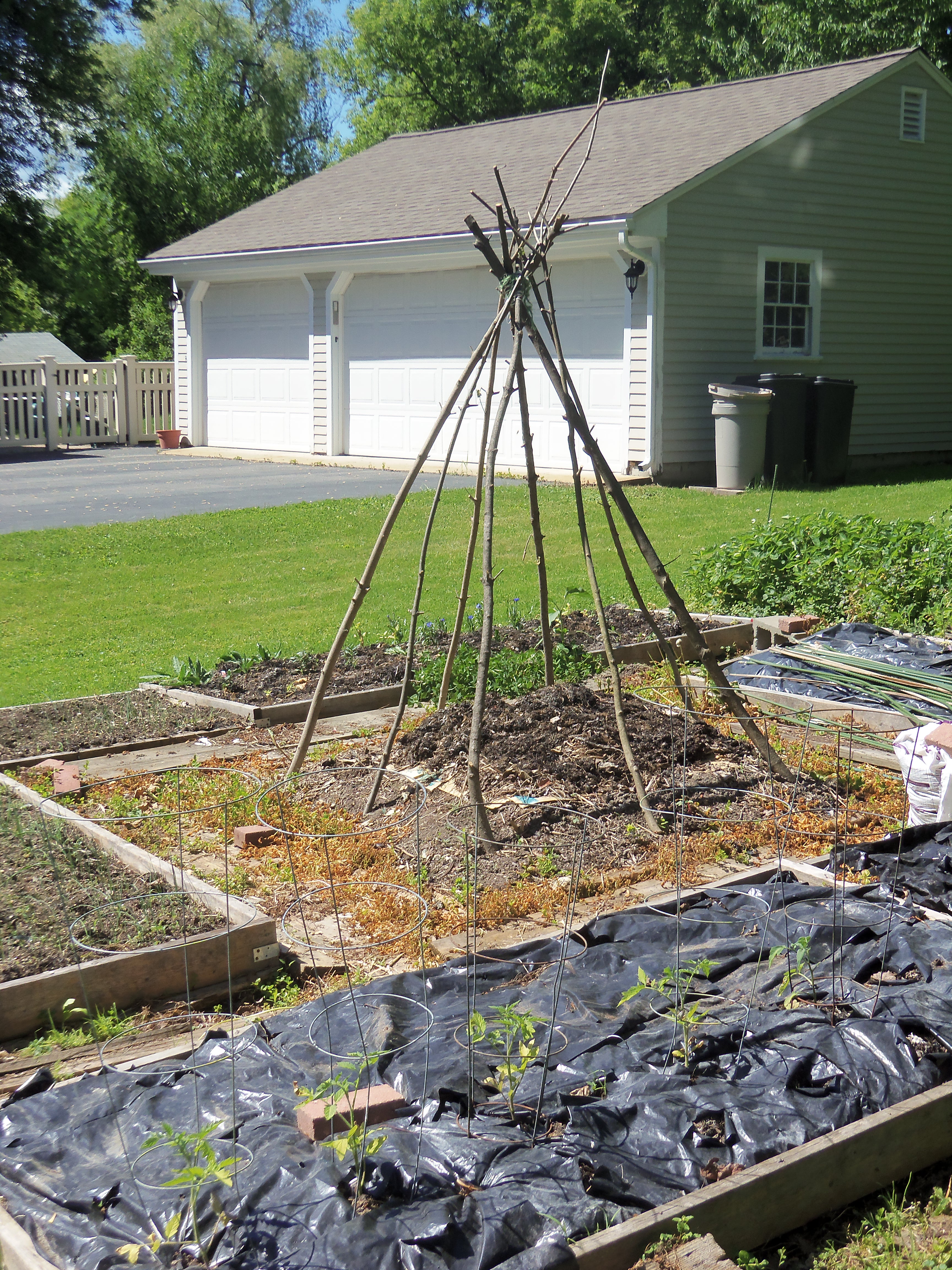
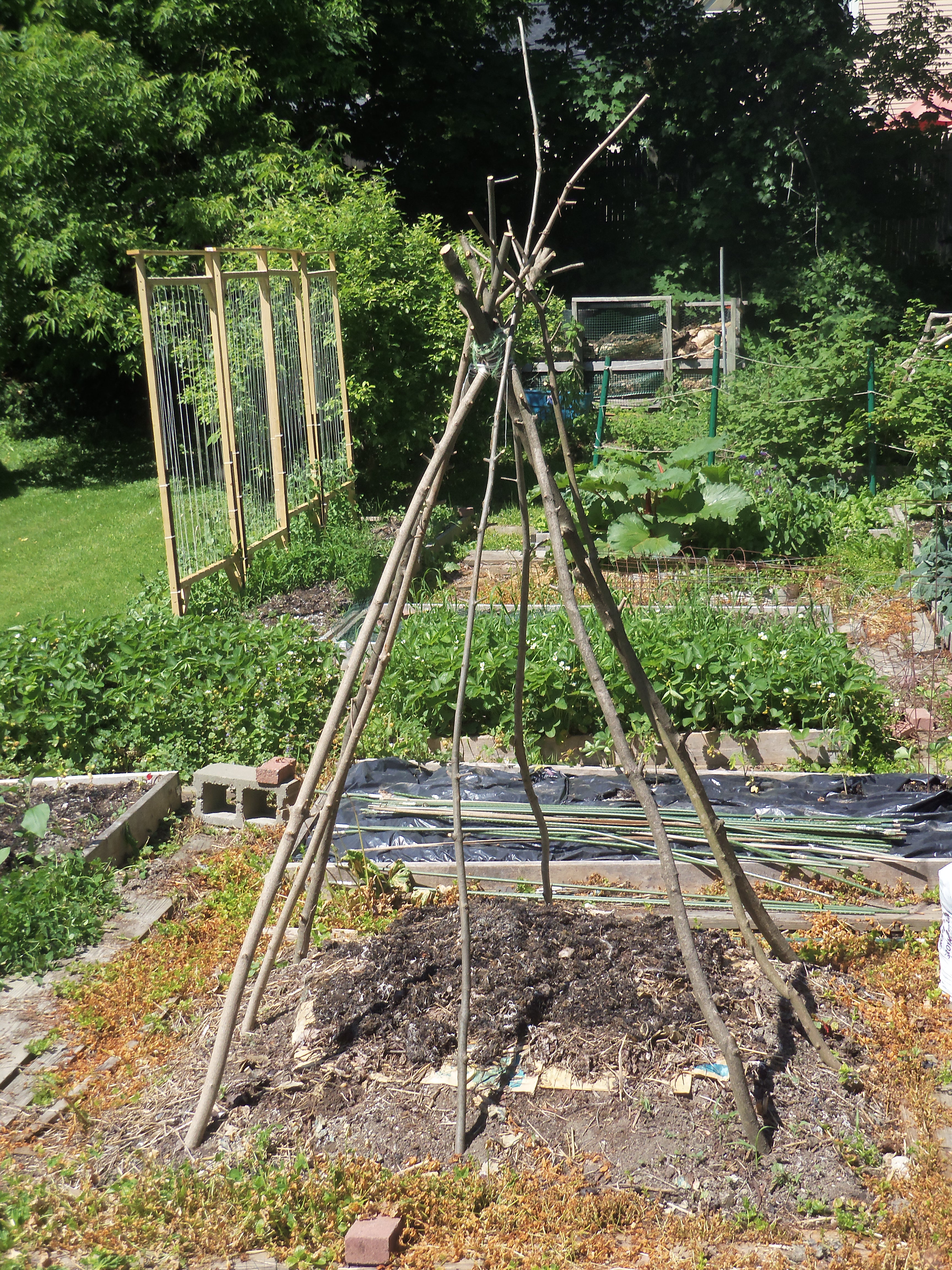
We’re trying a new approach with our bean-pole beans this year. They’ll be climbing a tepee. The poles were obtained mostly by thinning the hedges at the back of the yard.Here’s a little perspective.
It’s fitting the beans are supported by a tipi. My sister’s a big community gardener and told me about a Native American method for beans. It’s called Three Sisters and has beans, squash, and corn together. Evidently, in addition to physically supporting each other, the nitrogen, shade, and other qualities make the trio stronger than each alone. I have the brown thumb of the family so can’t vouch for this myself.
I don’t believe Native Americans used bed frames as you appear to be using for your peas. 🙂
Vincent
Because of its pollination requirements, we’d need a lot more space to grow corn. Fortunately, we can rely on some great farm stands nearby in season.
The Pennacook and Abenaki around here likely used our soil to make clay pots. Seriously, there’s a pottery about six blocks away.
The Plimoth Plantation village, presenting 1630 English settlement in New England, has raised beds, though. I’m left wondering how much of that they brought over with them and how much they learned from the locals.
For us, the raised beds are the only way to keep our seeds from rotting in our wet season, which usually lasts to the beginning of July. There are good reasons we call that side of our estate the Swamp.

 Jnana's Red Barn
That is going to look wonderful once the beans start growing on the poles.
Any day now …
Reblogged this on Writing Out Loud and commented:
A learning experience, or an leaning experience?
It’s fitting the beans are supported by a tipi. My sister’s a big community gardener and told me about a Native American method for beans. It’s called Three Sisters and has beans, squash, and corn together. Evidently, in addition to physically supporting each other, the nitrogen, shade, and other qualities make the trio stronger than each alone. I have the brown thumb of the family so can’t vouch for this myself.
I don’t believe Native Americans used bed frames as you appear to be using for your peas. 🙂
Vincent
Because of its pollination requirements, we’d need a lot more space to grow corn. Fortunately, we can rely on some great farm stands nearby in season.
The Pennacook and Abenaki around here likely used our soil to make clay pots. Seriously, there’s a pottery about six blocks away.
The Plimoth Plantation village, presenting 1630 English settlement in New England, has raised beds, though. I’m left wondering how much of that they brought over with them and how much they learned from the locals.
For us, the raised beds are the only way to keep our seeds from rotting in our wet season, which usually lasts to the beginning of July. There are good reasons we call that side of our estate the Swamp.
The natural poles look great!
Sometimes Plan B is the better one after all …
Definitely!
They should do well. I used to grow them like that all the time.
Good luck with the beans.