What makes ‘Nearly Canaan’ new and improved

My newly released Nearly Canaan is a thorough reworking of three earlier novels that were intended to be a series.

The publication of What’s Left and the revisions it prompted for four related books soon had me also reconsidering my Promise, Peel (as in apple), and St. Helens in the Mix novels. Sensing the possibility of restoring them to the original concept of a single big book, I made drastic cuts and still added colorful new material.

Here are ten ways the result is new and improved.

~*~

  1. The story is now primarily character-driven. It’s a richer brew. The landscapes now blend in as the backdrop.
  2. Jaya’s romantic partner gains more prominence and independence. His inner turmoil may leave her perplexed, but it’s an essential element in their developing relationship. He’s renamed, too, and refocused.
  3. He’s not the only ongoing conflict. Her professional ambitions in nonprofits management are more sharply detailed as she runs into organizational crises.
  4. She and Joshua become especially close to two other young couples. Everyone seems to look to her for answers, while she turns to an older couple for counsel.
  5. One exception is the pastor’s young wife in the opening section, who serves as a counterpoint to Jaya’s Hindu-based spirituality. The two develop a unique but clandestine budding best friendship. Wendy will return to bring the book to its conclusion.
  6. The new release compresses three books into one centered on Jaya’s influence once she leaves Manhattan. Can she really change lives for the better?
  7. The story is now connected to my novel Yoga Bootcamp, thanks to revisions that installed Jaya as a central figure there. The backstory provides a better understanding of what’s driving her as she settles into Prairie Depot and beyond.
  8. Jaya’s desire to find a suitable artistic means to express her mystical experiences is more clearly envisioned. She may be stressed, but her private discipline continues as best she can. She has to have somewhere to turn.
  9. The pivotal catastrophe moves to the middle of the book, rather than hanging at the end of what was the first volume. Can they survive and pick up the pieces and go on? That’s the stream that follows.
  10. Or, as I didn’t ask earlier, has Jaya unleashed a demon?

~*~

Be among the first to read it!

Ultimately, the new series is all about Jaya

Cassia is not the only character who’s had me drastically revising my earlier fiction.

Jaya, the central figure in what now stands as Nearly Canaan, has more recently had me doing the same to six other published books.

First, before Cassia became part of my life in What’s Left and the earlier stories now told in my Freakin’ Free Spirits cycle, Jaya emerged in a set of revisions in what became the three novels Promise, Peel (as in apple), and St. Helens in the Mix.

Initially, her part wasn’t even female – and while transforming her wasn’t exactly literary gender reallocation surgery, it certainly changed the dynamic of the story, which became older woman/younger man, with the woman being the tall dark sophisticated stranger being pursued by a hot young guy.

In the early drafts, she wasn’t yet a yogi, either, but rather a Sufi.

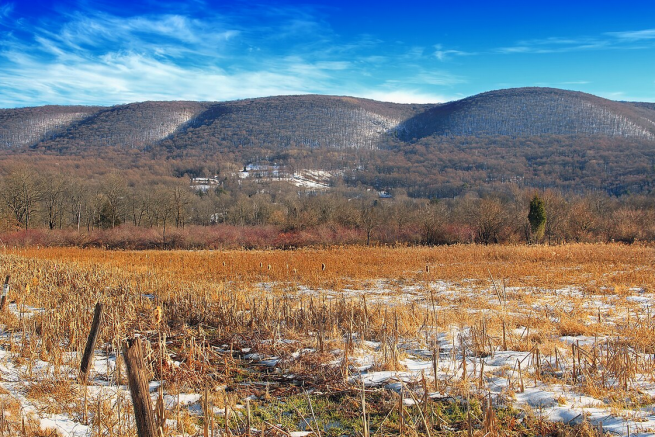
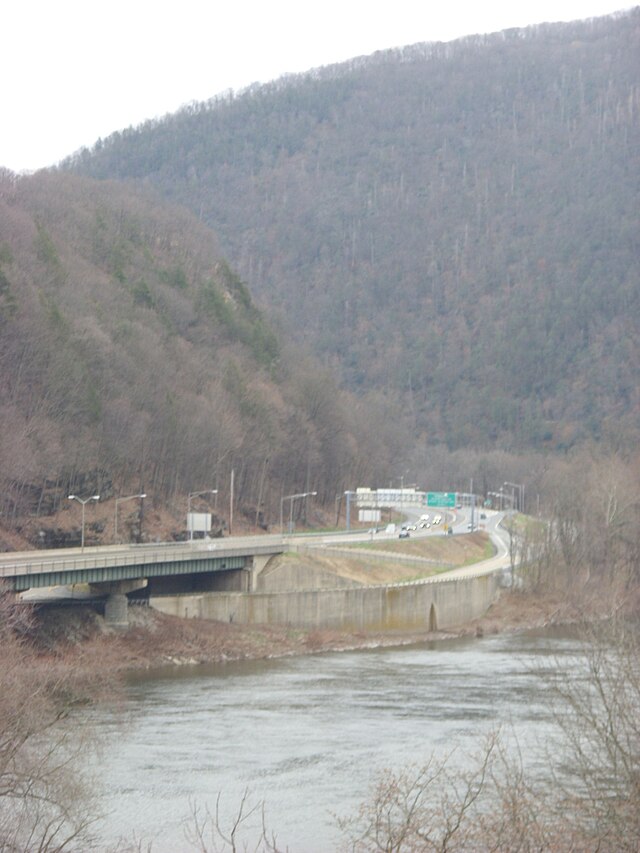
The stories themselves were about encountering specific landscapes as much as the individuals themselves.

A few years after their publication, I decided to restore them to my original intent of one volume but realized drastic revision was necessary. First, they needed to be cut significantly to fit into what would still be a “fat” and hopefully juicy book. Second, I needed a clearer understanding of Jaya’s actual career as well as her companion’s character. And, third, a fuller comprehension of her lasting influence was required. That led to the new version, Nearly Canaan.

It still felt incomplete, though. Her earlier spiritual training needed to be told. While she had talked briefly about her ashram experiences, they didn’t align completely with my yoga novel. But they could.

I reopened the manuscript, changed one of the eight students to be Jaya, and then changed the gender of the guru throughout. That led to a slew of drastic alterations and additions, moving the novel from Ashram to Yoga Bootcamp.

That gave me two novels in a series, but a series needs a third or more, I felt.

But wait, there’s more.

Continue reading “Ultimately, the new series is all about Jaya”

Standing in our brahmacharies

My novel YOGA BOOTCAMP describes the events of being initiated into brahmacharya and being given the two strips of cloth cut from the guru’s robe as our new underwear, supposedly to restrain our male sexual impulses. As a bit of real-life evidence, here we are at the Poconos Ashram in Pennsylvania in mid-1972. The girls found it highly amusing, especially since we were all living under celibacy.

At least I didn’t use the title of an old hymn here, “Blessed Be the Ties that Bind.”


I’m elated to have my novels now more orderly and interconnected

I’m still surprised by how much literary writing I accomplished in my spare time during all those years I was employed elsewhere. Much of it, admittedly, was in a shotgun fashion, or as I’ve also said, along the lines of graffiti, while hoping for the big break that would give me the space for a more concentrated approach.

Still, it led to a rich stream of material. In that regard, Jack Kerouac was a huge inspiration.

Releasing Hippie Drum as an ebook at Smashwords.com in 2013 was an indispensable defining moment for me. I was no longer bashing my hopes against a brick wall of commercial publishing, which was ever more resistant to experimental fiction. Six more novels followed at Smashwords, plus the fiction available at my own Thistle Finch online imprint.

As I’ve already noted on this blog, my novel What’s Left led me to rethink and rework almost all of those earlier novels. For one thing, as I now see, it was drafted and revised entirely after my retirement from the newsroom.

I’m deeply grateful to an insight from Smashwords founder Mark Coker that one of the advantages of ebook publishing over printed paper is that revised editions are much easier to accomplish, and more economical, too. That – and my own ability now to create my own covers, rather than hire a designer – encouraged me to drastically recast those earlier volumes.

There’ no way to express the elation I feel in now having most of those novels stand in two distinct, orderly cycles – Freakin’ Free Spirits and Living Dharma – each with a continuity of events and central cast of characters.

There’s the relief, too, of having finally been faithful to this material and its inspiration. I can now move on. It belongs to the world, the way a parent feels about grown-up children.

Continue reading “I’m elated to have my novels now more orderly and interconnected”

Abundance versus scarcity in my life

Perhaps you’re familiar with the abundance versus scarcity question. You know, do you feel you’re blessed with enough – or do you instead feel you’re always lacking.

I’m programmed from early childhood to feel the latter. My parents were children of the Great Depression, after all, and handed the attitude down.

It tends to make me something tighter than frugal. Generosity doesn’t come easily, I don’t open up to others easily, either – not even to ask for help. It’s a long list of negatives.

As I returned to this concept recently, I’ve been feeling a lot more sense that I have more than enough in many ways, even on a very limited budget.

So much for material goods.

Curiously, it’s time where I’m feeling the scarcity kick in. There’s just never enough. Not for what I’m trying to do.

I’m realizing, often after the fact, how much that outlook crimps my relationships.

This is, ultimately, a spiritual matter. The one place I find time opening up is within the hour of mostly silent Quaker worship. Not that it’s always easy, not even after all of these years I’ve been doing it. But it is always refreshing and renewing.

To think, I started meditating to get naturally high, as in stoned. But somewhere along the way it became a practice to simply get natural – to breathe and get grounded again.

Oh, but I’m still on the internal clock, even there. How on earth am I supposed to cope with Eternity just around the corner?

Does a family that meditates together glow together?

The first decade of her father’s presence in the family was one of great growth and deepening personal awareness for every member – especially before all of the children, including Cassia, come along.

For one thing, her parents’ generation is still working on its Buddhist studies together. As I noted in an earlier draft of my novel What’s Left:

You know, Baba will say one night after our family meditation, most of these enterprises wouldn’t stand a chance if it weren’t for one thing.

What’s that?

Rinpoche, the Tibetan master.

Then the room will fall into a profound reverie.

Well, it was all no doubt pretty exotic to all of them.

And then the vision got even heavier:

It’s the concept of living as a people of the Holy One, however we phrase it. A peaceable people. A peaceable kingdom. The great wisdom or enlightenment.

There was even a question of how much diversity they could manage:

Religions? Say the way a piano is a world apart from a trombone or a double bass or a clarinet, even if they rely on the same kind of musical notation? And that was before your Manoula weighed in on some wildly divergent ethnic musics based on entirely conflicting theoretical foundations.

Well, that got too esoteric, even for me! Play it as you will.

Still, not everybody in the family was so high on the Buddhist excitement:

The Temple Room relocates to the first-floor parlor next to Yiayia Athina before moving altogether to a more public location, one having chambers for our anticipated Rinpoche’s full-time residency. Yiayia Athina makes no secret of being glad to see them go. The chanting was getting on her nerves.

Oh, I’m so glad Cassia stopped talking like this! In the final version, she’s pretty snippy.

~*~

Cassia’s family obviously takes all this seriously.

What spiritual practice or source of inspiration is meaningful to you?

Ten perspectives on yoga in America

My novel Yoga Bootcamp stirs up more curiosity. Here are ten facts.

  1. Number of yoga teachers in U.S.: 52,746 registered with Yoga Alliance in 2015.
  2. Number of centers: 18,000.
  3. Number of yoga practitioners in U.S.: 37 million.
  4. Number over age 40: 14 million.
  5. Percentage of women and men practicing yoga in U.S.: 72 percent versus 28 percent.
  6. Amount spent on yoga classes, clothing, and gear: $16.8 billion.
  7. Most popular reasons for practicing yoga: flexibility (61 percent); stress relief (56 percent); general fitness (49 percent); overall health (49 percent); physical fitness (44 percent).
  8. The highest percentages of yoga practitioners: Found on the West Coast and Mid-Atlantic states (New York, New Jersey, and Pennsylvania). The lowest percentages are in New England, the Upper Midwest and Plains states, and the East South.
  9. Circulation of Yoga Journal magazine: 375,000.
  10. Turnover: Only 25 percent have been doing yoga for more than five years.

Looking for a natural high

Just what so intensely motivated her father-to-be to quit everything so he could retreat into monastic Buddhist practice for three years? It’s a question that’s impossible to answer fully. (My parallel experience of living on a yoga farm is the basis of my newest novel, Yoga Bootcamp.)

Still, I’m required to try. In a passage from an earlier draft of my novel What’s Left, the explanation went this way:

Thea Nita suggested another take. Your Baba yearned for the highs, she says.

What about drugs?

You don’t think that was a problem, she counters. Don’t you think I wasn’t worried, at least until Rinpoche came into the picture?

Well, I’d wondered about that with my uncles, too – that whole hippie thing?

Oh, that? Nita chuckles and admits it posed a danger, especially before she returned to town. Barney, especially, enjoyed being stoned when he could. As she says, that could present problems in a commercial kitchen.

And then? They learned they could get a natural high through meditation – if they steered clear of drugs, as they did when Baba, by then a militant practicing Buddhist, entered the scene. Besides, there was no escaping the reality we all had work to do – and it better be done right.

~*~

As Rinpoche told Cassia about her father:

He needed the lightness and even playfulness he encountered in the Tibetan Buddhism – the high, in fact – that he hadn’t found in his Christian past. To be fair, I am finding indications he was discovering that in the Judeo-Christian side, too, during his final years. What a loss, then.

Oh, I’m so glad she stopped talking like this! In the final version, she’s pretty snippy.

~*~

And then there was her mother’s presence, as Rinpoche explained:

Your Baba found his missing half in Manoula and through her, his place in this world. But he always sensed there was more to life. The rabbi here tells me that when Moses came down from the mountain, he carried two tablets. The first one was about man’s relationship to God, and the second one was about relating to each other. So your Baba was working on something like that. He sometimes referred to it as finding the right balance.

And that mountain?

It was about all that would hold him down. For now. Maybe they were well matched.

~*~

Here we are talking about religion, and I see the question turning to something unexpectedly related:

What makes you smile?

Blessed bliss

My novel YOGA BOOTCAMP describes group meditation as a central discipline in the daily life at Big Pumpkin’s ashram. As a real-life example, here’s a photo taken at the Poconos Ashram in mid-1972. I’m struck by how young we all look and the fact that most of us could sit in a full lotus position. Makes my knees hurt just thinking of it now!

Yes, I really lived this.

Ten major yoga brands today

In the decades since I took up yoga in the early 1970s, the movement has had its ups and downs. For a while, it looked like it was about to peter out altogether, especially as scandals hit many of the teachers or their organizations.

And then came the boom in popularity, far outrunning the earlier flowering.

Today, it’s hard to keep up with many of the trends, especially as they take on commercially branded identities. Back in the day, we knew it essentially as hatha, raja, karma, and so on … but not anymore. When you’re looking for a class, it can be rather confusing.

Here are ten on my radar. Many of the details come from Kristin McGee’s fine overview at the MBGmovement website.

  1. Iyengar: Founded by B.K.S. Iyengar after his arrival in Ann Arbor, Michigan, in 1973, this system relies heavily on props to help students to perfect their form. The positions are held for longer periods while focusing on details of the pose. Photos of the props still disturb me. Guess I’m just old school.
  2. Restorative yoga: Focused on winding down and relaxing after a long day. As an outgrowth of Iyengar yoga, includes props like bolsters and blankets.
  3. Astanga: (Also spelled ashtanga.) Popularized by K. Pattabhi Jois in the ’70s. Very physically demanding sequence of postures with an emphasis on continuous movement. No props, no music – I wholeheartedly approve, but I am from a line that had long rests in the corpse pose between asanas. Aah. Our goal was meditation, more than physical fitness.
  4. Vinyasa flow:  Adapted from astanga in the 1980s, it is more varied, depending on the teacher and students and the intent of the day. It may include props and music. Vinyasa is considered the most athletic of the popular styles, more suitable for students with previous yoga experience.
  5. Jivamukti: Founded in 1984 by Sharon Gannon and David Life as an outgrowth of vinyasa flow, this includes teachings from Hindu philosophy with an Earth-conscious connection. Many of its followers are also vegetarian.
  6. Hot: Supposedly intended to simulate the steamy jungles of India where yoga was practiced, this covers a range of styles as long as the room’s hot and humid. It’s intended to produce a lot of sweating. I’ll assume that’s to sweat out impurities in the body. One of its earliest strands is Forrest yoga, developed by Ana T. Forrest.
  7. Bikram: Founded by Bikram Choudhury in the late 20th century, it’s the best-known form of hot yoga. Its 90-minute class format has postures each performed twice in a 105-degree room with 40 percent humidity, great for producing sweat. The certified teachers have a standard patter to accompany the workout. He seems to be very proprietary.
  8. Yin: Slow paced and meditative. This system dates from the late ’70s with the work of Paulie Zink, a Taoist and martial arts expert, and developed by Paul Grilley and Sarah Powers.
  9. Anusara: A more traditional hatha yoga with a focus on heart-opening and spirals to align each part of the body. Founded by John Friend in 1997 and now continued by a nonprofit school that certifies its teachers.
  10. Acroyoga: The most gymnastic of the systems, this features partners exercising in acrobatic poses. It requires three people – a base, a flyer who will be elevated off the ground, and a spotter to break the fall, if needed. The couple on the cover of my upcoming novel Nearly Canaan are shown in one of its poses.

Note that they’re all focused on physical fitness of one sort or another, rather than the meditative or ethical dimensions of the underlying religious foundation. Where are the swamis nowadays, anyway?