Hello, readers!

I’m excited to announce that my lineup of ebooks is available as part of a promotion on Smashwords for the month of July as part of their Annual Summer/Winter Sale. This is a chance to get my novels, poetry collections, and Quaker volumes, along with volumes from many other indy authors, at a discount so you can get right to reading. Some of mine are even free, as you’ll see.

The sale begins today, so save the link:
https://www.smashwords.com/shelves/promos/

Please share this promo with friends and family. You can even forward the news to the avid readers in your life.

Thank you for your help and support.

And happy summer reading!

Do you use storyboards and photos?

While these weekly Arts & Letters postings have been focusing on the writing life, at least as I’ve known it, some of the insights do spill over into regular life more generally. (I’ll leave that redundancy for emphasis.)

I am visually oriented, more so than many writers, and I did have four intense years of art training in high school. As a newspaper editor, I was regarded for my design layout skills and photo editing and presentation. I credit my high school teacher for much of that.

As a writer and designer, I’ve collected magazine photos, art books, postcards, and stray photos that happened my way. Use of a personal camera was more sporadic and problematic.

And then came digital photography, for me about the same time I started blogging.

But first, to back up.

Memory can carry you only so far, and even good notetakers miss much at the time. A story or poem can become vivid through a detail that pops a character or a scene. A sensitive writer might find that specific in a scent or a taste or motion or a particular word that’s voiced or sensed, but in many more instances, it’s something visual, the sort of thing you might find in examining a photograph or a painting. I’ve learned how those saved magazine photos as well as later images found online can be valuable that way. You or I can even build memory boards to support certain characters or locales, even a room in their house, to assist in our thinking. Some might use a website like Tumblr to do that, too, though I’ve found much more’s available more openly.

Much of my revision of the novels Daffodil Uprising and Nearly Canaan greatly benefitted from such prompts, as did the drafting of “Miller at the Spring” in The Secret Side of Jaya, and especially some books I won’t tell you about.

Some of these photo archives have become albums I’ve posted at Thistle Finch editions, should you be interested. Others you’ll find there, more recent, are images I’ve been taking in my new setting at the easternmost fringe of the continental USA. They’re more of what I’m considering an adjunct kind of journaling – impressions that might have spurred poems back when I was without a camera. I’m even finding a similar stream in what I’ve posted on my Facebook profile, where the images are more likely to be video. (Yes, today’s author is supposed to be active hustling everywhere.)

I hate to admit this, but the ubiquitous digital camera is greatly reducing my on-paper journaling.

Besides, just what are all of those people out there holding up their cell phones wherever they go planning on doing with all of those digital shots? It’s like they’re trying to confirm their own existence. Note the selfies. Or that what’s in front of them is actually happening.

Not that I’m trying to say I’m somehow nobly above that. (Well, maybe?)

As for photo inspiration? In my household, the collected images are impacting our thinking in the ongoing renovation of our historic old house. At this point, the kitchen, especially.

I am trying to be more selective in what I post here at the Red Barn, even if the subsidiary blogs are picking up some of the overflow. Maybe you’ll enjoy them there, too.

~*~

You’ll find my novels in the digital platform of your choice at Smashwords, the Apple Store, Barnes & Noble’s Nook, Scribd, Sony’s Kobo, and other fine ebook retailers. They’re also available in paper and Kindle at Amazon, or you can ask your local library to obtain them.

So why did I write poetry?

A poetry editor a decade or two ago asked why I write poems, and in response I came up with this:

I’ve been writing poetry and fiction for so long the questions of “how” and even “when” and “where” arise long before any consideration of “why.” That is, the practice quickly turns directly to “just sit down, start keyboarding, and see where it goes.” Even so, my “why” quickly turns to a succession of motivations within an evolving exploration that continued to present itself as poetry. So here are some of my primary Whys along the way:

  • Because it sustains expansive dimensions of language and thinking that have been precluded from my employment as a newspaper (and, briefly, social sciences) editor, where expression is intended to convey a single layer of factual presentation.
  • Because it allows me to pursue wordplay, surrealism, ambiguity, innuendo, absurdities, but especially my own emotions and experiences that are forbidden in objective third-person writing. (Intentionally or otherwise, my literary endeavors have worked as a reaction against and counterweight to the strictures of professional journalism, the way a pianist might balance classical and jazz or country-western performance.)
  • Because it has kept my skills as a headline writer sharp and pliant.
  • Because it collects and distills the seemingly random wanderings of my Aquarian mind and my often-obscured impressions and feelings.
  • Because it reflects the intuition and clarity that arise in my practice of meditation.
  • Because revision, a crucial element of writing poetry, pushes me beyond linear narrative to a more mysterious matrix as I looking between the cracks and broken syntax to admit other voices to appear.
  • Because it allows me mythologies for exploring and celebrating places I’ve lived and people I’ve known along the way. (If I’d taken more photos during all those years, would the drive have been lessened?)
  • Because it immerses me in a long stream of poets, troubadours, singers, storytellers, mystics, prophets, and shamans before me.
  • Because it’s a kind of prayer.
  • Because it keeps me looking at the world around me with an awareness of gratitude and wonder.

Well, that’s what I wrote at the time, and the editor fired back with a round of questions I didn’t have time to answer. Way back then. I have no idea how I would answer now. I do hope it would be less ethereal.

On to the Pacific Northwest via the prairie and Ozarks

My second brace of fiction, ultimately three books in all, addressed the dozen years in the aftermath of the hippie outbreak, though I’ve tried to fudge the era precisely. I do think much of it is continuing.

Naturally, for me, they were semi-autobiographical, even though the protagonist is now a woman named Jaya who winds up with a much younger lover who becomes her husband.

The pivotal piece is Yoga Bootcamp, with her now as a central character, along with the guru they sometimes called Elvis or Big Pumpkin. My residency in the ashram was a transformative period in my life, even in the face of details I’ve since learned. We were a rogue outfit in the period when yoga took root in America. This down-to-earth story will probably scandalize your local yoga studio instructor, but the experience did reshape many of our lives, hopefully for the better. I’ve certainly carried many of its lessons far through some other faith traditions.

The central piece is now compressed into Nearly Canaan, originally an ambitious triptych that comprised the hefty novels Promise, Peel: As in Apple, and With St. Helens in the Mix. At the outset, a sense of place was central as Jaya relocated from a small town on the prairie in the American Midwest to the hardscrabble Ozarks to the apple orchard country in the desert of the Pacific Northwest, but the central theme now condenses as the question of how much influence one person can extend over others, hopefully for the better. I can ask now whether it would have been more compelling if she’d been conniving and manipulative.

The third book, The Secret Side of Jaya, is a set of three novellas, each one set in the places she lived after leaving the ashram. Each one, quite different, is premised on hearing and seeing figures in a locale that others don’t. Maybe you encounter them, too, where you are.

You can find these books in the digital platform of your choice at Smashwords, the Apple Store, Barnes & Noble’s Nook, Scribd, Sony’s Kobo, and other fine ebook retailers. They’re also available in paper and Kindle at Amazon, or you can ask your local library to obtain them.

Last chance!

If one of your New Year’s resolutions is to get back in shape – or even simply to get more physically fit, period – the characters in my novel Yoga Bootcamp will stand by you as inspiration. Or, as I’ve been confessing of late, as a reminder of what 50 years of neglect can do to you. (Some of the easiest hatha yoga moves are beyond my ability these days, and that’s before getting to my sense of balance. I don’t think I’ll get around to writing that story, though.)

Yoga Bootcamp tells of a back-to-the-earth funky farm not far from the Big Apple and covers a day in the life of its founder and followers as they seek to ride a natural high without tripping over themselves. As they discover, yoga is about much more than just standing on your head.

The humorous and insightful ebook is one of five I’m offering to you FREE as part of Smashword’s annual end-of-the-year sale, which ends tomorrow.

As they say, Act soon!

Get your copy now, in the platform of your choice, and then celebrate.

For details, go to the book at Smashwords.com.

Come on in to Big Pumpkin’s ashram

You don’t have to stand on your head for this bliss

Some folks actually came to the ashram for their holiday breaks, and now through these pages, you can, too – for free. If you think this means getting away from it all, though, you’re in for a surprise. The real intent is to pare away to essential truths of life and the universe.

The answers, surprisingly, are often more down-to-earth than any mystical platitudes you were expecting.

In my novel Yoga Bootcamp, chaos and humor are essential components of their spiritual quests. The guru is better known as Elvis or Big Pumpkin than by the long Sanskrit formal name he officially goes by. As for tradition? Theirs is essentially American maverick, centered in the hills not far from Gotham.

This may even come as a refreshing turn after all of the frantic ho-ho-ho rushing this time of year.

The ebook is one of five novels I’m making available to you for free during Smashword’s annual end-of-the-year sale. Think of it as my Christmas present to you. It’s available in the digital platform of your choosing.

You may even want a stick of incense when you sit down to read it.

Hari Om Tat Sat and all of that, then. Namaste!

For details, go to the book at Smashwords.com.

Come on in to Big Pumpkin’s ashram

Retrofitting Jaya into the ashram led to a chain reaction

I had expected that the deep revisions to my previously published novels in reaction to the appearance What’s Left would apply only to the ones related to Cassia’s father.

I was wrong, once again. I blame Cassia, by the way.

She had led me to present a more unified set of hippie novels and bring them more into the present. Now she wanted me to do something similar to my remaining works.

I could connect two more books through the character of Jaya. She was the center of my book that leads into the Pacific Northwest. By shifting her spiritual identity from Sufi to yogi, I could then weave her into the yoga novel, in effect creating a two-part series.

How would that work?

It all depended, I sensed, on the yoga novel. She would have to become one of the eight resident followers of the guru.

The obvious one, Swami’s right-hand disciple, was male. That shift would throw off the balance of having half of the followers being male and the other half, female. In addition, the interaction with Jaya and the guru, a female, would lack a basic tension.

Having Swami be a woman, as mine was, had presented a hurdle for many of my potential readers. The ashram was rogue enough as it was.

The gender change allowed for a more credible – and colorful – character. It also had a ripple effect through the rest of the cast.

In the end, the book had a new title and some renamed and otherwise altered characters while now leading organically into a series. Just where does she go when she leaves the ashram? You got it.

~*~

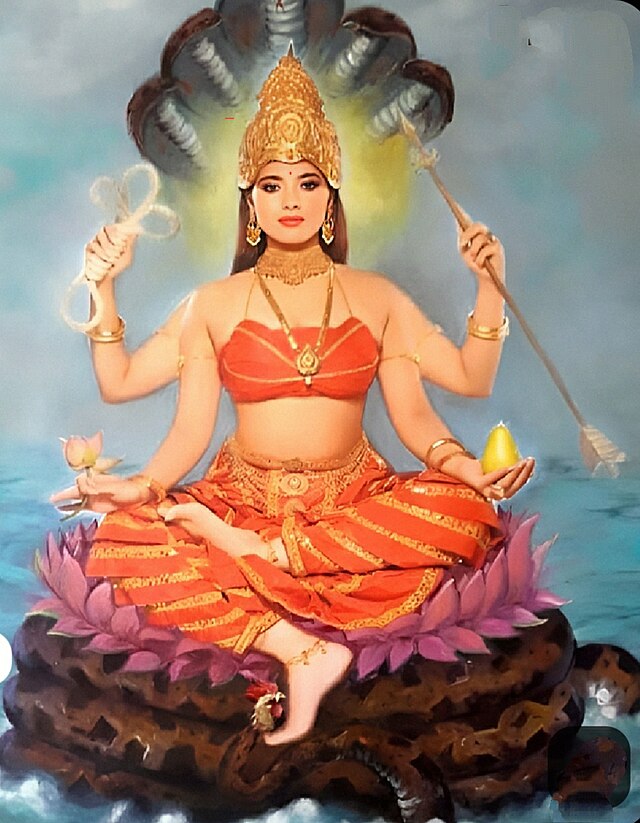
Finding the artwork that now graces the cover was a boost. Maybe it even prompted another sweep through the story to enhance the humor.

Much had happened in the yoga world in the time since I drafted the story and eventually published it. Many of the new religion organizations in America – and I’ll include yoga, despite the usual protests – had suffered serious scandals, either monetary or sexual. At least I had avoided that by keeping my story to a single day.

Bit by bit, I learned some of what happened after I had moved on. A chance encounter in a central Pennsylvania diner with one of the figures, who was waitressing on a very busy day, revealed one disturbing schism. Later, through the Internet, I heard from several key players from my residency and learned I hadn’t been ostracized, after all, but the operation had undergone a serious upheaval shortly before Swami’s death. And then I had some long phone calls with the figure who had been in the role Jaya subsumed in the revised novel. The relationship wasn’t exactly as I had assumed – or anyone else, as far as I can see. On top of that, a former girlfriend finally told me of her mistreatment when she visited. There were other dark sides I hadn’t suspected.

Repeatedly, they agreed that I was at the ashram during its glorious apogee. I missed later conflicts that erupted when the locals decided the place was a cult or events I see as fatal changes in direction, especially in terms of guru worship.

~*~

With the focus on Jaya and what she gained from her experiences on the yoga farm, I’m spared from going into an expose of a marginal spiritual community. For me, the time was a major turning point in my life, leading me to the Society of Friends, or Quakers, which to my surprise had been the faith of my ancestors.

I still believe as a nation, we could be doing much, much better. Something more like what I see in the Biblical Kingdom of God on earth.

Yoga had been a stretch for me. My preference would have been for Zen Buddhist, had a teacher appeared. Instead, this American woman in a pink jump suit came across my path. It still seems surreal.  In my hippie novels, it’s Tibetan Buddhist.

A good friend who had been an Episcopal nun had her own insights on monastic life, with many overlaps to what I had experienced. I’ve long been fascinated by American Shakers, too. More recently I’ve added Greek Orthodox examples and mysticism to the mix. And, curiously, my most “hippie” identity or fullness came during those years on the yoga farm.

There are lessons I’ve carried through life, but I should also acknowledge potentially damaging instances, including things that came up in therapy years later. My denial of emotions, especially.

Novels about yoga are surprisingly few. As touchstones for his book, I’ll instead cite non-fiction: Anagarika Govinda’s The Way of the White Clouds, Patanjali’s Yoga Sutras, collected writings of Swami Sivananda. Ram Dass’ Be Here Now, and stray bits by and about Murshid Samuel Lewis, and Kathleen Norris’ Cloister Walk, for a Christian parallel. Surprisingly, Herman Hesse’s Siddhartha left me cold.


Now, for standing on my head

I’m not sure when or where I began drafting my yoga novel or where, but I know the bones were in place before I began my self-declared sabbatical in 1986-87. Perhaps it was during my month of unemployment before landing in Baltimore. For one thing, I had revisited the ashram in the year before my big writing spree and perhaps even driven past it the previous year. I was hoping to get some answers for questions regarding my manuscript must say the encounter was unsettling. I wasn’t even allowed inside the center, and the woman who had taken over as guru declared herself too busy to say hi. A deputy was dispatched for that, with tea, while I sat beside Swami’s grave.

Well, that was a perk of being “on the road” as a newspaper features salesman, otherwise known as “field representative.” I even got my name in brochures and full-color ads in the industry magazine Editor & Publisher.

My ashram residency a dozen or so years earlier had been life-changing, but the connection broke completely when I relocated to the Pacific Northwest in 1976. Swami had demanded a large chunk of my meagre salary, and besides, I was newly married with a wife in college. The upshot, quite simply, was that I felt ostracized. I was certainly shunned it that social call. In the bigger picture, the yoga movement itself had gone into eclipse and my own spiritual journey had resettled in the Quaker vein.

Still, the yoga life in America was a largely untold story, even if it had put “karma” and “om” into the American vocabulary and mindset.

When I began drafting the book, I had no idea where everyone had scattered and had no way of contacting them. I mean, if I was ostracized, what was the point of contacting the headquarters? Did I even know that Swami had died? Perhaps, though some communication I had with someone who had been a regular guest and went from being a rock-band manager to a Messianic Christian comedian. I managed to make that connection through a wire-service news story I came across before my leap to Baltimore. So now I’m thinking the yoga novel originated even earlier than I’d thought. (I really do need to sit down with my journals for a very deep dive.)

I do see that some of the outtakes from Subway Hitchhikers were woven into what became my second published book, Adventures on a Yoga Farm, which came out as pioneering PDF ebook from PulpBits.com in 2005.

~*~

What do you do with a rogue outfit like ours? I definitely wanted to avoid the sticky sweet guru worship I’d seen in other books, and I definitely wanted to avoid a scandal-mongering expose, though I would later find that nearly all of the religious imports from Asia would face financial or sexual embarrassment. Michael Downing’s 2002 Shoes Outside the Door: Desire, Devotion, and Excess at San Francisco Zen Center would cover that reality in one of the more prominent and, up till then, respectable organizations.

When I sat down to write my novel, I decided to stick to one day in the community’s life. I created a composite of eight young yogis and their woman swami guru. Each resident student represented a different stage of development. It also involved compressing the two years of my experience into a single day. I’m guessing the one-day focus reflected the Greek theater ideal.

And I do stand by my original structure of eight disciples within a single day.

The book was republished via Smashwords in 2013, this time with more popular platform choices than PDF. My, have times changed.

What I really wanted, I think, was my own version of Be Here Now.

I don’t think I could have adequately presented the inner turmoil of a charismatic leader without a college degree now having a tiger by the tail much less uncovered all that got covered up in the frenzy.

Would anyone really care?

Various lifestyles I’ve lived

Maybe it’s a good thing we didn’t have selfies through most of it. Most of those shots would have no doubt been embarrassing now.

So here’s how my life’s shaken out in terms of lifestyles.

  1. Straight ‘50s middle class: Growing up in the Midwest.
  2. Hippie: From college to Upstate New York and various moves thereafter, including my first marriage to an emerging visual artist. Well, this does fuel my novels Daffodil Uprising, Pit-a-Pat High Jinks, and Subway Visions.
  3. Monastic: The rogue yoga ashram in the Pocono mountains. See my novel Yoga Bootcamp.
  4. Ascetic: In many ways, this was still hippie as I lived in a loft in a small downtown in a place resembling what I’ve called Prairie Depot.
  5. And back-to-the earth: The next move was a return to my college, this time as a research associate position before leaping on to the interior Pacific Northwest, one with my personal life filled with growth as a published poet, a shift to Quaker spiritual practice, and immersion in backwoods and wilderness wonder. These inspire my novels Nearly Canaan and The Secret Side of Jaya.
  6. William Morris: Steel mill region in what one called the Near East, aka the Rust Belt. Included a divorce and rebound. Hometown News arises in that experience.
  7. Nearly Plain Quaker slash Muppie: The Mennonite Urban Professionals I was hanging out with in Baltimore were the less expensive version of Yuppies. Living in a federal-style brick rowhouse in the Bolton Hill neighborhood was the culmination of my big-city dreams. During the week, I was often on the road with a company car and expense account. This was a rich mix for me, a time of much personal growth, ending in a self-gifted sabbatical year hunkered down in a suburb in which I drafted early versions of much of my fiction.
  8. Yuppieville on the Hill: Relocating to New Hampshire, I wound up living in a complex where I rented a small townhouse. Back in the working ranks rather than management, I was freed from long unpaid overtime hours and the neckties and suits of my earlier professional situations. Contradancing, especially, steeped me in Boston, an hour to the south, while I immersed my personal writing in poetry circles. My love life had many ups and downs.
  9. City farmer: Remarriage prompted my move to the New Hampshire Seacoast, where we bought an old house within easy walking distance of downtown and the Quaker Meeting. That “farmer” label actually befits my spouse, the avid gardener. The property also had the small carriage house you know as my Red Barn. Retirement included serious choral singer and daily swimmer roles.
  10. Island author: We needed to downsize, which led to the remote fishing village with a lively arts scene you’ve been reading about here.