How well do you know your cousins?

Would you agree that a close-knit extended family like the one in my novel What’s Left, is uncommon in today’s American society? Of my own five surviving first-cousins, only one remains in communication — a brief note every Christmas. None grew up in our city; two lived in the other corner of our state; the other four, at the time, in California.

~*~

In a passage I cut from the final version:

It wasn’t quite like that when Baba shows up, but only because we kids aren’t yet on the scene. First, we need some marriages, like when Barney and Pia get a new generation rolling, followed by Tito and Yin and then my parents.

~*~

And if Cassia’s uncle Dimitri or her aunt Nita had been adding to the gene pool, we’d have an even bigger slate of first-cousins to draw on. When it came to the novel, I had to limit things somewhere.

Have you ever been introduced to family members and found yourself asking yourself: Just who are these strangers? Have you enjoyed some of your kin at one point in your life but not at others? Do you ever feel some have been treated better than the rest?

~*~

Do you ever get lost when older members of your family start mentioning so-and-so? Just how do they all fit together?

The small-press literary scene has had a big influence on me

While still living in the Midwest, I came under the sway of the margins of the literary world more than the more influential institutions and best-selling or most critically acclaimed voices at its core.

In high school, I came across the weekly Village Voice tabloid amid the out-of-town newspapers at Willkie’s downtown and devoured its tales of sides of Manhattan (and the world) the established dailies ignored, mostly of a progressive slant. By college, it was augmented by New York Magazine, which originated under Clay Felkner as the Sunday supplement to the now defunct Herald Tribune; glossy Esquire, with its New Journalism stars; and Evergreen, alive with muckraking politics.

Concurrently, my advanced writing class my sophomore year opened my eyes to the importance of small literary reviews, some with institutional support and others fully independent, most of them published quarterly. Some were student run, others had professional staff; more likely they were a labor of love in the wee hours. Many of them were mimeographed and stapled, before photocopying took over. Now they’re mostly online.

I was already putting out a sporadic mimeo broadside, Dr. Samuel Johnson’s Rambler, on my commuter college campus, which also had a fine student-run review of its own, Nexus (35 cents!).

My next campus didn’t have such an active literary scene, especially of an experimental sort. As a student majoring in poly sci rather than English, though, I was able to sample some influential courses. Film history, for one, and Russian novels in translation in the Russian department, for another, and finally a current American novels class that examined Ishmael Reed, Tom Wolfe, Robert Coover, Thomas Pyncheon, and Ken Kesey. I was also reading a lot of Vonnegut and Hesse. On my return as a research associate in the mid-’70s, I became involved in a lively off-campus poetry circle led by Richard Pflum, Roger Pfingston, and David Wade, along with their annual Stoney Lonesome. The novelists I most often cite as influences were all active in this period.

My favorite literary periodicals were the Paris Review and Kayak, as well as the book publishers New Directions and Black Sparrow.

And then I got serious about poetry and submitting promiscuously. In all, I’ve had more than a thousand works accepted for publication by editors around the globe. Each acceptance encouraged more work in a particular direction, and sometimes comments on rejections (quite rare, I must say – most are mere forms) provided valuable advice. Some of the correspondence got quite lively. And yes, 20 rejections per submission was par for the course, as I’d been advised in that advanced writing class.

Trying to get a chapbook published, however, was more difficult. My biggest near-miss was with Copper Canyon in Washington state.

These days I can see my blogging as continuing in the small-press arena, especially at my Thistle Finch site, which is offering free PDF editions of my poetry.

Remember, feedback is always welcome for a writer, unless it’s purely caustic. Publishing in a void is the bigger struggle. I’d say the small-press scene is ultimately more personal. One reader can make all the difference.

Well, they couldn’t wear nametags

One approach I employed may help readers keep track of the spreading number of family members.

In drafting my novel What’s Left, I envisioned each chapter as a module that could stand alone from the rest of the book. Think of it as a short story. That way, the number of characters in each chapter is more focused.

And while first names are usually repeated frequently in a Greek-American family, I limited this to just one great-grandmother and one descendant, and used a nickname for the elder one. Neat, eh?

Yes, the family members do show up in other modules and there is continuity over the whole, but at least you don’t have everyone in your face at once.

When you go to a social event and are introduced to many new people, are you able to remember their names and faces? Or do you go into a blur? How do you cope with this challenge?


When flights intersect or move on 

Just what was I thinking? Was this supposed to be a philosophy class moment? A reflection on time versus space? Or fate versus free will? No wonder the paragraph failed to take root in my novel What’s Left.

History is filled with unique moments when something flashes up and takes hold. Or a singular intersection of trajectories appears in the universe of motion.

~*~

The novel, by the way, has many of these situations, just as life itself does. We just didn’t need to get preachy.

I suppose this just might fit a story about baseball. Or think of football. The great play no fan will ever forget.

There are also those accidents, seemingly chance encounters, like the late-night crash that kills Cassia’s grandparents or the avalanche that claims her father. A few moments one way or the other, and her story would be much, much different.

I was more likely reflecting on those seconds where you have to make a decision one way or another. Say something. Do something. Yes or no. The beginning of a romance, for instance, once you’ve introduced yourself. Uttered the joke that could have as easily fallen flat.

Can you recall a significant moment in your life when something had to happen right then — or never at all? One with no second chances? Please share it! Be bold!

~*~

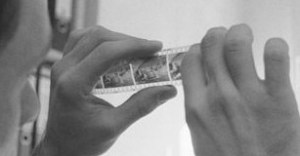
Cassia learns to “read” strips of photographic negatives like this as she looks for clues to her father’s life journey.

Maybe it’s not really news but it counts

Heyduck

In my novel What’s Left, Cassia’s aunt Nita writes a daily newspaper column focusing on local people and their real interests. It’s not all that different from CeCe Cobb’s in my earlier novel Hometown News, but Nita’s is far less corny and far newsier.

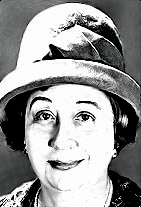
In Dayton, where I grew up, it was Marj Heyduck of the Journal Herald. Her mug shot on her daily column featured a new hat each week as a signature touch. And in Cincinnati, it was TV host Sally Flowers.

But I can think of others who just seem to know everybody.

Does your community have a local voice? A minor celebrity or just a naturally curious friend of all?

Maybe it does run in the blood

I heard it twice, miles apart: “I have retailing in my blood.”

Both headed family businesses – one, a supermarket chain, the other a small-town restaurant.

The grocer worked with three of his brothers and a brother-in-law, though another brother instead became a respected physician.

The restaurateur worked alongside his only brother and their wives.

Both enterprises were founded by their fathers.

It’s a lot like the family enterprise in my novel, founded a few generations earlier.

Do you know anyone like that?

~*~

My novel is available at the Apple Store, Barnes & Noble’s Nook, Scribd, Smashwords, Sony’s Kobo, and other fine ebook distributors and at Amazon in both Kindle and paperback.

Within a daughter’s own living Greek drama

High hippie by degrees – nobody fully fit the stereotype

By the end of ’68, the counterculture phenomenon was metastasizing from San Francisco’s Haight-Ashbury and nearby Berkeley into pockets across most of the country and even Europe. As August of ’69 proved, it was sufficiently established in the East to draw together the unanticipated throng at Woodstock.

Much of the transplanted activity existed at the fringes of college campuses, as I experienced in Bloomington, Indiana, and later Binghamton, New York. For me, growing up in Ohio, I would have rather attended hip, beat Antioch in Yellow Springs, but the finances were way out of our consideration. So a state school was my destination, and at the time, Indiana as an out-of-state student was nearly as reasonable as in-state for me in Ohio. And a bit later, to my surprise, how yesterday Antioch began to appear once I was near the East Coast.

The searing experiences shape what I describe in Daffodil Uprising and then Pit-a-Pat High Jinks. And as I continue to repeat, hippies came in all varieties – and still do. There was no standard-issue, card-carrying member, but each was one to some degree or another. Nobody completely fit the hippie image.

As someone who became addicted at the onset of adolescence to classical, opera, and folk music, I was already passionate about an alternative to commercial entertainment, which was what rock at the time really was. I was one who lamented deeply when Bob Dylan went electric. Sold out, so it seemed. I had the long hair and blue jeans and bell bottoms. I was against the war, tried a few hallucinations, loved sex when I could get it, which wasn’t often.

And then I encountered yoga, which led me to give up meat, alcohol and drugs, and sex for the life I detail in Yoga Bootcamp – and yet, curiously, this was when I felt the most hippie in all of my awareness.

Keeping track of a big cast

A multi-generational family tale like the one in my novel What’s Left can lead to a lot of characters, and keeping them all straight can be a problem.

My plot line takes a few twists that minimize their numbers, but when you get four generations over time, it’s bound to create a challenge, no matter how hard you try. Sometimes it helps to stick with somebody who knows everybody, when you’re circulating through the crowd.

When reading a big book, do you have tricks for keeping track of the individuals? Anything you’d like to share?

~*~

Just listen to the melody.

Yes, variables of place

A major influence on my work has been an awareness of the variables of place. When I lived in the ashram, my yoga teacher returned from her first trip to India and described with wonder her sensation that each locale there felt different – to the extent that each village or region had its own god or gods to embody its distinct character or, as she put it, vibration.

Fifty years later, having lived and worked in eight states, I can say that’s true in America, too, even though we’ve muddied much of the indigenous awareness. I’m especially convinced that people in deeply prayerful states do somehow leave an imprint on a place.

That sensation has unexpectedly led me to Quaker meetinghouses and burial grounds or arisen in the midst of conversation in old houses of worship.

How have you felt special locales?