Reviewing a whole year of posts in one evening

It didn’t start out to be an overview, but I do forget a lot, including what I’ve written or photographed or even done over time. These posts, though, are records of bits of that  life, coming together in the manner of a quilt when you step back enough to see the emerging pattern.

Somehow, in the process of scheduling a few new entries a few nights ago, I wound up going backward in time through the Red Barn. Let’s just say I stayed up much later than I had planned before sleep started to catch up with me. And that was just going through the previous year, not the entire decade I’ve been at this.

But what a year! Not to brag, but I was surprised by the high quality of the dispatches and their range, and I did enjoy some deep satisfaction. (That’s not always a given for a writer, by the way – sometimes it’s more “Ugh!”)

Has me wanting to go back deeper in the archives, maybe a month at a time, to see what other treasures might be buried there.

And from there? Bet many of the rest of you have rich lodes awaiting rediscovery, too.

Blog on!

How flimsy are all those social media stats?

I know that everywhere you go, everybody seems to have their nose stuck in their cell phone, oblivious to just about everything going on around them. You know, the bubble people.

Or, where I’m now living, they have those phones up in the air taking pictures so they can look at what’s in front of them later.

Oh, my. What a world.

As a writer, I’m supposed to be active on all platforms as a matter of marketing , but as many others are discovering, those venues rarely lead to book sales or loyal readers. Let’s be honest.

I’ve toyed with some of them, but drifted away, even Twitter.

My primary social medium is here at WordPress, blogging. I know how to manage my posts easily. The Reader feels to me like a real mailbox, with dispatches from around the world – postcards, letters, clippings. As for you?

For that matter, I’ve never quite “got” Facebook. It’s cumbersome to navigate, most of the content feels like gossip cluttered with advertising, and I don’t like having to sign in to see what should be public information for local retailers, schools, or public events.

Still, living in a small town, I’m finding that’s where the local “party line” is, and checking in regularly is essential. I still have qualms about the bigger corporate picture, with its shadowy agendas.

Recently renewing contacts with folks from my ancient past has also had me turning to FB.

What’s surprising me, though, is the gap between those who are active in a social medium and those who are “members” but rarely or even never check in.

It’s not just FB. Even email accounts. I suspect many of my contacts are that way, too. Hello! Anybody there? Did you get my message? When was the last time they posted or commented? Take that as a clue to their presence … or absence.

The numbers, then, might not be nearly as big or influential as they’re boasted.

Meanwhile, I keep falling down these Internet rabbit holes, pursuing arcane information.

Where are you spending your time online? Or even elsewhere?

Am I the only blogger working from Downeast Maine?

I don’t mean broadcasters or newspapers reissuing their material online, nor do I mean Facebook or Twitter snapshots and quips. Blogging, as you know, is more varied, personal, and I’d say engaged than that. It requires a special focus.

At the moment I’m finding it difficult to locate anyone else posting anywhere in the Pine Tree State, apart from gloating visitors and a few writers sharing a site based elsewhere.

It’s not that folks hereabouts are aloof, not by any means, as I’m discovering in my new locale. I’m fascinated by the stories they tell as well as the unique landscape we share, but I’m still new on the scene.

Welcome to my workstation, for now.

How much interest would there be in my new book?

The literary great Samuel Johnson once quipped, “No man but a blockhead ever wrote except for money,” but he also ascribed to the  pejorative term of “hack writer” for those who set down words as an income. It makes for an impossible bind. After all, he was a stickler for quality literature.

That perspective could generate guilt among some of us who did our best to defend the language in what Johnson would have considered grub work – in my case, daily journalism, with its effort at an anonymous style and universal voice. And yet, for me, at least, there remained an aspiration for something loftier, more lasting, more artistically and intellectually demanding but which, as I’ve found, had no monetary value.

Do I regret the effort? Not when I sit down and reread the published but largely neglected fiction and poetry. Pointedly, it has come at a heavy personal cost in time and foreclosed opportunities, no matter any satisfaction I feel.

CURIOUSLY, I DOUBT that anyone has felt the pain of this dichotomy more than novelist Stephen King, even though I’m certain he’s never heard of me. He has, though, articulated the gap between the writing for wide readership and for critical acclaim better than anyone else. Writing under pseudonyms, he has demonstrated a mastery of the craft, and under his own name, some deep insights into the art of crafting a novel. He deserves great credit for getting a public reading books, against all odds.

MY CURRENT QUANDARY comes in trying to decide which course to take regarding my latest – and likely last – manuscript. I’ve found researching it to be exciting; my findings, provocative and original; and the current voice that’s resulted, lively and entertaining. I get animated just talking about its content, and the listeners catch on. The problem is that it’s still a niche product, as far as marketing goes.

I mean, a history of the Quaker Meeting in Dover, New Hampshire?

Yes, it has the freaky potential to break out, but that’s a gamble.

The book moves novelistically. There are some big villains, a contrarian take on New England itself, a long period of frontier violence, historical surprises, a look at a subculture something like today’s Amish, and political dissent. What a volatile mix!

I’ve approached a couple of regional publishers but heard nothing from one. Not that I’m surprised. They survive by being conservative and cautious. Still, it would relieve me of a lot of effort in production and distribution that I just don’t feel up for. I’m more optimistic, cautiously, about the other. As I posted earlier, I’m ready for a break. Let them keep some of the change.

Plan two would be to issue it as an ebook, like my novels, and via Amazon’s KDP, where it would also be available as a print-on-demand paperback. I’m not sure how to include the maps in those formats, though, and the work wouldn’t be available in bookstores. Much of the sales of the paper edition would be, as they say, from the trunk of my car – after readings and talks, essentially. As for libraries? Marketing of an ebook remains, from my experience, very difficult. People want something physical to examine, even if they buy otherwise.

The third option is through one of several self-publishing programs that distribute to bookstores. (The stores won’t touch the Amazon editions, since they would have to sell at a higher price to cover their added costs.) For reviewers, it’s more respectable than Amazon. You might even pick up some book clubs. The bigger problem is that this route would require me to invest some big bucks. At this time, I have no way of knowing whether the investment would be offset by sales in bookstores, mostly in New England. Or, put another way, I’m feeling way out of my league or field of expertise. Yes, I would have a product I could feel proud of. But could I make the numbers add up? My wife advises me to consider it like joining a country club. Hmm. One involves dropping balls into holes.

A fourth alternative is to shelve it altogether, maybe even taking the money I would have spent and finally traveling off to Europe. Let myself be content with the overview I’m presenting in weekly installments here at the Barn.

One thing I’m not doing here, contrary to Johnson, is being mercenary.

What course would you suggest pursuing?

So much for preserving footprints in the sand

After 50 years of keeping a journal, though more often of a weekly than daily regularity, I’ve passed the 200-volume mark. By now, most are hardbound, while others, especially early on, were of spiral-bound notebook nature or smaller size.

A few people in my past who admitted to trespassing into their contents were all disappointed. Guess they were expecting juicy details, though one was quite angry and accusatory. Look, mental health requires someplace to spew forth, and if a journal isn’t safe, corking up will only mean the feelings will fester.

Except that few of my entries articulate my emotions, feelings, or sensations. Yes, there were way too many of the hippie-era wow variety, but mine soon became a matter of tracking my ongoing activity. Just trying to remember what I did, who I met, what I saw filled the pages, when I could get to them.

Even so, they remain prompts into so much that happened at the time. And without them? There are no photos. Could that be why everybody is shooting like crazy with their cell phones?

The first newspaper editor who hired me, Glenn Thompson, urged me to keep a journal, though I didn’t get around to the practice until three years later, shortly after graduating from college. Still, I am everlastingly grateful. For the record, I was trying to puzzle together my “problem,” at least as it applied to the lack of a love life. Instead, it began noting the highs, even in the absence of a lover. And then began going from there.

Yes, I wish I had started earlier, there are so many details of my life I’ve forgotten and a trail from there would be deeply helpful in seeing how I eventually landed where I have.

Still, looking back, maybe mine aren’t journals, after all, but maps of my time, movements, and interests.

How do you keep track of where you’ve been?

As an example of the kind of excellent journalism we’re missing these days, let me offer this modest example

My wife forwarded me a link to a Washington Post article about the ways international supply-chain problems impacted a small, family-owned, dairy north of our place in easternmost Maine and its signature product, a chocolate milk with a passionate following.

For me, it’s a great piece of journalism, or as I told her, my ideal of reporting.

In fact, it fit into the aspirations I present in my novel Hometown News.

Personally, I favor longer pieces that take a long-range view, as this one does, especially when they encapsulate a much bigger, more difficult, issue in ways that hit home.

In contrast, the trend has long been for shorter, faster, less complex dispatches that move on to the next sensational blast. You know, the 24-hour news cycle. Or less. Most of it is forgettable, puff in the air, hit-me-with-what’s-next superficiality.

Instead, what we have here is a consequence of assigning a reporter full-time to the Northeast, as the Washington Post does, in one of those expenses that might seem superfluous to the bean counters who fill too many executive positions in too many industries. In fact, we can blame them for much of the supply-side issues that plague us. Prestige, after all, is rarely seen as a quantifiable asset.

Moreover, I doubt the Post would have found this story without that marginal investment. (The nearest daily newspaper, fine as it is, finds itself way too overwhelmed by everyday issues to dig into something requiring an investment of time like this. In fact, one of the things I that drew me to working at the New Hampshire Sunday News was the opportunity to assist similar projects, where we might have a week to dig into the dimensions and then display the findings properly.)

I also love the fact that the Post hired an excellent photographer to pursue the story, too, and paid for his time to look beneath the obvious surfaces. Again, it takes time to get a feel for what’s beneath the surface and come up with something fresh and expressive. His shots tell a full, parallel, story of people dedicated to their seemingly commonplace employment. What emerges is almost like a film score underpinning a movie.

Better yet, in this case, the difficulty encountered was about chocolate – who couldn’t love that! As well as the schoolchildren who loved the dairy’s chocolate milk as part of their lunches. You can’t build a better connection than you do with kids, except maybe through the words of their parents, as this report does.

My kudus to reporter Joanna Slater and photographer Tristan Spinski – and their unnamed editors for publishing this.

If only we could see much more along this line of journalism!

What happens when a journalist attempts a novel

It used to be said that every newspaperman had a novel inside him, waiting for release. (Yes, male. Women reporters and editors were a definite minority. My, how times have changed!)

Frankly, I rarely saw any literary ambition around me. Few in the business read fiction of a serious sort, much less poetry. There were, though, a couple of playwrights. More recently, however, I know of two colleagues who have self-published – one a mystery, the other a political intrigue.

Yes, we’ve had notable exceptions, with Edna Buchanan, Ernest Hebert, Carl Hiassen, and Tony Hillerman topping my list. (Hemingway wasn’t considered much of a reporter in his six-month stint in Kansas City, and earlier giants often cited reflect a much different kind of journalism than what’s been practiced from the rise of the last century.) The crush of daily deadlines is exhausting, and fiction requires an entirely different approach and sensibility to the telling of a story. Journalists are conditioned to put facts first, usually without any concern for feeling, and to be professionally neutral, reflecting the quest of objectivity. These stances place the reporter at a distance from the subject, no matter how fascinating. Journalists also tend to put action ahead of the actors. Most of the resulting novels leaned toward the crusading reformer slant of the Front Page tradition – Down with corruption! – or maybe sports, either way, with the emphasis on the game more than the inner mindset of the players.

Well, there was also one editor-in-chief who took a popular genre novel and did a paint-by-numbers kind of rewrite over it. I think it was a Western, but I’m no longer sure. His connections got it published, and his success led to a half-dozen more. He was sheepish about the whole thing, though. It was more like a game, I suppose.

I wasn’t typical. My first love was the fine arts beat, for one thing. Since jobs there were scarce, I wound up on the copy desk. No matter how much I love politics, I find meetings boring. Press conferences, even more so. My most satisfying post was heading up lifestyles sections. Long story, as you’ll see in Hometown News. Maybe I was mostly a misfit who happened to do some things extremely well.

News writing, for the most part, is supposed to sound anonymous. Short sentences, limited vocabulary, a structure with the most important details at the top and the rest in descending order. As a writer or editor, your craft can soon become dulled. As an editor, one of my skills went to headlines, trying to relate a story in as few as four or five words. I’ve written hundreds of thousands of them, and I can see the distillation as an element of poetry. In my personal writing, I often reacted against the broader restrictions – I wanted a richer range of diction, more accurate language, more varied sentence structure (yes, I love long threads that work), and often more background on the story itself.

Turning to fiction, I’ve learned the importance of withholding details until later in the tale, things like not including first name, middle initial, and last name when introducing a character, much less his or her age and address. As for my poetry, I’ve preferred experimental and edgy, where the image or fractured expression might open into its own ambiguity and potential.

I do remember the first time a poetry publisher reacted to my submission by saying how delighted he was that my work wasn’t what he expected from a journalist. He had received enough to develop a negative opinion, one I fortunately didn’t fit.

My novel “Hometown News” was drafted during my third break from the news biz, when I was approaching 40 and gave myself a sabbatical after two years calling on editors in 14 Northeastern states as field salesman for a major newspaper syndicate. Driving between my calls on the local papers and seeing their newsrooms from the other side of the desk, so to speak, gave me plenty of time to reflect on the industry and then augment what I had collected in my own career. At many papers, as I saw, the managing editor or his equivalent was gone in a year, and with each one, I’d have to start grooming a new connection all over again. Many of them had telling histories of their own. Many of their towns looked like bombed out shells after World War II, their industrial might boarded up or rusting. I kept notes. Many of their skirmishes reflected my own.

Later, developing my novel in a series of routine days set months apart, “Hometown News” gave me an opportunity to see what I could do with creating a computer-generated novel. I set a framework for the day and randomly inserted 80 to 120 markers I could hit with search-and-replace items for each round. There were many other places that had to be manipulated manually, but it the attempt was fascinating, the way working a thousand-piece jigsaw puzzle is.

The result was something like a Jackson Pollock painting, a theme-and-variations curiosity but not compelling reading. Through a series of revisions, I kept the bones but layer by layer added flesh and muscle to bring certain characters to the fore while the dystopian theme deepened.

Thirty-four years after starting out on the work, and seven years after its publication, I am struck by the story’s prescient warning of the collapse of a once very profitable business for the dominant voices, not that our salaries reflected that. What I saw was entire communities under attack, and they still are – not just their daily mirror.

The newsroom I present is a blend of five I’ve worked in over the years – another one was much smaller, and the remaining one was simply different. When you get a group of news folk together and we start talking what one spouse called Bodoni-Bodoni, after the typeface used for many headlines, we all have insider war stories. I hope “Hometown News” gives you an idea how ours translate.

Just before taking the unanticipated buyout

Hard to think that it was right around this time ten years ago when my newspaper career took the big turn.

The atmosphere at the office was tense, with contract negotiations approaching a deadlock. Actually, there was little back-and-forth but rather a take-it-leave-it set of ultimatums from the front office.

As much as I loved journalism, I had long dreamed of being liberated from the daily workplace grind to pursue my bigger passions fulltime – writing serious works that would stand as a legacy, plus more time for Quaker endeavors and activities of personal renewal. I envisioned a bigger studio at home and had several book manuscripts that looked promising, if only I could get them in motion faster. When you had an interested book publisher, as I tentatively did, you had to act fast, something that’s difficult when you’re actively engaged elsewhere. My big break, all the same, hadn’t happened, even if I was being published widely in the small-press literary scene. You had to build a name, after all, as well as connections.

The job itself had long ago turned into a production-line mentality, rather than a more deliberate craft. Gone were the big projects that allowed enough space for deep research, reflection, and revision. Even at the prestigious big dailies, the clout that came with having a byline had largely evaporated. I began joking, with a degree of factual backup, that I really earned my wages in a one-hour span every Saturday night, when our biggest paper of the week in terms of circulation, heft, content, and income, was about to hit the press. Missing that deadline by even a few minutes was costly and had consequences. In that hour, and the two that followed as we made corrections and updated editions, everything funneled down through me, carrying with it blame for any big errors.

Well, I was a pro. Suck it up.

The possibility of buyouts had been floated by the union but required a certain number of members to step forward as interested candidates – tell us more – before that possibility was soundly yanked away from the table by management. I felt left like a pawn in that high-stakes game. For me, the pension and Medicare were both still a year off, and a steady income between here and there was looking more and more imperiled. I’d stuck my neck out, after all, and could now be seen as disloyal – if the paper was still running at all.

A few weeks later, brusquely, I was called into HR and essentially told I had an hour or so to commit to a decision. What, it’s back on the table? Maybe I had a little longer to confer with my spouse, I don’t recall, but in the whirlwind, the closure still came down like a hammer.

And that was it – a bonus that included extended health coverage, plus opportunities for part-time employment, if I wished. No guarantees there, but good luck. Even so, I was giddy. This is it?

A few nights later, there was a cake in the newsroom in recognition of us who had walked the plank. Some of our younger colleagues, I suspect, wished they had the option, though part of our decision came in hoping what we did kept them employed duly, some even supporting families. These calculations get tangled.

~*~

My first month of liberation came as a welcome period of decompression. I loved sitting in our front parlor and reading in winter sunlight, for one thing. A favored new routine with my wife was strolling downtown every Wednesday around dusk, when a small pub featured a fine jazz guitarist. How civilized! I could even go to bed before midnight.

The paper soon found itself short-staffed, however, and I began receiving calls wondering about my availability. Enjoying the flexibility of picking-and-choosing, I soon found myself working three or four shifts a week, the max allowed under the agreement. The feeling was entirely different, free of the weight of internal politics and big responsibilities. My floating shifts liberated me to attend concerts and films and a host of other events not previously open on my schedule. I didn’t have to weave around others’ vacation time off, either, when looking ahead to conferences or travel.

But ten years ago already? It really does feel more like five.

My encounters in a yoga ashram altered my perception of life

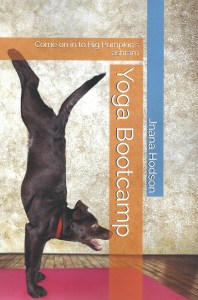
I stepped out of my journalism career three times in my life before retiring for good. The first was when I decided to move to the ashram where I could immerse myself in yoga philosophy and practice. Responding to Swami’s invitation to settle into her rural setup was something I did slowly and deliberately, with a large degree of trepidation. As I relate in my Yoga Bootcamp novel, the daily life was intense and evolving. Leaving the ashram was a different matter, with others largely resolving the outcome – out you go. For weeks afterward, I felt myself falling helplessly through space. Eventually, I reestablished my feet on the ground and then headed off for a new life in a town I call Prairie Depot.

The paperback cover …

What happened for me during my residency was life-changing. I regard it as my master’s degree and my introduction to psychotherapy of an amateur sort. Among other things, it led me to the Society of Friends, or Quakers, which turned out to be the faith of my Hodgson ancestors from the 1660s down through my great-grandfather.

In the novel, I chose to confine the structure to a single day, in part because I had so many lingering questions I could not answer. Yes, within that day individuals could look back on their previous history, but the focus was on the NOW. And a lot could happen there in a 24-hour span. Besides, as I later learned through some candid discussions with a former Episcopal nun, monastic life has some commonalities of its own. As she said, some of the most intense interactions came in trying to choose the flavor of ice cream when the rare opportunity arose. I’ll argue you’re the most human under such rarified circumstances.

On top of everything, when I was drafting the book, I was out of contact with the place and its people. Critically, I had refused an order to return to the ashram after I’d married and moved to Washington state and a follow-up stipulation of heavy financial support was out of the question. A half-dozen years later, back on the East Coast, I had an opportunity to stop by but was not admitted into the house. I did learn that Swami had died and I sat by her grave. So much for making amends.

… and the back cover.

Since then, I’ve reconnected through social media with some of the key players and had a few assumptions, not in the story, deflated. In addition, Devan Malore’s “The Churning” reflects life there a few years after I’d moved on.

The story itself could have gone another way, if I hadn’t wanted to present the ideals that drew us together and kept us going. Especially the humor and playfulness.

More compelling for many readers would have been a more sordid tale of just one more “new religion” outfit run into scandal of a sexual or financial sort, preferably both. There were enough elements for that, as I’ve since learned.

The story first came out as a pioneering ebook in PDF format only and was later updated to Smashwords and its affiliated partners. A more recent, quite thorough recasting (again, blame the influence of Cassia in “What’s Left”) changed Swami from female to male and introduced Jaya as one of the eight resident yogis, thus linking her to the heftier Nearly Canaan novel. Besides, the transformation made Swami more acceptable to the expectations of many readers and allowed the Big Pumpkin and Elvis dimensions. The role was already unconventional enough, and this was more fun.

Am I still doing yoga? If you mean hatha, the physical exercises, let me say rarely and embarrassingly, at that. As exercise, I’ll substitute my daily laps in the swimming pool, and as meditation, my weekly Quaker meeting for worship. And no, I’m no longer vegetarian, other than when I voluntarily follow the Greek Orthodox “fasting” of Advent and Great Lent (again, blame Cassia), though I also eat much less flesh than most Americans. Actually, in these seasons, the Eastern Orthodox Christians are stricter than we yogis were.

I do wish there were a similar haven for youth today, one freed from the burden of student college debt. I’ll let “Yoga Bootcamp” stand where it does.