How relative is time, anyway?

Let’s consider fourth place, as far as length in time. That is, realizing that I’ve been dwelling in Eastport four years now strikes me as a bit of a shock. I’m finding it difficult to make sense of the fact, at least in light of earlier landings.

Quite simply, I’m still settling in here, even if it’s in my so-called sunset years. And, yes, I’m still feeling this is it, a very suitable end of my road, even if I am being greeted by name by people I don’t recall knowing, this is in sharp contrast to earlier locales.

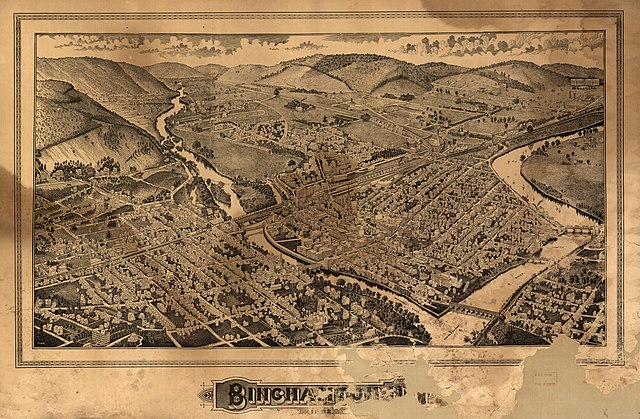
For perspective, those shorter spans were in my early adulthood: Bloomington, Indiana (four years in two parts); Binghamton, New York (1½ years, in two parts and three addresses); the Poconos of Pennsylvania (1½ years); the town in northwest Ohio I call Prairie Depot (1½ years); Yakima, Washington (four years); a Mississippi River landing in Iowa (six months); Rust Belt in the northeast corner of Ohio (3½ years); and Baltimore, my big-city turn and turning point (three years). You’ve likely met many of them in my novels and poems.

Looking back, each of those addresses was filled with challenging turmoil and discovery, soul-searching yearning as well as glimmers of something more concrete and fulfilling just ahead.

In contrast, my longest period of living anywhere was Dover, New Hampshire (21 years), my native Dayton, Ohio (20 years), and Manchester, New Hampshire (13 years).

Back to the underground inspiration

As you’ve probably noticed in other posts here this year, I’ve been trying to recall some of the authors and books having an influence on the earliest drafts and later revisions of my novels. As I’m writing this, most of my personal library is still in storage – or other volumes, purged long ago to make room on my shelves for more – and my journals under wraps during the house renovations. I’m having to rely on memory, faulty though it may be.

Look, I don’t want these posts to be about some poor neglected novelist blah-blah-blah, but rather as one account of surviving in a writer’s life, maybe as a bit of advice or even encouragement for the next generation or two.

That said, I can state that my subway project sprang from Richard Brautigan’s Trout Fishing in America as its model. Think short, playful, imaginative with an image slash idea as its central character, like a children’s story for Woodstock reaching young adulthood. William R. Burroughs’ Naked Lunch also cast a spell as a free-floating state of mind.

For me, hitchhiking in subway tunnels was a fantasy symbolizing the hippie experience as I encountered it during my time living in upstate New York. You know, underground with urban roots yet flourishing out in the countryside where you could stick out your thumb and go about anywhere. Yes, though I didn’t fully comprehend it then, that Woodstock crowd was mostly from New York City and its suburbs.

The symbol even implied a degree of freeloading rather than responsibility.

While awaiting publication, the manuscript kept growing from its 1973 first draft, typed while sitting cross-legged at my beloved Olivetti 32 typewriter, through a revision shortly after that and probably another in 1976 before I packed up for the Pacific Northwest, where yet more would be added to the text with quite a backstory in addition to a superstructure out in the foothills somewhere north of Gotham.

This was well beyond the initial Brautigan flash. What I had was, in fact, unwieldy, and nodding toward Brautigan’s other fiction and a lot more. Unlike me, he kept most of his volumes short.

And then, somewhere before reaching my sabbatical in the Baltimore suburb of Owings Mills in 1986, the manuscript was greatly slimmed down, leaving many pages of outtakes I couldn’t trash outright. There was enough to create more novels, or so my inner trash picker insisted.

We’ll look at those as they took shape during my furious year of keyboarding on my new personal computer, however primitive the machine and process appear now.

In that sabbatical, I must say I was highly disciplined, keyboarding for four hours or so before taking a break, eating, even napping, and then returning to the work until two or so in the early morning. I had lived my adult life up to this point awaiting this moment, if it was far from what I had envisioned. Suburbs? Without a wife or soulmate? Heartbroken, in fact?

What drives an artist, anyway?

Beyond the yellow BMW 1600 oil-burning coup I was bopping around in – the one that was older than any of the women I was seeing.

A great deal of material and energy was there to be released, and I sensed this was my make-it-or-lose-it moment. As you’ll see.

Baltimore even had its own subway line under construction, reaching all the way out to where I was encamped.

Not that I would be there when it opened.

~*~

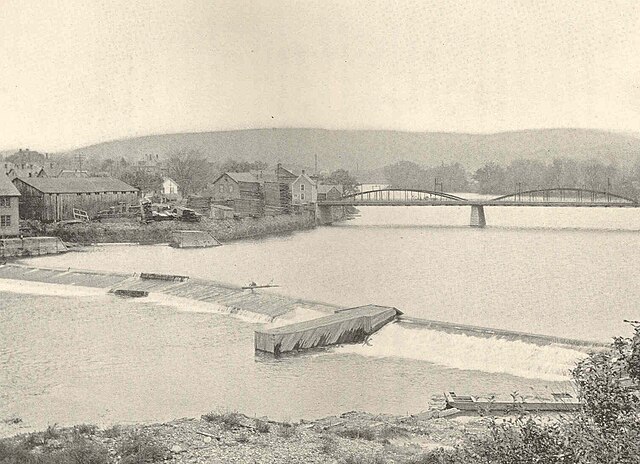
My first hick outpost, the one upstate, wasn’t as small as it seemed. Yes, it was a backwater, but the core was more populous than six of the places I would subsequently live in, if you didn’t count the university students in what I would dub Daffodil.

What my first actual job in journalism did have, though, was proximity to New York City, a mere 3½- to four-hour drive away. Despite the distance, the connection was vital, even vibrant. All of my new friends were from the Big Apple, and many of them were Jewish, as my college girlfriend was, even though she had by now oozed away from my presence, off on what I saw as troubling new places. At least none of them were Jonestown.

Starting with a summer internship before my senior year of college and picking up again after my graduation, a time of great emotional upheaval, exploration, and redirection. As I said, this was in the high hippie outbreak.

I presented the image that flashed before me, the gandy dancer who could have been a hitchhiker, but I should also acknowledge a freaky cartoon a housemate had created and handed me, with a face at a sewer grate mumbling “Duma luma, duma luma.” Those were the two prompts for the manuscript, seriously.

~*~

The inspiration also came from my first jaunts into New York City while living upstate, and later to the west in the Pocono mountains of Pennsylvania. Most of my buds and girlfriends had been from the City, as they called it. My early experiences turned into fascination during a period of great personal upheaval and growth for me.

Hippies seemed to be trying to go in two directions at once: back to the big city while hitchhiking out in the sticks. The original version was, in fact, published as Subway Hitchhikers in 1990 – the worst bookselling season in the memory of many publishers, thanks to the first Iraq war.

As I’ve ready described, in the 17 years between the first draft and the story’s first publication, the manuscript underwent a considerable metamorphosis as I moved across the continent in my day job. While living in the desert of Washington state, I even picked up a 1915 engineering book on the building of the New York subway system while browsing in a very small, small-town bookstore. (How did it ever land there?) Much of my expanding text was backstory on the central character, while the urban transit episodes shifted into something akin to an appendix. The result was an unwieldy epic. But I kept the outtakes, which took on their own life later.
Other panoramas opened

Thinking of my own time living in the foothills of upstate New York as well as Kenzie’s situation in my novel Pit-a-Pat High Jinks, there’s a big question:

If we loved mountains so much, why didn’t we go climbing? The Adirondacks weren’t that far away, and the Catskills were closer.

For me, anyway, there were so many other fronts to explore, which I did, leading on to the ashram at the edge of forest in the Poconos.

No regrets, then. Besides, what emerged is a better story.


Some perspective on prime foliage

Even though I grew up in a northern environment and its deciduous trees, autumn color was pretty much peripheral. We lived in town, after all, and I was essentially indoors at school or the like. Besides, much of the rural landscape around us was open farmland, with here and there a woodlot or riverbank.

My foliage awareness really took off a few months after graduating from college, when I lived in a small city surrounded by forested Appalachian foothills that turned ablaze at the end of September. Like Kenzie in my novel Pit-a-Pat High Jinks, I was working a job that allowed me to get out of the office at mid-afternoon, when my free daylight hours were soon devoted to exploring the visions along backroads in what became a daily epiphany.

From town, it appeared the hills caught fire at their summits and the flaming color then ate its way downslope. And, as I heard, the forests themselves were a blending of New England varieties and those of the South, so we had the best of both worlds for foliage.

In the years and wanderings since, that’s been my standard, though I should question if it was really quite as vivid as my memory would boast. Having lived in northern New England now for 33 years, I’ve often thought our fall foliage was more subdued than its legend, perhaps apart from some spectacular locales like Sugar Hill here in New Hampshire.

This past week, though, has changed my opinion. In driving about, I’ve come across large swaths in full color – not the usual mixed green and bare mixed in – and properly illuminated, even in an early morning mist and fog, not that my camera would capture that. It soon becomes almost too much, too rich, for one’s eyes to handle.

~*~

That first autumn Upstate, I didn’t have a camera, alas. Later, living in an orchard, I was disappointed that the apple, peach, and pear trees turned mostly dun. Finally, what I attempted, with film, my first years in New Hampshire came out so-so, partly a failing on my not knowing quite where to go, when. Only when I took up digital photography, about the time I launched this blog, did I start shooting earnestly, especially my first autumn after taking the buyout at the office and heading into the hills a little north of us.

As I’ve revisited those shots, I’m struck by how often utility lines mar the image – that, and other things our eyes overlook, though the camera is far less forgiving. Those lines stick out like the proverbial sore thumb. Thus, in the past month, as I’ve been shooting, there have been many fine examples of color I’ve out-and-out passed by for that reason.

Another difference this time is that I’m using my second camera, which has a “magic” auto-setting that intensifies the color. In alternating my shots with that and a more subdued tonality, I’m finding that the “hotter” one grabs more of what I’m feeling as I look, while the “cooler” option is closer to the reality … until the sun turns just the right way, which is what’s been happening the past week.

I am surprised our hundred-year drought hasn’t deeply limited the foliage. There was a walnut tree across the street that turned yellow one afternoon – maybe within an hour – but I postponed the shot. The next day was dull and wet, the light was just wrong. And the following day? The leaves had all fallen.

Well, it will all be gone soon. The phenomenon is a lesson in attentiveness and acceptance in the present.

WELL, IT REALLY WAS NEWS TO ME

This morning’s newspaper had a headline that sent an “Oh, gee, I haven’t seen that before” running through my head. As I mentioned the other day (Why Woodpecker Can’t Keep Up, June 14), so much of the news can be same-old, same-old variations on a theme. But this one really was new:

Motorcyclist Hits Bear.

As I also mentioned (Harley Heaven on Lake Winnipesaukee, June 16), we just had the nine-day Laconia Motorcycle Week, which attracts swarms of bikers to the Granite State, and racing along mountainous roads is one of their joys. Every year the event is accompanied by accidents and usually a few fatalities, but I don’t ever remember seeing one involving a bear. This one happened in the afternoon. Broad daylight on a perfect day.

Unlike moose, which are slow and dumb, convinced they can continue ignoring oncoming traffic, bears can be fast-moving, when necessary, and alert. Moose-car accidents are, in fact, commonplace throughout northern New England, while bear-car encounters are also a standard news item, though less frequent. I suppose I’ve seen a few moose-motorcyclist crash stories over the years, or at least should have.

This time I found myself recalling a report I’d edited and written the headline for back on my first news desk position right after college. We were Upstate New York, which has its own mountainous terrain. That time, a motorcyclist ran into a porcupine on a dark highway, and the results were fatal. As a city-boy, porcupines were still a curiosity, rather than a critter I often acknowledge in my journeys.

In this morning’s dispatch, the driver was airlifted to a hospital and reported to be in critical condition.

~*~

Another item making the rounds also seems to slip over from one of the routine categories — in this case, political survey results — into the I’ve-never-seen-that-before status. In the race for the White House, a Democrat, and a woman at that, is polling evenly with Donald Trump in the overwhelming Republican state of Utah.

~*~

This reminds me of another reaction I often have as a novelist: “This wouldn’t work in fiction.” Accompanied by “You couldn’t invent this if you tried.” Life really does take some bizarre turns if you look.

Really.