APPRECIATING WHAT’S FUNDAMENTAL, EVEN PRIMITIVE

Throughout history, people have turned to pilgrimages, monastic retreats, or fasting as pauses in their daily customs — opportunities to reflect fully on immortal objectives before returning to everyday demands. Modern versions include vacations, travel, and outdoor pursuits such as camping — typically without the dimension of worship. Whatever the form, people return home with renewed appreciation. Maybe my wife’s trip on the bus held an element of this; perhaps it was just an escape.

The desert is similar. It’s made me recognize fundamental, even primitive, life requirements clearly, as though chiseled by flint instruments. Like the multitude of crickets chirping in the garden, much we take for granted — rain, clouds, family, especially — now magnify in consciousness. I could lay out some generalized principles and then form a big picture.

Tell me, then, Kokopelli insists. So I do.

Begin, for instance, with a line found on few maps, one that nevertheless defines the United States as much as the Appalachian mountains, Mississippi River, or Mason-Dixon Line do: to its west, less than thirty inches of rain falls in an average year. Because they require at least thirty inches of rainfall a year, leafy trees never extended across the Great Plains or Far West, except along streams or in pockets settlers planted and irrigate. The line drops across the map like a spider’s exploratory filament, a perpendicular sheen from a ceiling. The Dakotas, Nebraska, Kansas, Oklahoma, and Texas are cleaved. Further west, forests return near mountains, which generate their own weather patterns. Snowfall and rain, in part, explain the conifers of Western forest. Explain, too, the smell of open air, crackle of fire, proliferation of wrinkles in neighbors’ cheeks and foreheads. More lines can be drawn, leading to some web: the treeless expanse, for instance, between the Rockies and the Cascade or Sierra Nevada ranges.

Within the treeless expanse are other circles, other webs. Take center-pivot irrigation, patented in 1952, and count how many mile-wide green circles it’s spun across the Western landscape, each one requiring the electrical power of a city of ten thousand and a reliable source of water, generally fossilized or snowmelt. Back east I had rarely considered such matters. A drought meant no rain in several weeks. Dew was dependable. I knew about farmers, not cowboys. Grass was thick and green rather than sparse and dun. Summer air heavy with humidity made the sky milky rather than this piercing blue. On the westward journey, I barely noticed how loam is a table tilting to sky until we ran up against the forbidding wall of the Rocky Mountains. Now I measure summer nights that plunge fifty degrees, yet desert thermometer readings don’t compare with the comfort and discomfort known elsewhere. Thirty or sixty days without clouds oppress me as much as continuous rain would. I need new prayers. New magic, too.

For more insights from the American Far West and Kokopelli, click here.

SOMERSWORTH MILLS

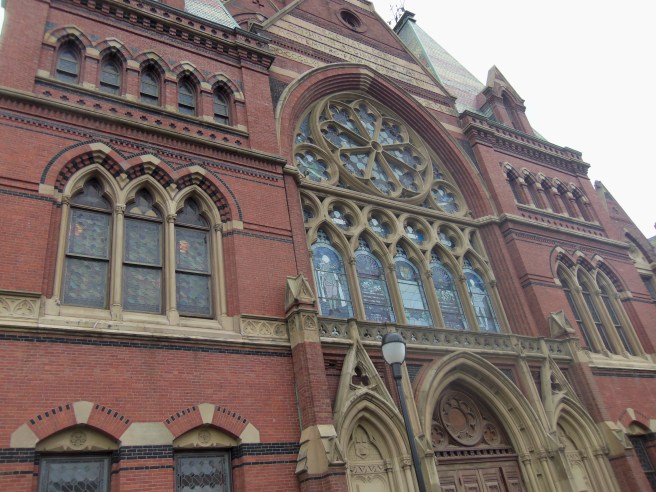
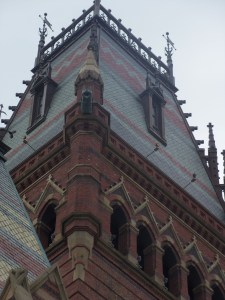
I still imagine living in a tower like this.
I still imagine living in a tower like this. The round window remains distinctive.


Right along the river.


Restoration remains to be done.

The Great Falls once gave their name to the New Hampshire community also known as Summer’s Worth, now shortened into Somersworth. This being New England, the water itself was once put to work in the mills.

My fondness for old mills, by the way, did prompt a novel, Big Inca.

TURNING, RETURNING

My cultivated exercise of substance and spirit, my Dedicated Laborious Quest, is an interplay of natures — my own character and communities and varied ecosystems as they ultimately feed into our universe. As they harmonize, intuition leaps and skips; intellect dances with the heart. Emotions and each individual’s senses potentially humanize a fertile terrain rather than snagging within wildness. Wilderness, meanwhile, represents another order. In its sacred opportunities, the field of endeavor itself, whatever its name or specific form, becomes secondary to the abundance being disclosed around and within each practitioner. Indeed, many who participate and even excel in some activity where the D.L.Q. begins to appear — be it a gymnasium or playing field, a studio or stage, a laboratory or workshop — remain oblivious to the gateway my spiritual brothers and sisters and I have entered. When I meet a celebrated mountaineer who perceives icy heights, it turns out, the way a trucker regards a highway, I’m disappointed he failed to become a mystic seeking cosmic oneness. Accomplishment that’s solely technical remains devoid of unity. No, I’ve already learned that birds along the way are not just birds; my Teacher’s gardens nourish more than a stomach. In a circle of heavenly order as well as disintegrating debris, Kokopelli and I prepare a clearing and settle for the night. Observe planetary and lunar motions. Greet the sunrise. All natural phenomena give birth in an opening, should you find it. Likewise, locating a personal opening, an enclosed space within a universe, can bring recovery, renewal, healing, and salvation. To sit at the center of one’s birthright repeats an ancient journey made only on foot. There have always been charlatans who gain large followings by pandering to appetites for instant gratification, these days offering the comforts of jetliner or Interstate automobile. In reality, the aspirant must abandon even camel or mule along the way — eventually jettison everything, including his own backpack and affection for the very form he practices. In time, even his intentions. Step by rocky step follows a pathway that regresses through that origin. Perhaps the aspirant’s teacher has been there; perhaps he’s lost. At last, with his very life is at stake, if he turns back, he bears a haunted look in his eyes forever. I’ve come far, answering a call in the night, goaded by some deep wound and an overwhelming loneliness. In this exploration, dreams and mythologies correspond to trail markers. Once you discern how paradox differs from contradiction, you embrace its place in the teaching. To climb a higher ridge requires first descending to a valley.

Kokopelli, of course, knows all this and much.

He knows you may have taken any of a number of pathways to the holy garden. One may have played high school football — likely on the offensive line. One may have been an Eagle Scout, backpacking through winter forest. One may have built theater sets or lighting. Analyzed interstellar noise or constructed parquet flooring. One may have repeated violin scales, like me, or cared for younger siblings. The stories Kokopelli’s heard are endless. The common thread through all is this: the commonplace is never good enough. The spider’s thread climbs higher.

It’s no accident I came to dwell in desert, the timeless opening for religious surrender and ecstasy. By good fortune I also encounter great mountains, summer snowfields, crystalline air, unrelenting winds, a circle of fascinating comrades, and a new fullness of myself, no matter how briefly. From those heights, my art and intellect extract an essence, an inspiration to share with brothers and sisters who remain in suburbs and cities, often by necessity or by the duties of urban economy and civic obligation. My goal as poet, priest, artist, philosopher, naturalist, explorer, teacher, or prince — whatever that call — is somehow to preserve a sense of this supernatural potential and cosmic harmony.

Kokopelli says we can do all this when we play a dance. “They can feel it, and that’s enough,” he explains.

To be authentic, such an extended sojourn must somehow reflect other facets of existence as well: violence, savage revolt, a wide ranging lack of dignity or purposeful employment — at least, a recognition that socially valuable work seldom offers adequate compensation. In this preparation, the pilgrim may be propelled backward through history as well as forward into science fiction and interplanetary speculation. How curious that desert is so often perceived as a place of escape: gazing into its vast inhospitable space, you’ll detect nowhere to hide. Such terrain strips and confronts. No other environment, excepting surfaces of large water, is as mirrored with brilliant sunlight. All reflections turn back on the very thing you might most desperately seek to escape: yourself, especially.

If you hide behind a boulder, it evaporates. If you raise your hand to block glare, a Greyhound bus hisses past in a cloud of dust and thunder. If wearied by this torment, you retreat to the house, you’ll find that boulder waiting in the bedroom. A note on the kitchen table will divulge your beloved has taken that bus to the seacoast. You cannot sleep in her absence.

For more insights from the American Far West and Kokopelli, click here.

NOMADS

Some cultures believe a man’s spirit exists in the soil of one’s ancestors. My grandmother’s ground furnished my own, with her muddled knowledge extended in part through Grandpa. But I never knew Mom’s parents, who had been born in other states. Here, though, apart from the Indians, we are all nomads. Many of us, spiritless nomads.

~*~

In this Census round I ponder multiple categories of Hispanics: Mexican, Mexican-American, Chicano, Puerto Rican, Cuban, other Spanish, Hispanic. Also, some of the other categories I keep encountering in the Valley: Japanese, Chinese, Filipino, Korean, Vietnamese, Asian Indian, Hawaiian, Guamanian, Samoan, Eskimo, Aleut, other (specify). Indian (Amer.) print tribe.

I have no idea what I am other than a homogenous WASP. English? German? Norwegian? Czech? Not a clue.

Kokopelli, for his part, is offended there are no distinctions between Hopi and Navajo, even if he’d checkmark both and a few more.

For more insights from the American Far West and Kokopelli, click here.

A MAIN STREET IN MAINE

Those trying to make the place trendy like to call it SoBe.

South Berwick, just across the Salmon River from us, has a downtown block that retains an iconic appearance. The town is also home to Berwick Academy, a private prep school.


The writing on the wall touts Dover, in New Hampshire just to the west.

ALONG WITH THE REZ

When you drive, details pile up.

Where mat-house villages once stood, Highway 21 now runs along a large irrigation canal. Because the roadway goes nearly straight, a few subtle curves become especially treacherous.

Illegal aliens buy cars but have no driver’s license or training. No insurance, either. There’s a headlamp out, few repairs, or brakes gone bad. Talk about trouble.

In the dark, a big white furry wing sweeps in front of my windshield. An owl. An omen, nearly colliding. It’s hard to say who’s more startled.

It might have told me the Pom Pom or feather religion, Washat, remains the most practiced old religion on the reservation.

Kokopelli was a member.

Twenty cars park in a hollow point toward what appears to be a white frame meetinghouse. Inside is a congregation of dove hunters.

There isn’t a cloud in the sky, only one jet contrail as crows circle some relentless screeching. As they flap up, slaughter moves out of the shadows and coyote pursue the only antelope in these parts, the ones on the Army reservation.

On the bright side, the State Fair is a three-hundred-pound pumpkin multiplied. Its doe-goats are judged by measuring and weighing their teats in a beauty pageant stripped to essentials.

Back home, her moodiness could be impossible.

Downtown, about nine at night, a wino-cowboy walks into the office. “Where’s the city desk?” He has no place to stay. “It’s a long story.” A quarter in his pocket, stub of a cigarette, and scabies — mites that are highly contagious. “I don’t want to spread them the way some bastard did to me.” So he went to the hospital from the Gospel Mission, received medicine (how’d he know to do all this?). Didn’t get back in. (“He refused to stay for the service,” they explained.) Angry, turns to ask: “Where does a stranger go for help in this town?”

How should I know? I’m just filling in for somebody else.

“Well, if anybody whizzes you,” the stranger says, “it was a matter of amphetamines. Maybe you heard about ‘The Duke’ in Traders? The trial dismissed on procedural grounds?”

He buried $67,000, but when he returned, the money was gone. So he says, far too articulate for the typical migrant.

Later, Kokopelli tells me that guy’s trouble.

Details pile up as I stay downtown at night and taste the psychic toll of economic theories in wasted, untapped talents. The stench stirs tears. Lonely men at counters stretch cups. Icy evenings of waitresses, cowboys, GIs, prostitutes drive from many towns, a migrant worker family whose car broke down, out-of-work loggers, midnight mechanics and nurses. Add to them an assortment of skinny wannabe rich bitches or real estate and insurance brokers. Clerks trying to live on earnings from clothing stores. A few lumpy bag ladies. Walk in, and all look up from their coffee with vacant eyes. It could be Dickens.

I see another hunger, but my own faith isn’t strong enough — I’d yield to despair.

Later, I sing to Kokopelli, “All of man’s good resolutions turn sang froid in the seasons of samsara.” Noticing his quizzed expression, I translate: “Our good intentions turn cold-blooded in the web of life’s illusions.”

It’s the spider again. Coyote’s cousin. Their damned net.

“Sometimes, Bozo, I wonder about you,” Kokopelli says, exhaling blue curlicues.

“There’s no Dedicated Laborious Quest, no magic without the strength of sitting or dancing.”

I dare not be entrapped in any desire to move freely through the vertical and horizontal dimensions of wherever I simply am. So far I’ve surveyed past and present. The future must wait. First, I need to map the emotional and sensual planes of this realm. Every dance has distinctive rhythms and expressions, as Kokopelli reminds me.

For more insights from the American Far West and Kokopelli, click here.

ONE SIGN OF AMERICA’S CHANGING TASTES

Out in the middle of seemingly nowhere in rural Vermont.
Out in the middle of seemingly nowhere in rural Vermont, I thought this was farm equipment.

Yes, you expect a range of ethnic foods in any big city, and many smaller ones, including the place I call home, now feature a range of international dining options. But when you’re driving mile after mile inhabited mostly by cows, you’re surprised to find anywhere to eat, apart from the occasional convenience store gas station. You know, hot dogs accompanied by potato chips and soda.

This, though, was enough to make me swing around for a second look. As it turned out, they weren’t serving breakfast.

But this is what it turned out to be -- a taco stand! My, how America's mainstream tastes have changed!
Yes, this is what it turned out to be — a taco stand! My, how America’s mainstream tastes have changed!


STAY FOR THE SERVICE

I’m invited to photograph an Indian funeral for a 109-year-old woman. It’s a traditional affair, with a Pendleton trapper’s blanket on a casket lowered by hand. Even so, young punks surround me: “Don’t you think you’re crazy,” they ask, implying?

I look around for Kokopelli, who might intercede on my behalf. He’s nowhere in sight.

Later, with a Styrofoam cross and dozens of American flags, the casket rides the back of a pickup, viewed by faces in Cool-Ray sunglasses — ancient traditions side-by-side with the cheapest, most honky-tonk trinkets of the New American Way.

I wasn’t permitted to enter the house, either.

For more insights from the American Far West and Kokopelli, click here.