A few facts about the cruise boat Mount Washington

For 149 years, a New Hampshire vacation tradition has been the big cruise boat that plies scenic Lake Winnipesauke in the mountains in the middle of the state.

Here’s the dope.

  1. It started out as a paddle steamer in 1872, built by the Boston & Maine Railroad Company to transport passengers and cargo around the lake.
  2. It soon became a tourist attraction, drawing 60,000 passengers a year, a figure that continues.
  3. That vessel burned in 1939 while tied up at dock and a fire spread from a train station.
  4. The current incarnation of the M/S Mount Washington is 230-feet long and has four decks. Maximum capacity is 1,250.
  5. The current vessel started out in 1888 as an iron-hulled sidewheeler on Lake Champlain. In 1940, it was cut apart in Vermont and shipped by rail to Lakeport, New Hampshire, where the hull was reassembled in a new twin-screw vessel design. It was powered by two steam engines (since replaced by diesel) taken from an ocean-going yacht.
  6. There are three dance floors. It seats 500 for dining or serves one thousand for a reception. Two-hour dinner-dance cruises are popular.
  7. It has five ports of call – Weirs Beach, Wolfeboro, Center Harbor, Meredith, and Alton.
  8. The M/S stands for motor ship.
  9. The views include the summer homes of many billionaires as well as mountains and at least 264 islands.
  10. The line also runs two smaller vessels, one of them a mail boat where the envelopes are actually sorted en route.

Ever eaten elk or Dungeness crab?

In my novel Nearly Canaan, Joshua and Jaya settle into a place unlike anything they would have imagined. It’s desert, for one thing, where nearly everything has to be irrigated, for another. Quite simply, it’s a lot like Yakima, in the middle of Washington state.

  1. Dungeness crab. I really miss this. It doesn’t travel well. You have to go to the source. Someplace like Ivar’s on the waterfront in Seattle. One crab per person is fine.
  2. Salmon. How many varieties do you know? Sport fishermen will tell you their favorite.
  3. Tillamook cheddar. An Oregon coop.
  4. Beer. Must be all those local hops and barley. My favorite was Rainier.
  5. Geoducks. (Pronounced gooey-ducks). A large razor clam species.
  6. Those chewy apple, peach, or ‘cot bars. A sweet and chewy candy. Used to get ’em up around Wenatchee. Wish I could remember the brand name.
  7. Rainier cherries. Definitely distinctive.
  8. Chanterelle mushrooms. Had ’em once, and it was a treat. You really have to trust your source when it comes to picking wild ‘shrooms.
  9. Elk. Helps if you know someone who wins a license in the annual hunting lottery. Seriously.
  10. Walla Walla onions. OK, I hate onions. Or they hate me. So I’m just passing this along, based on the praise by cooks I respect.

~*~

What food is special where you live?

Dungeness crab, a specialty in the Pacific Northwest.


What I’ve learned about the ocean

We’re talking North Atlantic, though I had earlier exposure to the North Pacific in Washington state as well as the Atlantic in Florida, Maryland, New Jersey, and Long Island.

New England really is different. Here’s why.

  1. The water’s always restless, don’t be fooled. Those slow swells can get you seasick, too.
  2. The current in the water can push you one direction while the wind twists you toward the other. As I learned the first time I took the helm of a sailboat and tried to steer by the compass.
  3. Tidepooling presents an amazing crystalline world of miniature color in its unique range of flora and fauna. It’s well worth exploring in the rockweed at low tide.
  4. At night, the ocean can be terrifying. It’s utterly dark, surrounded by swirling and slapping sounds in unseen places. The stars – and distant beacons – are icy comfort.
  5. As for those romantic walks along the beach in moonlight? Most nights of the year are too cloudy and too cold. Maybe you need to book a flight to a Caribbean island.
  6. It’s dangerous. You think you’re standing sufficiently far back on a rock outcropping overlooking the water, but don’t be surprised if a big wave somehow crashes up behind you, threatening to sweep you out to sea. January and March add their own complications.
  7. I love bodysurfing in some big waves, come summer, meaning after the Fourth of July. Here we go! Whee!
  8. Whales! The tour captains know where to find them. But their blow spray stinks. Meaning the big leviathans, not the skippers, as far as I know.
  9. And seals! (And sharks, which go after them at Chatham, down on the Cape.) And lighthouses!
  10. The tides themselves are heightened here because of a fluke in the global streaming. They’re really impressive up in Fundy Bay and the easternmost flank of Maine. (Twenty-five feet change every six hours at Eastport, Maine, for example. It’s like draining and quickly refilling a lake.) Less than half of that where I live in New Hampshire, but still impressive.
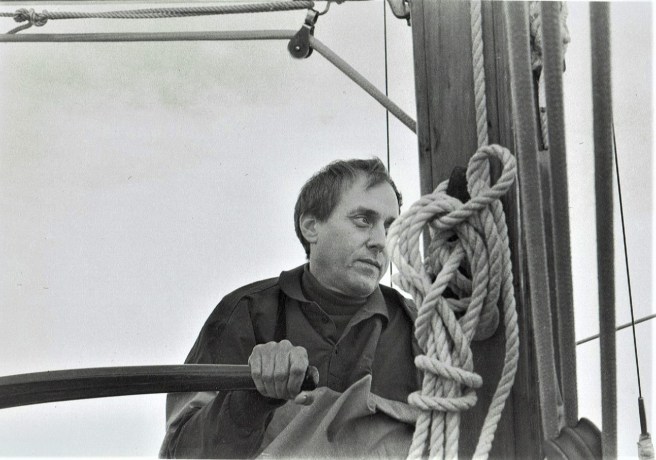
Me at the helm of a 32-foot sailboat back in the late ’80s. It didn’t want to go where we were supposed to be headed, and I was worried the wind might tip us over.   

As a footnote, there are only a few places you can swim in Chesapeake Bay without being stung by jellyfish.

And I love the way you really can see the curvature of the earth when you get an open panorama.

Just so you know about Lake Winnipesaukee

  1. Situated near the center of New Hampshire, it’s the state’s largest lake and the third largest in New England.
  2. It stretches about 21 miles and varies in width up to nine miles, covering about 71 square miles.
  3. The lake contains at least 264 islands and has 288 miles of shoreline.
  4. Maximum depth is 180 feet, augmented by a dam at Lakeport.
  5. The center part of the lake is called the Broads.
  6. The outflow joins with the Pemigewasset River to form the Merrimack, which heads south into Massachusetts before turning east to the Atlantic. Its waters powered many of the industrial mills along its way, including Manchester, Nashua, Lowell, and Lawrence.
  7. The Native name translates as either “smile of the Great Spirit” or “beautiful water in a high place.”
  8. Officially, it’s not a lake but a “great pond,” which the General Court has defined as a natural lake of more than ten acres. The state owns the beds of all the great ponds, making the surface public water.
  9. Ice-out is a popular measure of the end of winter in the Granite State. It’s declared when the ice on the lake breaks up sufficiently for the Mount Washington cruise vessel to make it to every one of its five ports: Center Harbor, Wolfeboro (“the Oldest Summer Resort in America”), Alton, Weirs Beach, and Meredith. It’s also considered the beginning of boating season. The date has varied from March 16 to May 12.
  10. It’s hard to spell. That’s why it’s often known as Lake Winni.

Cheers! They’re officially opening today

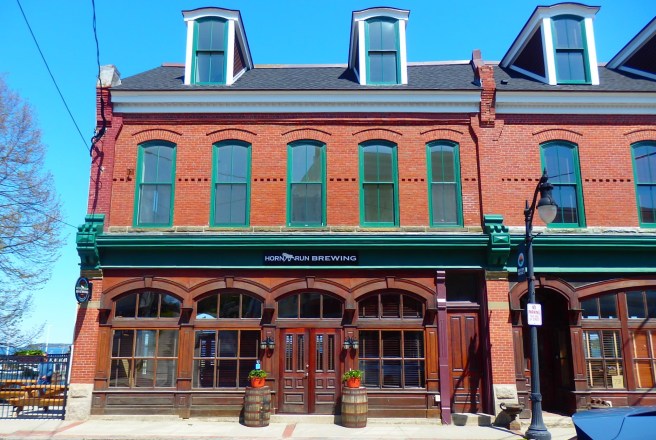
We’ve been watching the renovation of a former bakery downtown, including the clues it was going to be a brewpub. Everyplace seems to have one, except Eastport, until now.

Only a month ago.

The work felt like it was taking forever, but then, to our surprise, the one storefront had some “soft openings,” 2 to 7 or so over the past couple of weeks, ironing any kinks out. It was announced only by a small chalkboard on the sidewalk. I’ll just say they’ve been lovely, low-key, and fun. The Horn Run’s brew’s excellent, too. From all signs, Lisa and Jeff know what they’re doing. They already have a loyal following.

The interior is cozy with an English pub feel, with a view that would be hard to beat. It’s become a place where it’s easy to make introductions.

The choice for the official opening matched many of the downtown stores and galleries, which already planned to reopen for the season today. We’ve definitely felt something building in the air.

But look now. And, yes, there’s an outdoor deck to our left.

Horn Run? Well, for baseball fans, it’s a kind of pun, with a moose as the runner. But it’s also an inside joke, based on the nearby Moosehorn National Wildlife Refuge. Seems that when the pub’s owners were younger and wanted to go for a drive, they’d say, “Let’s take a run around the ‘Horn.” Which then introduces a second inside joke. Moose don’t have horns – they have antlers.

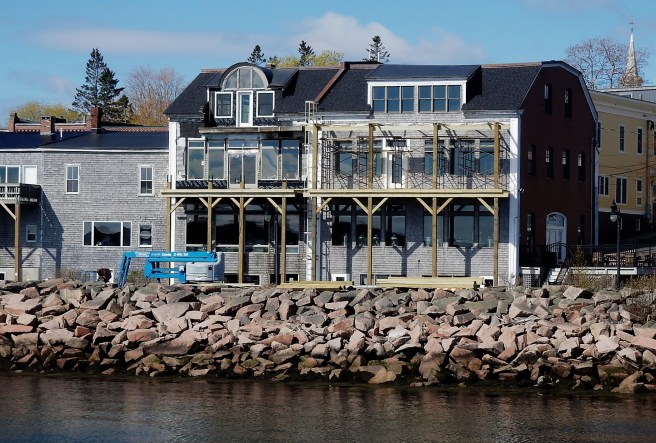
Overlooking the harbor, once the porches are finished.

Work on the apartment porches overlooking the harbor continues. I have seen some of the daring residents already having their morning coffee on the deck, enjoying the ocean air and the view.

The hope is that Horn Run will spark renewed vitality downtown as we come out of Covid. It definitely has appeal for summer visitors as well as younger residents looking for a suitable social center.

Distances from Seattle to … it really is a world apart

In my novel Nearly Canaan, Joshua and Jaya settle into a place unlike anything they would have imagined. It’s desert, for one thing, where nearly everything has to be irrigated, for another. Quite simply, it’s a lot like Yakima, in the middle of Washington state. The closest big city was Seattle, three or four hours away. And that, too, was far from much else.

Just consider these in miles, apart from flying time, even when you could fly direct.

  1. Anchorage: 1,448 miles. Alaska has a spiritual affinity in the Pacific Northwest, like it’s just up the road, more or less. Plus, it had good summer jobs on the crab boats, forget the riskiness.  
  2. Honolulu: 2,680. Naturally, driving isn’t an option. As a vacation destination, though, this was a highly popular option, especially considering the sunshine.
  3. San Francisco: 679. Like this was the next town south, and like a grown-up version of Seattle, a few decades back. It’s still a long way to drive.
  4. Las Vegas: 871. Seemed close, especially in winter. Say a weekend getaway. Again, factor in the sunshine, if you ever left your hotel/casino.
  5. Denver: 1,024. While many think of the Mile High City as Western, we thought of it as Out East. Our awareness largely skipped right over it. See next item.
  6. Chicago: 1,737. Alaska was closer, and more of a kindred nature.
  7. New York: 2,408. Largely didn’t matter in our eyes.
  8. Washington: 2,306. Ditto.
  9. Tokyo: 4,792. Psychologically, it felt as close as the East Coast of the U.S. and about as influential. We shared an ocean, after all.
  10. Atlanta: 2,182. And you still had to get to Florida, which didn’t matter since we had Hawaii when you added it all up. Blah! 

Real Maine


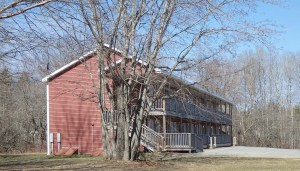
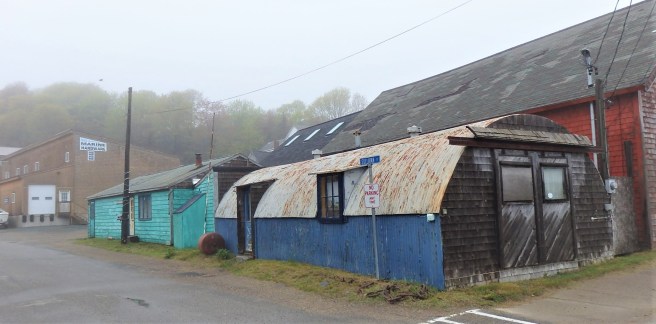
This year the Red Barn has featured a lot of photos from Downeast Maine, many of them taken about a five-hour drive from our home in coastal New Hampshire. (Driving the other direction would put us in Manhattan in the same amount of time.) It’s easy to imagine the remote coastline as idyllic, but the reality is that much is also economically challenged and impoverished. Here’s an example from downtown Eastport.

Ever been out on the Plains?

My novel Nearly Canaan starts off in a railroad crossing called Prairie Depot, and my story The Secret Side of Jaya returns there.

Prairie can be found as far east as Ohio, but it’s more extensive out on the Great Plains.

Here are some tidbits about the landscape.

~*~

  1. It’s bigger than I thought. The region runs from the Rio Grande river bordering Mexico all the way to the Arctic Ocean in Canada, and along the Rocky Mountains to the west. Its width is about 500 miles and it covers about a seventh of the continental U.S.
  2. Rainfall ranges between 13 and 20 inches a year, too little to sustain trees.
  3. Its natural vegetation is a variety of grasslands. And it’s flat or gently rolling.
  4. It had immense herds of bison as well as pronghorn. Prairie dogs, coyotes, prairie chicken, and rattlesnakes remain prominent.
  5. Native American tribes included Blackfoot, Crow, Sioux, Cheyenne, Arapaho, and Comanche. The nomadic tribes followed the bison migration through the year.
  6. The introduction of the horse from Europe dramatically changed the Native culture.
  7. The rural Plains have lost a third of their population since 1920. Ghost towns, which have lost so much population they’re considered extinct, are the most common category of towns.
  8. The climate includes cold, harsh winters and very hot, humid summers.
  9. Without natural trees, hills, or mountains, there’s no protection against wind and erosion.
  10. The region includes Tornado Alley, based on the frequency and intensity of the twisters generated in its open spaces.

~*~

What surprises you here?