A few more of my favorite art museums

Let me say the big Metropolitan in Manhattan is not on this list for a reason. It’s too big and too crowded, OK? I’ve never felt so claustrophobic as I did the last time I visited.

Also, I see I did a rundown on New England museums and college galleries back in 2015, so you can go to the Red Barn archive for those.

With that, let’s turn the spotlight.

  1. Cleveland: The city was once the home of some powerful industrialists, including the Rockefellers, and this collection reflects that. It has some stellar old masters and a leading Asian collection. Plus, admission is free.
  2. Chicago: Masterpieces by the mile. A muscular feast for the eyeballs.
  3. National Gallery: The third of the truly encyclopedic collections on my list, I always feel it should have been built in Pittsburgh, where Andrew Mellon amassed his fortune. Still, it feels more leisurely to me than many others, and the Rothko court is my favorite. But don’t overlook the two rare Vermeers.
  4. Phillips Collection: Also in Washington, D.C., this assembly of old houses in the Dupont Circle neighborhood has an intimate feel and some stunning Impressionists and modern works, including major Americans.
  5. Dayton: I grew up with this then-free collection at hand. What makes it remarkable was the astute decision to go after masterworks by lesser known painters rather than third-rate works by the big names, a strategy the New York Times hailed.
  6. The Taft: This modest collection in the family homestead just off downtown Cincinnati is a disarming salute to personal collecting, one strong on period French like Corot.
  7. Baltimore: The famed Cone sisters’ collection of Impressionists and early modern masters is featured at the Baltimore Museum of Art on the edge of the Johns Hopkins campus. Don’t confuse it with the Walters, down by the Washington Monument in Mount Vernon Place, which goes more for antiquity and doodads. My bedroom in Bolton Hill looked out toward the apartment building where the sisters once crowded their assembly into a few rooms.
  8. Brooklyn: Way too overlooked, even with its major Asian galleries, among the best in America. Check the schedule before you go, since its budgeting closes halls on a rotating basis.  
  9. Victoria, British Columbia: The Royal BC Museum, situated downtown by the ferry landing, focuses on natural history, but its presentation of indigenous culture is stunning. Pacific Northwest Native totem poles, lodges, clothing and costuming are reverently displayed, gallery after gallery. Tell me this isn’t a visual masterpieces experience. It really is a vast art installation.
  10. MOMA: Don’t know what it’s like now, but I did get to view the panoramic Monet, back before the fire, as well as Picasso’s Guernica, now returned to Spain. All this was before the Museum of Modern Art expanded its home.
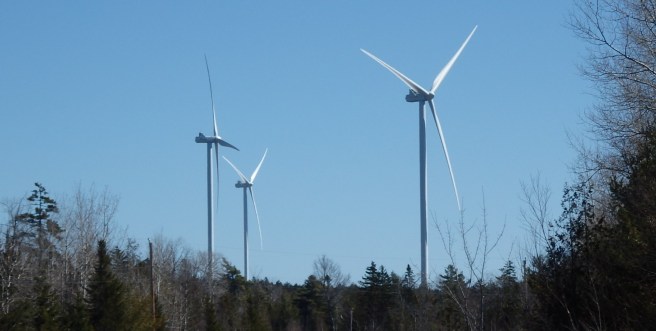
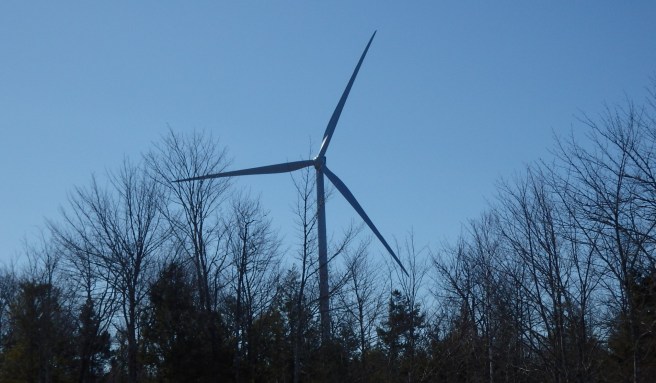
 

Running on the wind

One sight always catches our breath as we drive Route 9 across what sometimes feels like the fringe of civilization as we’ve known it. And, for the uninitiated, the state highway from Bangor to Calais can become pretty monotonous in its long uninhabited stretches. As they say, make sure you have a full tank of fuel before you tackle it.

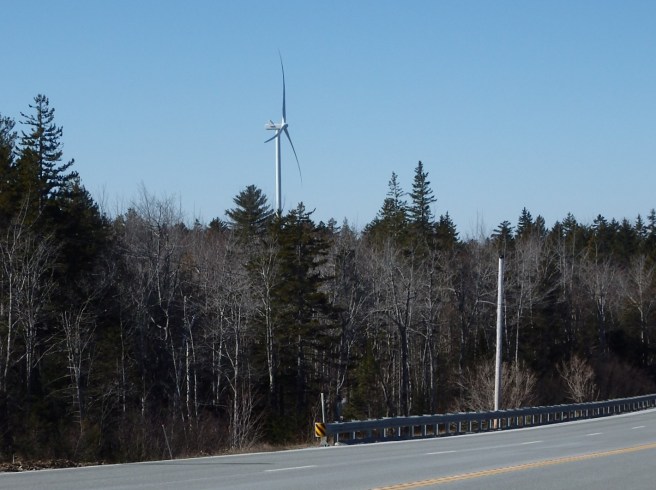
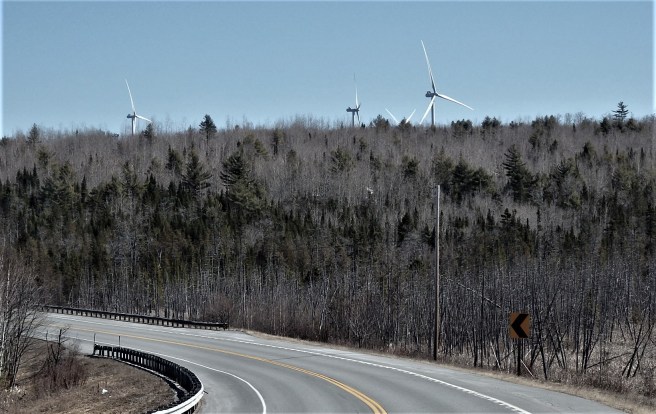
On a clear day, from a dozen miles away you might catch glimpses of a corner of the windfarms on Weaver Ridge and adjoining hills in Hancock County – I’ve counted at least 30 towers before the road dips away – but there are more tucked away in the high terrain. Still, nothing can prepare you for that first flash of the big blades turning gently in the air right in front of your face, or so it seems.

Each blade weighs 1½ tons, even though it appears svelte.

They dance gracefully – sometimes as a solo, then as a pair, or four. You spot them to your left but they suddenly show up on your right – the roadway twists along the slope. As those slip behind you, more giants rise above the hedge of forest. And all too soon, you’ve moved on.

The towers and their blades are bigger than you’d suspect. In fact, at the moment, they’re the tallest wind-powered electrical generators onshore in America, though much larger ones are projected for offshore installation.

The hub stands 382 feet above the ground – that’s more than the length of a football field – and the blade tips reach to 585 feet.

Wind generation accounts for nearly a third of the electrical production in Maine, though the state also imports a fourth of its electricity from Canada, largely Hydro Quebec.

I am baffled by the “not-in-my-backyard” opponents to similar windfarms. They still want energy for their computers and refrigerators and lighting, right?

A tractor-trailer rig could easily be parked in the gearbox or “cabin” attached to the hub.

As if these “spoil the view”? I find them mesmerizing, even enhancing as a kind of sculpture and a reminder of the currents in the air itself. They definitely look better than a toxic oil refinery – and there’s no awful smell. For that matter, they strike me as much more attractive than a television transmitter or cell phone tower as a hilltop crown. And they do remind us of the charming Dutch windmills in a much smaller scale.

The latest installation, 22 Vesta towers and turbines, cost $150 million and went into full operation earlier this year.

Sometimes they seem to play peek-a-boo as you drive.

Reasons to like Watertown, Mass.

Greater Boston is comprised of many suburbs that were originally Colonial towns out in the country. As a result, much of the metropolitan area today retains a village feel in addition to its cosmopolitan chic.

Each town – or, in many cases, now city – is different, however subtly.

Let me illustrate with Watertown, where my choir rehearses.

  1. It’s on the Charles River, which once powered its paper mills and other factories. Today the river has lovely parks and pathways, as well as crewing teams practicing out on the water in season.
  2. The impressive Arsenal produced military armaments from 1816 through World War II. Today it’s a shopping district, and its restored antebellum commander’s mansion is a kind of museum.
  3. Settled in 1630, Watertown soon became the seat of the Whitney family of invention, investment, and horse-breeding fame.
  4. It’s largely overshadowed by neighboring Cambridge and the Harvard crowd. The famed Mount Vernon Cemetery, the first garden style burying ground in America, 1831, is usually thought of as being in Cambridge, when it fact it lies mostly in Watertown, with a who’s who of famous Americans buried in its rolling grounds.
  5. Watertown has a wide ethnic range of residents, mostly working class or professionals.
  6. The Armenian Library and Museum of America is well worth visiting for exhibits that acknowledge many genocides beyond their own. Watertown is the third largest center of the Armenian diaspora in the United States, surpassed by only two cities in California.
  7. When it comes to cheap eats, I think it definitely beats hipper Cambridge. Some of the best Chinese I’ve ever had was in a modest storefront in Watertown Square, and I’m really sold on the Iranian takeout just up the street. But we also like Wild Willy’s.
  8. The Perkins School for the Blind, founded in 1829, is the oldest such institution in the U.S. and is world famous. It manufactures its own machine to record text in braille. It moved to Watertown in 1912.
  9. I really like the public library, which even has its own coffee shop.
  10. The Gore Place is an opulent summer home built by a man who a fortune in speculating in Revolutionary War debt.


Come explore the Olympic Peninsula

When Jaya and Joshua set of for the Pacific Northwest in my novel Nearly Canaan, what they expect to find is something very much like the Olympic Peninsula rather than the fertile desert where they land.

Here’s some of the alternative.

  1. Set on the far western end of Washington state, the Olympic Peninsula is an anvil of land comprising nearly 3,600 square miles – more than Rhode Island and Delaware combined. It has rare temperate rainforests, glacier-clad mountains, hot springs, timber-tangled shorelines, tall seastacks in the surf, hot springs, waterfalls, large lakes, and eight Native tribes and their reservations.
  2. Olympic National Park at the heart of the peninsula covers nearly a million acres and includes the state’s second-largest mountain range, crowned by 7,980-feet-tall Mount Olympus. Glacier-climbing skills are essential for ascent and descent. The park is the system’s sixth most popular, attracting more than 30 million visitors a year.
  3. The restoration of elk was so essential to the park’s mission that it was nearly named Elk National Park.
  4. The town of Forks gets 119.7 inches of precipitation a year – making it the wettest municipality in the continental U.S. And the nearby Hoh rainforest receives 140 to 170 inches a year.
  5. The peninsula abuts the Pacific Ocean on the west, the Strait of San Juan de Fuco on the north, and Puget Sound on the east. Its rugged interior shunts auto traffic toward the coastlines.
  6. The 300-mile, two-lane Route 101 loop around the peninsula is considered a three-day drive. More, for those who investigate scenic offshoots. There are no alternatives for traversing the peninsula.
  7. Hot springs access is available to the public at Sol Duc. Other sites are local secrets.
  8. Following the biggest dam removal in U.S. history, completed in 2014, the Elwah River once again runs wild for fish migration.
  9. There are more than 60 named glaciers.
  10. While the Olympics Range is seen prominently from Seattle on a clear day, its tallest point, Mount Olympus, is visible from no city.

~*~

Hope that serves as an introduction. We haven’t even touched on Port Townsend.


Major North American rodeos

In my novel Nearly Canaan, Joshua and Jaya settle into a place unlike anything they would have imagined. It’s desert, for one thing, where nearly everything has to be irrigated, for another. Quite simply, it’s a lot like Yakima, in the middle of Washington state, a place that has some fine rodeos, like the one at Ellensburg, up the canyon, or out in White Swan on the reservation.

This list started out to be the biggest ones, but I’m finding even that can be tricky, depending on the varying measures. And then there are the Best Lists, which laud smaller events like the Reno Rodeo in Nevada and the Pendleton Roundup in eastern Oregon.

So here’s a list anyway. Giddyup!

  1. Cheyenne Frontier Days, Wyoming
  2. Calgary Stampede, Alberta, Canada
  3. National Western Stock Show, Denver
  4. Ponoka Stampede, Alberta, Canada
  5. Fort Worth Stock Show, Texas
  6. La Fiesta de los Vaqueros, Tucson, Arizona
  7. Williams Lake Stampede, British Columbia, Canada
  8. Festival Western de St. Tite, Quebec, Canada
  9. World’s Oldest Rodeo, Prescott, Arizona
  10. Parker Ranch Fourth of July Rodeo, Hawaii. Oops, not North America but still in the USA.

~*~

Ever been to a real rodeo?

Yes, I enjoy Midcoast Maine

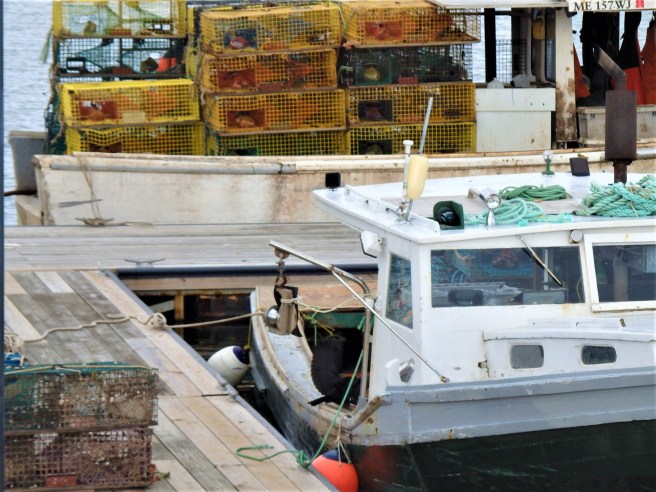
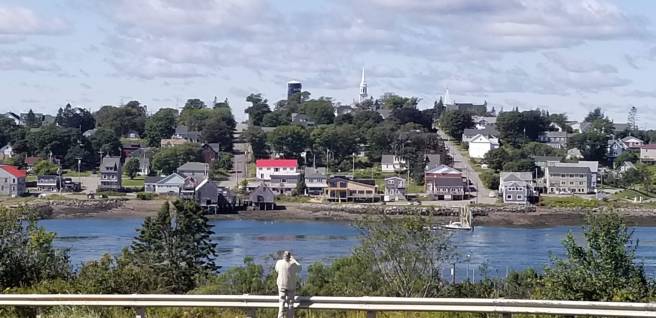
The coastal loop of Maine north of Portland but before Acadia National Park can easily be overlooked by many tourists who stick to Interstate 95. Besides, U.S. 1, its principal route, turns into a traffic jam during the summer, which is why we go in the shoulder seasons.

Many of its delights are found along the side roads that reach down its fingers to the sea or inland in the other direction.

Here are a few of the things we enjoy.

  1. The lighthouses, of course. Pemaquid Point at Bristol is a photographer’s favorite, but there are 20 more. Some are privately owned, and many – including the 11 on islands – are viewed best from the water.
  2. Ferry rides are one way to get to the islands and a fun trip in their own right. The state runs vessels from Rockport, Bass Harbor, and Lincolnville, and private services add New Harbor and Port Clyde to the points of departure.
  3. Getting to Morse’s sauerkraut in Waldoboro, leading away from the water, can seem like forever, especially in winter, but when we go, we stock up. This cabbage is nothing like the crap we were force-fed as kids, and the German restaurant and store are treats in their own right.
  4. Moody’s Diner, back out on U.S. 1, is a classic and where I learned the difference between lowbush blueberries common to Maine and the highbush ones like I grow.
  5. If you can, pick a town and stay there for a few days. We’ve done B&Bs in Bath, Belfast, Boothbay Harbor, Camden, and Damariscotta – as well as weeklong conferences in Brunswick – and each town is different. We’d go back in a flash to Camden in the depth of February again, if the opportunity arises. Or if it’s in the summer, we definitely want to visit the lavender farm. You have to walk around to really enjoy each town and its people.
  6. The Farnsworth Art Museum in Rockport emphasizes work by Americans, especially modernists – and its connection to the Wyeths and Alex Katz are strong. The museum even owns the Olson house, made famous in the painting Christina’s World.
  7. Bay Chamber concerts have been providing classical music each summer out of the old opera house in Rockport and related venues along Penobscot Bay. It began as the summer home of the famed Curtis Institute in Philadelphia and maintains high standards.
  8. Popham Beach in Phippsburg has to be the loveliest in the Maine. The state park is also the busiest. Get there early, if you can, before the line forms.
  9. The river herring also known as alewives are a regional treat, especially when they migrate each spring. You can see them up-close in Damariscotta … or dine on them, if you ask around.
  10. When the herring run, the osprey follow. The big birds rival eagles in their majesty.

A bit of what I know about Cape Cod

The flexed arm of 15 Massachusetts towns sticking out into the Atlantic is a unique part of New England. You sense something’s different as soon as you cross over the Bourne or Sagamore bridges high above the Cape Cod Canal.

Here are some considerations.

  1. It has four different sections, and they can be confusing. The Upper Cape is what you encounter immediately over the bridge, while the Lower Cape, or Outer Cape, is what comprises the wrist and hand of the upraised arm. Got it? That always feels reversed to me. And in-between are the Mid-Cape and Lower Outer Cape. Usually added to that are “the islands,” Nantucket and Martha’s Vineyard, which you reach by ferry.
  2. The Cape is infused with a Colonial appearance, despite all the development since, or at least since the high Victorian era. And it’s definitely integrated with the ocean, on both sides. It often becomes overwhelmingly twee, though the thrift shops can be well worth investigating. Make sure your American flag has only 13 stars.
  3. What people usually think of as the Cape is its far outer tip – the glorious sand dunes and then flamboyant Provincetown. For me, the heart of it all has been the Portuguese Bakery in P’town. Cheap, blue collar, and distinctively tasty, until recently. Portuguese, after all, have long been the fishermen.
  4. The Cape is noted for its lighthouses – 18 still working, last I counted. Some of them are privately owned.
  5. Chatham, at the elbow, has a gazillion big seals – and a shark population that feeds on them. You can get close-up views of the seals at the town’s commercial fish dock.
  6. The sandy cliffs and beaches along the Atlantic run for miles, from Marconi station on up to P’town. You can just walk and walk and walk, maybe returning on the converted railroad trail up above.
  7. Traffic jams are a constant headache through summer, especially on weekends.
  8. The Cape pushes the ocean current further out to sea, meaning colder waters rise up in the void to its north. For swimmers, that means warmer waters on the Cape than we have in New Hampshire or Maine, beginning earlier and later into the season, too. By the way, the Plymouth Bay side is usually warmer and gentler.
  9. Bicycling is big.
  10. I suggest going in the shoulder season, before Memorial Day and after Labor Day. Good swimming can extend through September, if hurricanes cooperate. For the rest of the year, the weather can be weird. Remember, the Cape’s at the mercy of the ocean.