A year of puffin-viewing tours to Machias Seal Island sells out in 45 minutes

The narrow, mile-wide island, claimed by both Canada and the U.S., is treasured by many birdwatchers for having the largest colony of nesting puffins along the Maine coast.

Trips to the island are limited, so much so that when online reservations for daily summer visits opened at 8 a.m. on January 10, all the tickets were booked in 45 minutes – at $180 a seat.

Sounds like a real bucket-list item, even if the boat sails from Cutler in my own Sunrise County.

Be warned, too, that the weather can be iffy, meaning that reservation might be cancelled on short notice.

Should I start considering a trip to Newfoundland if I really want to see any of the distinctive birds?

The cruise ships are coming!

As our City in the Bay has been redefining itself, in part thanks to its lively arts scene and surrounding natural wonder, tourism has been ticking up, even in the face of Covid-19.

Part of Eastport’s appeal is the deepest natural harbor in the continental U.S., a port that at one time, back when there was a lot of smuggling, was the second-busiest in the nation – something a shift in federal tax laws and heightened enforcement soon curbed.

Still, we have a long history of steamship travel, right up to the auto age.

And now, this year, hooray, we’re even anticipating the return of passenger vessels, albeit of the increasingly popular “small” ship variety rather than the floating cities that can overrun a seaport.

First, the 210-passenger, 325-foot Pearl Mist is scheduled for five visits, most of them 3½ hours ashore, as part of a seven-night round-trip out of Portland. Other stops on its Fundy Bay circuit include Rockland and Bar Harbor in Maine, and St. Andrews, St. John, and Grand Manan Island in New Brunswick. Fares run from about $4,000 and up.

Second, in September we host the innovative 530-passenger, 459-foot Roald Amundsen expedition ship on a 10-hour stopover. Originally, this was to be part of an adventurous 44-day navigation across the Arctic Ocean in a Northwest Passage venture from Vancouver, British Columbia, an ultimate bucket-list voyage. But the fares, starting around $57,000, may have been too pricy for the Covid-antsy market, causing it to be broken up into segments – the first ending at Nome, Alaska, and the second continuing from there on to Greenland and ending at Halifax, Nova Scotia. Eastport is now tucked in as the cherry in a shorter, more affordable, New England dessert.

More exciting is the news that the Amundsen is now scheduled to return next year as part of an even more audacious 94-day cruise – a Pole-to-Pole adventure that will originate in Vancouver, British Columbia, and traverse the Northwest passage before coming to Eastport and then continue on to equatorial warmth, the Panama Canal, the Pacific coast of South America, and finally shore visits on Antarctica. Think of going from icy summer to the edge of autumn in New England to the tropics and on to spring while exploring three continents. The lowest fares figure out around $600 a day.

And little Eastport will be part of that.

In Maine, the bulk of the cruise action hits Bar Harbor, at the edge of popular Acadia National Park, where frequently two ships a day debark during the summer season, and in Portland, which gets especially busy during the fall foliage season.

We’re really not set up for the mega-cruise vessels that have dominated the industry. Let’s see how our emerging niche shapes up.
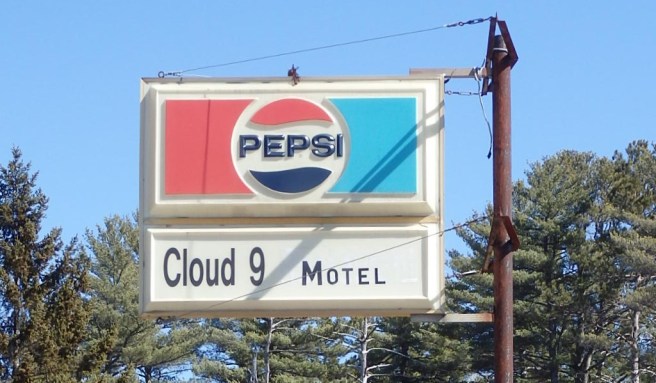
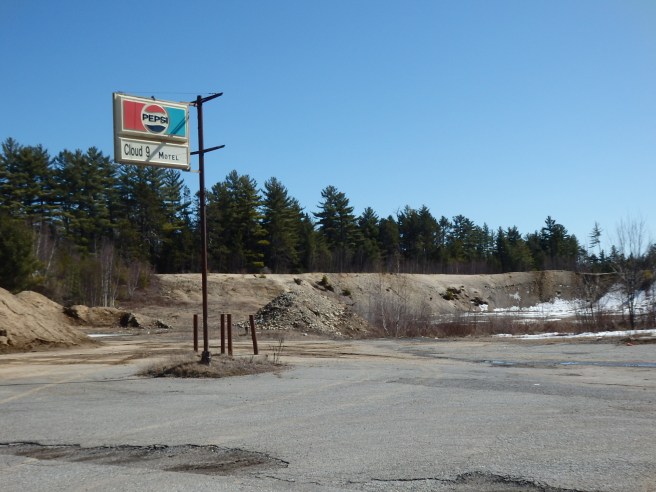
 

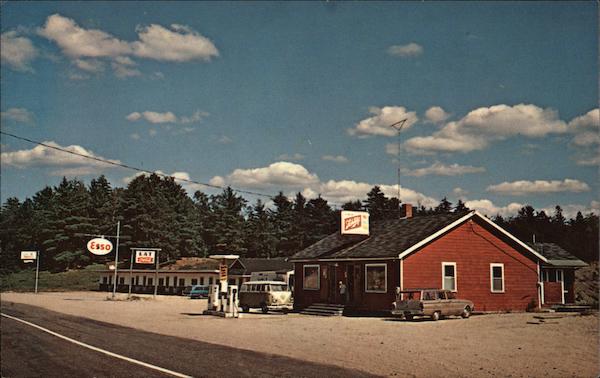
Heavenly rest? The Pepsi sign always raises a chuckle

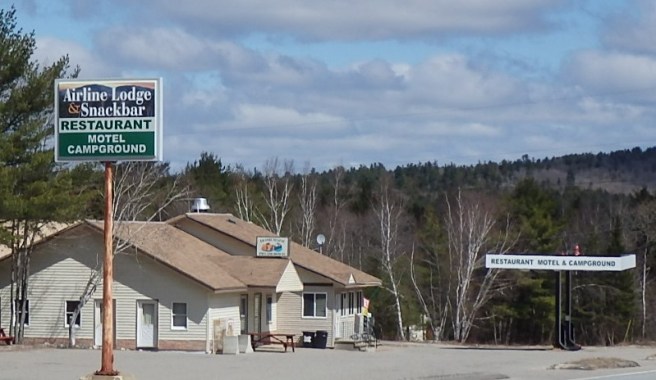
The Cloud 9 Motel sign stands out along State Route 9. Initially, the name seemed to reflect some misplaced hip ’60s jargon. What we encounter is far from a plush, consummate destination. Eventually, I connected the “9” to the highway. Ha-ha.
As you can see, there’s no motel, just a sand pit, on Maine Route 9 – the Airline Highway – four miles west of Wesley.
A postcard shows the place in its prime in the ’70s. It had eight heated motel units and sold gasoline, groceries, beer to take out, and light lunches in what it touted as the heart of some of the finest hunting and fishing in Maine. Many of the sportsmen returned annually, but times change. The buildings came down in 2015.

The road was named before there were even airplanes

Except for a highway way up north, there are only two east-west routes across sprawling Washington County, either one requiring an hour-and-a-half drive from Eastport to the county line and the rest of the nation (and that’s including a shortcut, if you can find it).

One is U.S. 1, which more or less follows the coastline – or the Bold Coast, as it’s also designated. It passes through some lovely seaport towns and includes spectacular views of Mount Desert Island and its Acadia National Park as well as the northern reaches of Penobscot Bay.

The other is more direct. State Route 9, or Airline Highway, stretches 90 miles from Bangor to the Canadian border at Calais. Much of it passes through uninhabited townships of scraggly forest and swamp or along ridges with blueberry barrens and views that stretch for miles. It carries major truck traffic to and from New Brunswick.

There aren’t many services along the way. This is the most prominent.

But Airline? For a road?

The name, it turns out, comes from the Air Line Stagecoach company, which began using the oxcart trail in 1857. At the time, “air line” was a term for the straightest line between two points – or, in another common phrase, “as the crow flies.”

Its backers hoped to encourage settlement and economic development along the route, but the land was too rocky for commercial farming and the blackflies and mosquitoes could make even summer miserable. Later, mechanization reduced employment in the logging industry, depleting what little population there was.

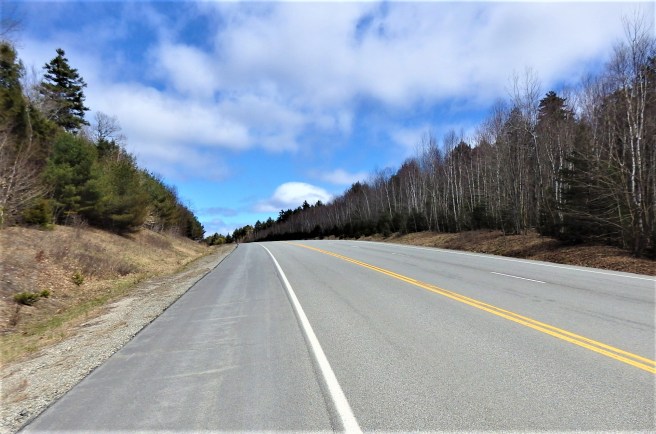
Today, some stretches look like this. This is eight miles without any utility lines. 

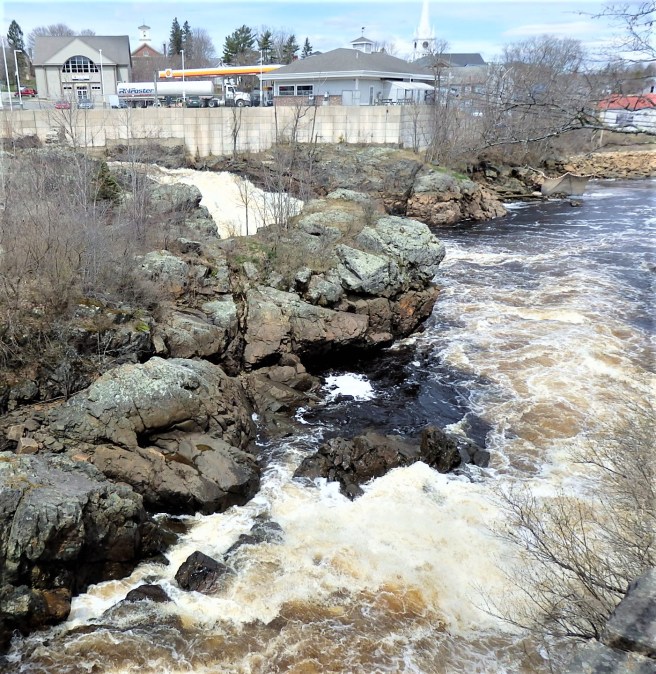
Nasty Little Falls

That’s how the Native name Machias translates.

The bridge carries busy U.S. 1 traffic that’s oblivious to the landmark below.
The water charges down in two parallel sets of falls that reunite in the tide below.
You wouldn’t want to go over these in a canoe.

The tranquil city of Machias at the falls is the Washington County seat.

In just six hours, day in and day out

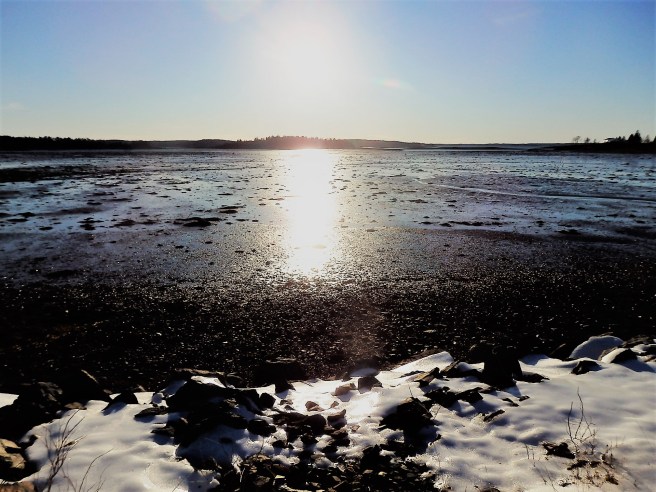
Our tides vary between 15 and 25 feet, depending on the moon cycle, and half of that change occurs in just two hours, halfway between high and low. It still amazes me.

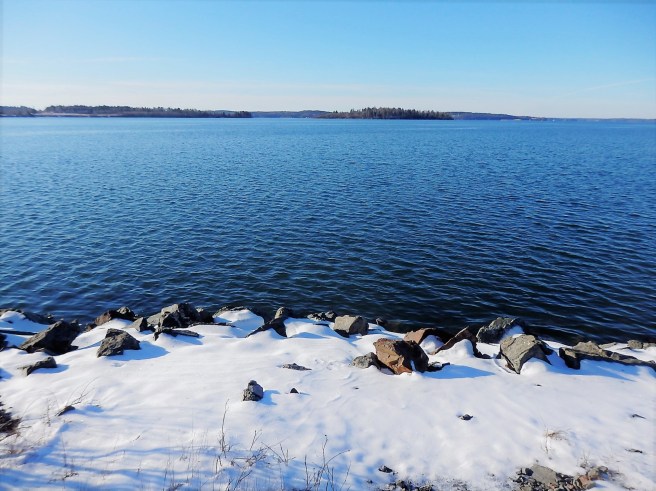
This is what you expect to see at the ocean, right? Just stick around another six hours to see what happens to our high tide.
At Carrying Place Cove, if often looks like somebody pulled the plug on the tub and let all the water out.

National parks I’ve truly enjoyed

I have to confess to how many of America’s national parks remain on my to-visit list. But I still have some favorites among the ones I’ve explored. They don’t have to be massive to still be impressive.

  1. Rainier, Washington: Most of all. It’s top of the list for reasons I’ve described elsewhere on this blog. Living a few hours away, I had four years of exposure to this glacier-clad beauty and its forests below.
  2. North Cascades, Washington: Geologically some of the most incredible mountains in the continental U.S., along with rewarding hiking and camping. Some of our best beat-era poets were forest fire lookouts on its remote summits in the ’50s and ’60s.
  3. Smokey Mountains, Tennessee-North Carolina: I was nine or ten or so when we ventured down from Ohio. We weren’t yet doing family-camping, but there were some wild experiences with cheap motels. But then, when we got to the park, how could I not be blown away? So this is what mountains were!
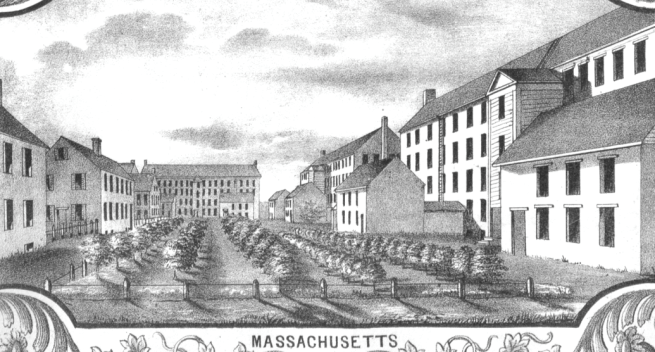
  4. Lowell, Massachusetts: I’ve blogged about our daytrip to this pioneering industrial community and its water-powered textile mills. Try to time it so you can also take a ride down the canals through the mills and out to the Merrimack River.
  5. Cuyahoga Valley, Ohio: This meandering swath of greenery along the Cuyahoga River in the former Connecticut Western Reserve corner of the Buckeye State is a touch of sanity within a populous region. It even includes some decent waterfalls. The Cleveland Orchestra’s summer home is nearby.
  6. Acadia, Maine: The rugged Downeast coastline starts here, more or less, and there’s nowhere else so much of it is available to the public.
  7. Olympic, Washington: It’s the heart of a unique realm worthy of a Tendril of its own, as well as a longpoem you can get at my Thistle Finch blog.
  8. Mammoth Cave, Kentucky: The world’s longest known cave system, only part of it is open to public tours, but what is shown includes spectacular geologic formations and chambers.
  9. Crater Lake, Oregon: It’s impressive but usually seen as an auto circuit around the volcanic crater of what was once mighty Mount Mazama. The lake sits at 6,178 feet above sea level.
  10. Everglades, Florida: To appreciate this ecological system, you need to take a guided boat tour into its vegetation and zoological wonders. This is the real Florida, almost surreal. Well, compared to much of the commercial development throughout the state, maybe a better adjective is needed.

~*~

There are many more, awaiting personal discovery. So what are your favorites?

Lowell, 1850

Why we’re all waiting for the border to Canada to really reopen

Having to wait 72 hours for a Covid test result – but don’t you dare delay much longer – as well as the other current restrictions have meant that the U.S.-Canada border really isn’t open, not the way it was before the coronavirus outbreak.

That’s made for a hard burden where I now live. New Brunswick is very much a part of our community. Just about every long-established family has kin on the other side of the boundary. For almost everyone, it’s meant jobs or services or shopping or even cultural pursuits. There are good reasons our local newspaper covers the two adjoining counties, which share the tidal waters and weather. The virus constraints have devastated the economy of the small city of Calais, to our north, which usually carries heavy truck traffic between the two countries as well as local business at groceries, hardware stores, and other retailers and restaurants; likewise for the town of Lubec, to our south, which has the only bridge connection for Campobello Island. Many folks also have property on the other side of the line, or maybe their boat, or even dear ones buried in cemeteries, and are cut off. You go to the dentist and realize the radio is tuned to a Canadian station, that sort of thing. It’s not all one way, either. I would be back to swimming laps in the nearest indoor pool, for instance, only 45 minutes or so distant. The nearest Costco would be only an hour-and-a-half drive off, rather than eight or nine down around Boston. We’d have some fine dining options available, so I’ve been told, as well as museums and nightlife and even festivals.

The local Passamaquoddy population has long been torn by the international division, especially the differing laws regarding Indigenous peoples. I’ve also heard how the already tightening border regulations have changed other interactions. Guys my age have told me about dating girls on the other side of the water (way back then we were all teens), rowing over to court them and then returning (merrily), something nobody could do today without being detained by the Coast Guard, Customs officials, and who knows else. (Not so merrily.)

It’s also dampened summer tourism, especially by travelers who were hoping  to continue on but couldn’t, or by Canadians who usually boost the crowds at our week-long Fourth of July revels and Pirate Festival weekend.

For me, this has been a lesson in the ways seemingly arcane regulations made in distant places can hit home personally. You know, the kind of thing you might glance over in a news story with a shrug, as I would, not anticipating a trip to Europe or a Caribbean cruise or even a cross-country flight anytime soon.

What unexpected ways have you experienced Covid restrictions?   

Some breathtakingly beautiful places I’ve been

  1. Mount Rainier, Washington: Not just its high country and flanks (I’ve been as high as Camp Muir, 10,188 feet elevation), but also the valleys and surrounding ridges. Living four years to its east allowed me many opportunities to see aspects many of its more urban neighbors rarely encountered. (I’ll let this one stand as a representative of what could easily become a Tendril of other Cascades Range experiences.)
  2. West Quoddy State Park, Maine, after a big storm: Like a smaller scale Acadia, but far less crowded and more intimate.
  3. Outer Cape Cod, Massachusetts, on the Atlantic side: Especially pleasant in the shoulder season, when we were staying at Grandpa’s Jim’s place. The beach and dune just run on forever.
  4. Mount Cochura, New Hampshire: Not one of the state’s higher peaks, but a strenuous and varied ascent all the same, with fantastic views from the peak. Noted in Native lore even before the celebrated lovers’ leap.
  5. Stillwater Quaker meetinghouse, Barnesville, Ohio: Built in 1877 along timeless classical proportions and designed to house yearly meeting sessions as well as weekly Meeting for Worship, the site always felt much older and more hallowed to me, even after living in New England.
  6. Music Hall, Cincinnati: Some of my greatest concerts in my memory were in this large, horseshoe-shaped Italianate auditorium. The acoustics in the second balcony were razor-sharp. (Gilded Severance Hall in Cleveland deserves an honorable mention.)
  7. Hancock Tower observation deck, Boston: The panoramic view from the top of the city’s tallest building was amazing. Alas, it has been closed for security reasons since the 9/11 flights took off from Logan International Airport across Boston Harbor, a very prominent feature in the view.
  8. Butchart Gardens, Vancouver Island, British Columbia: This flower-lover’s 55-acre paradise attracts more a million visitors a year for good reason. The blooming beds are perfection of horticulture and color, but there’s no preparation for the stunning sunken garden in the former limestone quarry just beyond.
  9. Roan High Knob, North Carolina-Tennessee: I was a 12-year-old Boy Scout nearing the end of a week’s backpacking on the Appalachian Trail when we came upon this 6,286-foot-high mountain crowning a nearly tree-barren highland punctuated by rhododendron in full bloom. I’d never before seen a rhododendron, as far as I know, but have always associated the shrub since with that unanticipated, perfectly timed encounter.
  10. Ohio Caverns, West Liberty: You just don’t expect the crystalline underground wonder to exist under an otherwise pedestrian Ohio landscape. (Mammoth Cave, Kentucky, is grander and more spectacular, but sometimes, as the saying goes, Small Is Beautiful.)

~*~

Your turn to pipe up!