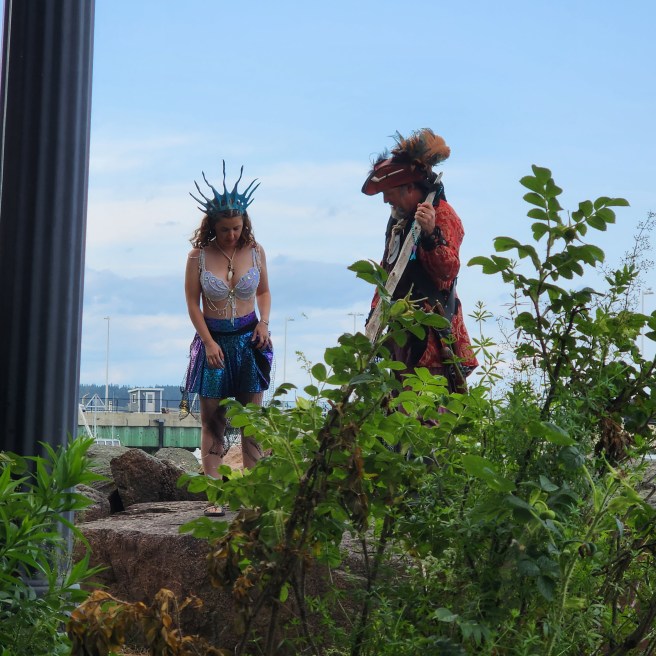
Only in Eastport … as seen from the wine bar.
You never know what we'll churn up in cleaning a stall
Only in Eastport … as seen from the wine bar.

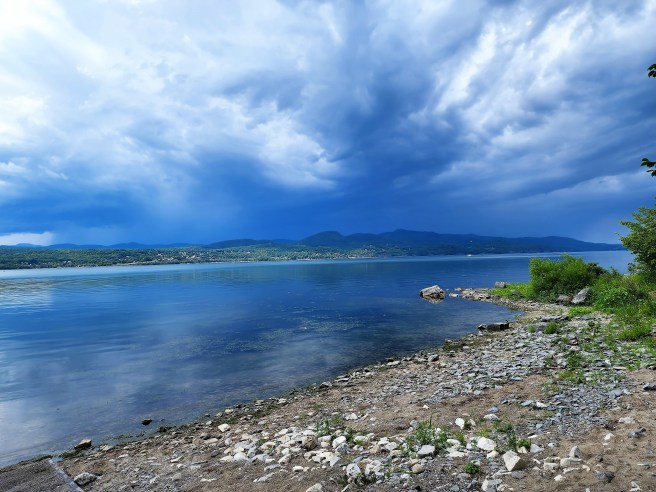
In New York’s Adirondack Mountains, seen across Lake Champlain from Vermont. A serious storm’s coming on.

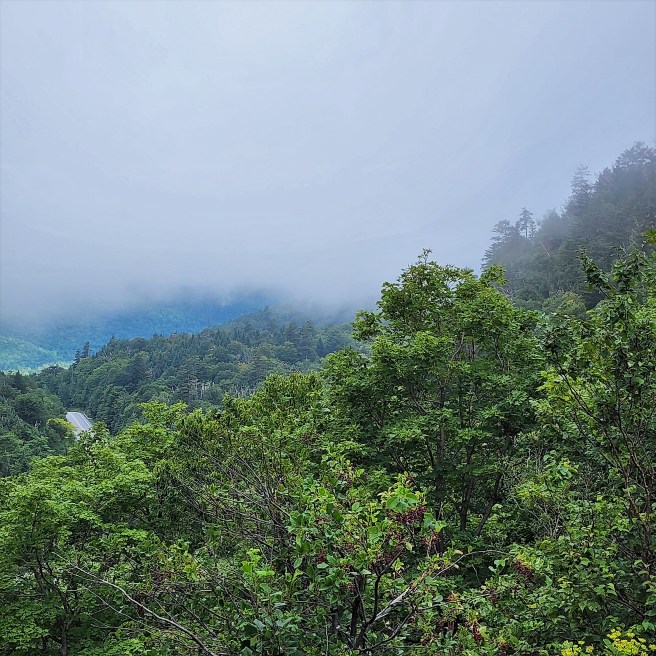
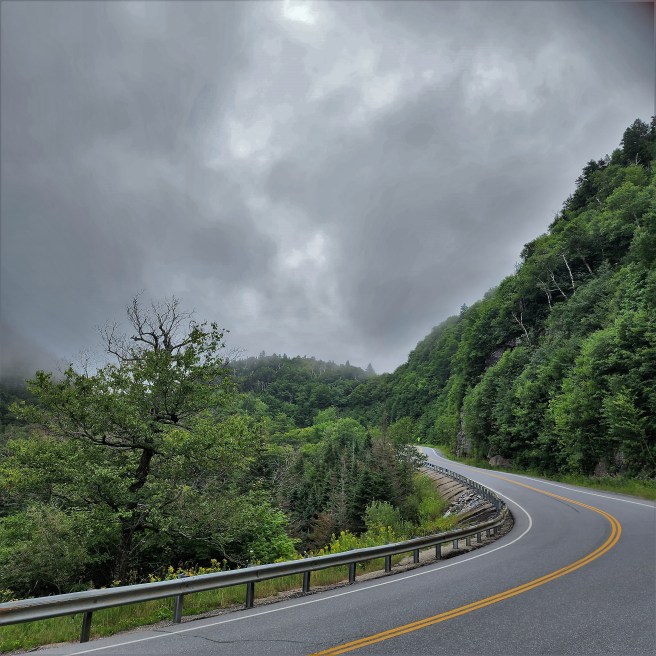
That’s how I heard “Appy,” for Appalachian Gap in Vermont’s Green Mountains.
These are from last summer. I hate to think what the route’s like now, after the recent record-breaking flooding.
Somewhere in my youth I fell under the spell of windjammers – vessels under full sail in the wild ocean. Those were as far away from my native Ohio as were the white-capped mountains that also caught my fancy.
Over the years, though, even as I came to know first the Pacific Northwest and later, coastal New England, I never considered actually going on an overnight windjammer cruise. Dismissed it as too expensive on our limited income. For contrast, I should note that I’ve never had any interest in an ocean-liner cruise. Zip.
But in late May, a dear friend from Vermont stopped by for a few days on his way to his annual windjammer trip on Penobscot Bay and that, well, reignited those dreams.
My wife looked at our budget and encouraged me to join him on his early autumn return. For the record, she’s declining to go too, remembering a bad seasick whale watch excursion when we were first together. No way would she venture forth for so many hours or days.

Upshot is at the end of next month buddy and I will spend the better part of a week under sail on a historic schooner exploring some famed Maine waters, especially the lighthouses along the way.
I have to admit, a windjammer should be my kind of excitement. And because my buddy grew up sailing, I’ll certainly be privy to a deep source of inside information. At least maybe I’ll have more of the terms right when I report on our adventure.
In addition, many of the classic sailing ships were built only a block or two from our house, back in the heyday of masts and canvas sails. The remaining keel of one schooner is exposed at low tide only a block or two from my house.
I’ve started counting the days till we set sail.
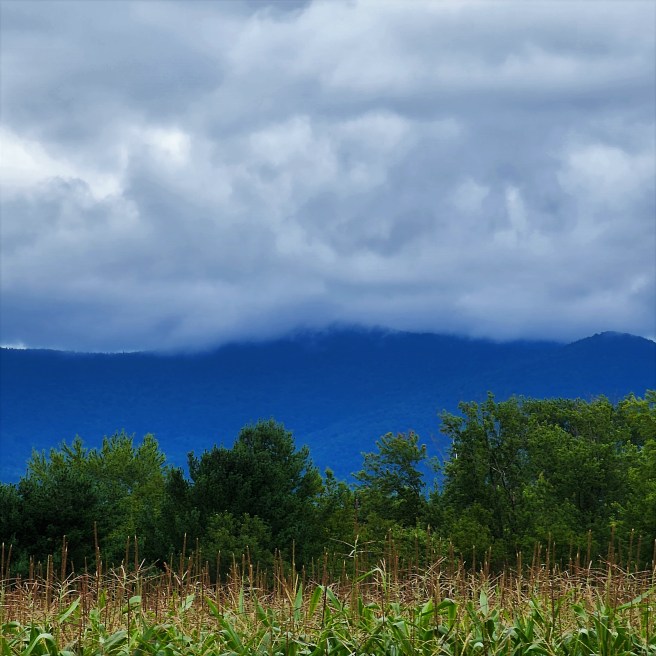
In New Hampshire’s White Mountains Presidential Range as seen from the Vermont state line.
From the start of our travel season, things here have felt slow. I haven’t seen as many cars as I have in the past or as many states represented in their license plates, for one thing. While there are people on the streets, they’re not crowds.
Even down on Cape Cod, summer homes are available rather than reserved long in advance.
Somehow, we’re hearing that retail sales have been holding up, but we’re also seeing more vacancies in the Airbnb options, too. (The latter hits us as good news, considering how the investment buyers have been skewering the home market away from working families we desperately need.)
Still, visitors are the key to retail businesses in our part of Maine – our version of Black Friday has already passed or soon will, unlike the day after Thanksgiving push elsewhere. Maybe the visits by cruise ships in the foliage season will provide a much needed boost.
Could much of this reflect the reality that inflation is finally pinching family budgets?
Looking at the news of Vermont’s flood damage, I’m seeing places I know and have traveled. Towns I pass through on my way to and from Quaker Yearly Meeting sessions at Castleton University, for instance, all now heavily hit. I wonder about some of the covered bridges I anticipate visiting or places I stop for a stretch, too.
I’ve been waiting to hear from a dear friend, especially, though I know his home is high above the stream running through town. Still …
My wife and I retain strong impressions from seeing the devastation from Hurricane Irene nine or ten months after it delivered its wallop. You wouldn’t believe the extent unless you saw the evidence.
The mountains become a funnel for the falling water, and many of the roads have nowhere to go but beside the streams. People, of course, live along the roads … many of them at the foot of natural chutes from the hillsides.
It’s not just water, either, but the boulders and gravel it unleashes.
There are real stories that will unfold long after the TV cameras and breaking news headlines have moved elsewhere.
But it does make a difference when events do somehow seem to reflect home for you. Or when you look for what I think of as “slow news.”
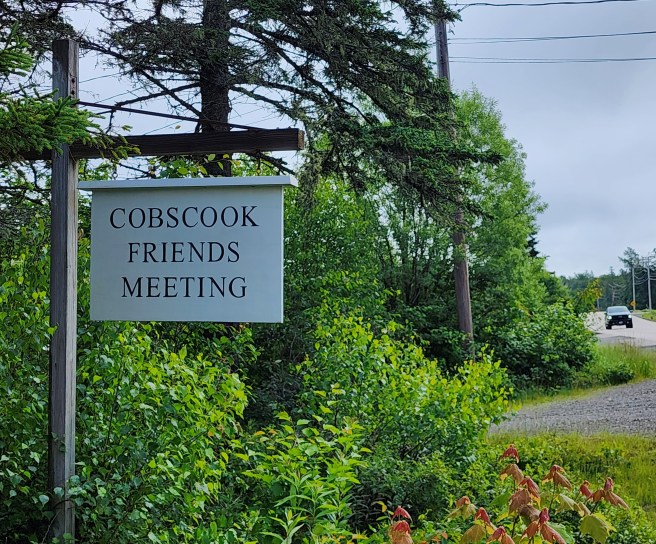
As a small, rural Quaker fellowship, we’re especially happy to be worshipping together in one space every Sunday again, at least through the summer and early autumn.
Covid, of course, had us connected only by Zoom through much of the Covid onslaught and after that, coming together in a physical space on alternative weeks only. We do live at distances from the meetinghouse, so winter weather can often be a challenge.
Not so summer. We’d love to have others join us in our hour of mostly silent centering, beginning at 9:30 on Sunday mornings. The meetinghouse is in the woods along Maine Route 189 in Whiting – on the way to Lubec and many great outdoors trails.
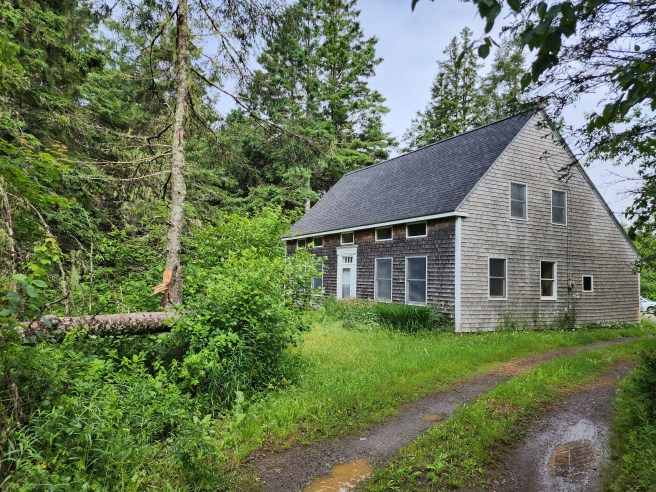
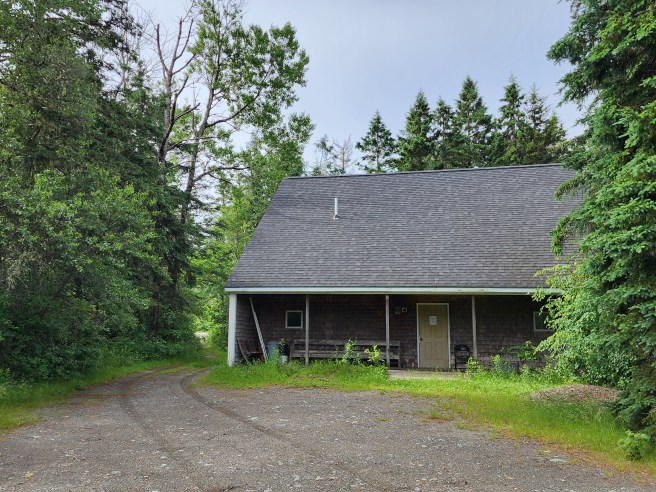
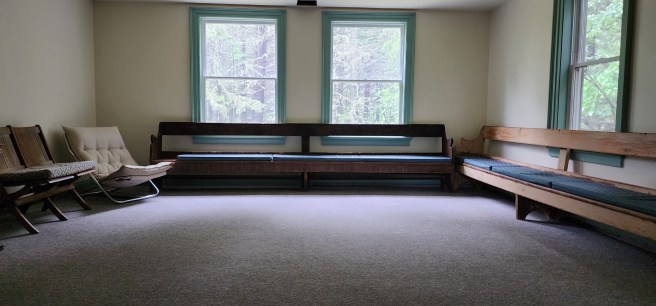 If you meditate in some practice, you’ll fit right in – and if that seems foreign, it’s still a great time for personal reflection. I always find it renewing.
Even though we live a block from the ocean, we’ve been perplexed by the selection of local seafood available in the region’s markets. Or more accurately, it’s lack.
The bigger supermarkets have been a disappointment, and the smaller ones, quite limited.
The best overall selection we’ve found, especially for local catch, is Earle’s SUV that shows up on U.S. 1 down in Machias on selected days. That’s an hour away.
For crab, clams, and scallops, it’s Betty’s seasonal shack in Pembroke, about 20 minutes from home.
Other than that, it’s meant going directly to the fishermen, if you know where they are.
Finally, we’re feeling upbeat. The reopening of Quoddy Lobster’s dining operation, just a block from us, includes a fresh seafood counter.

New owner Look Lobster, a fifth-generation family company in Jonesport, has already invested heavily in the Eastport site by rebuilding the pier for straight-from-the-boat deliveries. Last summer it became my go-to place for fresh retail lobster, especially for anything over a pound and a half.
Now that the end-of-the-street site is serving traditional lobster plates for the first time since Covid, it won’t be long before the outdoor picnic tables by the sea are soon packed with devoted fans. The place, a very popular destination both among tourists and locals, was much missed.
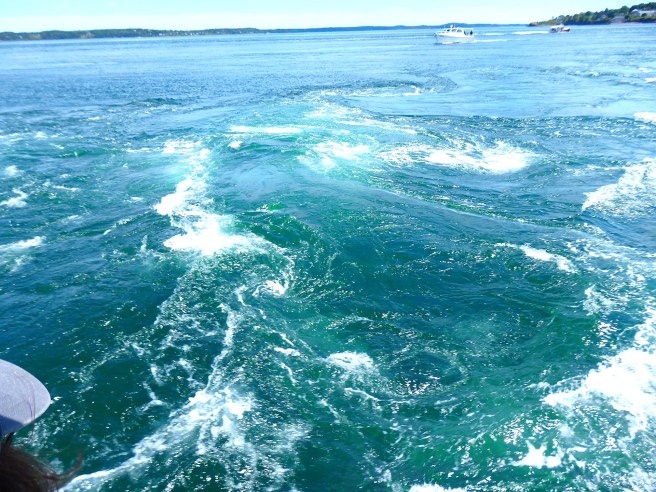
One of Eastport’s travel attractions is the “Old Sow,” the world’s second biggest whirlpool or the biggest one in the Western Hemisphere.
~*~
Before you make reservations to come see it, let me point out a few things.
 Jnana's Red Barn