Favorite garden accessories

Remember, I’m not the gardener in this operation. Still, for me?

  1. Loppers: I use mine both in the garden to trim thick-stemmed plants, and around the yard to trim hedges and small limbs of trees or prune shrubs – sometimes even to cut branches into firewood. It’s probably my most used tool, actually.
  2. Nippers: Not just to cut small plants but rope, twine, and zip-ties, too. Usually beats scissors.
  3. Speaking of twine: Jute is a favorite. Whatever you use to tie plants in place or as lines for peas and climbing beans, you’ll rarely find it when you need it.
  4. Wheelbarrow: Not just for dirt, either. Big bags of compost, mulch, or fertilizer can be a bear to tote without this. Rocks, bricks, stones, as well. Hauling things away from the beds, too, can quickly fill one.
  5. A good spade: Meaning one with a handle attached so it won’t pull out – it’s essential in planting season, especially if you don’t have a rototiller. It’s also helpful in uprooting plants at the end of the season. We also have a ton of rocks in the yard, and it gets a workout there.
  6. Trowels: Especially since they’re easily misplaced or lost, if you don’t stick them upright in the ground when you’re done.
  7. A skinny shovel: The usual broad size can be frustrating more times than you’d suspect.
  8. Five-gallon buckets: Even if you don’t collect seaweed for fertilizing and mulching, you will find endless ways to fill one: water, fertilizer, compost, garden produce, firewood tinder.
  9. Bricks: OK, not actually a tool, but they sure come in handy in holding tarps or black plastic weed-cover in place or for propping up plant pots for display. A few concrete blocks are also good to have on hand.
  10. Band-aids: No matter how careful you are, you will get nicked.

So what about you?

How many of the busiest airports have you flown into or from?

They’re not always ones you might expect. On the top ten list you won’t find Boston’s Logan, New York’s Newark, San Francisco’s SFO, or Seattle-Tacoma, for instance. Globally, Paris, Amsterdam, Seoul, and Beijing miss the list.

For this Tendrils, we’ll look closest at the USA. I started out basing the measure by what the industry calls scheduled seats but have switched to passenger volume, not that I know the difference other than it alters the ranking slightly, notably with Chicago dropping from No. 2 to No. 8. Do note these rankings can be confusing, and may shift around a bit if we look closer.

Should you be curious, English is the international language of aviation when it comes to pilots’ and air traffic controllers’ communicating. In contrast, French takes too long to convey essential information.

That says, here goes, however tentatively.

  1. Hartsfield–Jackson Atlanta: ATL is king of the skies, both as the busiest airport in the U.S. — and the world. Its dominance arises in being Delta Air Lines’ largest hub, making it the primary gateway to nearly every U.S. city, but especially Florida and the South. Despite having relatively limited international traffic, its massive domestic network keeps it soaring.
  2. Dallas/Fort Worth: DFW’s sheer size – at 26,8 square miles, larger than Manhattan, and set midway between the two cities – allows its domestic connectivity, a result of being home to American Airlines, to support the cliché claim that everything’s bigger in Texas, boosted in part by the state’s population boom and heavy air freight action. DFW winds up as the eighth busiest airport internationally, too. Measured by aircraft movements, DFW ranks as the third-busiest airport in the world; by passenger traffic, it’s the world’s second-busiest. As I was saying about those definitions?
  3. Denver International: DEN is built on a 53-square-mile campus, giving it more room to grow than any other airport in the U.S. It does have a 16,000-foot runway, the longest public use one in America, is the biggest hub for Frontier and Southwest airlines, and has 27 airlines providing nonstop service to 230 destinations throughout the Americas, Europe, and Asia, making it the sixth busiest internationally. Ride ‘em, cowboy?
  4. Chicago O’Hare: Traditionally the nation’s second-busiest airport, ORD has been eclipsed by Dallas and Denver. Located 17 miles from the Windy City’s downtown, ORD’s strategic location in the Midwest still makes it one of the busiest transit points in North America, driven by United Airlines and American Airlines hubs. Last July 20, it set an all-time record for daily Transportation Security Administration screenings, 115,962 passengers. That was part of the busiest month ever for U.S. air travel, when TSA agents screened 85 million passengers. Globally, ORD ranks eighth
  5. Los Angeles: LAX remains the top West Coast gateway, especially with heavy traffic from Asia. Internationally, it’s 11th. The airport is getting a massive facelift in preparation for the city’s upcoming 2028 Olympics.
  6. John F. Kennedy: With its international long-haul flights, especially across the Atlantic, driving growth, New York’s JFK also ranks 19th The crown jewel of a historic massive redevelopment is a public-private partnership is the new Terminal 6 with JetBlue and Vantage, with the first gates expected this year and full completion in 2028.
  7. Charlotte Douglas: Bet this one flew under your radar, but CLT is a crucial hub for American Airlines. Major expansion includes a $1 billion Fourth Parallel Runway scheduled to open in 2027. Repeated, this North Carolina operation has earned recognition as North America’s most financially efficient airport.
  8. Harry Reid: Las Vegas continues to shine as a leisure travel powerhouse, but there’s more to the metropolis than gambling and conventions. The fact that LAS is a central airline connection to much of the Southwest was the reason I placed Cassia in my novel What’s Left there during her years as a financial field representative. Globally, the airport ranks 24th.
  9. Orlando: Taking over from McCoy Air Force Base after its closure in 1975, MCO does much more than welcoming tourists to Walt Disney World. Its location between sunny coasts has made it a hub for a cluster of flights serving Florida. MCO ranks 25th Welcome to the sunshine, you snowbirds.
  10. Miami-Dade: As the busiest gateway to Central and South America and the Caribbean, MIA conveys major cargo traffic in addition to international travelers. For American Airlines, it’s the third-busiest hub. Globally, MIA comes in 27th.

As for those world rankings, Dubai International comes in third. Not surprising, since the modern city was premised on the international airport’s luxury terminals, duty-free shopping, and emerging strategic global connector. Tokyo Haneda ranks fourth. London’s Heathrow, fifth. Istanbul comes in seventh. Indira Gandhi, ninth. And China’s Shanghai Pudong International Airport, tenth.
 

How do you feel about money?

Here’s a collection of captivating money quips, should you want to showcase your success and financial flair. Better yet, as I suggest in the Talking Money category at my Chicken Farmer blog, use these and others you come across as prompts for personal examination and study-group discussion. They’re more loaded than you likely expect.

  1. Money can’t buy happiness, but it can buy freedom.
  2. The best investment you can make is in yourself.
  3. Money isn’t everything, but it sure does help.
  4. The only way to have more is to make more.
  5. Money makes the world go round.
  6. The key to success is financial intelligence. (And what, dare we ask, is success?)
  7. Making money is hard work, but it’s worth it.
  8. Focus on making money and the money will follow.
  9. The more you learn, the more you earn.
  10. Wealth isn’t measured by money, but by the impact you make.


As I’ve said, writers’ advice goes beyond the page

Here are some more examples.

  1. “Always carry a note-book. And I mean always. The short-term memory only retains information for three minutes; unless it is committed to paper you can lose an idea for ever.” – Will Self
  2. “[F]ocus on your own journey, and try not to worry about what’s going on in the lane next to you. I know it’s hard, because it feels natural to compare. And sometimes it’s important, to know what barriers exist and how they impact marginalized writers. But from a productivity standpoint, the comparisons tend to do more harm than good. Because everyone’s publishing journey is different.” – Akemi Dawn Bowman
  3. “Everyone has ups and downs at different moments, and paying too much attention to what other people are getting is only going to slow you down. Focus on the page, and the words, and do what you do best—write.” – Akemi Dawn Bowman
  4. “We’re all students of the craft and every book we read is another chance to learn. Read voraciously. And write exactly the kinds of books you like best.” – Mindy Mejia
  5. “Always stop while you are going good and don’t worry about it until you start to write the next day. That way your subconscious will work on it all the time. But if you think about it consciously or worry about it, you will kill it and your brain will be tired before you start.” – Ernest Hemingway
  6. “Words have extraordinary power—their definitions and colloquial meanings, the way they evolve, and where they come from. Be deliberate and selective about the words you choose. Be voracious about collecting new words for your authorial toolkit. Always look up words you’ve never met before. And above all, wield your words for good, for creativity, and for the cultivation of knowledge.” – Jeff Zafarris
  7. “You’re most likely going to spend a long time writing a book, and then more time promoting it, so make it something you’re passionate about so that even when you collapse into bed exhausted at the end of the day (or fall asleep on your couch with your laptop open, as I’m prone to do), you’ll feel fulfilled.” – Haley Shapley
  8. “A successful career in writing typically takes too long to achieve to be writing something you’re not passionate about. Write from your heart, and write what gets you excited to sit at your computer every day. Most of all, make sure you have a life while doing it—exercise, teach, build, vote, explore, learn, grow, fellowship, and most of all, love. It will not only inform your writing but you’ll also be a healthier person for it, mentally and physically.” – Christopher J. Moore
  9. “Write often. I won’t go so far as to say you have to write every day, but I do think you need to make this a part of the texture of your life, something that you do on a regular basis, like a workout schedule.” – Leslie Lutz
  10. “Then, learn to let go. Let go of old drafts that aren’t going anywhere, or scenes that don’t work. Don’t spend months tweaking a fundamentally flawed project when you can move on to the wonderful new projects that are percolating in your head. The ‘you must start what you finish’ attitude—although admirable—can actually be a pitfall, because it prevents you from taking a necessary course correction when you need it.” – Leslie Lutz

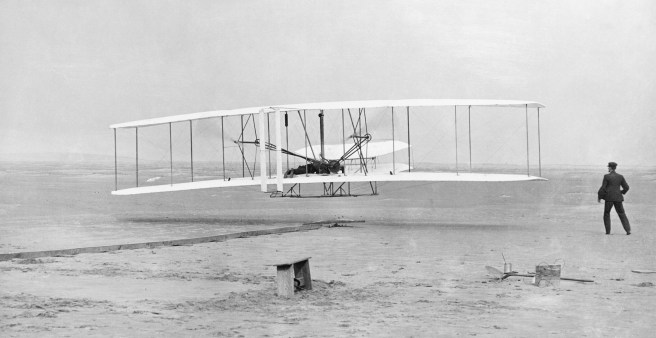
Wilbur and Orville weren’t the only Wright Brothers

THEY WERE “PKs,” meaning “preacher’s kids,” a difficult role for nearly every child put in its unwanted spotlight. Beyond that, theirs does appear to be a tight-laced family, even with its strong strain of moral and social progress. We can even wonder what the brothers’ diagnosis would have been today; there are speculations of “somewhere on the spectrum.”

Still, they did put humans into the air and, more importantly, brought them down safely.

We’ll put their technological breakthroughs aside today and instead focus on the more personal surroundings of Wilbur (1867-1912) and Orville (1871-1948), sons of Bishop Milton Wright and Susan Catherine Koerner Wright.

Like me, they were both born in Dayton, Ohio, and we were members of a congregation their father had founded. (He also founded a seminary.)

And, gee, a photo of the house they grew up in looks almost identical to my grandparents’.

Here are ten more interesting points gleaned from the Web:

  1. Neither one graduated from high school. They were, however, friends of classmate Paul Laurence Dunbar, the school’s only Black student, now an acclaimed poet, and in time, at their print shop, they published a newspaper he created. Yes, they were printers and bicycle manufacturers before they built airplanes.
  2. They learned many of their mechanical skills from their mother, who had attended Hartville College, a small United Brethren school in Indiana, at a time when few women were permitted such an opportunity. Her focus, tellingly, was literature, science, and mathematics. In 1853, she met the future bishop. He had joined the church in 1846 because of its stand on political and moral issues including alcohol, the abolition of slavery, and opposition to “secret societies” such as Freemasonry, values she shared. Working together as his ministry developed, they brought their boys to 12 different homes across Indiana and Iowa before returning permanently to Dayton in 1884.
  3. A year or so later, while playing an ice-skating game with friends Wilbur was struck in the face with a hockey stick by Oliver Crook Haugh, whose other claim to fame would be as a serial killer. Wilbur lost his front teeth. Up until then, he had been vigorous and athletic, but the emotional impact left him socially withdrawn, and rather than attending Yale as planned, he spent the next few years largely housebound, indulging in the family’s extensive library and caring for his mother, who was terminally ill with tuberculosis.
  4. More befitting a PK, in elementary school Orville was prone to mischief, including practical jokes, and even expelled once.
  5. They weren’t the only Wright brothers. Reuchlin (1861-1920) was their oldest sibling. Born in a log cabin in Indiana, he grew into a restless young man, failed college twice, then moved to Kansas City in 1889, distancing himself from his family. He worked in Kansas City as a bookkeeper until 1901, then moved on to a Kansas farm with his wife and children to raise cattle. Though he built a good life for his family there, he remained estranged from the rest of his family in Dayton.
  6. Lorin (1862-1939) spent time on the Kansas frontier before attending Hartville College in 1882 and returning to Dayton, where he had difficulty making a living. So he left for Kansas City in 1886 (before his elder brother), struggled, briefly, returned to Dayton, and then headed west again, where he scraped out a living on the Kansas frontier for two years before returning home in 1889, lonely and homesick. He worked as a bookkeeper for a carpet store in Dayton and married his childhood sweetheart, Ivonette Stokes, in 1892; they had four children as he settled down to a quiet life. In 1893, he worked for Wilbur and Orville in their print shop, and in 1900 helped sister Katharine manage the Wright Cycle company while their brothers were in Kitty Hawk, North Carolina. He visited Wilbur and Orville at Kitty Hawk in 1902, notified the press in 1903 after their first powered flights, and lent them his barn to build the machine that eventually became the first United States military aircraft. In 1911, he helped test the first airplane autopilot and in 1915, spied on Glenn Curtiss to gather information for the Wright patent suit against the rival airplane manufacturer. After Orville sold the Wright Company, Lorin bought an interest in Miami Wood Specialties, the company manufactured a toy that Orville designed. He also was elected a city commissioner in Dayton.
  7. Twins Otis and Ida (1870) died in infancy. He, of jaundice; she, five days later, of marasmus – malnutrition.
  8. Their youngest sibling, Katharine (1874-1929), could be the subject of a Tendril all her own. She was only 15 years old when her mother died of tuberculosis in 1889. As the only female child, it was taken for granted that she would assume her mother’s role—which she did – caring for the family and managing the household. She was especially close to Wilbur and Orville, and when her mother died it became her responsibility to take over the household, seemingly ending any prospects of marriage. Yet she also graduated from Oberlin, at the other corner of the state, in 1898, the only Wright child to complete college. She then became a highly respected teacher at Dayton’s Steele High School. After Orville’s injury in a 1908 test flight for the military at Fort Myer, Virginia, she took a leave of absence from her teaching job to nurse him back to health and never returned to teaching. Instead, she became a central figure in her brothers’ aviation enterprises. In 1909, the French awarded her, along with Wilbur and Orville, the Legion d’Honneur, making her one of the only women from the U.S. to receive one. After Wilbur’s death in 1912, Orville became more and more dependent on Kate, as his old injuries had him in severe pain. She looked after his correspondence and business engagements along with his secretary, Mabel Beck, and ran the household as before. In the 1920s, Kate began to renew correspondence with an old flame from her college days, a newspaperman named Henry Haskell, who lived in Kansas City. (What is it with Kansas City for this family?) They quickly began a romance through their letters, but she feared Orville would become jealous. After several attempts, Henry broke the news to Orville, who was devastated and refused to speak to the couple. When they finally wed in 1926, Orville refused to attend the ceremony, and wouldn’t speak to them up until they moved to Kansas City. She was ridden with guilt for choosing Henry over her brother, and tried many times for a reconciliation, but Orville stubbornly refused. Two years after her marriage, Katharine contracted pneumonia. Even when Orville found out, he refused to contact her. It was their brother Lorin who eventually persuaded him to visit her on her deathbed, and was with her when she died. She was 54.
  9. None of the Wright children had middle names. Wilbur and Orville were “Will” and “Orv” to their friends, and “Ullam” and “Bubs” to each other.
  10. The parents and siblings, minus Reuch, are buried at Woodland cemetery in Dayton.

For a broader view, let me suggest The Bishop’s Boys: A Life of Wilbur and Orville Wright  by Tom Crouch.

The United Brethren denomination also figures prominently in my posts at Orphan George.


A few things you don’t know about this Aquarian

Despite all these outings as a writer, not just as a blogger but as a poet and novelist, too, let me confess, I …

  1. Almost always feel like an outsider.
  2. Struggle at small talk.
  3. Look at idealized writer’s studios and realize they could have been what’s now my bedroom.
  4. Can be blamed for too often having taken my romantic partner as a muse.
  5. Can’t stand wet feet unless I’m swimming. Or, more frequently, showering.
  6. Assume true love always involves pain.
  7. Had some horrid toilet-training that lingers.
  8. Love foggy mornings when I linger in bed, sipping decaf (these days) and reading.
  9. Add to that listening to the rain muffled on the metal roof just overhead, perhaps while falling asleep.
  10. Can’t keep up with all the reading I attempt to do, much less any of the rest I should be tackling.

Typical comments from our cruise ship visitors

In season, we like interacting with the passengers from visiting cruise ships. Eastport does limit the ships to no more than one a day, and most of the ships come after the summer season and many of our retailers had traditionally closed up. For the restaurants and stores, the ships more than doubled the retail season and often provide the best days of the year. What a relief!

So here’s a sampling.

  1. There are no yachts! This is a real working harbor!
  2. Where can I find a lobster dinner? Or a fresh lobster roll.
  3. It’s so lovely. (Or, quaint. Or, charming.)
  4. Is this typical weather? (Think of June with temps in the lower 50s.)
  5. What are the winters like? Is snow a problem? How much snow do you get?
  6. Your garden looks great.
  7. This is an island?
  8. Do you have schools?
  9. That’s Canada?
  10. It’s not like other ports, we feel welcome.

 Some inquire about lighthouses or the Bay of Fundy.

The crew members, meanwhile, want to know how to get to the IGA and Family Dollar, where they stock up on snacks and junk food. They quickly establish a kind of ant trail moving in both directions.

Naturally, I’ve collected tips on writing over the years

Often, writers’ advice can be extended to life beyond writing itself. Here’s a sampling.

  1. “Trust your idea, and just start writing. It can seem like a huge task, especially if you have had your work commissioned and there is a relatively fixed deadline, but once you start putting words on the page it will come together, and there is always someone you can ask for a little bit of support.” – Jaime Breitnauer
  2. “Don’t tell me the moon is shining; show me the glint of light on broken glass.” – Anton Chekhov
  3. “Keep your exclamation points under control. You are allowed no more than two or three per 100,000 words of prose. If you have the knack of playing with exclaimers the way Tom Wolfe does, you can throw them in by the handful.” – Elmore Leonard
  4. “It has become increasingly plain to me that the very excellent organization of a long book or the finest perceptions and judgment in time of revision do not go well with liquor. A short story can be written on the bottle, but for a novel you need the mental speed that enables you to keep the whole pattern inside your head and ruthlessly sacrifice the sideshows … I would give anything if I hadn’t written Part III of Tender Is the Night entirely on stimulant.” – F. Scott Fitzgerald
  5. “[S]tay focused and write what you enjoy writing. Don’t write for money or follow the trends of what might be selling at the time. Write something that you cannot only be proud of, but also enjoy the process of writing.” – Christopher J. Moore
  6. “Read it aloud to yourself because that’s the only way to be sure the rhythms of the sentences are OK (prose rhythms are too complex and subtle to be thought out—they can be got right only by ear).” – Diana Athill
  7. “Write what you love, what truly piques your curiosity every day. I’ve met authors who have told me they were sick of the subject matter in their books by the time they came out. I’m so glad I don’t feel this way!” – Haley Shapley
  8. “Fiction that isn’t an author’s personal adventure into the frightening or the unknown isn’t worth writing for anything but money.” – Jonathan Franzen
  9. “Looking back, I imagine I was always writing. Twaddle it was, too. But better far write twaddle or anything, anything, than nothing at all.” — Katherine Mansfield
  10. “How do you write? You write, man, you write, that’s how, and you do it the way the old English walnut tree puts forth leaf and fruit every year by the thousands. … If you practice an art faithfully, it will make you wise, and most writers can use a little wising up.” – William Saroyan

Why we really dig Fedco seeds

In my household, like many others in northern New England, the Fedco seed catalogue and ordering from it are something of a fond ritual this time of year, even a devotion.

Here’s some background.

  1. The company is a co-op founded in 1978 by back-to-the-earth followers of self-sufficiency gurus Scott and Helen Nearing, who had moved to Maine from Vermont in the mid-‘50s.
  2. At first, it functioned as a resource for food coops and sold to no one else.
  3. Heirloom apple trees were added in 1983 and autumn bulbs the following year. Seed potatoes came next,, and in 1988 Fedco took over the organic supplier role of the Maine Organic Farmers and Gardeners Association. (Many people know MOFGA for its big, hippie-infused Common Ground Fair every September. You may have read about that here.)
  4. In its first year, with a one-page mail-order page in a food-coop newspaper, Fedco and its part-time staff handled 98 customer requests. The initial list had 81 items, mostly vegetables, some herbs, liquid seaweed fertilizer, and no flowers. These days it handles more than 38,000 orders from all 50 states for an estimated $4 million revenue.
  5. The catalogue is funky, black-and-white on newsprint or similar stock, rather than the glossy photos of big commercial garden retailers. The illustrations lean toward sketches and 19th century printers’ images. It carries more than a thousand seed listings alone, along with a host of other things gardeners and small-farm operators find useful. The descriptions reflect careful study, helping buyers make reasoned decisions, especially regarding what’s new. It’s inspirational. You can also order online, using a catalogue that does have color photos and is easy to navigate.
  6. Legalization of cannabis has generated new business, even though Fedco has so far resisted selling its plants or seeds. Much of the business is in organic fertilizer, especially for home growers.
  7. Rather than growing the seeds itself, Fedco repackages from 100 to 150 seed growers, and other suppliers, mostly in Maine. Other products are more widely sourced.
  8. Fedco concentrates on a unique niche, mostly in the Northeast, and deliberately stays small, out of direct competition with large corporations.
  9. Its 60 full- and part-time employees own 40 percent of the company, while the consumers own the remaining 60 percent and get small discounts on their orders.
  10. The company’s charter aims at pay-level equity, preventing wage extremes between high and low.

Details from the company’s website and from Jeffrey B. Roth in Lancaster Farming.

There were some positive steps for our City in the Bay last year

For a small community like ours, with just 1,300 year-round residents, though that swells in summer when the owners of second homes return, our shop owners and restaurateurs have to hustle to make their income during the summer season, long before the notorious Black Friday after Thanksgiving that other retailers rely on.

Our port’s growing popularity with the passengers of cruise ships, especially in the autumn, has provided a definite economic boost and essentially doubled our retailing season.

With that background, here are ten positive steps we saw in our local economy in 2025.

  1. Fiber optic cable came to Eastport and much of Way Downeast, providing both faster broadband connectivity as well as some healthy competition for dominant Spectrum. It’s especially important for many who work from home.
  2. The last leg of the I-395 bypass around Bangor finally opened, in time for the Fourth of July, even. (Officially, the new stretch is State Route 9 and only two lanes, but it is limited-access.) This eliminated a narrow country road link that fed into a typically congested stop-and-go suburban jag between Way Downeast Maine and the rest of the United States. It also shortened the driving time for us to get to major services in metropolitan Bangor, things that the rest of you take for granted, or for deliveries to get to us way out here.
  3. A savvy, local-oriented new and used bookstore opened downtown. It’s an inviting place to sit and read the latest. She knows her stuff and what makes our region tick. As an author, I can say how wonderful it is to be represented on her shelves.
  4. We gained a six-day-a-week bakery, the kind that makes real croissants and yummy breakfast sandwiches. Its opening overcomes the loss of our bagel shop a few years earlier, after its founders realized it was too much to tackle while still having full-time jobs elsewhere. Maybe folks will even stop lamenting a dedicated bakery that closed before the Covid shutdowns.
  5. There are solid choices for great coffee seven-days-a-week now. In addition to the bakery and the bookstore (yes!), an established gourmet coffee roaster has moved into the earlier espresso joint, this time six mornings a week instead of hit-or-miss hours. If you’re up here for a week, this will definitely brighten your day.
  6. Our fine dining options on Water Street have certainly improved. The wine bar now has a full kitchen and a masterful chef who curates a new menu weekly, featuring local sourcing while keeping the price-point in reach of us locals. Ye Ole Hookers, an upgraded incarnation of a legendary waterfront bar, also added a talented cook in the evenings, and we confidently recommend both locations for those who want something more memorable than average diner fare at the other end of the downtown. (In fairness, the Waco has stepped up its game by opening its Schooner Room with evening specials many nights of the week, too.) Gone is the motto many of us repeated a few years ago, “Don’t get hungry in Eastport on Monday.”
  7. The lobster pound returned to outdoor, next-to-the-tides seafood service after a multi-year hiatus. It doesn’t get any more iconic than this. And it is a relief to give an affirmative answer to the common question, “Where can I find a lobster dinner (or lobster roll) around here?”
  8. Ten years after the resident schooner in our harbor went down in the collapse of a section of the Breakwater pier, Eastport Windjammers (our whale watch service) once again has a schooner in its fleet. The Halie & Matthew’s day-sailing cruises are one more attraction for visitors. As an added twist, the two-masted ship was built in Eastport in 2006, so it’s also a homecoming.
  9. Passenger ferry service between Eastport and Lubec resumed on weekends. It’s a great way for tourists to view our waters and mosey around another town.
  10. Our volunteer airport opened a spacious terminal, something that can greet private pilots to our neck of the woods and assist locals who are being flown (gratis) to medical specialists in Boston, 352 miles or a six-hour-drive away. It even brings us a step closer to getting puddle-jumper commercial airline service.

Cheers to all!