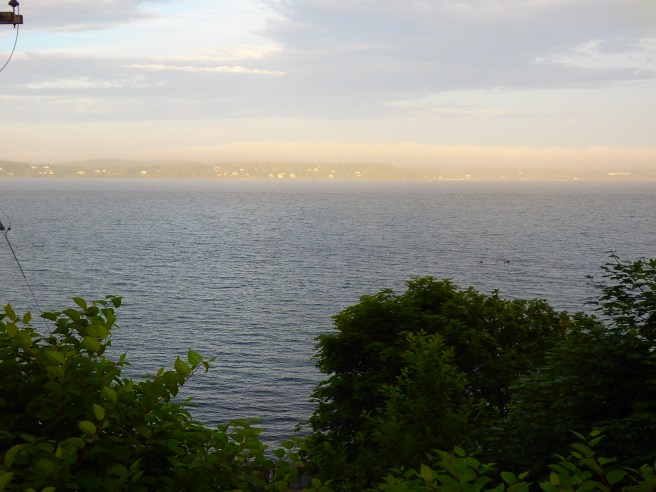
A few things I had hoped to do with Friends Meeting but never quite got around to

The position of clerk in a Quaker Meeting is akin to being president or chairman, except that you’re not the boss. Historically, it was more like being clerk in a courtroom, recording decisions from a judge in the bench above – in this case, Christ or, if you prefer, Light. For Friends of a less Biblical bent, things get more tangled and less focused, at least my perspective.

A Meeting in the Society of Friends, as we’re more formally known, whether of the open, traditionally “silent” worship like mine or of the more widespread pastoral “programmed” variety, has a presiding clerk as well as a recording clerk for its monthly business sessions, as well as a clerk for each of its committees. The Monthly Meetings are then grouped in neighboring Quarterly Meetings, which gather four times a year and have a similar structure, and are then joined together as regional Yearly Meetings that have annual gatherings – and that’s it for hierarchy. There’s a lot of work to do, just as there is in any family.

In my strand of the Quaker world, we don’t have a pastor but we often expect the clerk to fill many of the functions, sometimes everything except preaching or praying aloud on Sundays. I was detailed those expectations in an article published in Quaker Life magazine. In theory, you’re more of a moderator. In reality, you’re the first person the others turn to when a light bulb is out, the key to the door’s missing, or the fire alarm’s going off in the meetinghouse after a power outage. As for real emergencies?

As I’ve observed, there’s a lot of burnout, usually after two years.

I tried to pace myself accordingly in the six years I served as Quarterly Meeting clerk and the five at the head of Monthly Meeting as well as the nine or so I was a member of the Yearly Meeting’s Ministry and Counsel committee.

Along the way, I’ve come to admire some amazingly skilled clerks as well as pastors, priests, and rabbis in the wider community. Few of us, I should note, are really trained in this matter of dealing with people or institutions, and most of us would rather be fine-tuning theology of one sort or another.

~*~

As I entered retirement, I felt a curious softening in my personal Quaker identity. Part of it was a consequence of finally having lived with children, in addition to a spouse’s input. Ours never did run along the lines of a Quaker Meeting, as I had once idealistically envisioned. (I would like to be able to go back to interview the now-grown children of a few families I had known who proclaimed “Jesus is the head of this household” to discover how well that had worked, usually in rural settings.)

By the time I left full-time employment, I realized there was no previous period in Friends history where I would have fit in comfortably. I love the fine arts too much, for one thing. Nor could I go Plain today, though I had once flirted with it: the Plain dress and speech need to be part of a community, not of a lone ranger seen only as an eccentric or even scary. For a while, my beard was along the lines of Amish and Brethren, with no mustache, but once I had married, my wife found that look too severe.

I’ve rounded some corner into now. Wherever that is.

~*~

Lately, I’ve been sharing with you some reflections as I’ve been comparing my original plans for retirement with what’s actually happened in my life in the decade since leaving full-time employment. The review has included Quaker service as well.

Even before retiring, for instance, I had hoped to send out annual thank-you cards and letters, recognizing Friends for their service. Too often, that goes unacknowledged but still expected or even subtly demanded. I also wanted to invite the clerks and the other officers, such as the treasurer, and their partners to a big dinner, probably a cookout in our Smoking Garden in early summer. I envisioned something similar for the charter school board where my wife was chairman. Alas, these never happened.

Well, our big parties there had pretty much faded from the schedule as the years progressed and other demands crept in. We are hoping to resume them in our new locale, once the renovations and our full relocation are in place.

Something more ambitious was what I termed the Light Project. Prompted by questions asking, exactly, what Friends believe theologically, I had found myself connecting the dots in early Quaker thought and found myself facing an alternative Christianity, one they dared not articulate fully in the open. I’ve presented my take in four booklets you can download at my Thistle Finch blog, and I would love to hear your insights and reactions.

I had expected to be spending more time following up on these foundations, both in journal articles and traveling around the country to lead workshops and discussions, but Friends have had more pressing realities to contend with, as we found springing from the Trump administration and now Covid. On my end, revising and releasing my novels also deeply engaged me, bringing with them a feeling of personal satisfaction and accomplishment.

So, for now, my Light Project has rather fizzled out. Perhaps the release of my next book, a history of Dover Meeting and a wider counterculture in New England, will revive the Light Project, too.

~*~

Other unfinished business on my heart involves outreach, attracting like-minded souls to our legacy. Having a booth at community fairs was a start, as was an open house, but I was hoping to do more with the campus center at the neighboring state university, perhaps guiding a weekly “worship sharing” event or Quaker Quest series, as well as visiting more widely among other Friends Meetings and retreat centers, in a tradition called intervisitation.

And then there was hosting the monthly Poetry in the Meetinghouse series I mentioned earlier. It may have even been part of a cycle of weekly events that included folk music concerts, films and discussion, and a lecture.

Oh, my, the last item reminds me of something I had hoped to revive from the local religious leaders’ fellowship – their Cochecho Forum. Look up Bill Moyer’s Genesis project, which aired as a series on PBS, to see how I wanted to launch something similar through DARLA. It would have been exciting.

~*~

Well, revisiting all of this reminds me of an old Quaker adage, and perhaps find comfort in it: “Be careful not to outrun thy Guide.”

Some things I thought I’d take up in retirement but didn’t

Looking back on my pre-retirement visions, I’m facing the fact that much of what I had anticipated has instead fallen by the wayside.

Here we go.

  1. Meditation: First thing in the morning, just like the ashram. Instead, I go pretty straight to the computer and start writing or revising. The clarity of those early hours is treasured for creativity, rather than the wee hours of my earlier years.
  2. Hatha yoga: Along with chanting, hymns, or even Bible study that I anticipated in the calm of early morning. Nope, none of these have even made into the afternoon or evening, either.
  3. Fasting, mauna observance, retreats: Again, this would have sprung from my ashram roots. Fasting had been a one-day-a-week routine – no food, rather a restricted diet. Mauna was a period of non-speaking, which could initially be very difficult before turning liberating and enhancing. The idea of getting away from it all for a week at a time definitely deserves renewed consideration.
  4. Tennis: I never have figured out the scoring, but there were a few friends who seemed willing to teach, if I ever had time, so, hey, why not? . Alas, fate intervened and they were no longer able once I was open.
  5. Bicycling: My original regular-exercise option, this was about to take off (pardon the pun) just about the time our younger daughter decided she wanted her long-neglected, high-quality wheels to join her in Greater Boston. Here, I had just paid to have it tuned up and ready, too, and even purchased a helmet and lock. Admittedly, all those gears – which we didn’t have back when I was a kid – were rather intimidating.
  6. Camping: I had purchased a tent and stored it in the loft of the barn, but when I finally pulled it down, it wouldn’t open – the weatherproofing had melted over the years.
  7. Hosting a monthly Poetry in the Meetinghouse series: There would have been a featured reader followed by an open reading.
  8. Travel: This fell away largely because of our budget but also because of the other things impinging on my time – the writing and revising, especially. Destinations would have included the annual Friends General Conference, writers’ conferences, Tanglewood concerts, as well as a return to the Pacific Northwest and then on to Alaska. There might also have been England, Ireland, Scotland, Alsace, and Switzerland, for genealogy. Italy, for opera and cuisine. Spain, Morocco, Japan, utter curiosity. Macedonia and Greece, retracing the trip my wife and elder daughter made a few years ago. More likely is visiting Quebec City, New Brunswick, Prince Edward Island, and Nova Scotia, all neighboring my current home.
  9. Boston weekends or midweek jaunts around New England: Again, mostly budget, even when it involved little more than an Amtrak senior-discount ticket. I could add visiting old friends around the country.
  10. A regular deep-reading routine: I am a booklover, after all, but am not checking off a book or two each week, much less one every day or two.

~*~

There are some other, more general, things I could add, such as taking up a social activist role after all those years of being stifled as a journalist, or specifics, such as getting serious about getting back to making and baking bread, as I did in the ashram, or forcing bulbs to bloom in the depth of winter.

And I likely won’t ever introduce my wife to the mountain laurels in full bloom along the Merrimack River at Newburyport, Massachusetts, or the springtime wonders of the Garden in the Woods in Framingham, west of Boston, now that we’re centering ourselves at the far eastern fringe of Maine.

One item especially amuses me – “second home (mountain lake or Maine island)?” The turns in our budget wound up ruling that out, but I am living on a Maine island now. You never know what might happen when you start sky-lining.


A few things I actually took up in retirement

Most of these weren’t on my radar, back when I was planning.

  1. Singing in the bass line: On the eve of the big change, my wife the incredibly insightful gift-giver presented me with a choral workshop session with the Boston Revels. Though I could hold my line in Mennonite four-part, a cappella hymn-singing circles, I was intimidated – the Revels Christmas production’s chorus was one of the best in the city. This all-day event led to the formation of the organization’s amazing community chorus, Revelssingers, with me as a charter member. Other singing opportunities have included Dover’s annual Messiah Sing and a world-premiere for a music director’s 50th anniversary on the job.
  2. Swimming: Taking after her mother, our elder daughter (the next Christmas, I think) gifted me with an annual pass to Dover’s indoor pool. Again, I was intimidated but ventured forth, embarrassingly, truth be told, by how out of shape I was. The only swimming I’d done lately was in the ocean. Had I even been in a locker room more than once or twice after high school? But swimming those laps soon anchored my weekday routine, and I patiently worked up to a half-mile a day.
  3. Blogging: Again, credit our elder daughter, who suggested a blog when I was considering establishing a Web site. It started out modestly, but you can see where it’s led.
  4. Photography: As I realized the need for visual support for the blogging, digital photography soon followed. Back in high school, I had considered a career as an artist – and the protagonist in three of my novels is a photographer – so I now had a way of visually showing much of the way I see the world around me. The camera I’m now using, and the cell phone that will likely supplant it, are later gifts from the said Mother-Daughter duo.
  5. Spanish: My first Spanish teacher, back in high school, was great, and we became pretty proficient. Not so, the second. So I switched to French in college – a big mistake. They rather wiped each other out. Flash ahead and trying to communicate with visiting Quakers from Cuba. As I was thinking about a refresher course, the said daughter – a linguist by nature and training – suggested Duolingo, the free online program. Now my daily routine had a second anchor.
  6. New England Yearly Meeting Ministry and Counsel committee: Think of Yearly Meeting as an archdiocese, if you will, and ours covers all of New England, tending to about 5,000 Quakers. My work schedule had precluded my serving on M&C, a big committee with big responsibilities, requiring attendance at its retreat and full-day meetings through the year around the region. It’s also meant getting to know and work with some amazing members.
  7. DARLA: This informal fellowship of religious leaders in Dover, both clergy and laity, meets once a month, serving both as a support group for its members and as an information swap for their congregations. It also presents some community-wide events, including a Thanksgiving service that’s turned into a festival of choirs and readings. Again, I can tell you of some amazing folks I’ve come to admire as friends and colleagues.
  8. Dancing: I had planned on resuming New England Contras, now that I had my evenings free. The Greek dancing was what was new, thanks to the Dover Orthodox church’s annual festival. Well, that led into experiencing their worship and fellowship, too, even if it is quite a leap from my Quaker base.
  9. Reading the Bible straight-through: You can follow the experience and my reflections in the archives of my As Light Is Sown blog. What I came away with is nothing like what you’d hear from a Fundamentalist.
  10. Writers’ circles: The first was the Poetry Society of New Hampshire, before my retirement focus shifted away from the poetry and over to book-length fiction. Still, for the first several years I was active in the Granite State group’s meetings four times a year and other readings. Their schedule, unfortunately, clashed with Ministry and Counsel’s, and something had to give. The second was Writers’ Night Out, usually on the first Monday of the month, when many scribes of all sorts around the Granite State get together at any of ten or so locations to socialize. For me, it was in Portsmouth, just down the road from Dover. While some of the groups had pretty big agendas, even programs, our joy came in schmoozing and swapping information. It’s where I learned about Smashwords, for one thing, where my novels then appeared as ebooks.

Since moving to Eastport, hiking has also resurfaced. It’s taken a while to get back to this, but relocating to the wilds of Downeast Maine leaves me no excuses not to. I’m just not going to be back to the distances or speeds of my Boy Scout days, OK?

What new activities are you up to? Or perhaps hoping to engage?

Beyond those declining mass media numbers

Newspapers were in trouble even before the Internet. In general, fewer people were reading, period, and that included books and magazines as well. It was easy to blame television, but interests were shifting, too – and editors were at a loss when it came to hitting viable new directions that would capture attention.

Another factor was that the workplace and lifestyles were also changing. Fewer people were employed in factories, for one thing, and fewer were taking mass transit to get to and from work. Waiting for the bus, train, or ferry and then riding were prime time for many readers. Driving, then, meant less time for reading. More likely was the radio or even audiobooks.

When I entered daily journalism, afternoon papers generally had the larger circulation, fitting blue-collar work schedules that often let out at 3 or 4 pm. As the factories closed down, so did the afternoon papers in towns that had two or more newspapers. Most of the others shifted to morning publication, where they could be on the newstands all day and still look fresh. Thus, American dailies declined from 1,750 in 1970 to 1,279 in 2018.

The Internet’s whammy has been mostly to the papers’ business model, an arcane system I describe in my novel Hometown News.

What we haven’t heard much about is the bigger hit to commercial network television, where audiences have defected to cable content and streaming.

In fact, the best new programming is on those newer options.

The thought hit me while watching Only Murders in the Building was that such quality would have never appeared on a commercial network series. You no doubt can add your own favorites to the list. How many of those are on commercial networks? Any?

The meltdown of the monolithic mass media, both print and broadcast, is a mixed bag, of course. Here we are blogging, for one thing, but rarely does that get the same readership as a newspaper column in even a small-town paper. But we’re getting our say, anyway.