Oh, for the glory of pickles!

Not everybody shares my delight in pickles, at least the kind you put on sandwiches, but I pile them on, when I can. I’m not much for lettuce there, by the way – I prefer that as a separate salad.

I like the crunch and acidity the pickles add, or even the sweetness, depending on the variety.

My wife grew up in Mount Olive, North Carolina, where many of these originate today.

My eyes were opened to this reality the year we went largely vegan when we practiced the Eastern Orthodox feasting for Advent. The hardest part for me was finding snack food. (Well, that plus a satisfactory creamer substitute for my coffee and something in place of cheese and … the list goes on.) Fortunately, my wife makes a great humus, and the wraps can be filling, though bland over repetition. And that’s when the pickles took center stage. A row of the green orbs in the torpedo was truly heavenly.

Not that I stop there. When we’re out to eat, the rest of the family puts their kosher pickles on my plate. Not that I’ll argue.

And then there are the summer pickles, meant to be consumed shortly after the cucumbers taken from the garden and put into canning jars. Sometimes it’s a challenge to keep up with the harvest. As if I’m complaining.

Only in the past few years have I begun to appreciate other kinds of pickles – beets, green beans, and eggs, for instance – dishes that used to appear on family dinners at Grandma and Grandpa’s. Especially on big events like Thanksgiving and Easter. Just how far back in our heritage does that go through generations of farmers?

Anybody else love that pickled ginger they serve with sushi?

 

Living in sweats

The thought had once appalled me. Like was this the epitome of laziness, that you really didn’t bother to get dressed for the day? Or that perhaps you’d gained so much weight you wanted something that would hang loose rather than accentuate anything?

Skip ahead to retirement and then the Covid shutdown, and I’m having to admit there have been days when I’m living happily in sweats, especially in the depth of a northern New England winter.

Sometimes I even think of it as luxury, not having to venture outdoors.

Oh, what a bum I’ve become kind of feeling!

How do you dress for everyday comfort?

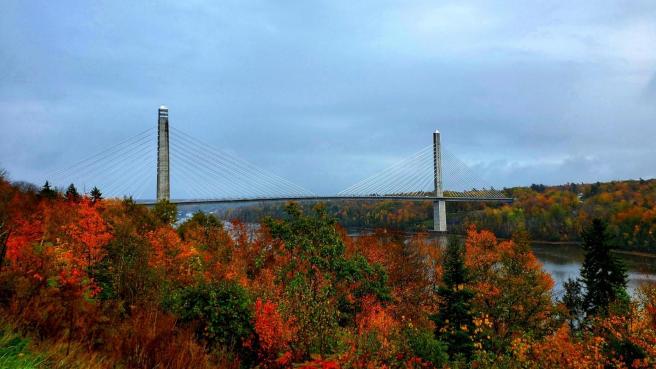
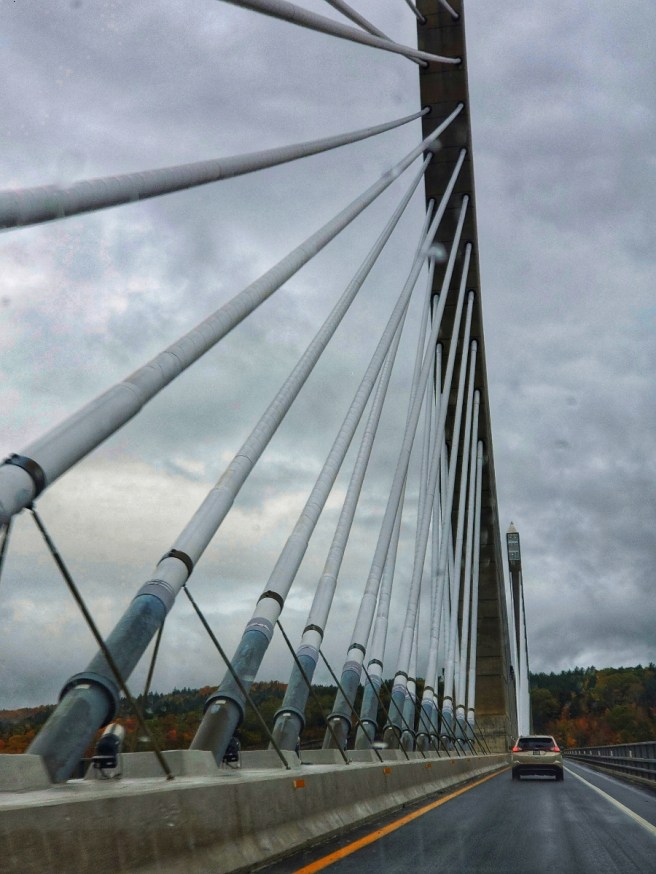
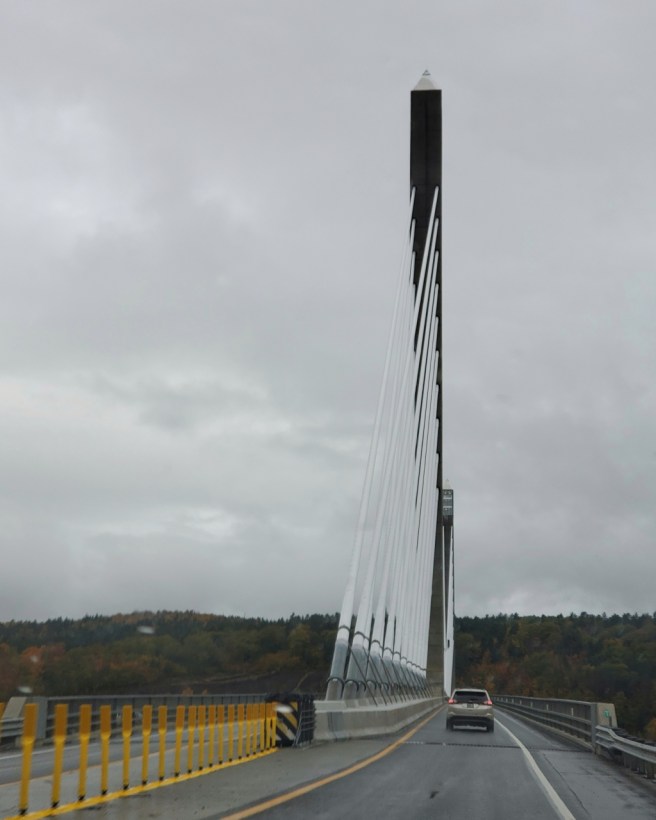
The dramatic bridge over the Penobscot Narrows

For many people, the dramatic wishbone bridge at Fort Knox, Maine, is the welcome to Downeast Maine, the portion of the Pine Tree State that sits east of Penobscot Bay and its river.

The big span carries the major highway to Acadia National Park, for one thing, and allows shipping to continue upstream to Bangor and Brewer. It’s also the slighter slower of the two routes from our home to the rest of America.

The glass pyramid atop the one pillar covers a public observation deck. It’s on our to-visit list.

(Photos by Jessica J. Williams)

Which door is the real one?

Don’t know about where you live, but in New England, the front door typically is rarely used.

That insight was confirmed when I was canvassing for the Census and we had to leave a notice behind when nobody was home. Often, the real door is the one at the rear of the house.

It’s a curiosity that reminds me of something I once read about Zen temples in Japan, which were initially copies of ones in China.

The Chinese loved symmetry, which the Japanese detested, and so when the imported designs were expanded, they grew to one side or the other. Many old New England houses also have many additions, most famously the connecting barn.

Well, for the record, our back door is where the action is, and it runs through a mud room addition from the kitchen.

Now I’m starting to think about trying to enter by the right door as a metaphor for life. Like maybe there’s a hidden key, even. The one others know about, but not you or me?


We’re getting a glimpse of a most incredible cruise ship

We were anticipating the expedition cruise ship Roald Amundsen’s arrival at the Breakwater today after it had circled Alaska, crossed the Arctic Ocean, and visited Greenland and Baffin Bay on an intrepid voyage from Vancouver, British Columbia, across the Northwest Passage – albeit from the west.  But when that itinerary was halved, and the second leg shortened, we were crossed off the ports of call. At least we were then added to a shorter round of New England stopovers that followed.

So now the Amundsen is expected to show up today and you can bet that the locals will be lined up for a personal look. This is not any floating resort.

With global warming, Northwest Passage trips are being offered each year for bold, well-healed, bucket-list travelers desiring to go where few have ventured before. This opportunity requires ice-breakers, not just any cruise ship. The Norwegian-flagged Amundsen is one with style and luxury.

The visit should heighten our anticipation of its return next September as part of a remarkable 94-day Pole-to-Pole adventure that will continue to Antarctica.

Sounds like a historic journey to me.

Here are ten more facts.

  1. In 2019, the new, 530-passenger, 459-foot, stylish state-of-the-art vessel joined Hurtigruten Expeditions’ fleet.
  2. It is propelled by environmentally sustainable, innovative hybrid technology that reduces fuel consumption and CO2-emissions by 20 percent.
  3. The ship is specially constructed for voyages in polar waters, where it serves as a comfortable base camp at sea.
  4. Unlike a typical vacation cruise, an expedition is for curious minds and explorers, focusing on the geography, biology, cultures, and histories along the way. To serve that aim, the Roald Amundsen has a science center packed with banks of stereoscope microscopes and related laboratory gear, as well as touch screens, lecture spaces, a small library, and areas for workshops in photography, biology, and similar interests as guests, staff, and crew mingle and generate a heightened understanding of the landscapes being explored.
  5. It’s not your utilitarian research vessel but posh, with all cabins having outside views. Half even have private balconies. Aft suites include private outdoor hot tubs for enjoying spectacular views.
  6. Its three restaurants are inspired by Nordic and Norwegian heritage.
  7. The ship is named after the first explorer to reach both the North and South Poles.
  8. Passage through the Panama Canal takes roughly 12 hours.
  9. Arrival in Antarctica will be late spring there, when the Gentoo and Chinstrap penguins will be at the start of their courting season, while the Adélie penguins may have already laid their eggs and be nesting.
  10. Fares for this expedition started at $57,000 – or $600 a day. I doubt that any of those are left.

If you had the money, is this something you’d love to do?