Tag: Smiles
Kinisi 232
When not Irish
the harp’s so French
Beyond that?
Twang! Twang!
tinsel glitter
As I’ve said, writers’ advice goes beyond the page
Here are some more examples.
- “Always carry a note-book. And I mean always. The short-term memory only retains information for three minutes; unless it is committed to paper you can lose an idea for ever.” – Will Self
- “[F]ocus on your own journey, and try not to worry about what’s going on in the lane next to you. I know it’s hard, because it feels natural to compare. And sometimes it’s important, to know what barriers exist and how they impact marginalized writers. But from a productivity standpoint, the comparisons tend to do more harm than good. Because everyone’s publishing journey is different.” – Akemi Dawn Bowman
- “Everyone has ups and downs at different moments, and paying too much attention to what other people are getting is only going to slow you down. Focus on the page, and the words, and do what you do best—write.” – Akemi Dawn Bowman
- “We’re all students of the craft and every book we read is another chance to learn. Read voraciously. And write exactly the kinds of books you like best.” – Mindy Mejia
- “Always stop while you are going good and don’t worry about it until you start to write the next day. That way your subconscious will work on it all the time. But if you think about it consciously or worry about it, you will kill it and your brain will be tired before you start.” – Ernest Hemingway
- “Words have extraordinary power—their definitions and colloquial meanings, the way they evolve, and where they come from. Be deliberate and selective about the words you choose. Be voracious about collecting new words for your authorial toolkit. Always look up words you’ve never met before. And above all, wield your words for good, for creativity, and for the cultivation of knowledge.” – Jeff Zafarris
- “You’re most likely going to spend a long time writing a book, and then more time promoting it, so make it something you’re passionate about so that even when you collapse into bed exhausted at the end of the day (or fall asleep on your couch with your laptop open, as I’m prone to do), you’ll feel fulfilled.” – Haley Shapley
- “A successful career in writing typically takes too long to achieve to be writing something you’re not passionate about. Write from your heart, and write what gets you excited to sit at your computer every day. Most of all, make sure you have a life while doing it—exercise, teach, build, vote, explore, learn, grow, fellowship, and most of all, love. It will not only inform your writing but you’ll also be a healthier person for it, mentally and physically.” – Christopher J. Moore
- “Write often. I won’t go so far as to say you have to write every day, but I do think you need to make this a part of the texture of your life, something that you do on a regular basis, like a workout schedule.” – Leslie Lutz
- “Then, learn to let go. Let go of old drafts that aren’t going anywhere, or scenes that don’t work. Don’t spend months tweaking a fundamentally flawed project when you can move on to the wonderful new projects that are percolating in your head. The ‘you must start what you finish’ attitude—although admirable—can actually be a pitfall, because it prevents you from taking a necessary course correction when you need it.” – Leslie Lutz
Kinisi 231
rotary
rosary
Wilbur and Orville weren’t the only Wright Brothers
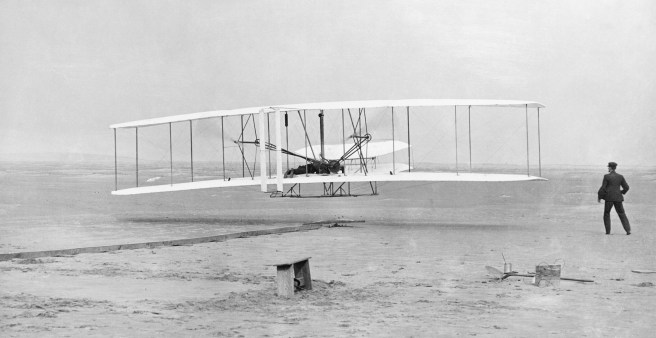
THEY WERE “PKs,” meaning “preacher’s kids,” a difficult role for nearly every child put in its unwanted spotlight. Beyond that, theirs does appear to be a tight-laced family, even with its strong strain of moral and social progress. We can even wonder what the brothers’ diagnosis would have been today; there are speculations of “somewhere on the spectrum.”
Still, they did put humans into the air and, more importantly, brought them down safely.
We’ll put their technological breakthroughs aside today and instead focus on the more personal surroundings of Wilbur (1867-1912) and Orville (1871-1948), sons of Bishop Milton Wright and Susan Catherine Koerner Wright.
Like me, they were both born in Dayton, Ohio, and we were members of a congregation their father had founded. (He also founded a seminary.)
And, gee, a photo of the house they grew up in looks almost identical to my grandparents’.
Here are ten more interesting points gleaned from the Web:
- Neither one graduated from high school. They were, however, friends of classmate Paul Laurence Dunbar, the school’s only Black student, now an acclaimed poet, and in time, at their print shop, they published a newspaper he created. Yes, they were printers and bicycle manufacturers before they built airplanes.
- They learned many of their mechanical skills from their mother, who had attended Hartville College, a small United Brethren school in Indiana, at a time when few women were permitted such an opportunity. Her focus, tellingly, was literature, science, and mathematics. In 1853, she met the future bishop. He had joined the church in 1846 because of its stand on political and moral issues including alcohol, the abolition of slavery, and opposition to “secret societies” such as Freemasonry, values she shared. Working together as his ministry developed, they brought their boys to 12 different homes across Indiana and Iowa before returning permanently to Dayton in 1884.
- A year or so later, while playing an ice-skating game with friends Wilbur was struck in the face with a hockey stick by Oliver Crook Haugh, whose other claim to fame would be as a serial killer. Wilbur lost his front teeth. Up until then, he had been vigorous and athletic, but the emotional impact left him socially withdrawn, and rather than attending Yale as planned, he spent the next few years largely housebound, indulging in the family’s extensive library and caring for his mother, who was terminally ill with tuberculosis.
- More befitting a PK, in elementary school Orville was prone to mischief, including practical jokes, and even expelled once.
- They weren’t the only Wright brothers. Reuchlin (1861-1920) was their oldest sibling. Born in a log cabin in Indiana, he grew into a restless young man, failed college twice, then moved to Kansas City in 1889, distancing himself from his family. He worked in Kansas City as a bookkeeper until 1901, then moved on to a Kansas farm with his wife and children to raise cattle. Though he built a good life for his family there, he remained estranged from the rest of his family in Dayton.
- Lorin (1862-1939) spent time on the Kansas frontier before attending Hartville College in 1882 and returning to Dayton, where he had difficulty making a living. So he left for Kansas City in 1886 (before his elder brother), struggled, briefly, returned to Dayton, and then headed west again, where he scraped out a living on the Kansas frontier for two years before returning home in 1889, lonely and homesick. He worked as a bookkeeper for a carpet store in Dayton and married his childhood sweetheart, Ivonette Stokes, in 1892; they had four children as he settled down to a quiet life. In 1893, he worked for Wilbur and Orville in their print shop, and in 1900 helped sister Katharine manage the Wright Cycle company while their brothers were in Kitty Hawk, North Carolina. He visited Wilbur and Orville at Kitty Hawk in 1902, notified the press in 1903 after their first powered flights, and lent them his barn to build the machine that eventually became the first United States military aircraft. In 1911, he helped test the first airplane autopilot and in 1915, spied on Glenn Curtiss to gather information for the Wright patent suit against the rival airplane manufacturer. After Orville sold the Wright Company, Lorin bought an interest in Miami Wood Specialties, the company manufactured a toy that Orville designed. He also was elected a city commissioner in Dayton.
- Twins Otis and Ida (1870) died in infancy. He, of jaundice; she, five days later, of marasmus – malnutrition.
- Their youngest sibling, Katharine (1874-1929), could be the subject of a Tendril all her own. She was only 15 years old when her mother died of tuberculosis in 1889. As the only female child, it was taken for granted that she would assume her mother’s role—which she did – caring for the family and managing the household. She was especially close to Wilbur and Orville, and when her mother died it became her responsibility to take over the household, seemingly ending any prospects of marriage. Yet she also graduated from Oberlin, at the other corner of the state, in 1898, the only Wright child to complete college. She then became a highly respected teacher at Dayton’s Steele High School. After Orville’s injury in a 1908 test flight for the military at Fort Myer, Virginia, she took a leave of absence from her teaching job to nurse him back to health and never returned to teaching. Instead, she became a central figure in her brothers’ aviation enterprises. In 1909, the French awarded her, along with Wilbur and Orville, the Legion d’Honneur, making her one of the only women from the U.S. to receive one. After Wilbur’s death in 1912, Orville became more and more dependent on Kate, as his old injuries had him in severe pain. She looked after his correspondence and business engagements along with his secretary, Mabel Beck, and ran the household as before. In the 1920s, Kate began to renew correspondence with an old flame from her college days, a newspaperman named Henry Haskell, who lived in Kansas City. (What is it with Kansas City for this family?) They quickly began a romance through their letters, but she feared Orville would become jealous. After several attempts, Henry broke the news to Orville, who was devastated and refused to speak to the couple. When they finally wed in 1926, Orville refused to attend the ceremony, and wouldn’t speak to them up until they moved to Kansas City. She was ridden with guilt for choosing Henry over her brother, and tried many times for a reconciliation, but Orville stubbornly refused. Two years after her marriage, Katharine contracted pneumonia. Even when Orville found out, he refused to contact her. It was their brother Lorin who eventually persuaded him to visit her on her deathbed, and was with her when she died. She was 54.
- None of the Wright children had middle names. Wilbur and Orville were “Will” and “Orv” to their friends, and “Ullam” and “Bubs” to each other.
- The parents and siblings, minus Reuch, are buried at Woodland cemetery in Dayton.
For a broader view, let me suggest The Bishop’s Boys: A Life of Wilbur and Orville Wright by Tom Crouch.
The United Brethren denomination also figures prominently in my posts at Orphan George.
Kinisi 230
intensely
intentional
A few things you don’t know about this Aquarian
Despite all these outings as a writer, not just as a blogger but as a poet and novelist, too, let me confess, I …
- Almost always feel like an outsider.
- Struggle at small talk.
- Look at idealized writer’s studios and realize they could have been what’s now my bedroom.
- Can be blamed for too often having taken my romantic partner as a muse.
- Can’t stand wet feet unless I’m swimming. Or, more frequently, showering.
- Assume true love always involves pain.
- Had some horrid toilet-training that lingers.
- Love foggy mornings when I linger in bed, sipping decaf (these days) and reading.
- Add to that listening to the rain muffled on the metal roof just overhead, perhaps while falling asleep.
- Can’t keep up with all the reading I attempt to do, much less any of the rest I should be tackling.
Kinisi 229
sip, sip and then it’s gone
Van Wept Ohio
Typical comments from our cruise ship visitors
In season, we like interacting with the passengers from visiting cruise ships. Eastport does limit the ships to no more than one a day, and most of the ships come after the summer season and many of our retailers had traditionally closed up. For the restaurants and stores, the ships more than doubled the retail season and often provide the best days of the year. What a relief!
So here’s a sampling.
- There are no yachts! This is a real working harbor!
- Where can I find a lobster dinner? Or a fresh lobster roll.
- It’s so lovely. (Or, quaint. Or, charming.)
- Is this typical weather? (Think of June with temps in the lower 50s.)
- What are the winters like? Is snow a problem? How much snow do you get?
- Your garden looks great.
- This is an island?
- Do you have schools?
- That’s Canada?
- It’s not like other ports, we feel welcome.
Some inquire about lighthouses or the Bay of Fundy.
The crew members, meanwhile, want to know how to get to the IGA and Family Dollar, where they stock up on snacks and junk food. They quickly establish a kind of ant trail moving in both directions.

