Baby pewter of her mind
that Chagrin Falls furniture maker
using really nice hinges
You never know what we'll churn up in cleaning a stall
Baby pewter of her mind
that Chagrin Falls furniture maker
using really nice hinges
Ten more random notes in no particular order:
A toothache I kept trying to pinpoint.
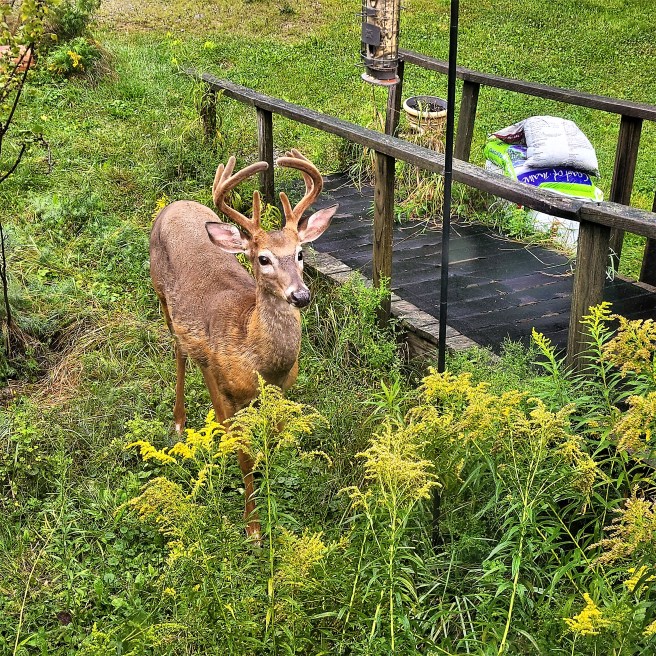
Eastport – centered on Moose Island – is one of many small cities being overrun by deer. You may have met some of the culprits here at the Red Barn.
Here are some random bits as a result.
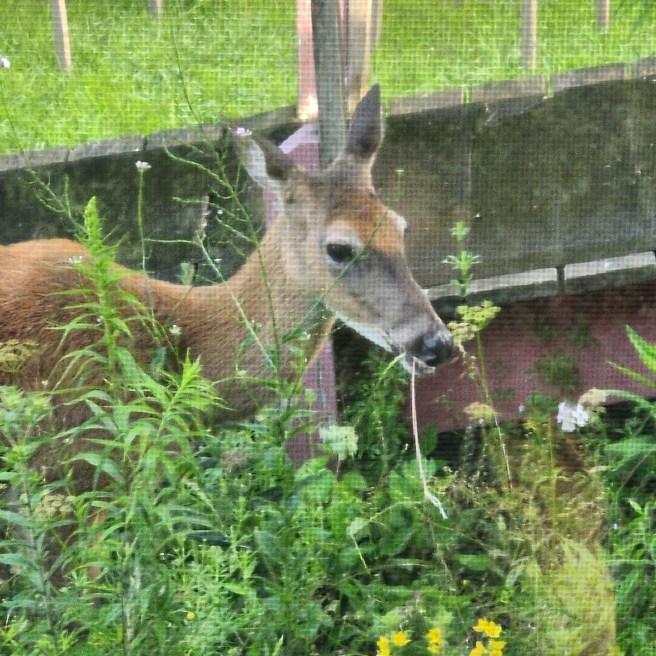
Moving at the speed of youth
A pinball machine of particulars
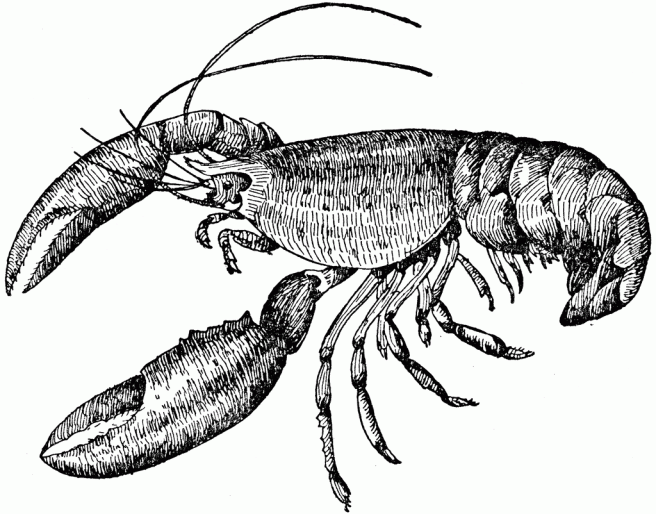
Eastport’s fleet doesn’t use nets to fish. Rather, they use dragging gear or baited traps, mostly.
Technically, the bulk of what they catch isn’t fish, which are vertebrates, have gills, and lack limbs with digits. Fish fall into the scientific superclass of Osteichthyes, as noted in a previous Tendrils.
Shellfish, meanwhile, are invertebrates, have external skeletons, and are classified as molluscs, crustaceans, and echinoderms. See a more recent Tendrils.
So today, let’s look at what the local commercial fishermen catch. Or, in some cases, used to.
Let’s not overlook salmon, a major product here, which are farmed in pens and harvested directly by special boats using tubes that work something like a giant vacuum hose. Not kidding.
Why is addiction
so much easier
than subtraction?
We continue to keep our bird feeders out through the summer (something we wouldn’t do if we had bears in town), but I am surprised by how much more they eat in summertime, when there’s plenty of other food available, than they do in deep cold and snowy conditions when they need more to keep their metabolism up.
Yeah, we know there are more of them now and that they’re also feeding their babies. But on some days they eat as much as they would otherwise consume in two weeks – or more.
On the other hand, we do enjoy watching the variety and drama as they dine right outside the window at our kitchen table throughout the year.
Somewhere in my youth I fell under the spell of windjammers – vessels under full sail in the wild ocean. Those were as far away from my native Ohio as were the white-capped mountains that also caught my fancy.
Over the years, though, even as I came to know first the Pacific Northwest and later, coastal New England, I never considered actually going on an overnight windjammer cruise. Dismissed it as too expensive on our limited income. For contrast, I should note that I’ve never had any interest in an ocean-liner cruise. Zip.
But in late May, a dear friend from Vermont stopped by for a few days on his way to his annual windjammer trip on Penobscot Bay and that, well, reignited those dreams.
My wife looked at our budget and encouraged me to join him on his early autumn return. For the record, she’s declining to go too, remembering a bad seasick whale watch excursion when we were first together. No way would she venture forth for so many hours or days.

Upshot is at the end of next month buddy and I will spend the better part of a week under sail on a historic schooner exploring some famed Maine waters, especially the lighthouses along the way.
I have to admit, a windjammer should be my kind of excitement. And because my buddy grew up sailing, I’ll certainly be privy to a deep source of inside information. At least maybe I’ll have more of the terms right when I report on our adventure.
In addition, many of the classic sailing ships were built only a block or two from our house, back in the heyday of masts and canvas sails. The remaining keel of one schooner is exposed at low tide only a block or two from my house.
I’ve started counting the days till we set sail.

