Jan as in January

and so having examined his cards she shot off fireworks from a waist-high bank of snowy night bottle rockets, the progression silence – whoosh – bang! in some bereavement overcome by momentary pyrotechnics in a furtive event, just once and it’s over who knows how she added fractions to appropriate repeated waves of painters, musicians, singers while he saved five years for some overcast studies prowling the night trajectories into hooting night forest only to detect he has zero bearing as a nightmare impostor posted KEEP OUT and call it quits, entering darkness Better luck next time

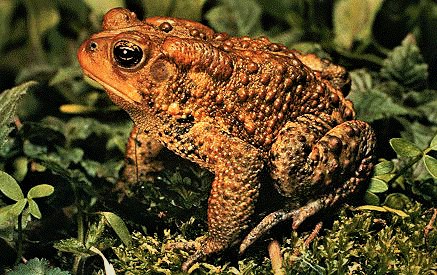
You better be good to toads

If you’re a writer, you no doubt know the dictum, “Write about what you know.” It remains sound advice. Another side, though, is equally valid — write about what you don’t know. It’s a means of exploration and discovery.

What’s Left takes that approach more than any of my earlier works. As an 11-year old, Cassia’s living in a financially secure extended family quite unlike any I’ve known intimately. She suffers a tragedy that prompts the action of the novel, again quite different from my own experience. Cassia tells most of the story in her teen years as she investigates the central questions in her life.

For me, this also required constructing a back story beginning with her great-grandparents and moving to the present. What do I know about running a restaurant, managing a family business, being Greek-American or Greek Orthodox, for that matter?

Well, as she advised me (and you readers) at one point, “You better be good to toads.”

I simply recorded what she dictated to me.

Read the book and you’ll see why.

~*~

I thought about “correcting” that to “You better be kind to toads,” but my sense is that it’s closer to what an 11- or 12-year-old may say under the circumstances.

To be honest, I don’t remember much from when I was that age. There may be good reasons I keep blotting it out.

Give me some help!

What do you remember of being age 11?

~*~

Ribbit!

~*~


Could it be a mutually transitional relationship?

In the final revision of my novel What’s Left, the voice and direction of the story changed greatly. For one thing, it became much more Cassia’s own.

To my surprise, some of the material about her father lost its urgency or importance. Here was one passage that would be refocused and condensed:

The crucial turning point comes, she says, just before Baba arrives here. Tara’s always defended her own space — what she perceives as her essential freedom — and as long as he could accept that, they could spend time together. At heart, though, he’d require more commitment than she would offer, but this once, knowing he’d be headed to the monastery, the situation forced him to take that out of the equation. He had to admit he had no idea what would follow his cloistered withdrawal from the world, and demanding a commitment he couldn’t return at this time would be unrealistic and unfair. That insight, in turn, gave both of them a rare freedom space to concentrate on the present rather than planning an ironclad future together. We can enjoy the next few months together, at best, and they could take everything at that. It was the healthiest — and most rewarding — relationship he’d had. Neither was clinging to the other.

~*~

When it comes to relationships, individuals can vary greatly in their needs and expectations and what they can provide for their partner.

Would you feel comfortable in a relationship like this? For how long?

~*~

In the family, Cassia may have had food like this. Halvah and nut-cake at Mario restaurant, Monolithos, Santorini. (Photo by Klearchos Kapoutsis via Wikimedia Commons.)

~*~


Tara, the lover who wasn’t ready to settle down

In my novel What’s Left, Cassia’s aunt Nita personally knew three important non-family members in Cassia’s father’s past.

Tara is one she viewed mostly from a distance, the lover who matched him best before meeting Nita’s sister.

~*~

Here’s a longer look, one I condensed in the final revision:

If anything, Tara was a lioness. It’s not just her sunburst of hair. It’s the way she moves and regards the universe. The way she even purrs, when pleased, or growls when vexed. It manifests in an insistence on social justice and rails at power-seeking machinations of any kind, public or private. No, she shares our aversion to anything underhanded or sneaky. But the whole time she and Baba are lovers, she’s far from ready to settle down. She’s searching, even probing, for the direction she wants to follow. What Baba never sees is her underlying anxiety or the ways it’s on the verge of explosion. Still, she opens his eyes and heart to so much.

~*~

There have been moments in my life when I ponder how things would have gone when someone like Tara was finally ready to settle down but I was otherwise engaged.

Personally, what do you think of Tara?

~*~

Cassia’s roots included inspiration like Fira, Santorini. (Photo by Rennett Stowe via Wikimedia Commons.)

~*~


Manic Mitch is also lurking from the past

In my novel What’s Left, a seminal figure in her father’s past is Mitch, who introduced him to her aunt Nita as well as Nita’s roommate Diz and then, let’s just say hippie highs.

It’s possible Nita and Cassia’s father never would have met on such a large campus without having manic Mitch in the story. It would be a tighter plot, but how much vibrancy would we lose? I’ve seen him pretty much as a catalyst, modeled loosely on a real-life figure from my past.

Well, he’s more of a key actor in in Daffodil Uprising, where Nita’s also important.

~*~

Just how do friendships begin? Not all of them originate through introductions by mutual acquaintances. Sometimes you just bump into someone and sense a connection.

Was there an accidental way you met someone you now consider a great friend?

~*~

In the family, Cassia may have had food like this. Nut pie and fried apple with ice cream at the Ammos restaurant, Perivolos beach. (Photo by Klearchos Kapoutsis via Wikimedia Commons.)

~*~


About that feminine point of view in my novels

Why a young female as my protagonist? Fair question. Since my novel What’s Left began as an attempt to answer a younger generation’s questions about the hippie movement, I felt a girl would be more receptive to its issues and sensations. Many girls have, after all, continued the identity, while it appears that boys have largely become more militant or even sullen.

As the novel developed, Cassia’s parents and their values retreated into the background. Far more compelling is Cassia’s own identity, development, and confrontations. Hope you agree.

My new series focuses on Jaya and her evolving awareness. Yoga is part of it, along with career issues and close relationships. She has a richer encounter with the events, I’d say, than Joshua does – there are many points where he’s largely a reactive or passive presence. Ultimately, The Secret Side of Jaya has no parallel in his more limited vision or imagination.

I have to confess the story didn’t start out to be told from her side, but it does feel much more fitting this way.

But I am speaking as the author. Readers and critics are open to their own takes.

Care to weigh in?

The Secret Side of Jaya

Among the non-family members in his past, the one now called Liz

As Cassia delves into her father’s photo negatives in my novel What’s Left, she’s bound to come up with a slew of Liz, who became his first lover.

Somewhere there’s also the experimental short movie he made, the one that made the rounds of avant-garde showings. The one featuring Liz’s shimmering breast.

Cassia’s aunt Nita had been Liz’ dorm roommate when the whole thing began. She’d tell her niece plenty, should the kid ask. She’s also a central figure in Daffodil Uprising and Pit-a-Pat High Jinks.

~*~

Romantic love is only one of the options when it comes to emotional spiraling.

Could you tell about telling me of some event that knocked the floor out from under your feet?

~*~

Cassia’s roots included inspiration like this Orthodox icon of Saint Agatha. Via Wikimedia Commons.

~*~


Getting to know Grandpa and Grandma Mac

In the early versions of my novel What’s Left, Cassia’s father’s parents are barely mentioned. They live miles away in Iowa, for one thing, and, for another, whatever they do is light years away from his contented life in her mother’s close-knit extended family.

As a purely literary challenge, trying to fit any more characters into a five-generation tale runs the risk of adding confusion for the reader. But then, by my eighth and ninth revisions, I stumbled upon a simple tweak that allowed me to acknowledge his parents more fully — the simple names of Grandpa and Grandma Mac would do. Just how much of a picture do you get from just that much?

For the most part, they’re a sharp contrast to Cassia’s experiences of home. She and her brothers never feel comfortable in their childhood visits to their Iowa grandparents. But somewhere in my later revisions, an episode developed that changes her understanding and then allows a relationship, however tenuous, to develop. Can I admit being rather fond of the insertion? For one thing, it allows me to quickly sketch another kind of American family little known to the general public — one that faced earlier pressures not all that different from Cassia’s Greek-American lineage much later. For another, well, it’s closer to my own roots, even when I look at hers with some envy.

~*~

In the final revision of my novel What’s Left, the voice and direction of the story changed greatly. For one thing, it became much more Cassia’s own.

Continue reading “Getting to know Grandpa and Grandma Mac” →

What do we make of a trio of evil great-aunts?

OK, I’ll have to admit they’re cardboard characters. I do little to develop her three great-aunts in my novel What’s Left, the ones Cassia and her brothers and cousins simply refer to as the Erinyes. Unlike the classic Greek marble statues, these have no redeeming qualities from the perspective of the story. They’re out-and-out evil forces, having fled the family rather than staying put where they’re needed. But they have enough influence to wreck everything, given a chance. And, yes, I’m still startled by Sandra’s outburst in my final revision. Let me know what you think when you get to that part.

As an author, I rather like the way they might simply dance across the stage as a trio arm-in-arm. And then back. Like a storm cloud, even.

I also like the way they serve as a foil to Cassia’s father and the others who voluntarily join the family the Erinyes had so readily fled at the earliest opportunity. Should I say abandoned?

Could it be they’re cardboard characters with a marble veneer? Do we even need to name them, individually?

I even delight in the weasel home-breaker who appears in their place further along in the plot — the one who aligns herself with their monetary claims. Oh, but that’s such an insult to weasels.

~*~

Here was one consideration I cut from an earlier draft:

What if the Erinyes had married into Baba’s side — something like it, out in Iowa or Salt Lake City?

And then moved on to Orlando or Orange County? No, they were bound for big cities. Which is where your Baba expected to thrive.

~*~

I dunno, but I’d guess they’d wear globs of makeup and tons of jewelry and loud stretch pants and perhaps even vote for Trump.

As an author, I can’t even forgive them for the way they treated Bella when she began working in the family restaurant, much less their threatening actions in the years when Cassia fights to preserve something for her own generation.

They have me thinking of the phrase “bad eggs.” I’ve seen more than a few in my own time … in my own life, actually.

Have you ever seen someone break up a relationship, a home, or a business? Anywhere else? What was the cause? What did they do? What could others do in response? What was your experience?

~*~

In the family, Cassia may have had food like these beet roots, photographed at Mario Restaurant in Monolithos. (Photo by Klearchos Kapoutsis via Wikimedia Commons.)

~*~