So much for their model of a commune

When Cassia’s future father moves in with Nita’s four siblings, their big old Victorian house and its household are practically a hippie commune.

But then, when her parents’ generation begins marrying and having children, things change.

Still, she’d grown up as part of a tightly knit extended family, one that was just about everything his hadn’t been.

Where was your family when you were starting out as an adult? Nearby or far away?

Have you ever lived in a group household?


In your mother’s dreams

brutal deep-freeze, heavy snowfall blanket, ice dams on roofs, melting drips through ceilings the hill resembled a resort ski condo development appropriate considering the city-operated slope on the other side of the expressway runs a single chair-lift I tour the surrounding woods on cross-country blades and observe bald eagles wintering along the Merrimack and recall the rainforest of the Olympic Peninsula, desert along the Yakima, views down over the Mississippi or Potomac or elsewhere in New England . spread your wings, then, in the thawing


A little idealism helps

Somehow, in starting from the finale of an earlier novel, my novel What’s Left would have to resolve a gap between the five siblings’ Greek ancestry and their interest in Tibetan Buddhism, along with the challenges of running a restaurant shortly after the loss of their parents. Their view of business is more radical and community-focused, for one thing.

Yes, they were young and idealistic, but would that be enough to get them through?

What would you hope to see change in your surrounding society? Or even your own life?

When she phoned again

within some perspective, the past and future as an hour-and-a-half chat in part about her new love or lover, how could Squirrel not be pained trying to separate truth from layers of self-deception making him wonder if she’d ever seen him clearly as he was after all moving into other circles as one eligible male the single women had their eyes on yet what shock he realized later seeing how blinded he’d been, his heart solely on her, the news coming amid gossip of that “intimate little dinner that breaks things off” where he heard, fourth party from a third, “first, pour me something stiff” and salty as teardrops running for miles while most really do want nuts, no matter what they say


Conformity isn’t necessarily comfortable, is it?

My novel What’s Left deals largely with a new generation as it attempts to make sense of its legacy. Yes, the story centers on Cassia, the daughter of a professional photographer and practicing Tibetan Buddhist in Indiana. She’s trying to make sense of how they got where they are now – and what’s always made her extended family unique.

Do you feel you fit in easily with the world around you? Or is there usually some sense of alienation?


The first and most learned

a pattern of fern shadows cast by candles playing into a snug culmination rented theaters where hillsides tottered in the unspoken gamble of her slightest motion, some indication if anyone commenced singing against the walls and ceiling of an unclothed expanse of potential a warm hand broaches, scratching its initials on frosted windows and then a lower back arched for precision a cappella with the choir we clocked a blizzard of treetop squirrels far below whatever our season and there you have it . tenderly


Here comes a string of prose poems

The gap between well-crafted prose, especially fiction, drama, or comedy, and the art of poetry has long tempted  and then eluded writers. The definition of poetry as “slow prose” further complicates the issue, I suppose, although some see that end of the spectrum as limp verse – many elements make poetry, after all, and can take a piece far from simple conversation or logical progression. Just because something is structured in broken lines doesn’t raise it to music.

Well, that does point to the appearance of rap as standing somewhere between poetry and fully developed music, rather than chanting or a rhythm section … and opera did emerge out of an attempt to recover the tonal nature of ancient Greek language.

So the possibilities of the genre of prose poems stand as a provocation, and the trials can fascinate. As a rule, I’ve found shorter is sweeter – around a hundred words, max, lest you start writing paragraphs and the piece at hand lose its energy.

This year the Red Barn will be presenting a prose poem each Saturday, drawing on a collection published in 2018 at Thistle Finch. I am grateful to the editors of the following journals for giving some of the prose poems their first airing: Bounce Is Bard, Crack the Spine, Jerseyworks, Ray’s Road Review, Red Coral, The Screech Owl, The Singularity Review, Souvenir Lit Journal, Subliminal Interiors, and The Vein.

Most of them arise from correspondence in my years before relocating to the New Hampshire seacoast and thus represent events now somewhere back in my foggy past. The persons they’re addressed to in these whirlwinds are abstractions, more than actual individuals. What I do know is that I could not create these works today, my outlook is so different.

I hope you enjoy them.
Jan as in January

and so having examined his cards she shot off fireworks from a waist-high bank of snowy night bottle rockets, the progression silence whoosh bang! in some bereavement overcome by momentary pyrotechnics in a furtive event, just once and it’s over who knows how she added fractions to appropriate repeated waves of painters, musicians, singers while he saved five years for some overcast studies prowling the night trajectories into hooting night forest only to detect he has zero bearing as a nightmare impostor posted KEEP OUT and call it quits, entering darkness Better luck next time

You better be good to toads

If you’re a writer, you no doubt know the dictum, “Write about what you know.” It remains sound advice. Another side, though, is equally valid — write about what you don’t know. It’s a means of exploration and discovery.

What’s Left takes that approach more than any of my earlier works. As an 11-year old, Cassia’s living in a financially secure extended family quite unlike any I’ve known intimately. She suffers a tragedy that prompts the action of the novel, again quite different from my own experience. Cassia tells most of the story in her teen years as she investigates the central questions in her life.

For me, this also required constructing a back story beginning with her great-grandparents and moving to the present. What do I know about running a restaurant, managing a family business, being Greek-American or Greek Orthodox, for that matter?

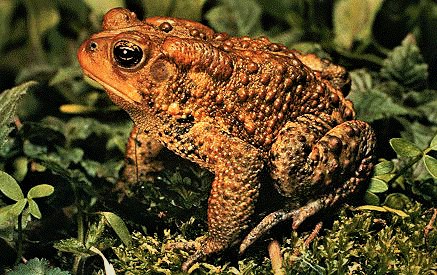
Well, as she advised me (and you readers) at one point, “You better be good to toads.”

I simply recorded what she dictated to me.

Read the book and you’ll see why.

~*~

I thought about “correcting” that to “You better be kind to toads,” but my sense is that it’s closer to what an 11- or 12-year-old may say under the circumstances.

To be honest, I don’t remember much from when I was that age. There may be good reasons I keep blotting it out.

Give me some help!

What do you remember of being age 11?

~*~

Ribbit!

~*~