Reminders of a very special introduction I had while living in Upstate New York. We’re still in touch all these years later.
You never know what we'll churn up in cleaning a stall
Reminders of a very special introduction I had while living in Upstate New York. We’re still in touch all these years later.
Vol. 18 began at the onset of my ashram residency. 23:XI:71.
On the inside cover, I inscribe, I, Elektrik Blue, Uranian, incarnation of Sacred Self, continue this journey.
Not a lot of poetry here but it does include early attempts at my astrological charts and some personally deep ashram mud.
First of all, I was deprived of many of my usual supports: reading of books and magazines, recorded music (though I did have my violin and attempted Bach two-part inventions on piano), movies or other outings, favorite foods. My newly blooming romantic outlook was totally nipped (celibacy and then the brahmacharya rags that served as a jock strap), although I was very much attracted to L.G., 17, daughter of Hunter’s friend Dick, and we had more charming interactions than I had recalled – until the incident in the attic. (I first record her as “Lynn,” which led to complications in reconnecting the thread.)
I was heavily criticized for what I said (too bookish or lecturing), inattentiveness to others, negativity. I was also put on my first Silence.
My struggle included attempts to reconcile my idealistic expectations with the sloppy realities I was inescapably facing. Except for Levi, the rigorous, systematic scholarly framework I sought was absent (even in a Zen absurdist degree). Cedar had her brilliance and insights, but nothing sustained. Levi pointed out that he and I were there for the discipline (practice), unlike the others who saw more of a back-to-the-earth party household. (Sports editor Russ Warman had thought my reason for relocating was to taste “rural life” – how curious considering how many of my residences have been that: Eggs Ackley, such a contrast in group living to the ashram, and then the places I settled in returning to Bloomington, and then on to the orchard in Washington State, the pig farm in Iowa, and perhaps Dover, with our city farm.
What began as an attempt to understand “my problem” (the depression) now had me once again sensing I didn’t fit in. My goal of becoming naturally high, wise, and holy enough to win back Nicki remained a motivating factor, along with self-liberation and enlightenment – transcendence.
I’ve joked about taking up yoga because I couldn’t afford psychiatric therapy, but I now see that both have wound up forcing me to examine the darker sides of my inner workings.
The resentments and anger, especially, built up as I ran up against the lackadaisical airs, and sometime irresponsible or inconsiderate actions of the others.
Especially heavy was my having to shut down all of the newly released sexual freedom and ecstasy. More on that anon.
My notes overflowed with locker-room coaching kinds of exhortations to push, strive, not let up, in the practice. In essence, to fly over my problems, rather than turn them into compost. My verse was largely bombastic, polemic, didactic generalizations and diatribes contrasting our superior ways to the rest of society.
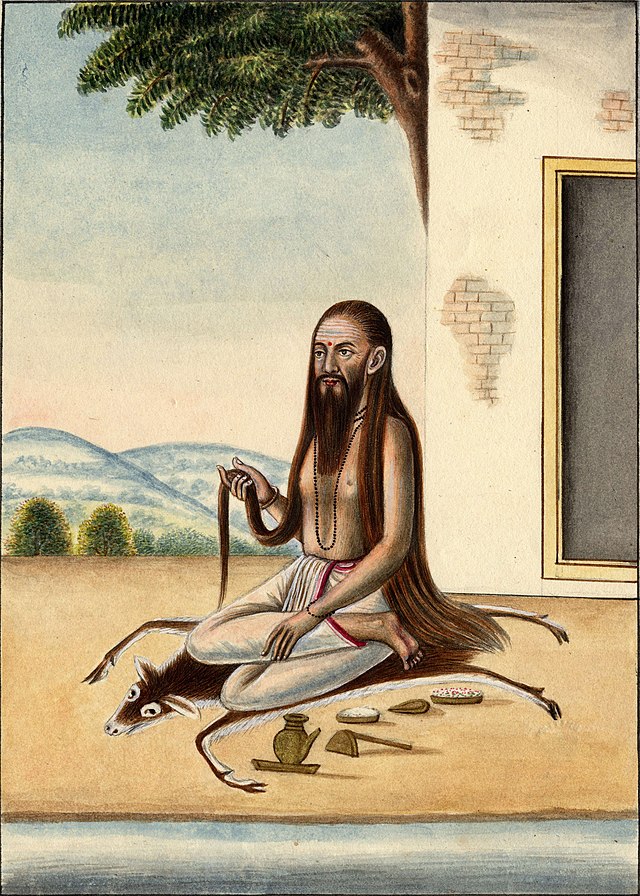
Well, this is kinda how I saw myself at the time. This image of Bharadwaja, seated on an antelope skin and surrounded by implements needed during his meditations, is from Wikimedia Commons.
All of this was intensified when Swami took off with Levi and Theo on extended travel to the Midwest (including Dayton). I was left as the sole resident male with three hippie chicks, at least that’s how we were seen on our trips out in public to the supermarket or diner. I noted that having a woman was my desire a year earlier but now? I perceived how inadequate these three were for my needs, even in celibacy.
Would it have helped to point out that I had to own up to my own demons? A year earlier, I never have considered that mumbo-jumbo.
Swami did point out that unlike us guys, the girls played games of their own invention, something that drove me further nuts.
This became extremely pronounced in trying to write an article for Mother Earth journal. Everybody had a different take, taking us further and further from what the editors wanted. In the end, the proposed story went off the rails.
Ria was the most complex case, I’m thinking. She had been involved in some of the more satanic streams – she “used to go with the guy who wrote Rosemary’s Baby, the infant with solid gold eyes, a tail, and long claws. [IThe author who wrote the bestselling 1967 novel was born in 1929 and divorced in 1968. The plot thickens.] We observed that what she really wanted was a home on a small pond with a rowboat.
After leading hatha and meditation one night, she turned to me, “Where were you? Your vibes were absent during the second half of our sitting.”
Theo (our seven-headed horse) usually appeared as the happy-go-lucky physical laborer counterbalance to Levi and me, though my early notes show him instead as intensely egotistical and “two-faced.” Ouch! He did teach me ways to ease off and loosen up, on the sly.
Our first, chaotic, week-long intensive session came over Christmas break, much earlier in my residency that I recalled.. Some of our actions I now must admit were offensive, even harmful, not that I could object at the time. Still, it was a huge opening in reshaping the direction of the ashram’s mission. One guest did mention hearing scandalous stories about our ordaining swamis under “questionable circumstances.”
Curiously, some of our guests – usually female – took me aside to say I was the only one in the community who understood and embodied our beliefs. That was tempting.
As for my response to the Zen koan, “What was your original face before your mother’s birth,” I noted: Close your eyes! (The koan really goes, “Show me your Original Face, the one you had before your parents were born.”)
Other bits:
“Last night in meditation, I saw Jesus – the dark, straight-nose, pointed jaw Jesus of the most popular portrait. He came into our circle and sat beside Cedar. [She’s Jewish.] Such a strange looking man.”
My other meditation entries were all about lights, warmth, feelings. Example: “Felt the flame burning up around my body but I, in the center, was cool. I see a little light, or merely cold light. I break my meditation to answer the phone and return without losing the high.”
“I am the center of my universe.” Well, in relationships, it could as easily have been, “She is the center of my universe.” Never, really, though, would I have said God or the like.
When L.G. asked about my parents, she laughed at my description: middle class, don’t smoke, don’t drink, don’t curse.
A country-western song idea: “Heaven is just a liquor store up in the sky.”
“Sometimes I think I’m more alive on paper than in person. A man of letters? A paper tiger.”
Also, mention of riding our horse Timely, English-style, “very high … like bareback, flying.” Also, 12:XII:71, Hunter’s asking if I’d like to hear some jazz, which led to Deer Head Inn at the Water Gap. Some very fine piano riffs. Nice, clean place: table cloths, nothing fancy but simple, art on the walls, some nice reproductions. With one of his friends, a freelance commercial artist.
Other musicians showing up that night were two bassists. One joined us at the table and told of quitting playing with a group at one famed resort. “They were in their 50s and so bad you couldn’t follow them; it sounded like church music.”
An ashram guest who had worked for a VD doctor said it was enough to put anyone off sex.
[Incinerated]
~*~
From Spiralbound Yoga, with commentary from now.
As you can see in my Binghamton “hippie” journals, there was nothing brash in my decision to quit my job, go without an income or health coverage, and relocate to study and practice a yoga life fulltime.
Yoga was definitely improving my emotional, mental, and physical life.
Economically, I was marginal, living in squalor (winter in that farmhouse must have been miserable, and getting to work through the snow often an impossibility).
My job wasn’t going anywhere, anyway, and for much of the preceding year before taking up yoga, I had been deeply depressed. As a professional journalist, my income was borderline near poverty despite working weird hours and Saturdays, which did nothing to alleviate my condition.
None of the stockholders, of course, appreciated any of this.
I’m still left wondering why I set a late autumn deadline for the move.
I suspect I felt that the summer would be one to remember, and it was, bringing a period of intense self-discovery and growth. The delay also allowed me time to have a better understanding of my teacher and the community. Was I overlooking something treacherous? In the years since, we’ve seen all too many incidents of financial and sexual scandals in the Eastern spiritual communities in America. As I’ve learned in subsequent years, that was true to some degree in my ashram, especially after my residency.
Crucially, I was single and unattached, even though my love life had certainly picked up.
And so, eight months after my introduction to yoga and then the repeated trips to my guru’s ashram on a former farm in the Pocono mountains of Pennsylvania more than an hour south of where I was living, I packed up and resettled.
As I would discover, the most important lessons in yoga were not about the physical exercises, hatha, but in the practice of meditation, ethics, and spiritual community.
The real lessons arose as back-to-the-earth skills, along with new people skills, too. I’ve come to think of this as my Master’s degree.
The experience has been abstracted and distilled into my novel Yoga Bootcamp and its earlier version, Ashram.
For me, it was ultimately positive. I wish there was something similar for lost youth today, though I’ve never seen myself in a position to offer that, either.
Could Anais Nin really keep such detailed notes of her daily activity?
As I went through my early journals, I started paying attention to their covers, originating in classroom notebooks. I don’t know about you, but trying to write down the meanderings of a college course presentation was usually frustrating. These spiralbound volumes, adapted to my personal life, seem to be no exception.
Still, their covers and endpaper entries provide some perspective of their own.
For consistency, let me say all of them were 8-by-10½ inches unless otherwise noted.
For example?
Vol. 1, undated, cost 49 cents. Upper right-hand cover had a Chiquita Bananas sticker. On the flip cover, I wrote, “The Kid – Yeah!”.
Vol. 2, undated, was a 49-cent Composition Book.
Vol. 3, undated. Indiana University 3-subject divider. Presumably from my first serious girlfriend in retreat. Some Wright State University notes, including French, logic, and Dick Allen’s advanced writing course, which wasn’t yet called creative writing.
Volume 4 included three loose pages from an earlier spiral notebook. First entry had dateline of New York, but was probably from Upstate enroute to Montreal. I’m thinking we took the Thruway to Syracuse and then I-81 due north to the Thousand Islands region. Pittsburgh, Toronto, and Cleveland were likely on an earlier trip.
Vol. 4, undated, though mostly spring ‘70, meaning English L 381, contemporary American novel with Prof. Terence Martin. Met 4:30 MWF in Ballentine 460. The Progress Line, 50 sheets, 35 cents.. It’s the source of an earlier post and a Chronicle at Thistle Finch.
Vol. 5, undated, also spring ‘70 / political science 665, Frontiers of Public Policy and Action, a grad-level seminar with Vincent Ostrom, 3:30 Wednesdays in Woodburn 345. Classmates included Brian Loveman, George Strump &/or George Stein, Paul Wogaman. Remember, I was only a senior, being surrounded by these stellar grad students was a revelation. They kept the prof on his toes. Tennis, anyone?
Vol. 6, undated, third of the Progress Line spiralbound notebooks. Only the first eight pages were used. The remaining pages remained blank.
Vol. 7, green IU Bookstores, 100 sheets, 60 cents, beginning in Bloomington (fall?) 1968, but ending (after a big gap) post-Nicki in Binghamton, Upstate New York.
Vol. 8, blue IU cover / undated, but seems to begin summer ’70 with Sloth story.
Vol. 9 / 50-sheet Progress Line Urban Geography notebook, backing up to IU. (No memory of ever taking a college geography course … don’t think we ever touched a map there, either. Turns out to be Geog 314, urban geography – anything as long as it’s related to the city.)
Vol. 10, fat, three-section Harpur College tan cover, 85 cents / still no dates! essentially winter of 1971, with phone number at back for “yoga – Steve, 723-7226, 7:30, 131 Clinton St”
Vol. 11, Harpur yellow cover / leaping into yoga. Starts Feb. 28, 1971.
Vol. 12, first of the Cornell books, which I long recalled as legal size – except that I now found they weren’t. Were these among the $20 spree I mentioned in one of my previous Ithaca trips? These do have the extra-wide left margins, about 3 inches, which I still love. Starts in late April ’71, with a bold NIJINSKY in black on the tan kraft cover.
Vol. 13, the Cornell series starts with fyr playing with an old English variation of “fire,” with date, 22:V:71 and photo editor’s death in newsroom on a Saturday night.
Vol. 14, Harpur white cover, starts with 26:VI:71 and a red Sivananda Camp Retreat Poconos rubber stamp image (I’d used one or two within previous notebooks).
Vol. 15, red Harpur cover. Really settling into a journal now … some verse, some encounters, some intellectual speculation, starting 26:VII:71 – huh, I filled the previous one in just a month earlier?
Vol. 16, yellow Harpur cover, starting 28:VIII:71.
Vol. 17, black Harpur cover, starting 17:XI:71, the night I met Celeste.
Note that I was consistently using that style of date notation by this point.
Now I’m observing that laptop computers no longer have a cents sign – instead, hold down the Alt key and type 0162 or some such, thought that no longer works in later versions of Windows.
While the ashram did eventually have an IBM, with its Selectric ball (which you manually place into the typewriter) each one with its distinctive typeface, all of that was a step ahead in the chronology.
Does any of this serve as a recap of the earlier postings?
You can see why I’m calling these episodes “spiralbound experiences,” hippie and otherwise.
And pricing et cetera really have gone haywire.
God, I am talking about ancient history even within my own lifetime.
Driving past a sign, State Eye Exams, I could say I just passed the state eye exams.
“You can’t help anyone if you feel sorry for them.”
Surprised I didn’t sleep over with J.B. when she asked me over to her apartment one sunny afternoon, back in my sophomore year at IU (or her roommate, Suzy?, sitting next to her f’ball b’friend and shooting me beavers) … and wondered why J.B. wasn’t so friendly a few days later …
J.B. was so beautiful and so obviously beyond my league. What could she possibly see in me?
Also surprised Nikki & I first went out on Pearl Harbor Day.
My innocence, like Parsifal’s, has protected me from so much.
I am my own guru. Well, only in aspiration.]
~*~
From Spiralbound Hippies, with commentary from now.
In revisiting these early volumes, I’m reminded of how much of the practice was an effort to recall just what had happened since the previous entry. Just recording the events has often been an essential attempt to see the connections in my life. Still, I am aware that many activities and realizations slipped past notation.
Often, my allotted time for journaling has left me barely able to make an outline of the course. I hoped it would be enough to prompt me into fuller memory later. By now, of course, so much of the fullness is lost in a haze.
So here are some things that barely showed up in the spiralbound notebooks.
My crazy employment situation: the scheduling (rarely two days off in a row) or the near-poverty pay. As for the others on the copyediting desk? Each would be worthy of a profile, had I been more inquisitive.
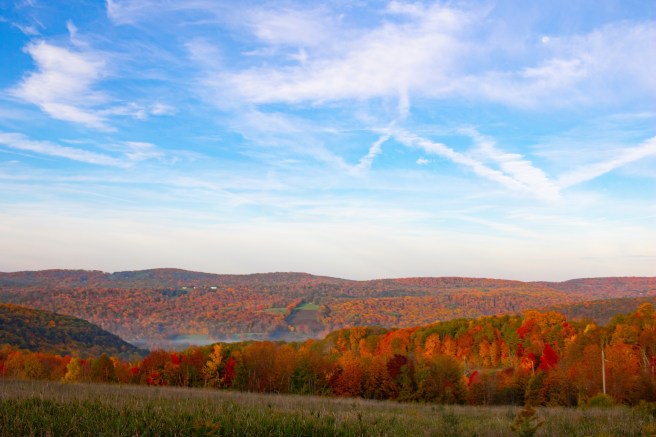
The autumn foliage: that first October was a revelation for me. As I’ve described elsewhere, the intense colors came on in waves, something like a fire beginning at the ridgeline of the forested hills or low mountains in the Southern Tier of Upstate New York and the neighboring Northern Tier of Pennsylvania. Since my shift usually ended at either 1:30 or 3, depending, I was able to explore that countryside in the late-afternoon sun. I put many miles wandering on my Skylark, sometimes getting wondrously lost. Adding to the brilliance was the fact that the trees were a blend of northern species and those of the South.
The snowfall experience: this was my first winter of relentless snowcover, one that was accompanied by extended deep cold. I had thought the sports editor was joking when he wrote to me in Indiana the previous winter that he was shoveling the snow from his roof. Now the reality sank in.
The people I was corresponding with: Those letters have disappeared in my many moves, though I’m certain I relied heavily on them in creating my novels. It was apparently more widespread than I’ve been thinking – high school classmates, a few others from college, including the student newspaper and my internship at the Journal Herald, teachers. Did I send off a large round of Christmas cards that year? I’m now inclined to think so.
The utility spool: the one I used as a desk in my bedroom. Somehow, remembering that now stirs up a sense of what the rest of the room was like. Really drab, should you want to know.
Just what was I typing away on? Both in the apartment and later at the farm, using lengths of teletype paper just like Jack Kerouac, I must have been drafting much that was later used in the drafting of fiction. Perhaps those included details I’ve found lacking in the spiralbound journals.
Perhaps you sense other omissions. Fire away!
The month before I moved to the Poconos was also the only time I’ve been romantically involved with more than one female at a time.
This volume fills in much that didn’t make it into the notebook before it.
perspires in beads
as if in a fever
with such a beautiful smile
her skin fit me better
than a silk shirt
in April
Her stories of Castro being in power 12 years, and Lola tells me how beautiful Havana is this time of year, but the Times says how dowdy the city has become … to encourage farm work … I do some quick math and realize she lived under Fidel and fled. The Times says Havana hides its beautiful women and hides its smiles.
Lola’s cool sensuous eyes sparkle like diamonds.
The Lola NYC trip was 3:X:71. Before that, when she came up to the farm, her parents thought she was at a church retreat.
Margie, who says she doesn’t know Lola well, says she emits good vibes. Is a center of color. How true!
Puts her bra on backwards, as did Judith.
So how did Nicki?
Fine medium breasts, firm … this, the night we met!
A sometimes beautiful, sometimes something else face.
She hitched through Europe that summer. Her previous boyfriend was Puerto Rican.
Looks so fine and soft petting a kitten or puppy. “He was climbing inside my shirt earlier.”
She mentions the colored underwear of European guys or how Italian guys come up to girls while they’re eating and start kissing their necks.
She wasn’t yet on the pill.
Celeste able to fall asleep anywhere.
Our first kisses, our mouths didn’t fit.
Bubble bath or bath oil.
Celeste was scared by Pinocchio.
Virgos torment their lovers; she was on the cusp with Leo.
The girls at the ashram didn’t like her. “They felt her dynamite,” I learned much, much later.
(Here, the paradox: Nicki’s question of loving two people at same time, now me with Celeste and Lola … )
So how was this, the two Leos I’ve loved, both came into my life within a month’s span?
~*~
Rainbow says everyone at Harpur is on the make.
And last night Todd was sleeping with another chick.
The Amazon, with Moe, just saying hello, did all the talking. And Cissy, who she wanted me to get together with, is pregnant and it’s not even her boyfriend’s although she’s making him believe that.
Glad I stayed out of that one!
I paid nothing for birth and will pay nothing when I die. (Except, likely, pain.)
Western religion loses the essential personal experience by emphasizing words instead.
In the East, the experience is told to the teacher, not the congregation. Listen for the vibe, not the words.
Words as the package.
Donnie, to Ajax: “Hey, you know who Hodson reminds me of? Bull Hollander, the same good vibes, same craziness. Well, Hodson’s more open about it, the same looks and dress, yep.”
Well, it’s good I remind some people of people they like!
Regarding Bhaktivananda:
Swamis serve as parent figures for a generation who have lost their own … parents who just don’t understand.
Three boys in a canoe, hitting each other with paddles. Finally, they capsize.
Youth must never die.
“You’re getting there, but you’re too intellectual about it.”
Skye came back, couldn’t register as a voice major at Michigan.
Rusty, mentioning, “When my dad was released from the concentration camp in Poland.”
(As was my former roommate Marj’s.)
Rusty, to Speedo in kitchen: “We’d agreed her being in Michigan was the best thing for both of us. I was losing identity of me. It was us. I said, ‘You can stay, I can’t kick you out, you know that.’”
The White Light: in middle of the night an incredible white light at my window. It took me a while to realize it was the window.
Four days after we met, I was sick … and she was nursing me, wearing my flannel shirt, etc. Deeply chilled.
To name children after animals (birds, esp.) or flowers, gods or poets or philosophers or theologians, actors, musicians, generals, anyone great or beautiful or tragic …
CONQUESTS / ETHOS
(I start attending Kundalini yoga sessions because it’s local)
“Why am I telling you this?” says a stranger after kundalini.
What the West calls “sin” the East calls “obstacles.”
It was after the trip to the ashram, two weeks before my move, that Celeste became “so tender, loving, no longer passive.” [My upcoming departure allowed her necessary freedom from entanglement.]
A car engine revving up:
“Listen to it growl! My, it’s wild!” I said.
“No, it’s just saying good morning,” she retorted.
So Swami and her star disciple were already involved when I moved in the ashram? [Didn’t know I knew about that so early on.]
Saw a bald eagle in Pa. Nov. 71. [So Yakima not my first.]
The work ethic … a man, judged by his labor and results.
So that trip to Ohio, with Celeste, went on to Bloomington and the Ostroms … Cincy and Antioch, too. She met Hap and Pauline, too …
~*~
From Spiralbound Hippies, with commentary from now.
The next notebook, volume 17 in my collection, started the same date that Celeste came into my life. She’s one of just two people from the Binghamton years who’s stayed in touch over the decades since.
The spiralbound is also the first where I was consistently using the 17:XI:71 style of date notation by this point.
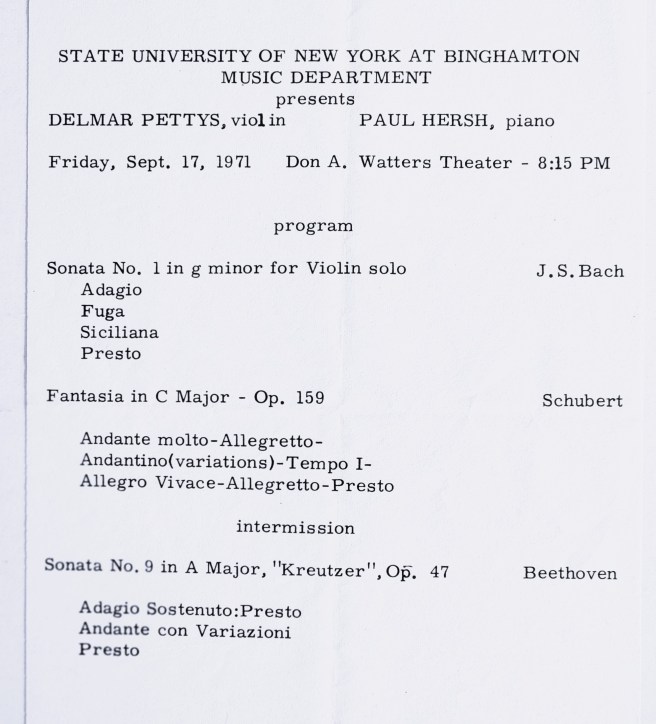
The concert program – Delmar Pettys with Paul Hersh – is taped to the inside front cover: Bach violin solo sonata 1, Schubert Fantasia opus 150, and Beethoven Kreutzer.
~*~
GENTLE. High shrieking laugh. Such red lips she couldn’t wear lipstick, which then appeared purple. Blue eyes. (Her home was 1261 Ocean Ave in Brooklyn).
Am surprised how late she appears on the scene, but she does round out my Binghamton sojourn on a high note.
Also, my autumn immune breakdown happened 21:IX:71, just days after we met. My VIRUS? [Over the years, I noticed it would happen every autumn until several daily prescriptions were added to my routine maybe two decades ago.]
The hippie farm crowd: Rainbow, Speedo, Rusty, Skye, Linda, Duck, Donnie, Margie, Mountain Girl, Jack, Moe, Gwen, & Bill.
The trip to visit Lola, too, on 3:X. The movie was Devils. [Sat in the next-to-last row and rarely saw the screen.] We also hit the Met, meaning art museum not opera, which failed to move me apart from its Tibetan entries.
Foliage on Columbus Day: hills half green, half tawny, golden, scarlet, purple, vermillion, rose with mercurial racing clouds
Friends Mtg 10:X:71 or so … “strange to meditate in a chair.”
Two poetry rejections: “Not these. These are interesting. Try again in April.” From another, “Not enough ‘poetry’ to these for me.” Problem of shooting straight, too little artifice.
THE FUTURE IS A BRICK WALL / why bang your head?
Halfway through the volume, I moved to the ashram, entry of 1:XI:71, which will fill out the next five notebooks.
Also, a trip to Dayton and Bloomington with Celeste. We stayed with Ostroms; also visited Fort Ancient.
Work ethic = a person is judged by his/her work.
Too much of the Midwest “living in the theology of Hollywood.”
In retrospect: Celeste was my best girlfriend up to that point in my life. There was an equality, a balance, that was previously lacking. And, from what I see, there was no underlying depression. Lola, who later noted depression, had potential.
YOGA OF PROTESTANTISM
[Incinerated]
~*~
My, sounds so cut and dry. Emotionally, this was hot.
From Spiralbound Hippies, with commentary from now.
So some of the major hippie farm activity occurs right around or after Labor Day, much later than I would have thought. Whatever happened to Shayna, did she just fade from sight? Or was there some more decisive break? Here there is a big trip, must have been the 29th, after Lola was in the works. I came back from that trip seeing her as deep sorrow and resistance. Much Lola in this volume, and I’m surprised now to see she was barely 17, yet so well balanced. The volume also covers a week of vacation where I chose to stay at the farm, rather than go off to the ashram – notes, too, on looking seriously at poetry submissions. Much copying of Be Here Now rounds out the volume.
TO DANCE WITHOUT MOVING
~*~
Another volume that begins on a Saturday, 28:VIII:71
Aftermath Hurricane Debra
Trip to Rochester the next day.
Shayna’s sister was Tammy, not Serena as I had thought. “Beautiful … green eyes drinking in mine.”
Note that Lola and Shayna put their bras on backwards, as did Judith … as for Nikki?
At end of month, “much affinity for Aram Saroyan” … and Robert Creeley.
At campus bookstore, spent $16.55: far-out collection. Himalayan art, Neruda and Vallejo, two Rilke volumes, and 17th century English poetry survey. Passed on a $4 book of Blake’s art.
Decided to spend week of vacation at home. “Where else would I see more beautiful land?”
Got an amazing letter from my sister, seems the ashram trip together opened her up … read parts to Helene, “She sounds cute”
News from Cheri was essentially a nervous breakdown.
~*~
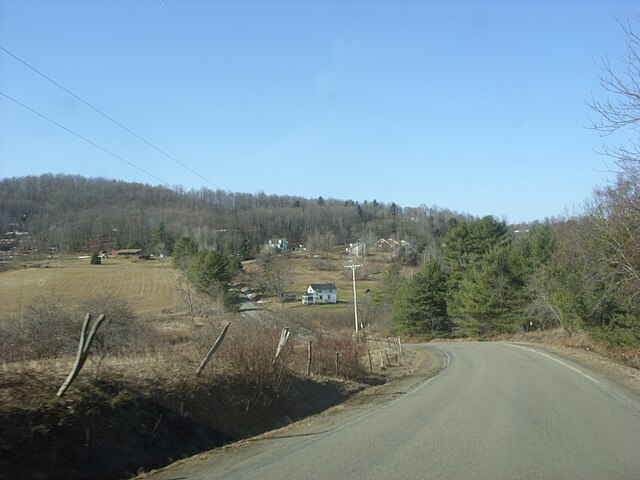
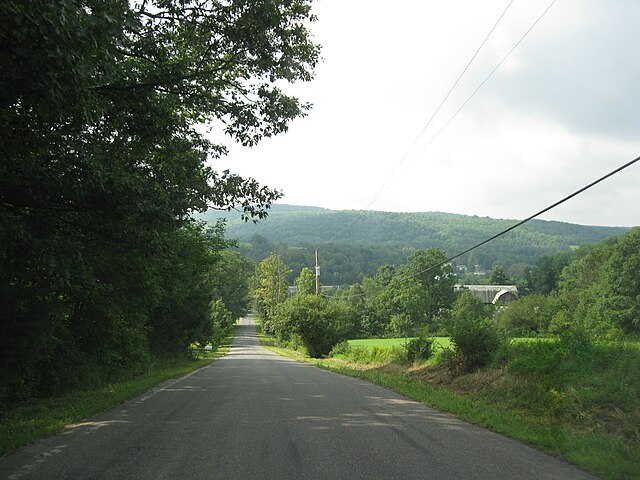
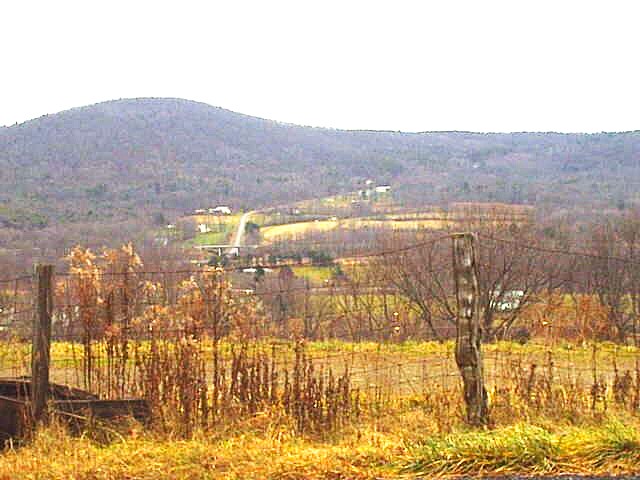
The commute to and from the office, down in the valley, from the rundown farm I shared in the highlands along the New York-Pennsylvania state line was memorable – a series of right turn, left turn connections of country roads. In the early mornings starting in August, the valley was often blanketed in fog below me.
~*~
Notes from Rochester trip: At Shayna’s parents’ house … books everywhere … Harvey’s Readers … Callas on the turntable … her mother was cooking what I dubbed Ira’s Stew, a pun on Iris … so now I wonder, who was Ira … I thought her brother, if one, was David … maybe that was Skye’s?
“Do you think you and Nikki will ever get back together?”
“No, not after Saturday’s phone call.”
Nikki was struck by my lack of my, using your, his, personal referents, calling it instead the car, the book, the dorm room: do I see the universe as mostly my stuff, or perhaps my stuff as the only real/valid stuff?
Wheel of torture [not fortune]
TO THE WOODS, WITH TYPEWRITER
Typing poetry, especially
Thank you Lola, I feel 17 …
In grocery with Rainbow (the nudist but this time clothed), and Pips’ mother standing in front of me.
I laughed, and she turned around. “Oh, hi! I knew it was you by your laughter. Nobody else laughs like you.”
Was I, uh, really, that weird?
My room as a universe I can comprehend.
On a later Friday, on way to Rochester [was I late shift next day?} … Shayna had found an apartment in Buffalo but with twists. Guys able to play cards there once a week …
Jack, Gwen, and Moe talking of moving out … Jack a source of leadership, initiative, and knowledge … Gwen a real down, everybody telling me she’s been giving off really bad vibes, confirming my impression …. If only she’d wash her dishes … while she doesn’t want anybody to hassle her, she hassles others, even by sitting to take a shit …
Rusty, talking: “When my father was released from the concentration camp in Poland”
Rusty to Speedo in kitchen: “We’d agreed that her being in Michigan was the best thing for both of us. I was losing identity of me, it was us. I said, sure, you can stay, I can’t kick you out, you know that.’
[Here, they stood in my eyes as a perfect couple.]
Rusty and Rainbow and me at the lake, one of the best days … hardly anyone around … warmish water, distant sun … his poison ivy so bad.
Another letter from Lola.
Ronco from Indiana visited, on his way to Ithaca, laughs like a little girl, gossips, yet good to see him. Slept with his clothes on using a mattress we dragged into my room. [We went up to Cornell the next day and I hitched home.]
Polly pissed to find about Willow; seems Mountain Girl [Willow?] wanted Polly to intercede to get Bob to pay for the abortion. “She’s really a fucked up girl.”
Molly’s pissed off about me and Gwen. “Boy, you should hear what she told me!” Also, a little later, “She was afraid she was pregnant.” Not me; we never got THAT far.
Walt upset ‘cause I left at 8 Saturday … 5½ hours. [Was I sick?] Tioga edition wasn’t there. A jam-up later. Also, I hadn’t finished editing a business story.
[Incinerated]
~*~
From Spiralbound Hippies, with commentary from now.
 Jnana's Red Barn