… the executive department had not been innocent of frequent breaches of the Constitution. … The great proportion of the instances were either immediately produced by the necessities of war or recommended by Congress or the Commander in Chief. … In most of the other instances, they conformed either to the declared or the known sentiments of the legislative department.
The accumulation of all powers legislative, executive, and judiciary in the same hands, whether of one, a few or many, and whether hereditary, self-appointed, or elective, may justly be pronounced the very definition of tyranny.
You know the one I’m talking about. Even before getting to the others just ahead.
Let’s just say I’ve been watching this building up, step by step, for decades. The corruption by big money and trickery, the erosion of the middle class, the polarization, the sleaze, the breakdown of the checks and balances or a loyal opposition.
Working in the newsroom, I was bound to give both sides their voice, though one was doing everything it could to discredit us and those distortions went unchallenged. There was more, of course, going on in the dark, things we sensed but couldn’t prove outright.
Let’s just say I was outraged but had to keep it bottled up. But then, after retiring, I let it out by indulging in a stream of poetry I usually steered clear of – the polemic rant akin to Dr. Bronner’s Moral ABC or Allen Ginsberg’s The Fall of America collection or Phil Ochs’ protest folksongs.
The result is Trumpet of the Coming Storm.
While the pieces that spewed forth in my collection may look like history from the Reagan years through the Bushes, they do reflect the origins of what’s coming to a head today. Even the poems that can be considered sophomoric seem prescient.
There are good reasons I subtitled it Blasts of Alarm and Rage, 1976-2008.
Do take a look.
It’s available in the digital platform of your choice at Smashwords, the Apple Store, Barnes & Noble’s Nook, Scribd, Sony’s Kobo, and other fine ebook retailers. You can also ask your public library to obtain it.
… the federal senate will never be able to transform itself, by gradual usurpation, into an independent and aristocratic body; we are warranted in believing that if such a revolution should ever happen from causes which the foresight of man cannot guard against, the house of representatives with the people on their side will at all times be able to bring back the constitution to its primitive form and principles.
News reports of protesting students seizing administration buildings on college campuses do bring back memories, and I know I’m not alone.
While there had been earlier seizures of campus facilities in the late ‘60s at schools like Berkeley, Columbia, and Ann Arbor, Michigan, the killing of four protesters at Kent State on May 4, 1970, and two more at Jackson State on May 14 triggered student strikes across the country.
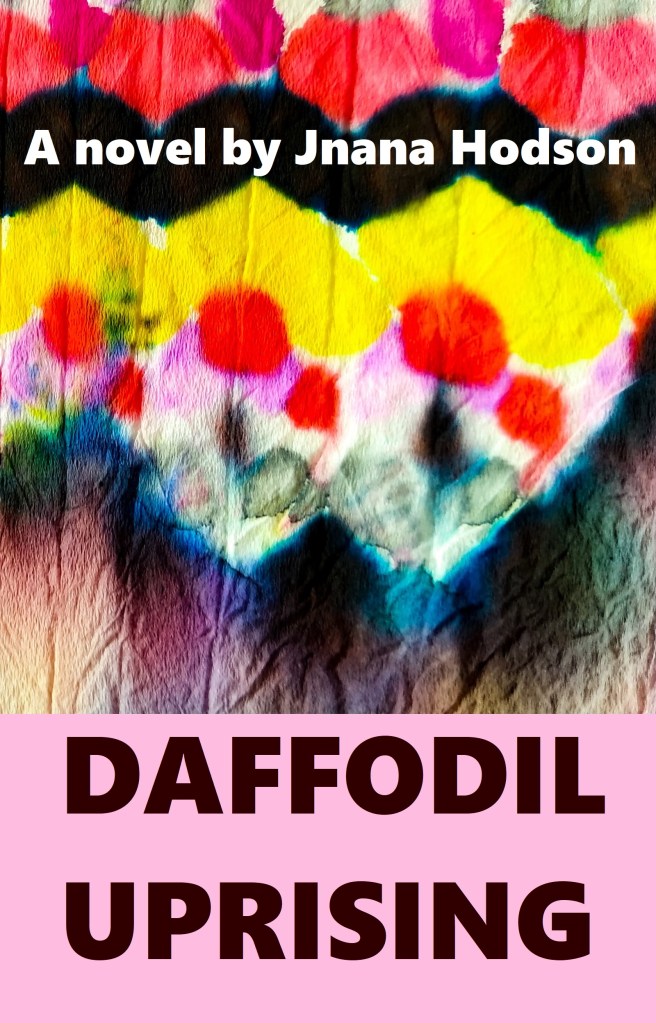
The causes ran deeper than just the ongoing warfare in Vietnam and surrounding countries, do note. My novel, Daffodil Uprising, reflects my experiences in Indiana.
The making of a hippie
While I’m not about to engage in comparisons of today and back then, I am fascinated in the focus on university funding in the current protests. My novel saw that as a crucial factor back then, too – it wasn’t just Dow Chemical, either.
Of special concern, now and back then, is the depth of frustration that finally erupts as rage and revolt. We can assume there are elements in the current actions that go back well before the current Gaza crisis, and not just in the Middle East. They need to be addressed.
I believe that many of the problems in contemporary America can be traced back to unresolved issues from the late ‘60s For now, I’ll leave it at that.
For any of you interested, my book is available at the Apple Store, Barnes & Noble’s Nook, Scribd, Smashwords, Sony’s Kobo, and other fine ebook retailers, and at Amazon in both Kindle and paperback.
Measures will too often be decided according to their probable effect, not on the national prosperity and happiness, but on the prejudices, interests and pursuits of the governments and people of the individual States. … The great interests of the nation have suffered … from an undue attention to the local prejudices, interests and views of the particular States.
Of all the cares or concerns of government, the direction of war most particularly demands those qualities which distinguish the exercise of power by a single hand. The direction of war implies the direction of the common strength; and the power of directing and employing the common strength, forms an unusual and essential part in the definition of the executive authority.
The Federal and State Governments are in fact but different agents and trustees of the people, instituted with different powers, and designated for different purposes.
… who can think it possible that the president and two-thirds of the senate will ever be capable of such unworthy conduct. The idea is too gross and invidious to be entertained. But in such a case, if it should ever happen, the [ruling] so obtained … would, like all other fraudulent contracts, be null and void by the laws of the nations.

 Jnana's Red Barn