For better or for verse, here are more lodes I’ve also mined  

By the standards of many, I’ve been a prolific poet, though if you consider that just one new poem a week would come to more than three thousand now.

Sounds about right, even with the arduous revisions they underwent, pressing the original inspiration into something quite different, always in an “experimental” rather than traditional vein. Add in all the hours of submitting the results to journals and small press openings, and all the rejection slips that followed, it was an obsessive amount of time – I had been warned that even “successful” poets averaged 20 rejections for every published poem. And beyond that, simply preparing a “clean” page for those submissions back in the days of typewriters pressed the limits of patience.

Still, poetry could be done in shorter spurts than fiction in my free days and nights while I was engaged working fulltime in a newsroom. As a minus, it did divert my attention from the local news scene and related gossip, but it did sharpen my editing and writing skills, both of which chafed at the limitations of newspaper style.

Many of my early poems sprang from my journals, something that changed over the years, especially as I got into Deep Image and related techniques. While more than a thousand of my poems were published in journals around the globe, book-length collections remained elusive. Now, however, some are available as ebooks, allowing you a chance to sample my evolution over six decades.

Here’s a lineup:

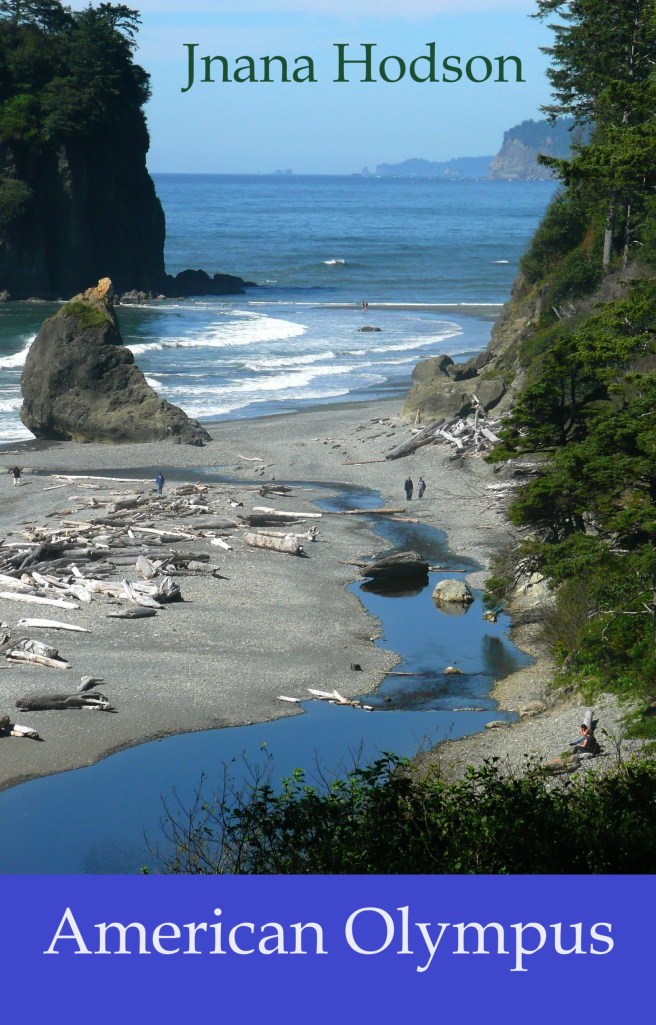
American Olympus: This longpoem is also a mythopoem set in a single week of camping on the Olympic Peninsula of Washington state. The book came close to being published by a prestigious letterpress imprint but fate intervened, sending me spiraling back eastward. Many other nature and landscape poems reflecting my experiences from one end of the continent to the other and back in my early adult years await full collection. Please stay tuned for future appearances of those works.
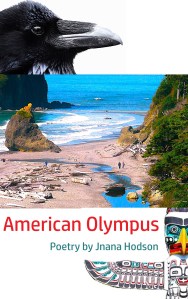
The volume has a new cover, one that’s a departure from my usual design style. I do find the leap rather exciting, and suitably unconventional.

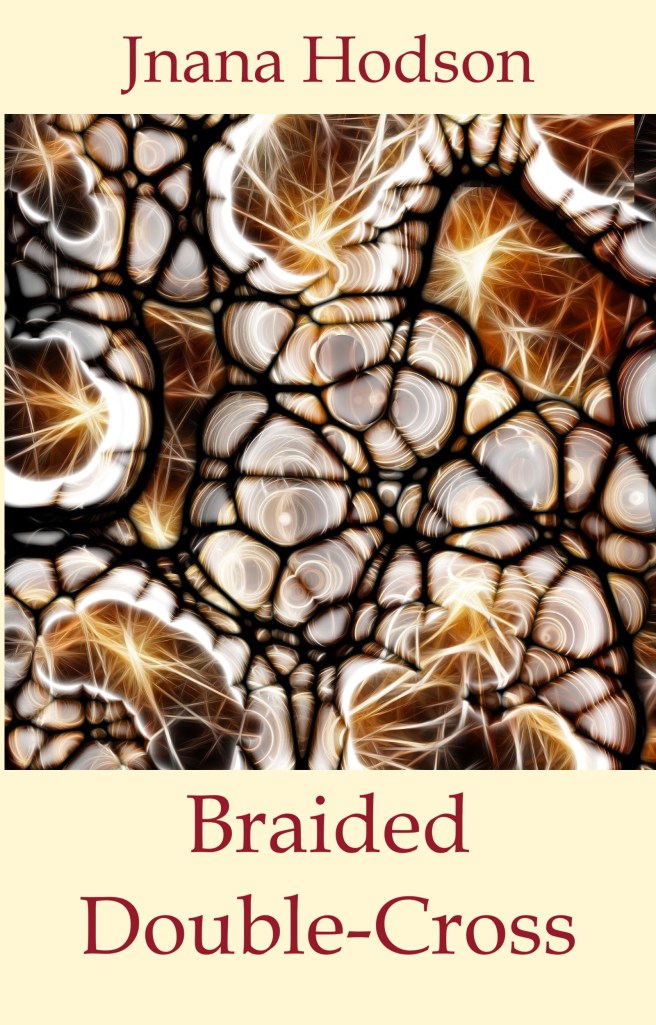
Braided Double-Cross: Intense attraction, sexual ecstasy, and long-term dreams ignite this set of contemporary American love sonnets that reflect the conflicting emotions and unspoken expectations that surface in the eruption of breakdown and breakup. The set, my first run of poems composed as a series, explores passions that sugarcoat realities and betrayals. Sometimes something so truly hot leaves a lover branded for life.

Blue Rock: Continuing in the conflicted passions line, these poems reflect attraction, romance, and the aftermath in today’s society. Just groove to their beat.

Trumpet of the Coming Storm: Admittedly polemic, these are brimming with buried anger erupting at last. Sometimes you just can’t ignore politics, even in a historical perspective.

Hamlet, a Village of Gargoyles: This playful investigation of human identities alternates between gossipy and confessional, set within the context of close community. The collection now hits me as somehow prescient, considering that I’m now living in a real village with characters I hadn’t considered. The tone is contemporary with nods to Shakespeare and Chaucer.

Ebook formatting does limit the visual array of what you would otherwise find on a defined page of paper, but it does make my daring work available inexpensively around the world. I can live with that and so can you, especially if you’re reading on a smart phone.

I promise, there will be more.

You can find these in the digital platform of your choice at Smashwords, the Apple Store, Barnes & Noble’s Nook, Scribd, Sony’s Kobo, and other fine ebook retailers. Or you can ask your local library to obtain them.
Acid test poet: Ted Berrigan (1934-1983)

Encountering a trio of his Sonnets in an issue of the Paris Review my senior year of college blew me away. First, by the fact that their iambic pentameter had been cut into lacy fragments but also that the remaining threads were made more powerful and light-filled as a result. Or, “oh, for the loving” (expletive), as he wrote. These were more like the collages of Robert Rauschenberg than the corseted stanzas of Shakespeare.

The fuller set, published in 1964, advanced the impact, especially in seeing how the collection came together as a series of essentially three poems that kept getting reassembled in new ways. Variations on a theme, as it were.

These were unmistakably urban, cigarette smoky, and not so secretly drug-infused.

They inspired my own set of American sonnets, The Braided Double-Cross.

As a reader, they also point me toward John Berryman and John Ashbery.

I love his definition of a poem as a miniature wind-up toy.

When passion gets terribly tangled

Have you ever been in a committed relationship, only to be struggling against what you later learn was a triangle? The third party doesn’t even have to be another person, for that matter, but secrecy does tip the balance.

The desire was still there and burning, hoping for reconciliation and renewal. Just don’t call yourself a victim, OK? Not as long as you were actively engaged in the scene.

As for the evidence? In hearing your side, who knows what was factual or imagined, other than the reality of your feelings.

Move on, then, with the memories. Don’t say it wasn’t love, especially of an adolescent sort. Or maybe even your first time.

Having originally appeared in Thistle Finch editions, this collection is now available on your choice of ebook platforms at Smashwords.com and its affiliated digital retailers. Those outlets include the Apple Store, Barnes & Noble’s Nook, Scribd, and Sony’s Kobo. You may also request the ebook from your local public library.

The move makes the poems available to a wider range of readers worldwide.

Do take a look.

Come along on a funky little camping trip with me

Maybe if I had a camera at the time, the trip would have wound up as photos rather than a poem. The weeklong camping trip was a turning point in my life, though, and the poem that emerged from the experience was initially accepted by a prestigious Northwest literary press but then declined – they’d lost a grant, they said.

Had it appeared at the time, my path as a poet would have advanced, definitely more securely than it did. But the effort definitely solidified my growth in the craft.

Poem? It’s my attempt at what William Carlos Williams advocated as a longpoem, where the challenge is “to find an image large enough to embody the whole knowable world about me.” About, in this case, having meanings as both the immediate world around the poet and his own autobiographical revelations. In his case, the image was the Paterson, New Jersey, the river city where he practiced medicine and lived.

For me, it became about the Olympic Peninsula of the Pacific Northwest, bugged, perhaps, by Basho’s wanderings in ancient Japan.

Having originally appeared in Thistle Finch editions, this collection is now available on your choice of ebook platforms at Smashwords.com and its affiliated digital retailers. Those outlets include the Apple Store, Barnes & Noble’s Nook, Scribd, and Sony’s Kobo. You may also request the ebook from your local public library.

Do take a look.

If these were paper books …

Discounted “sale” prices would be used to move a backlog of volumes, either at the bookstore itself or at the publisher’s warehouse. It was rarely a good sign.

With ebooks, there are no stacks of boxes or precious book-shelving problems.

Maybe you remember the “remaindered bin” with its cheapo prices. What you likely don’t remember was that authors didn’t get paid royalties on those.

Still, they got books moving into readers’ hands.

Events like Smashwords’ big July-long ebook sale exist to stir things up a bit.

Check out my four selected entries at my Jnana Hodson author page at Smashwords.com to pick up some real deals.

Poetry has been an influence, too

Through much of my adult life, I’ve spent more time writing and distilling poetry than I did with fiction.

Part of the reason was that poetry fit my once-a-week time for sustained “butt time” addressed to my literary efforts. A novel, in contrast, requires a bigger window, at least for me. I have to admire mothers who put something good together while toddlers and family meals gave little respite.

For me, the practice of poetry, both as a writer and reader, springs from the practice of meditation I took up as a yogi and continued as a Quaker, though now it’s once or twice a week rather than daily.

Prose simply feels more secular and aimed more at a general reader. And even there, I’ve come to see that writing hundreds of thousands of headlines for a living had a poetic component in its brevity. My personal writing was one way of staying sharp there. As for the hundreds of thousands of newspaper pages I designed? They did fall back on that intense visual art training in high school.

Like my fiction, my poetry originated in trying to remember and make sense of what was happening around and within me. Sometimes, when I got around to a manuscript of fiction, I would cannibalize a poem, especially if it hadn’t yet been published in a journal. That was especially true when it came to Nearly Canaan and the Secret Side of Jaya.

I wonder if any of this goes back to my childhood interest in chemistry and then being stymied when I wasn’t taught algebra when I needed it, back in fifth and sixth grades. Freshman year of high school was too late, my line of inquiry had shifted to classical music and visual art.

Poetry is a kind of equation, even geology, rather than the Friday night football game a novel can play.

~*~

My juggling act between the daily journalism that paid my bills and the literary aspirations that I hoped would finally free me did result in what I’ve come to see as literary graffiti – flashes written on the run, even when they then underwent much distillation and refining. I think that’s most obvious in Subway Visions, Nearly Canaan, and the Secret Side of Jaya but also befits everything except What’s Left, and even there may have crept in through the earlier outtakes I wove in.

~*~

Shortly after my books were up at Smashwords, a fine writer I know told me over coffee that I was more of a poet than a novelist. Ouch! He may have even said a better poet than novelist.

I hope I’ve improved since then and have arrived at a better balance in the revised books.

Think of it as an ‘advance reading copy,’ after the fact

Many of the books in my personal library arrived in the newsroom as advance reading copies, intended for reviews or perhaps mention in a column, except that we rarely printed one of those. Instead, the freebies went out on a shelf for first-come to be first-served.

For the book publishers and authors, it was a huge waste of money.

In addition to the two books I’m offering for free at Smashword’s big July-long sale, you can pick up a copy of my new Hamlet: A Village of Gargoyles poetry collection at just half-price.

It really is worth a visit.

I used to find ‘sale prices’ puzzling

In my mindset, a product or service has a fair-value point. You know, it costs so much to make and distribute, even before factoring in a profit. If you’re selling it at a lower price, why don’t you keep it there all the time? Maybe my outlook reflects the one-price for all practice of Quakers who objected to the upper class who expected to get a discount over the poorer masses.

Beyond that, the concept of bargaining or haggling found in many cultures absolutely repulsed me. I still feel like poor artisans and farmers in those countries are getting cheated or at least cheating themselves.

Either way, I rarely buy much and usually shy away from the more expensive range of items. Quite simply, I’m just not a shopper.

In my two years working as a field representative for a newspaper syndicate, I did finally come to appreciate the need to have something special to motivate a potential buyer. We couldn’t offer “specials,” and in most markets, we no longer had competing newspapers vying for our latest product. It was frustrating. There was nothing to make an editor jump onto our latest comic strip or columnist or game feature, no matter how excellent these were.

In the book publishing industry, free advance reading editions and review copies were sent out in the hopes of creating a buzz, but for digital books, that is a more challenging effort. Giving somebody a coupon to order online just ain’t the same as handing them a paper book.

So just what can an indy author do to get reviews or, better yet, a word-of-mouth buzz?

Welcome to Smashword.com’s big July-long ebook sale, where writers opt to present titles at sharp discount or even free.

Remember, this year I have two recent works available for free and two other new works at half-price.

Check them out at my Jnana Hodson author page! And then look at many of the fine offerings by others, too.