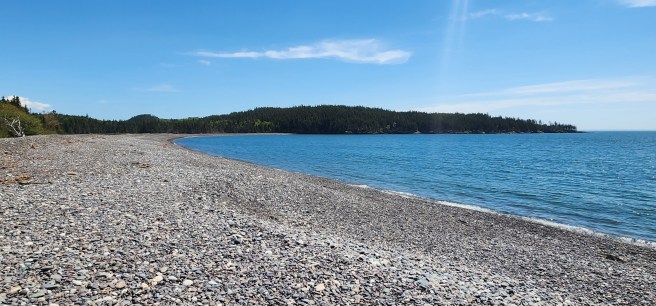
This cobble dune is much taller than you expect, and it is a natural wonder. In this photo, the sitting sunbather looks like one more small stone. Welcome to Jasper Beach in Machiasport, Maine.
To explore related free photo albums, visit my Thistle Finch blog.
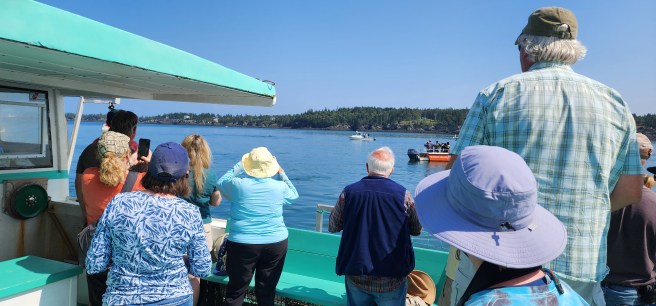
Everybody on board the Eastport Windjammers’ Ocean Obsession was engaged in looking for the next whale to appear, as were a few other vessels beside Campobello Island in New Brunswick, Canada.
We did observe humpbacks, finbacks, and minkes on the outing, but the rare right whales are less frequently seen.
For more whale-watching experiences, take a look at my Lolling with Whales photo album at Thistle Finch editions.
That’s also a warning if you do find a contractor who will present one on a project like ours.
Experienced tradesmen should know there are too many surprises when you’re dealing with an old house. The only way for them to come out ahead with that factor is by cutting corners or – as often happens – ghosting the client altogether.
Doing the job right, on the other hand, takes the amount of time it demands.
There’s an artistry in working with an existing old house.
~*~
That said, you better be prepared to deal with the expenses that do come up.
On our contractor’s end, when I look at all of the tools and equipment that’s been parked in our house, I’m surprised he’s making any money on this project. Much of his gear is very pricy, and we don’t even see the hidden costs, like insurance.
A longstanding highlight of Eastport’s annual Old Home Week and Fourth of July festivities is a U.S. naval ship visit. Here is the destroyer DDG 98 Forrest Sherman from last year’s edition as illuminated in glowing late-afternoon sunlight.
To explore related free photo albums, visit my Thistle Finch blog.
While awaiting the delivery of the windows for the front upstairs – once we had definitely decided on their size and placement – Adam turned to one of our optional side projects, redoing the back deck.
The ramp leading to it was becoming a safety hazard, and the existing deck was tiny and sinking.
The replacement and steps are a huge advance.
The windows arrived, and that put a hold on the bigger plan, for a lower deck on two sides below. It would be one way to keep Eastport’s red ants at bay when we’re dining outdoors, as well as less lawn to mow. Pluses on both counts, right?
Would Adam get back to it before the ground froze? We were facing a time crunch, and the interior was the priority, followed by the cedar shake siding.
~*~
Coincidentally, we found a mason who was able to get to repairing the top of our chimney – it really was in precarious shape – and touching up the exterior of our foundation. We wound up with a layer of supporting cover compound, too.
Our plumber had also installed three outdoor spigots and removed the one we previously had. It was leaking badly anyway and was on the side of the house where it was least useful.
Progress was taking place, just not always of the most noticeable sort.
Think of Maine and you’ll probably envision lobster fishing as part of the scene. This crowded pier is in Kittery at the westernmost stretch of the state’s long coastline.
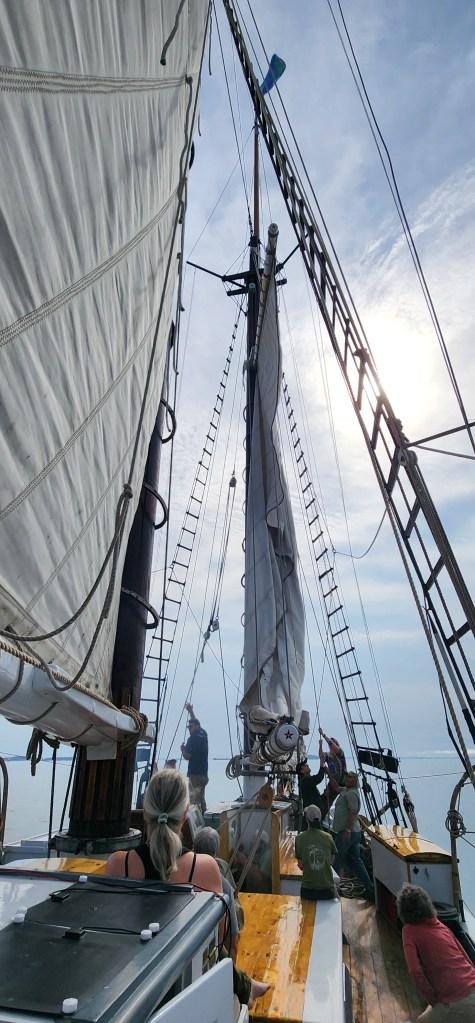
It’s a daily ritual if you want to go sailing. The breakfast dishes have been cleaned up and put away. Now the real fun begins aboard the historic schooner Louis R. French.
For more schooner sailing experiences, take a look at my Under Sail photo album at Thistle Finch editions.
Maybe it was a good thing that we didn’t have too much detail in the CAD design we ordered from a local lumberyard. Initially, that was a miscommunication between our contractor and us, plus a looming deadline for a building permit.
The upshot was that as we watched the space open, our vision transformed. We saw new possibilities.
The first big one opted for cathedral ceilings in the four bedrooms. No big problem, said Adam.
Also, we wanted to leave the charred exterior rafters visible in the two back bedrooms. They were evidence of the 1886 downtown fire that started on the waterfront just below our house. They also reflect the original roofline, which we had now raised. And they were dramatic.
Alas, once we realized how labor-intensive (i.e., costly) keeping that touch visible would be, we opted to forgo it.
In another change, the windows in the bathroom and laundry room went from transom-style to narrow vertical.
The ceiling in the upstairs hallway was originally going to be flat, but we liked the feel of having it follow the roofline. Classy.
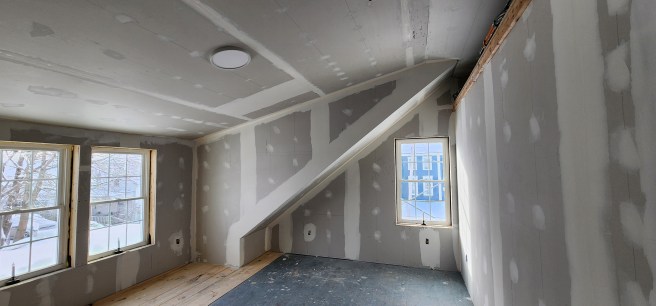
In the two front bedrooms, the width of the two side roofline panels was halved when we saw how much the original, aligned to the old dormers, really confined the rooms. The purpose of the panels was to keep a sense of the original profile of the house as seen from the street. What we wound up with does the job.
Note the way the loft over the neighboring closet makes the ceiling look even airier. The slope of the original Cape roof doesn’t run bluntly into that wall.
After that, the windows in the front two bedrooms went from spaced apart to being placed together, centered between the two pairs of windows below.
And there were some big tweaks in closet arrangements between bedrooms. The two smaller bedrooms got larger closets while the two bigger bedrooms got open loft above those.
As I’ve said, none of the bedrooms wound up looking like rectangular boxes with holes for windows punched in.
We did encounter so many unanticipated details. Things like molding, the placement of light switches, even the door latches – you usually open them with your right hand, it turns out. I’d never thought about it. How about you?
~*~
Did we see things an architect wouldn’t? I like to think so.

 No longer a working lighthouse, it remains a landmark in the New Brunswick seaside town on Passamaquoddy Bay.

 Jnana's Red Barn