

You never know what we'll churn up in cleaning a stall
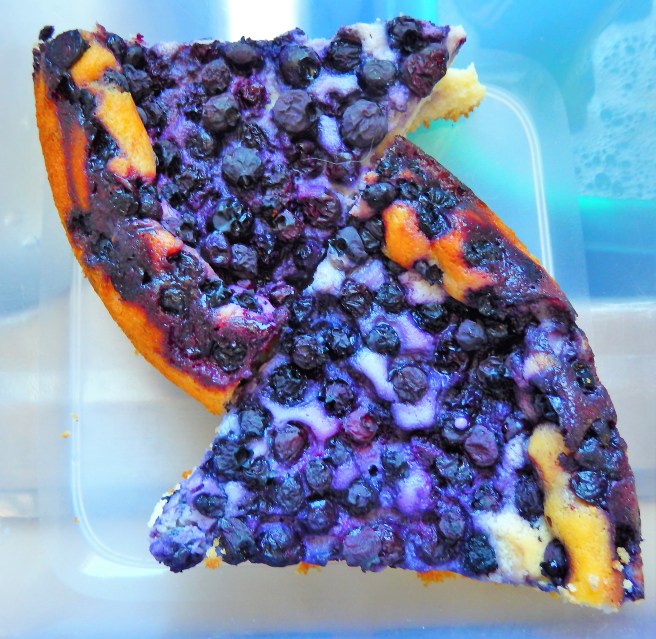
We’re getting down to the bottom of our stash of local blueberries, the smaller, wild, low-bush variety.
Here are a couple of the last slices from a blueberry breakfast cake my wife created.
I’m already waiting for next year’s crop!
Tourists may get a taste of a distinctive natural wonder in a particular landscape during their brief stay, usually in prime season, but it’s not the same as dwelling there through an entire year. A winter night or storm, for example, is a much different cosmos than a summer day.
I’ve been fortunate to have experienced some remarkable destinations through all their varying weather, thanks to my career moves, but never to the degree of living largely alone, as Henry David Thoreau did at Walden Pond or Henry Beston along the dunes on Cape Cod.
I’ve come to know both places firsthand over the rotating years, and so reading the two classic books that emerged from them evoked personal awareness of scenes that likely struck the general reader as exotic or even confounding. I never would have appreciated them the same way had I still been in the Midwest or Pacific Northwest, for certain. Quite simply, the encounters provided a stronger foundation for revelation of so much I had missed.
One of the fringe benefits of my second marriage was that my stepdaughters’ Grandpa Jim lived in Wellfleet on the Lower Cape, or what Beston more clearly calls the Outer Cape. (Understand that the Upper Cape is south of the Lower Cape, much the way Downeast Maine is really up the coast. Welcome to New England.) So we got to visit throughout the year, making me a big advocate of visiting popular travel sites in the shoulder season. There’s no way to describe walking several miles along the surf below the bluffs and having the expanse totally to myself – in perfect weather the week after the normally crowded Labor Day.
My wife used to gaze on the few remaining gray cabins atop the bluffs and voice a dream of living in one of them – the National Parks Service has been removing them piecemeal – noting that you wouldn’t want to have anything there you wouldn’t mind losing to a hurricane or nor’easter.
Beston’s 1928 The Outermost House tells of spending a year in just such a house only one town south of Grandpa Jim’s, and so I could envision and even smell much of what he describes.
At first, I was put off by the feathery, slightly Victorian language, as well as the affectatious British spellings rather than American, but once Beston presented some sharp, detailed observations of wave and wind motion and sound, I was captivated. His examination of waterfowl and other birds, especially, is admirable, but the range of shore and sea life he portrays is also encyclopedic.
He writes from a time when the Cape still retained an older character that was being overlapped by newer ways that included telephones and flashlights, both unlike today’s suburban feel, and his book is credited with inspiring the creation of the Cape Cod National Seashore to protect the wildlife and geology he treasured – as many of us do today, thanks to the protections.
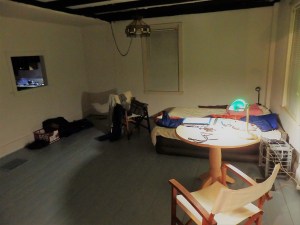
My reading came a few months after moving into my own equivalent of Beston’s cabin, albeit it much further up the coast and in a fishing village – still in view of the ocean.
You’ll be hearing a great deal about it through the coming year.
Are there books you’ve especially enjoyed because they’re rooted in places you know?
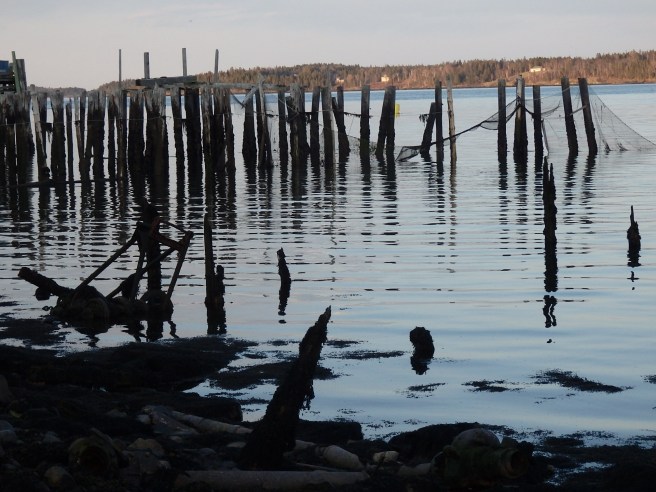
Except on overcast or stormy mornings, the early light of day in Eastport is amazing. Campobello Island in Canada blocks the first rays of the rising sun from striking us directly. Instead, the beam is deflected from the ocean into the air to become an ethereal rosy radiance, sometimes against a dark bank of clouds hovering off over the neighboring Fundy islands. And then, with that doubly-illuminated sky mirrored in the two-mile-wide channel separating Eastport from Campobello, the overhead color spreads out below as well.

When the sun itself finally swells into view, the blaze is nearly blinding, winter or summer.
Note to self: Keep sunglasses at hand.

Maine is bigger than you’d think, and half of it is still unpopulated.
In fact, the easternmost county in the USA is more than twice the size of Rhode Island or New York’s Long Island – or, if you prefer, bigger than the two of them put together. And it’s merely half of Downeast Maine, with Hancock County comprising most of the western flank.
Washington County, aka “Sunrise County,” has a population of only 32,000 – about the size of Juneau or Fairbanks, Alaska, or Dover, New Hampshire, my home of the previous 21 years. You know, the one I repeatedly referred to as a small city. My, how my perspective’s changing!
Most Downeast folks live near the rugged coastline, with the largest municipality in Washington County being Calais, the connection to mainland Canada, followed by Machias-East Machias, Eastport, Lubec, and Jonesport.
The four largest public high schools have about a hundred graduates a year – combined.

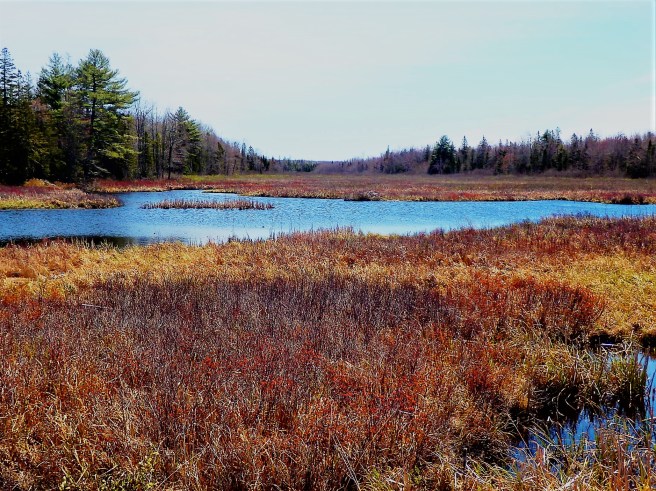
There are many reasons Downeast reminds me of the Far West, though it’s generally much wetter. In fact, 21 percent of the county is covered with water, much of it as big ponds running along the valleys between the low-elevation mountains. Many of these often island-specked bodies extend two to five miles in length and at least a mile across. And that’s before getting to the bogs and fens or wild rivers and tide meadows or marshes and swamps or prolific beaver ponds. The technical definitions vary, depending perhaps on how wet your shoes get. Quibble as folks might, the northern half of the county seems to be more lakes and wetlands than solid ground. I’m not sure if the Atlantic bays and coves even count in this tally. Quite simply, we’re surrounded by a lot of liquid, so watch where you step.

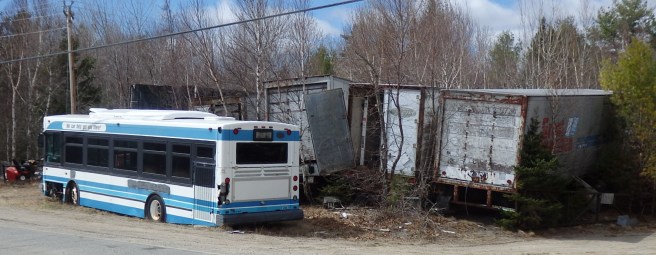
What also strikes me is how little development rings the shoreline of the lakes. Many have only a few “camps,” as we New Englanders call the cabins, trailers, or cottages and their docks, with the remainder in full, unspoiled forest. Make a bid, if you must.
It does make for a lot of unspoiled tranquility, for those who are so inclined, if you can deal with black flies and mosquitos. Moose often come as a bonus.
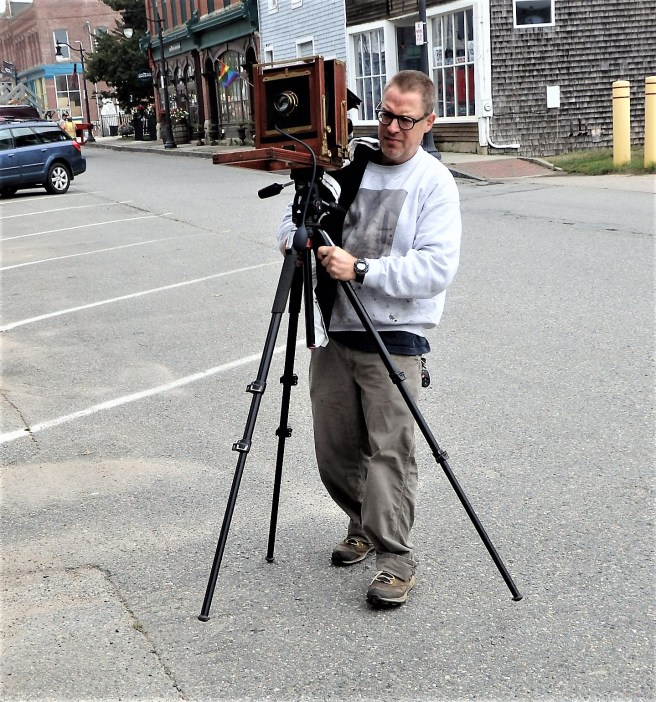
Among the artists-in-residence the Tides Institute invited to town last year was tintype photographer John DiMartino from Brooklyn.
He was certainly the most visible, with his big camera and tripod everywhere and his workaholic hours. He was enthralled with the place, its light, and its people.
Curiously, his medium gave everything he shot a back-in-history quality, as well as reversing the subject before him.
Here’s what he did to me.
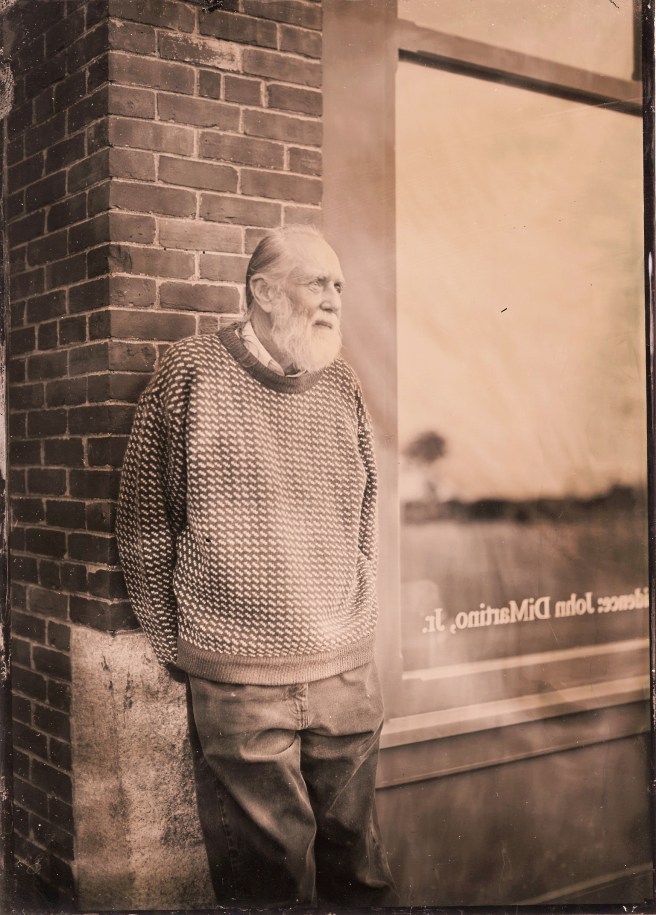

For more of his portfolios and other characters he captured in town, check out his website, johndimartinojr.com.