An Indigenous presence at hand  

My immersion in yoga and meditation in the early ’70s left me with a deep appreciation for what poet Gary Snyder dubbed the Old Ways, “the wisdom and skill of those who studied the universe first hand, by direct knowledge and experience, for millennia, both inside and outside themselves.”

It’s something quite different from simply old-fashioned, though it’s found in many different traditions. Call it spiritual, even mystical, if you will, but it often has a practical intensity as well.

I’ll even call it countercultural, across history.

One of its streams has survived among the Indigenous peoples of America, though often by a mere thread.
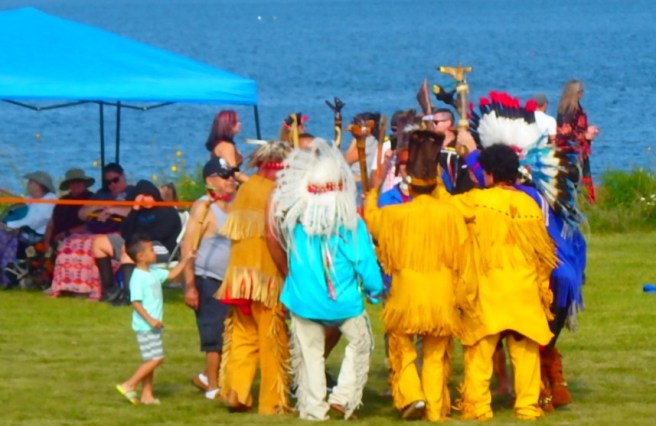
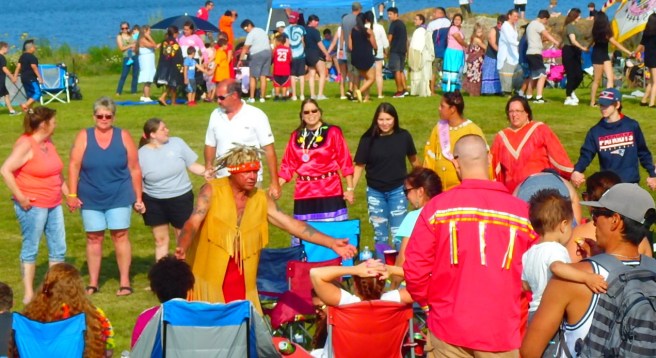
Passamaquoddy dancers in Maine.

I remember visiting Vincent and Elinor Ostrom in Indiana after I left the ashram and, awakening in the morning, sitting cross-legged in meditation on one of their magnificent Navajo carpets. (The Navajo call them blankets, rather than rugs, by the way, but I’d find them too heavy to wear or sleep under. At the time the Ostroms started collecting, these antique artworks were cheaper than wall-to-wall carpeting. Now they’re priceless.) As I opened my eyes, the lines and colors radiated out from me in a design that I could only describe as a living mandala. Its creator had been more than a weaver, then.

A few years later, I was living near the fringe of the Yakama Reservation in Washington state and delving into the mythology and artistry of the Pacific Northwest Native peoples. My longpoem, “American Olympus,” reflects that, as do many of my shorter poems and parts of my novels “Nearly Canaan” and “The Secret Side of Jaya.”

That experience, though, was cut short 42 years ago and revived only last year, when I landed in Eastport with its neighboring Passamaquoddy people – 258 households, 700 members.
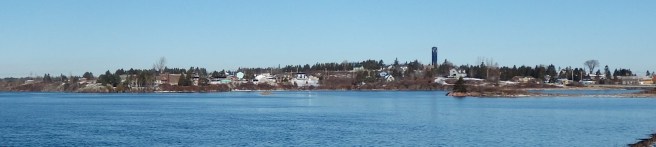
The Passamaquoddy’s Pleasant Point Reservation sits along Cobscook Bay on one side and Passamaquoddy Bay on the other.

I can’t exactly explain it, but I do sense that practitioners of Old Ways change the vibe of the surrounding landscape in a positive way. Not just American Indians, either. I’d say the same of the Amish.

One of the traits that seems to be common among these practitioners is reserve, close observation, and an economy of words. The character Marilyn Whirlwind, played by Elaine Miles in the television series “Northern Exposure,” embodied that to perfection.

There is also a sense of place as sacred, and a desire to live in balance with the land.

The word Passamaquoddy itself translates as People of the Dawn. Even Gatekeepers of the Dawn. And it definitely fits this part of the continent, on both sides of the U.S.-Canada border, which they have always spanned.

The first I had even heard of the tribe was when Fredda Paul, one of its traditional healers, and his apprentice Leslie Wood stayed with us a few nights in Dover. For me, it was a close insight into another way of thought and feeling.

So far, I’ve refrained from photographing the Passamaquoddy, at least apart from their annual powwow. Maybe I’ve learned that from the Amish, except for the powwow part.

A drumming circle is something shared across tribes. It’s a complex interaction, loud vocally and instrumentally.

For an introduction, I’d suggest touring the exhibits at the Wabanaki Cultural Center in downtown Calais. It’s free and includes hands-on displays.
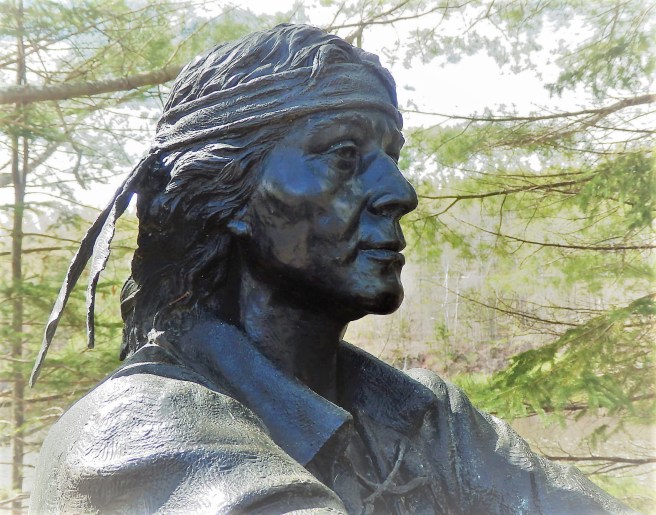
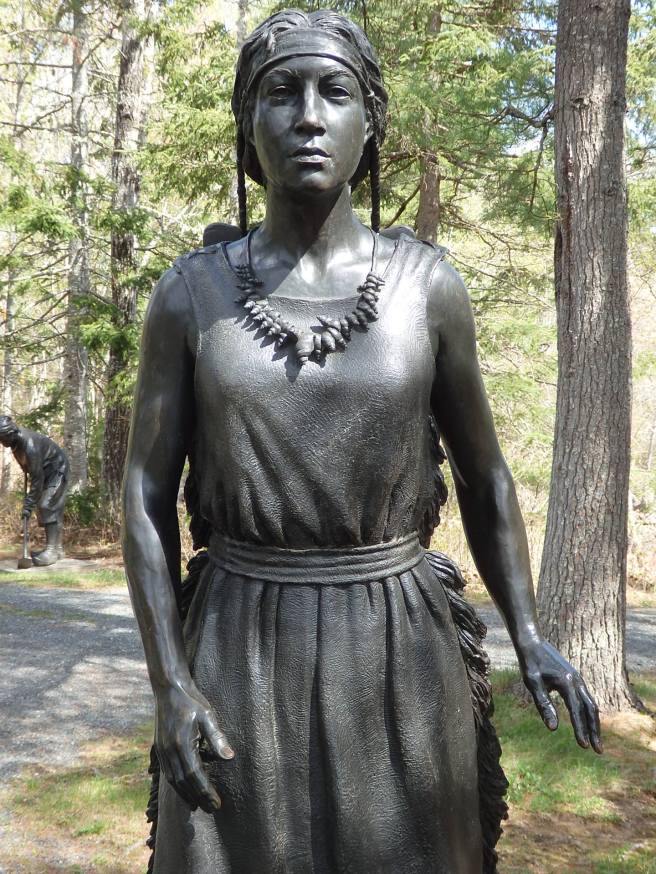
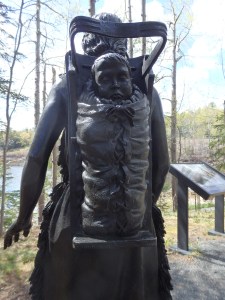
Sculptures by Ivan Schwartz and Studio EIS at the St. Croix Island International Historic Site in Calais honor the Passamaquoddy role in saving the remnant of the French venture in 1605.
I do wonder about the sculptor’s choice of models. As for the clothing?
And the future?
Just about everyone at the annual Passamaquoddy Days celebration is invited to join in the snake dance. Saying no is not an option.

I’ve not yet been able to visit the Waponahki Museum and Resource Center on the Pleasant Point Reservation, with its work by award-winning basket makers, canoe builders, carvers, and contemporary artists, as well full-body castings of tribal members made in the 1960s.
 

These stones speak

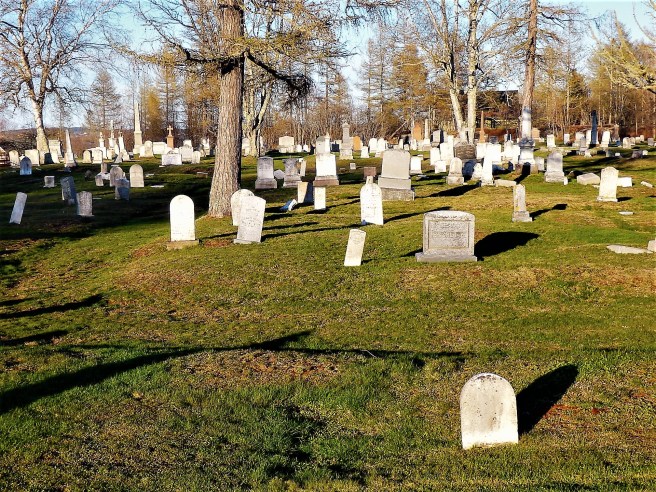
Say what you will, the Chamber of Commerce lists the Hillside Cemetery as a thing for visitors to do here.

It’s unlike other celebrated burying grounds across New England I know of. There are no Colonial three-bump gray slate stones, the ones with the famed death angel heads, for one thing.

This one is newer, meaning mostly 1800s and Victorian, when the town thrived. Yet many of the inscriptions, in softer stone, have weathered to illegibility.

Many of them lean precariously or have toppled over, giving the site a spooky feel. Or at least neglected, even though it’s mowed regularly. The sandy soil itself is anything but level, instead mounded over many of the family plots.

Yet I keep going back, often reading between the lines.

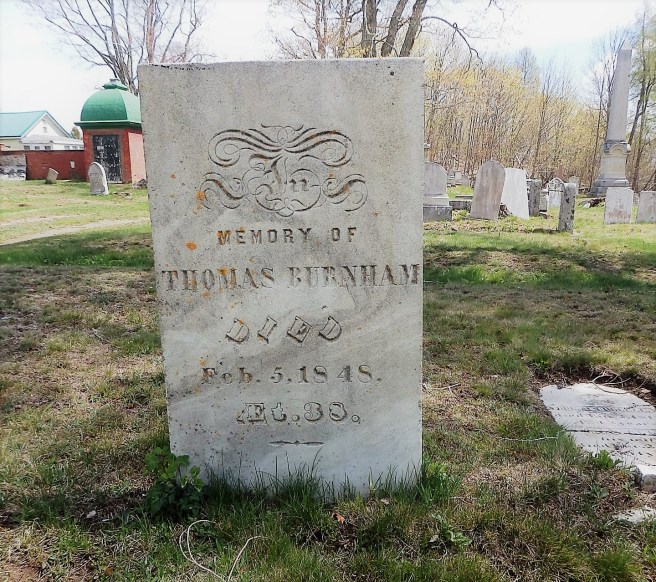
Quite a flourish

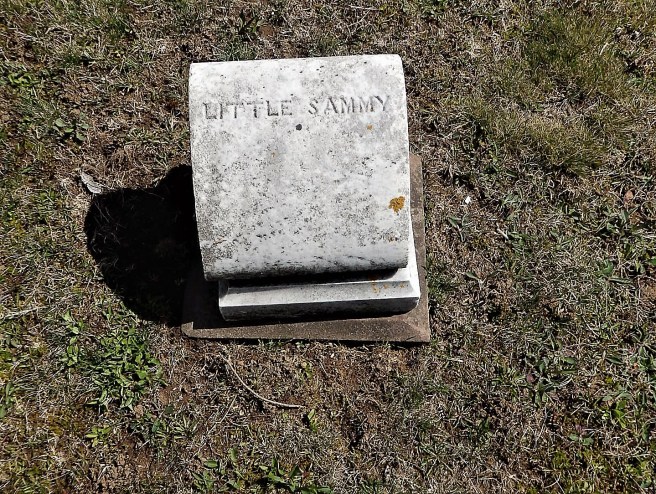
Many of the men and women died young, along with a large percentage of children.

Young Sammy

Many of the stones tell of birth origins elsewhere in Maine or even New Hampshire and Massachusetts, as well as a few defiantly proclaiming “born in Ireland.”

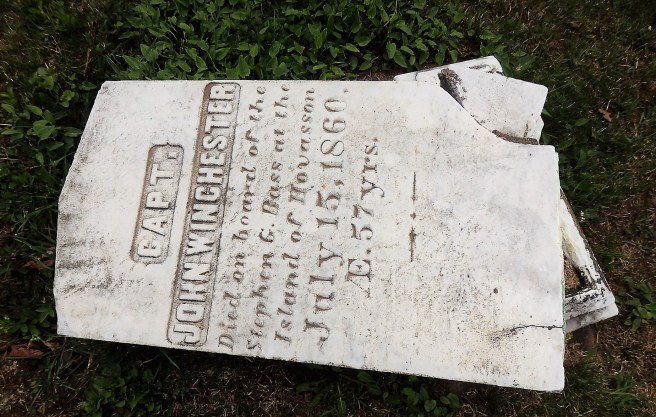
A toppled memorial.

Many of the names begin with “Capt.,” sometimes followed with “lost at sea,” which is also found on other stones of first mates or sailors. Others tell of falling in Civil War action – many New England towns suffered heavy tolls.

Some of these markers were erected as memorials, with no bodies buried below.

Fittingly, in places as I walk, views of the ocean and islands in the distance open below me.


In the coastal raised peatland

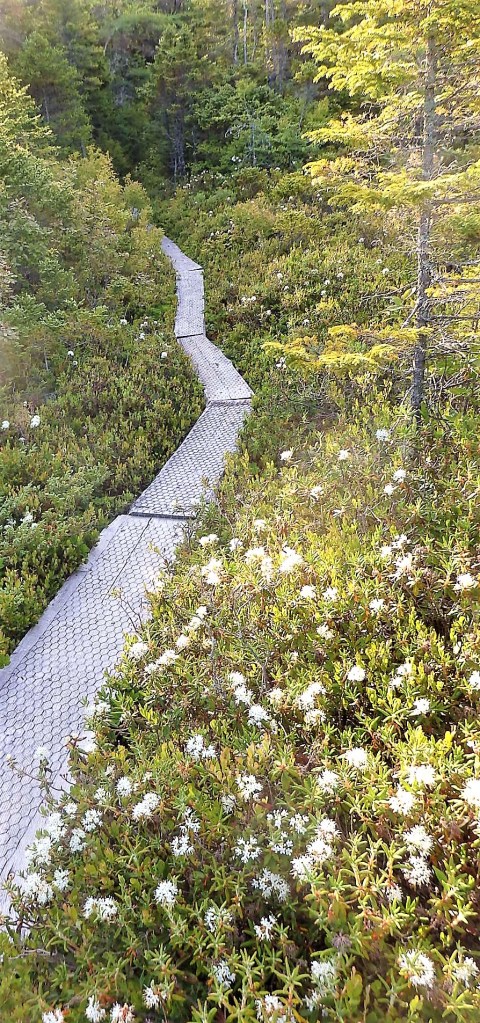
Approach with caution. The ground is fragile. Visitors tour on planks, like this trail at Boot Head, or on boardwalks, like those at Quoddy Head.

Within the continental United States, these arctic bogs are found only in Maine, where they’re known locally as heath. These magical openings in the forest host a variety of unusual plants and even rare animals like the crowberry blue butterfly. The forests themselves are often thick with arboreal lichen – Spanish moss – which thrive in the cool temperatures and fog, as well as mossy bog.

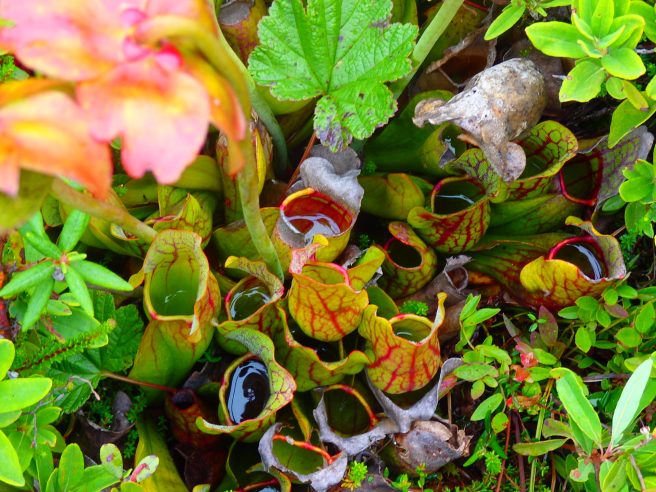
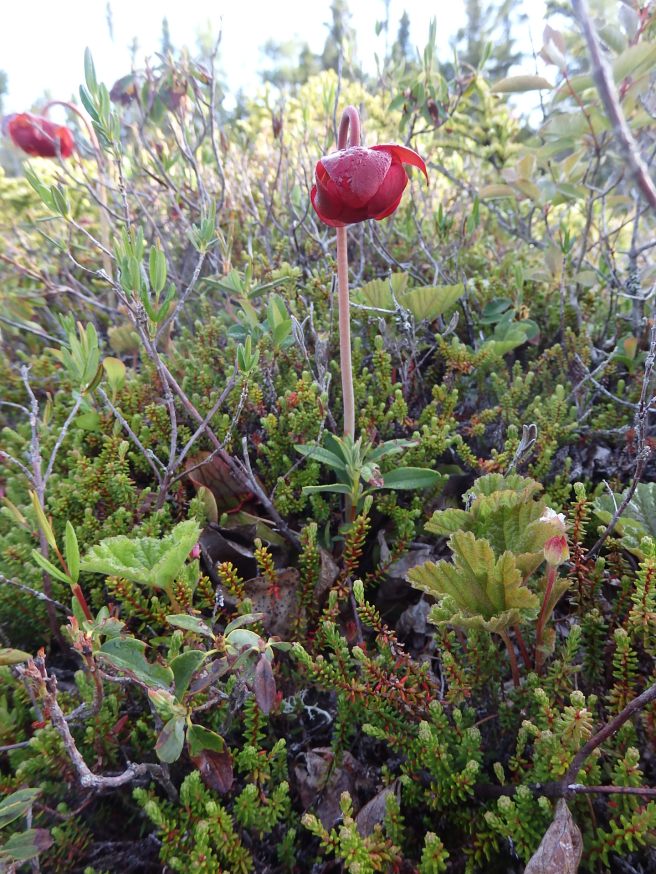
A recent rain shows why these are called pitcher plants. Like Venus flytraps, they’ll devour the stray insect.
It’s also known as the northern pitcher plant, purple pitcher plant, turtle socks, and side-saddle flower. Here’s how its flower looks.
The terrain also includes sphagnum and sedge lawns.

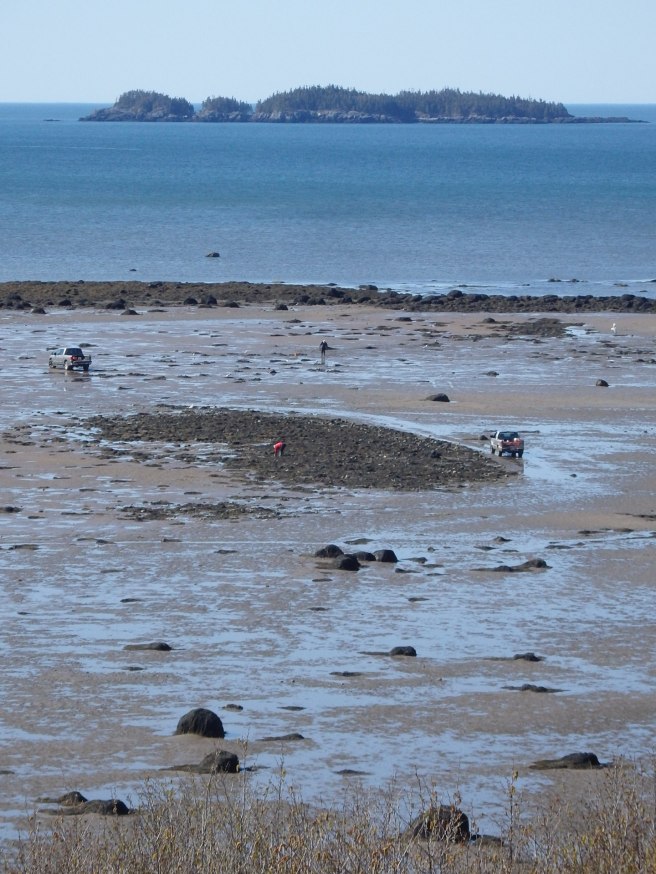
At low tide, you can walk out to Matthews Island

The population of Eastport lives mostly on Moose Island, with a few more on Carlow. Both are connected to the mainland by a 1930s’ causeway running to the Passamaquoddy’s Pleasant Point Reservation in the township of Sipayak. Before that, the connection was a toll bridge to Perry.

But these aren’t the only islands within the city limits.

Treat Island is within Eastport’s city limits but you can get there only by boat. And nobody lives there anymore.

The Maine Trust Heritage Trust includes Treat Island among its preserves open to the public. Settled in 1784 at the juncture of Passamaquoddy and Cobscook bays, it became home to a fishing hamlet of 50 or so families and then a Civil War artillery battery before being acquired by 1935 for a tidal power project that was later abandoned. Treat’s open meadows, cobble beaches, trails, and spectacular views are, however, accessible only by boat – and kayakers are advised to hire a local guide before venturing out on the challenging tidal currents.

Eastport also includes small Dog Island, which once had a lighthouse, but is tucked away in a tony part of town. Again, you get there only by boat.

But you can walk to smaller Matthews Island if you time the tides right.

Fourteen-acre Matthews Island, however, sits along Carrying Place Cove and Cobscook Bay, not far from the municipal airport. And you can walk there, if you time it right, while the tide’s out. Just make sure you don’t get stuck by the incoming tide. Another of the Maine Coast Heritage Trust preserves, it’s accessed through a right of way on private property and then an exposed bar.

In the early 1800s, Capt. Charles Matthews raised his eight children here. Today, eagles are raising their own on the north side of the island.

Matthews has some stunning views of Cobscook Bay as well as berry-picking and nesting eagles.