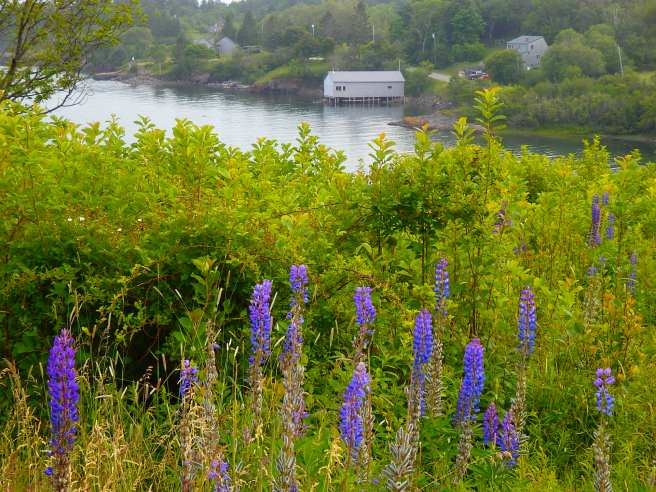
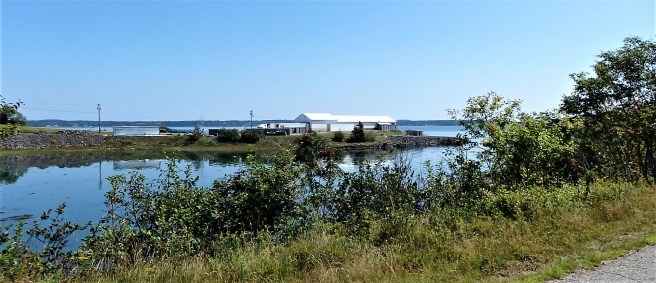
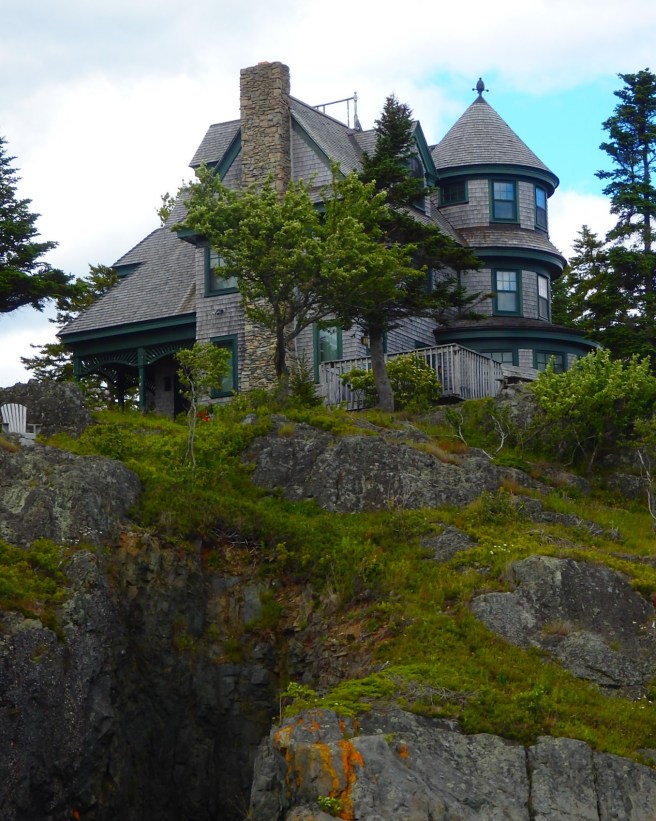
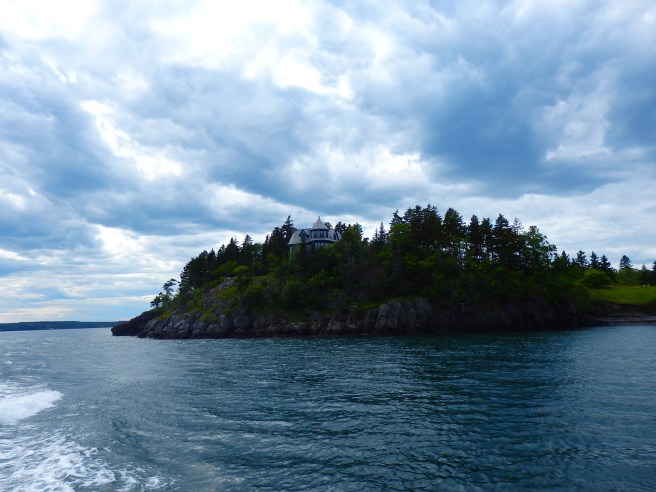
While Eastport and its neighboring towns are technically on Fundy Bay, they’re sheltered from the open ocean. Not so for much of Lubec and Cutler to our south, where the shoreline on the open Atlantic rivals anything Acadia has to offer. It helps to know where the trailheads and parking are, though. Here are some views from the trails in the Maine state public lands in Cutler.
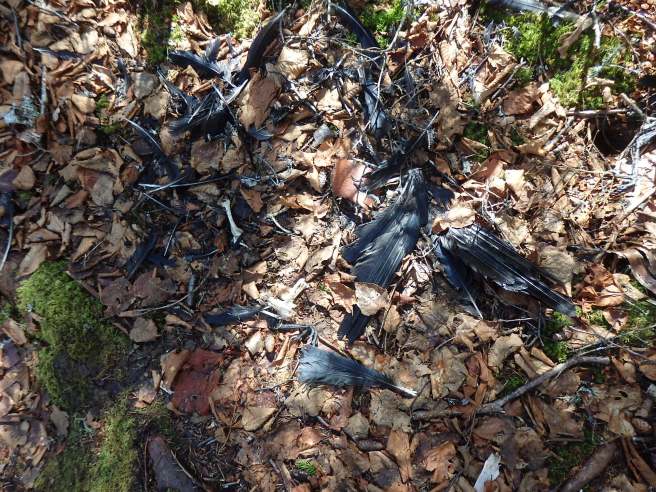
Best of all, there was no crowd. Just me and a young couple who were planning to land one of the five primitive campsites at the far end of the coastal trail. I met only ten other folks in the next five hours, all of them delightful.So what had been stripping the bark off these trees? My “Scats and Tracks of the Northeast” field guide points to Canada lynx, which leave “chin rubs” like these and live in “dense conifer forests interspersed with rocky ledges and downed timber.” There are also forest edges nearby where their major prey, snowshoe hare, might be found. While this trunk seems to be a natural totem pole.Look out, below!Except that pretty soon, the trail’s crossing down there.A slightly inland loop back crosses many peat moss bogs, where plank boardwalks are a necessity.
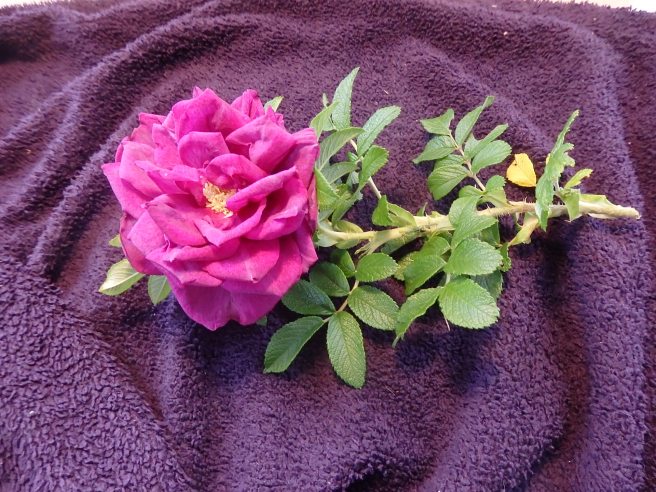
This fabric has been covering our washer and dryer most of the time in what’s become a multiuse room. Sometimes these accidental shots reveal glimpses into how I live.
Named for Upham Stowers Treat, the island once housed a fishing hamlet and then a Civil War battery. Today, as one of the Maine Coastal Heritage Trust preserves, it’s open to the public and has a 1.2-mile network of trails offering stunning views of the surrounding bays.
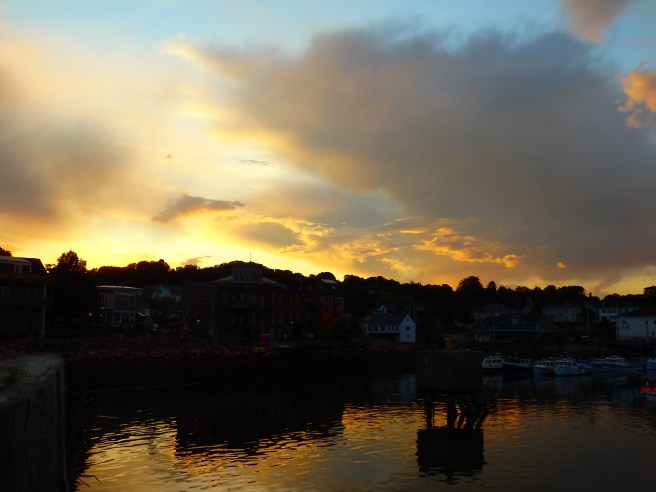
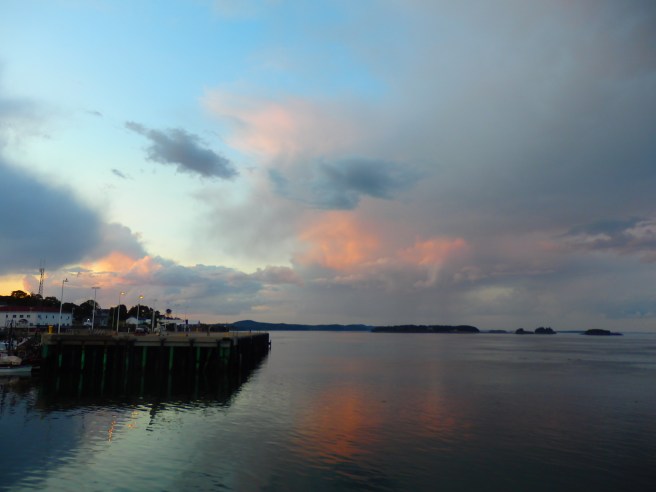
As seen from Eastport’s South Side.
The Army Corps of Engineers operates a marine concrete testing station on three acres on Treat Island’s northwest side.Officially, it’s the largest uninhabited island within the city of Eastport.Dudley Island adjoins Treat.
Kayakers are advised to get a guide who knows the waters’ treacherous currents.
Some early wag exploring the channel that separates Eastport and Campobello Island thought a rock formation visible only at low tide resembled an old monk and dubbed it the Old Friar.
To me, it looks more like an old hound. The poles to the left lead to the Franklin Delano Roosevelt summer cottage.
The headland behind it soon became known as Friar’s Head.
For a little perspective, note how small the Friar looks against the bluff.
As for the channel? It’s Friar’s Roads, curving along the island to its end on the Bay of Fundy.
The Old Friar himself may have lost some features during the Civil War when cannoneers stationed on Treat Island used the monolith for target practice. Canada, apparently, never complained, sparing the U.S. an international incident.
The Passamaquoddy, meanwhile, referred to the pillar as the Stone Maiden. The legend told of a young brave who left on a long journey after instructing his lover to sit and await his return. The distraught young maiden sat on the beach and waited for months. Alas, when he finally returned, he found her turned to stone, forever to wait and watch.
Still, the Old Sow can be seen about a mile away from Eastport if you time it right, about three hours before high tide on the biggest days of the month. The Western Hemisphere’s biggest whirlpool not only swirls but also shoots spouts into the air. As if I could capture that flash with my camera.
The current, though, often runs at seven knots, faster than an Olympic champion swimmer could manage in even a very short burst. It’s also treacherous for Scuba divers, waders, and sailors alike.
It’s by no means the only place to be mesmerized while watching the charge.
Tide pressing from the Atlantic into Dennys and Whiting Bays churns and ripples.
Another impressive sight is the Reversing Falls in Pembroke, though “rapids” would be a more accurate term. The sounds of the waters rushing from one bay to another are as mesmerizing as any waterfall, though.
As the level intensifies, a large whirlpool with a concave depression forms behind the rock ledge, setting off smaller whirlpools around it.The major action is a set of rapids I’d hesitate to call “falls,” though they’re just as noisy. Once the tide comes in, it has to go out, keeping the action going endlessly. As I was shooting this, a pair of seals lolled in the whitewater wings, diving and coming up with fish in their mouths.
The currants we’re harvesting in Eastport are a different variety than we obtained from the conservation district’s plant sale back in Dover. They’re bigger and juicier, for one thing. And the bushes aren’t as thorny or sprawling, for another.
We got 4½ pounds from a single bush. Most of it will go into jelly.
Funded by a family trust, Cobscook Shores is preserving waterfront lands around Cobscook Bay and its subsidiaries for public use and pleasure. One of its 14 sites is Pike Lands Cove, facing Eastport’s west side across the water from the North Lubec peninsula.
A trail leads out around tidepools I hope to investigate later.
A saltmarsh can be explored up-close.
Here’s where that eagle nearly ran into me. It was being chased by an angry gull. Eastport is across the water.
When I moved to New England more than three decades ago, I tried to take in at least one whale-watch cruise each year, usually out of Newburyport, Massachusetts. But my first time of meeting a live whale came during my first-time ever time in a real sailboat, which was also my first time out on the Atlantic. At first, we saw minkes lolling along at a distance, some of them parallel to our course. And then, just as we were turning into the harbor on the Isles of Shoals, one came up right beside the bow, where I was standing. You can’t say this Ohio boy wasn’t impressed. Minkes may be the smallest of the whales around here, but our 32-foot craft wasn’t much bigger.
A minke is viewed between Campobello and Deer islands in New Brunswick on a cruise out of Eastport.
Whales migrate up the New England coast each May and linger in its nutrient-rich waters well into October.
One thing I quickly came to appreciate is that there are no guarantees about what you’ll encounter when you go out from shore. What I’ve often called a poor man’s cruise is an experience in itself, especially as you watch land recede and then disappear altogether behind you and there’s nothing save the expanse of sea and sky with occasional birds and boats as punctuation. On one outing, the only whales we found were a minke cow and her calf, which we followed at a leisurely pace. On another outing, so many minkes, humpbacks, and finbacks surrounded us – some close enough to be misted by their stinky blow, others breaching off in the distance – I lost count. Once, we had to be content with a trio of porpoises. You should be grateful for whatever presents itself.
I was trying to get a good shot of the Cherry Island lighthouse but wound up with this moment of a father and daughter from Ohio.
Somehow, though, after I remarried, the annual event faded from the schedule – maybe a handful in 20 years, always with family and sometimes with the kids’ friends. I still have the memories.
Relocating to an old house a block from the ocean has now recharged that. I can walk to the whales. Seriously. In late season, they can even be seen from the shore here.
Here’s a sculpin fish that was in a lobster trap the cruise pulled up as part of its tour of the local waters.
More likely is walking down to Butch and Jana Harris’ Eastport Windjammers and setting forth in one of their refitted lobster boats. The vessels are smaller than the usual whale-watch models but put you much closer to the water. The route, from downtown Eastport out between Campobello and Deer islands in New Brunswick, doesn’t need to go into the open waters of the Bay of Fundy. On at least one of boats, you can even stand beside the captain – usually, but not always, Butch – and, on occasion, each of the kids on board gets to briefly take a turn steering at the wheel.
Don’t scoff when you connect “windjammer” with “lobster boat.” The enterprise comes by its name honestly. Up through 2014, its whale-watch cruises took place aboard Butch’s 118-foot, three-masted schooner, the Ada Lore. But on December 4 that year, a portion of the Breakwater collapsed, wrecking the schooner.
Pursuing whales from a wind-powered deck, I’ve been assured, is the most satisfying way of all to go forth.
I’m ready and willing, should the opportunity present itself.
At times we were joined by what I jokingly call the world’s smallest whale-watch vessel, which sails out of neighboring Lubec. The captains work together by radio to share sightings and other info. Lubec is seen in the background.
What’s been your most memorable experience with the sea? Or some other body of water?
Each summer, a few superyachts make their way from the Bay of Fundy into Eastport and tie up for a night or two at the Breakwater pier downtown. They usually draw an envious gaggle, as well as pure curiosity and gossip.
I love the built-in love seat hidden by the pillar, although I wouldn’t mind one of those captain’s chairs for my workstation at home.The welcome mat was more for changing shoes to keep the interior clean. Note the bikes under the tarp, too.
Some of them even blog about their travels, referring to each other first-name only and touting the “good friends” they made in port.
Uh-huh.
Charters for $130,000 a week plus expenses and fees.It’s 130 feet long, holds ten guests in five room, takes a crew of seven, and cruises at 12 knots. The waitstaff was pretty impressive, even from a distance.Includes his and hers bathrooms in the master suite, a jacuzzi, and a gym.
Some are flagged in the USA, while others come by way of tax havens.
An evening cruise around the bay can put on the ritz.