Reminders of a very special introduction I had while living in Upstate New York. We’re still in touch all these years later.

You never know what we'll churn up in cleaning a stall
Reminders of a very special introduction I had while living in Upstate New York. We’re still in touch all these years later.
The intense depth of color in a frigid winter sky stirs up memories of living in the interior Far West, where its usual lack of humidity produced similar firmaments through the hottest seasons. Consider this, then, from coastal Maine, a preview of some journal entries ahead.
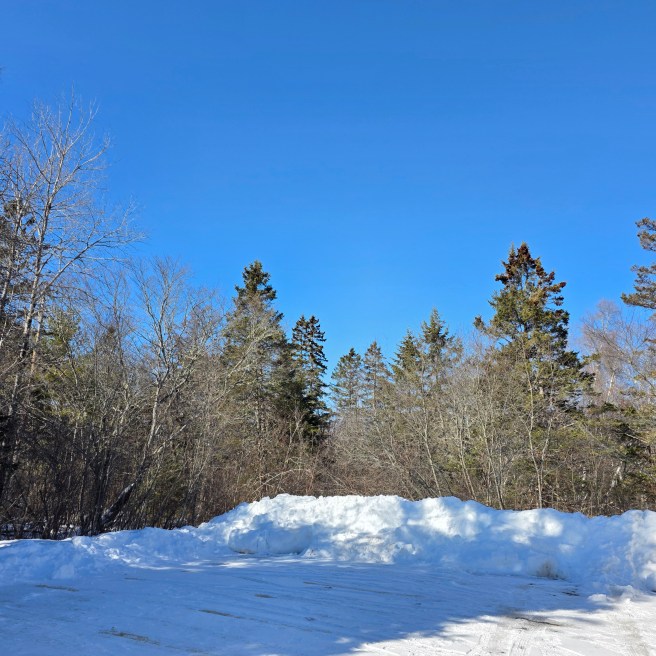
As the Red Barn delves into my earliest journals, I’ve mentioned that we’re skipping over many of the entries that have already been distilled into my previously published poetry, fiction, and non-fiction prose. I do hope you find what’s turning up to be brilliant and, uh, let’s back up, somehow engaging. It was a unique time and journey.
Still, I’m coming across material that seems more suitable for a different typographic and visual presentation apart from a straight Red Barn post, and that’s led me to create a Chronicles category at my Thistle Finch editions free digital editions “bookstore.” Offerings at that site allow me more flexibility in formatting, especially for you to download or print. Quite simply, it often feels more “literary,” with its own satisfactions.
Initial posts there as an outcome of my journals review are now available as free PDF downloads. Among them are New Novelists Back Then, notes from a lively contemporary fiction course, meaning cutting-edge novelists back in the ‘60s; Hitching, drawing on thumbing-on-the-road encounters in the hippie era; and The Past Still Speaks, three literary quotes that still resonate.
Another presentation there is a photo album, Mulberry Row, with images of a dormitory quad that prompted much of the action in my novel Daffodil Uprising. Collecting those images, which become this “lookbook” or “storyboard” was helpful in re-envisioning the narrative. Perhaps it will help readers, too, in internalizing the scene.
Welcome to another Rabbit Hole on the Internet.
In my moves across the northern U.S., I’ve always lived in places that would get icicles in winter – some places more impressively than others. I never planned it that way, but in some locales they could grow down past floor-length windows, creating a threat to anything below. When those fell, their crash would shake the house, sometimes waking us from deep sleep. These, on the second floor at the Cobscook Quaker meetinghouse in Whiting, Maine, are modest in comparison.
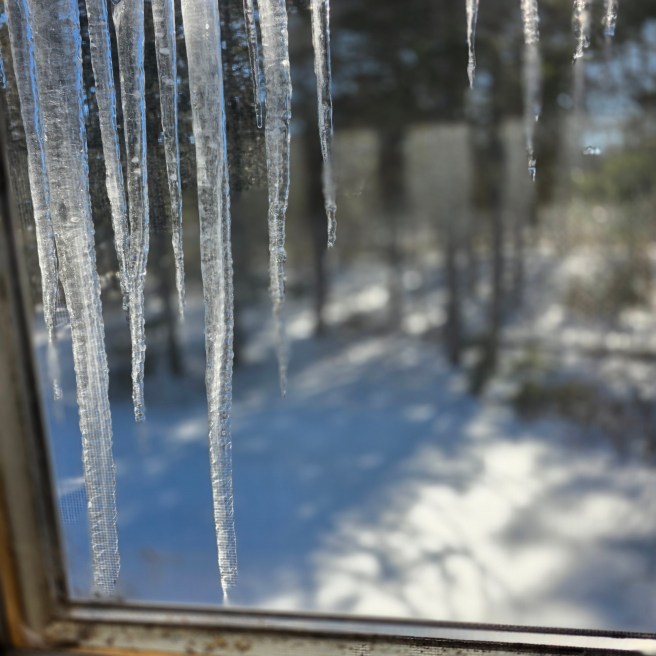
When I see this phenomenon where I’m now living, I’m reminded of an ice floe stampede one Sunday afternoon on the Susquehanna River back in the winter of ‘71. For two hours or so after an ice jam upstream had been dynamited, the river was a racetrack of large jagged white wedges three or four feet thick crashing down the riverway. Viewing it was terrifying, mystifying and unforgettable. Slabs of the ice that had been thrust into shrubs along the riverbanks remained visible until nearly May.
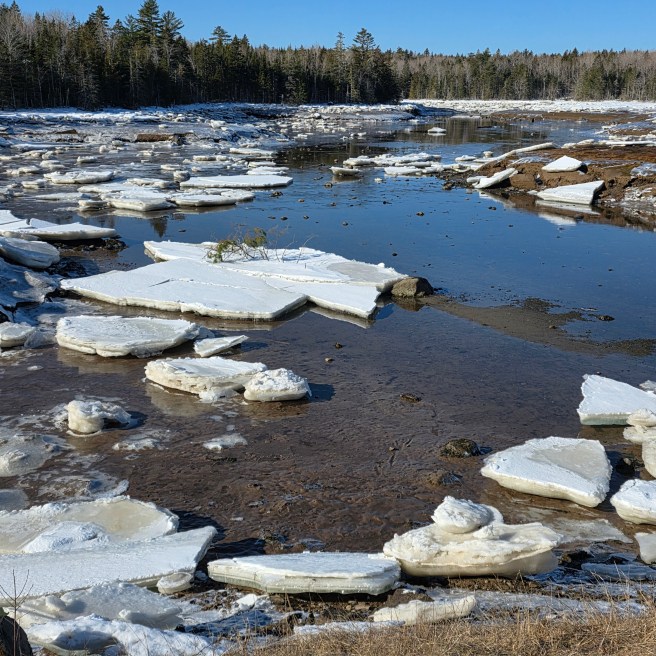
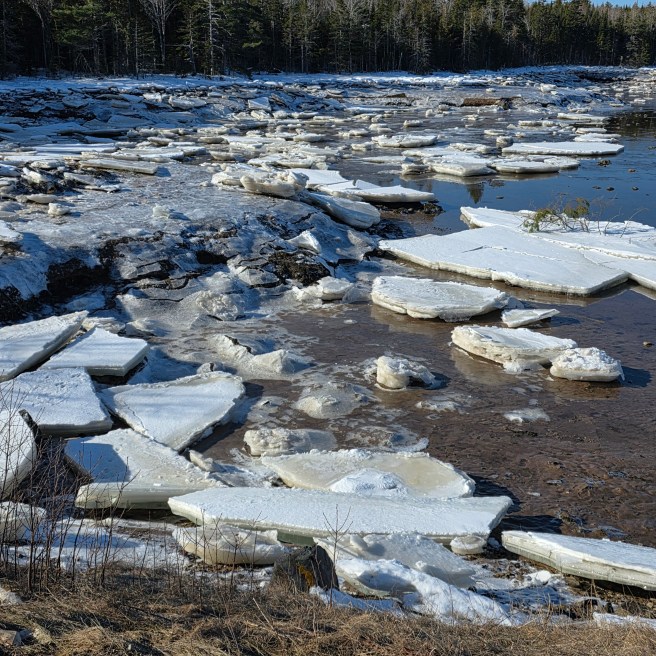
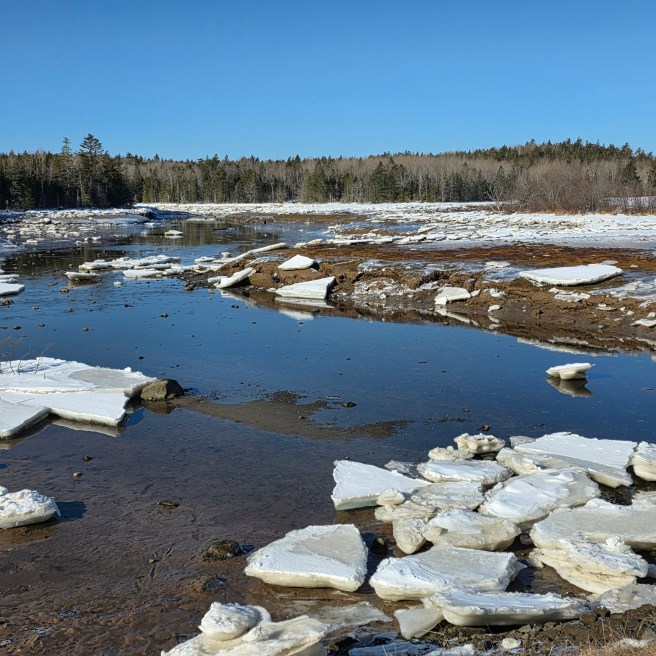
Hobart Stream at Cobscook Bay, Edmunds Township, Maine.
A snowy winter like the one we’re having reminds me of Upstate New York and the Poconos back then. The season’s longer and more intense than what I had growing up in southern Ohio and later in college in southern Indiana.
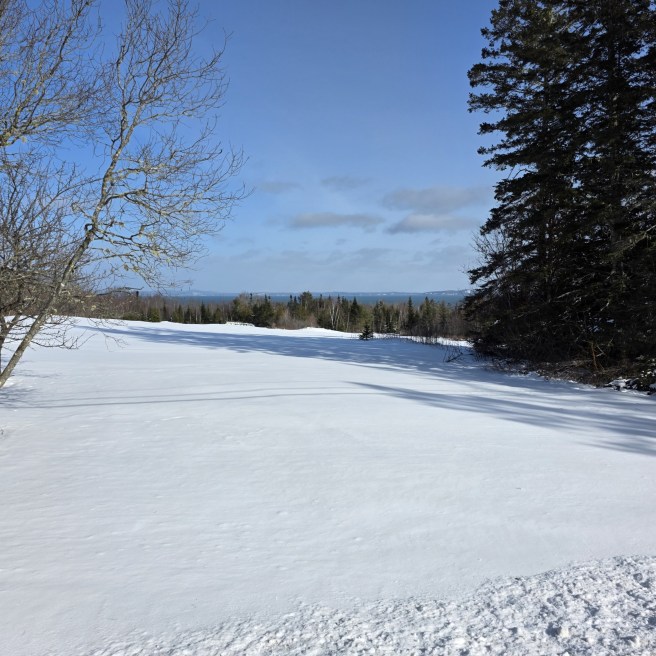
Here, though, I also have the Atlantic, as Passamaquoddy Bay, and Canada beyond it in the mix.
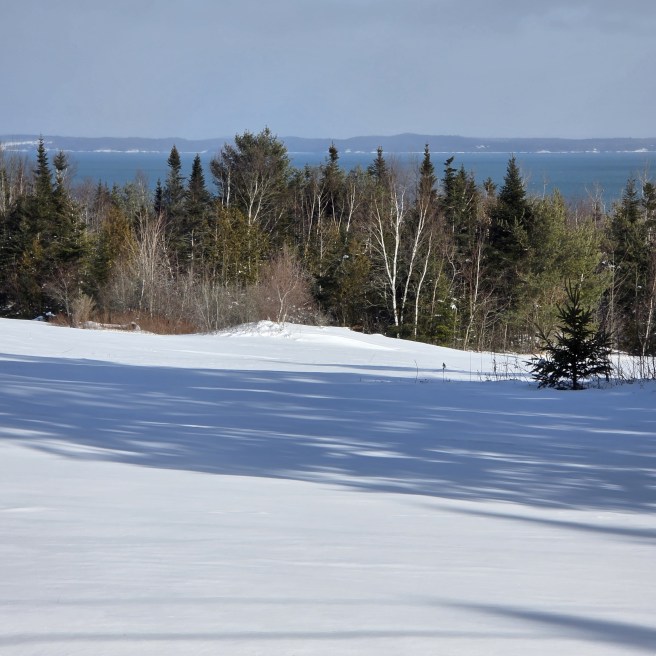
Welcome to my world, now and back then.
How about your winter?
We can wonder how much of the history I could have captured if I had owned a camera. The images I’m digging up for this series help some, but skirt much of the grittier realities I faced.

The city itself was already well into Rust Belt decline and probably would have been intolerable apart from the hippie-era adventure of living in a college-town slum.
This was my introduction to the East Coast, and my first time of living in proximity to mountains, albeit the Allegany foothills of the Apalachin range (New York spellings). I was still spellbound. The region was called the Southern Tier, to the west of the Catskills and south of the Finger Lakes. The city,- or Tri-Cities when neighboring Johnson City and Endicott were included, was generally working-class and infused with a spectrum of ethnic minorities.
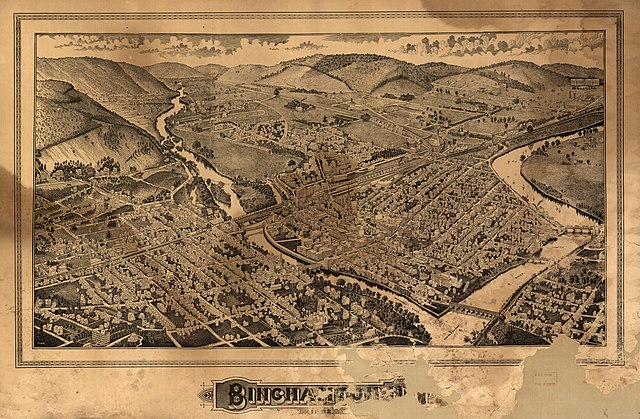
The city was nestled into the valley and once had water-powered mills along the riverbanks.
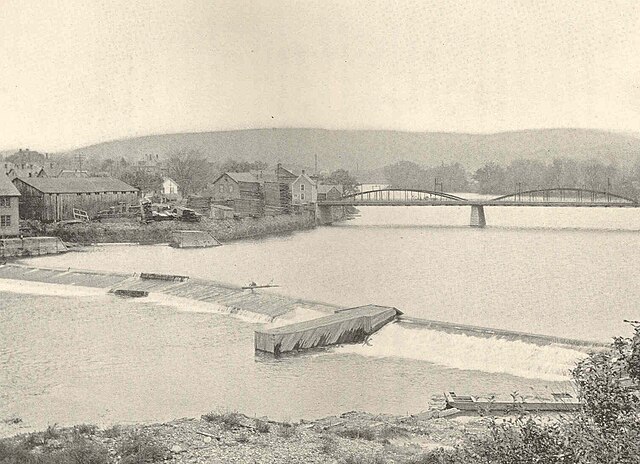
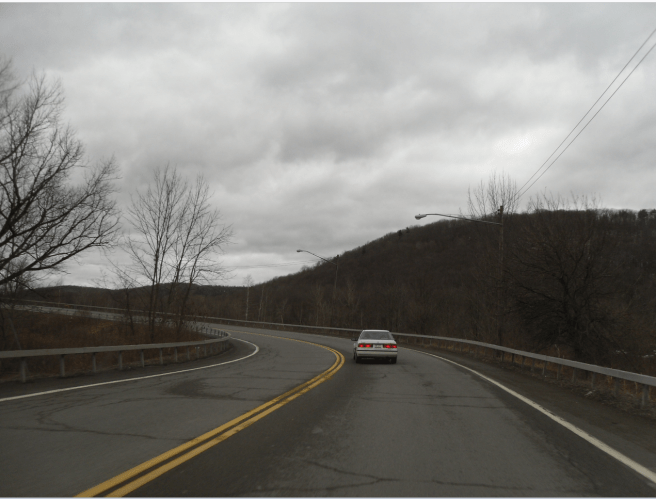
The Susquehanna itself was a fascinating river, as I present in my chapbook of poems carrying its name.
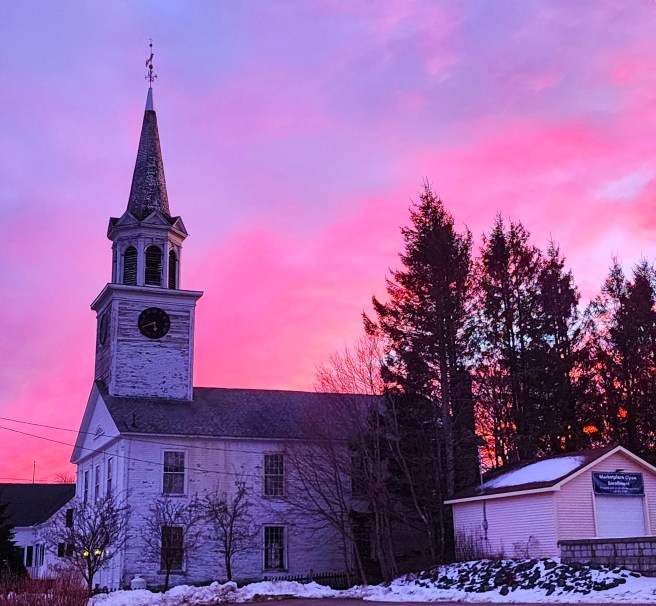
The historic Seaman’s Church on Middle Street has weathered many changes since it was built in 1828. Somehow this image seems fitting as we wind down another year.
While I had once considered architecture as a career, I’m surprised how little I know about what makes a home work or, through the eyes of my coconspirators in this venture, how much a few imaginative strokes can transform an existing structure. Not all of them are budget-busters for folks in the lower half of the income bell curve, either.
It’s a long way from my ingrained tastes shaped by the clean 20th century lines of the Bauhaus school of design as well as my admired Shaker and Zen aesthetics. Historic New England home styles have come as a more recent appreciation along the lines of an “This Old House” public television series dimension. Still, after owning a traditional New Englander described in many of the earlier blog posts here, I had jokingly promised myself that the next house would be concrete, glass, and steel – nothing that would rot or need maintenance. At least, with the move to Eastport, it wasn’t in the pine box I had once jokingly expected at the end of my Dover sojourn.
At least I’m no longer left with a state of anxiety each time a nor’easter barrels our way. Despite all the asphalt shingles on the sidewalks and streets I had found after each of those, fortunately most of ours stayed in place. As we’ve since discovered, the biggest wonder was that our roof itself had withstood so much for so long in its condition.
But I’ve also been haunted by an “This Old House” series that followed a renovation of a Nantucket Island home, if I recall right, and the way it overran budget and led to its sale shortly afterward.
You would have thought we would have had our plan down pat long before the renovations began. Maybe it was a good thing we didn’t.
I mean, with three years of looking for a contractor, there was lots of time for planning. Except that we kept it in the nebulous dream stage rather than some hard decisions.
And then, once we found one, we had hoped to have the entire roof component buttoned up before last winter but had to settle on getting the back half done first and then tackling the front come springtime, as you’ve seen in these weekly posts. So here we are, more than a year later.
We’ve made some mistakes, of course. We spent money on CAD specifications in a design done through a local lumberyard only to find out what our contractor needed wasn’t what we thought he was looking for. Looking back, I’m not sure they could have delivered, considering what we were really facing and then revised as we went..
And the wood stove’s metal chimney didn’t have to go up next to the brick chimney, meaning that it had more bending than was necessary. Oops. At least it draws the smoke well.
On the other hand, much of the rest has been pretty straight-forward.
We even know that it will never, ever, really be finished.
Our custom is to bring the tree indoors on Christmas Eve and decorate it then. Sometimes we’ve even waited till that very morning to head out to the tree farm to harvest the one we had tagged earlier. But that was back in New Hampshire.
Here in Real Downeast Maine, we instead initially gleaned our Yule tree in the neighboring forests, sometimes even along country roads under utility lines, first in tabletop sizes and then full-size. The vegan member of our circle, however, complained that they weren’t full enough. She wanted something more classically ideal. Definitely nothing Charlie Brown.
Well, the natural – organic – ones do tend to grow mostly on one side, nestled in with others, unless you fell a taller evergreen and lop off the top five or six feet. Not that such an argument went anywhere. Even so, the rest of us were perfectly delighted with what we put up and strung lights on and all the rest.
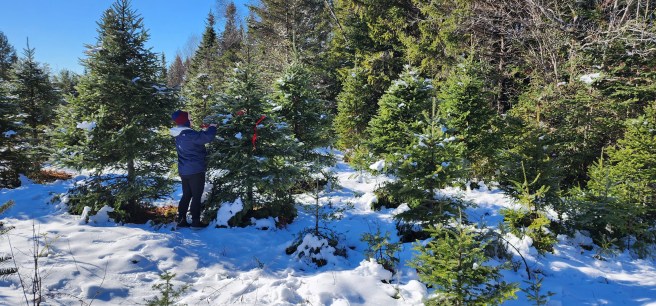
Against that background, we finally relented and were then astonished at one nearby family tree farm that goes along for perhaps a half-mile in clearings along an unpaved lane into the bigger forest. There are probably enough trees for every child, woman, and man in the county, and the prices are ridiculously low in comparison to what you just paid, wherever.
The kids in the family will even come around with electric chainsaws to cut it down for you. What more could you ask? Well, maybe that netting before we jam it into the hatch of our car?
What you see here is us claiming one to be ours, that is “tagging” it with ribbon and an identifying label, ahead of time. We trust that nobody else will ignore those markers. (It’s happened to us only once, back in more populous Dover. We still found a fine replacement. Maybe better?)
My, those needles y do smell good, outdoors and in.
Here’s wishing you and yours and happy and memorable togetherness.
 Jnana's Red Barn