More than volcanic ash spewed out from my days in the Pacific Northwest

Stephen King has advised novelists to have only one Big Idea in a book, but I came across that way too late to put it into practice. (Maybe if I ever tackle another novel?)

As I hunkered down in my self-imposed sabbatical in Baltimore – or was it self-incarceration or even cloistered? I did little else – my attention eventually turned to a more recent span of my life than the Kenzie novels covered. It was time to consider my nearly ten years of marriage and its breakup. If only I really knew how to star in it.

I thought that this next book would be about the most heavenly time and place imaginable, but as I typed and would eventually see, the real story was about a deeply troubled marriage, with me holding the debris after it blew up and a whirlwind romance afterward left me in a fog where I was.

So courtship, marriage, and relationship per se were one big subject. (Idea, in King’s expression, feels too refined.)

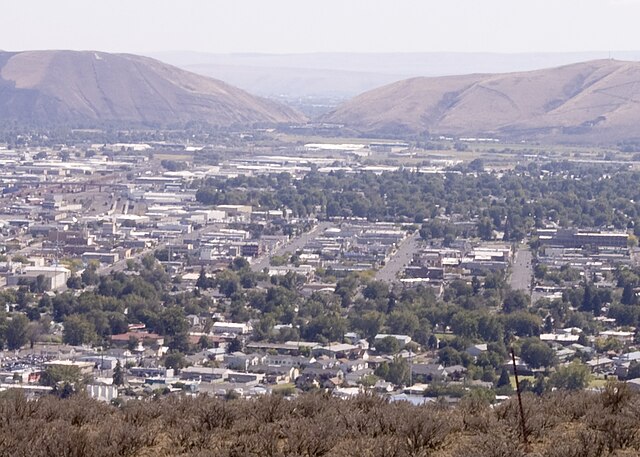
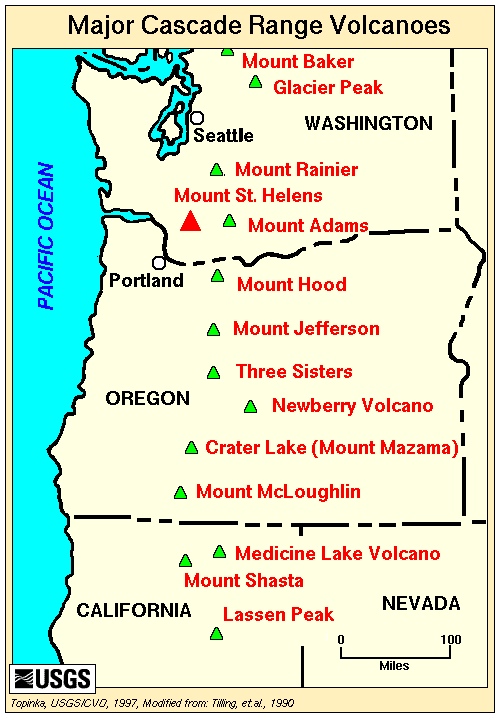
The other was the Pacific Northwest as seen from the other side of the Cascade mountains in Washington state, a land that is essentially desert rather than rainy gray Seattle.

One was something many people had some familiarity with, but the other was what I found more enticing as a writer. Besides, I had written many landscape poems I could draw from. Swami’s insight from her first visit to India, that the reason Hinduism had so many gods was a reflection of the ways each locale had a distinct vibe. The Yakima Valley and the Cascades were unlike anything I had experienced in the eastern half of the U.S. Especially the vast spaces you never see in a movie or read about in a book. And there I was with my new bride.

My inner drive was to better understand – and remember – the events leading up to what I thought was near perfection, my Promised Land. Except that it all blew up after four heady years, and we retreated eastward in haste. Now, six years later, I was trying to make sense of everything, and writing is my primary tool of thought.

One big hurdle was that I still had too many unresolved issues to provide clarity on the relationship struggles. I couldn’t see that the darling I thought every reader would find fascinating was, in a wider view, dislikable.

The plot – and the manuscript – kept growing by the proverbial pound.

Baltimore for me was so many lonely nights broken periodically by sex that wasn’t with my beloved. The whirlwind who came after the marriage. The one others have called my one true love. If only she had been true.

~*~

I really should go back to my journals to get a clearer sense of what I was going through both as I drafted it and also during its revisions. I suspect the reality would be painful, even embarrassing, and as I write this, those volumes are wrapped in plastic under the house renovation. Maybe that’s for the better.

What was I even originally calling the manuscript?

What coalesced for me was the many dimensions of the word “promise,” including the wedding vow, potential, and what I saw as our Promised Land. And then I had the flash of ending the book on a shocking note.

Well, so had much of my life.

I suspect that I spent far more effort than I’ve thought on the novel that now stands as Nearly Canaan.

Somehow, I even had a round with a real literary agent, who ultimately passed on the project.

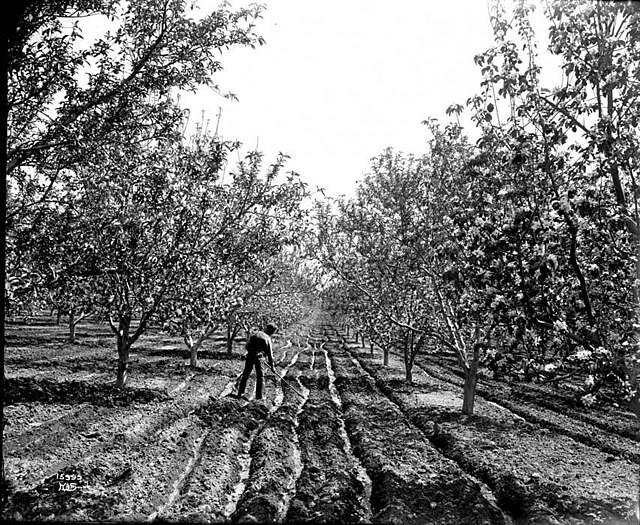
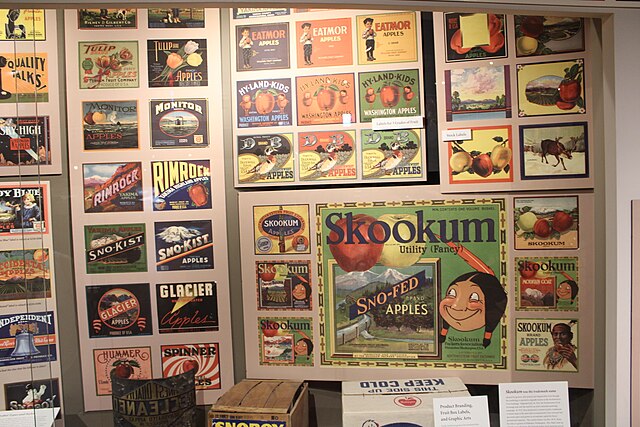
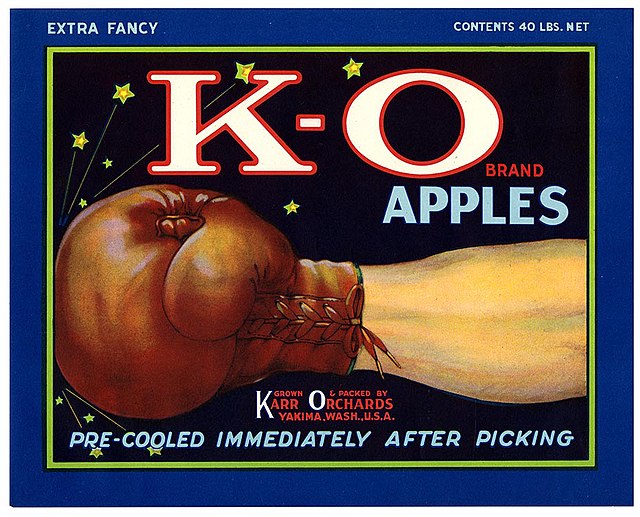
During later revisions in New Hampshire, the big blob of material I had in hand turned into three parallel volumes – Promise, Peel (as in apple), and St. Helens in the Mix. And I was wondering about my subsequent engagement and the young woman I thought was a perfect subject for later. (I now see how banal that would have been.)

Would the project have been any easier if I had all the facts rather than empty denials and evasions? What if I had steered this more into the fantasy realm, perhaps having the earth magically speak directly to Jaya? Or broken it into a sequence of short books, each with a sharper focus?

A very bruised journalist, alas, was still at the helm, one still engaged in a difficult, painful exile and trying to report on the facts before me.

~*~

I’m trying to recall books and authors I was reading at the time, especially ones that might have nurtured this project. What comes to mind are Ann Tyler (I can smell the back entry of some homes in her Roland Park section of Baltimore); the Random House Vintage Contemporaries series edited by Gary Fisketjon and writers like Jay McInerney (Ransom more than Bright Lights, Big City) and Tama Janowitz; beyond that, Larry McMurtry, Tom Robbins, and Joan Didion; as well as Calvin Trillin’s U.S. Journal letters from here or there in the New Yorker. I also had John Nichols (Milagro Beanfield Wars), Ken Kesey (Sometimes a Great Notion), Edward Abbey, and Ecotopia.

~*~

Promise came out as an ebook at Smashwords but went nowhere. Rather than pay for covers for two companion volumes, I released them as PDF freebies at my Thistle Finch imprint, only to find nobody was downloading anything that big. Ditto for the full-length poetry collections. There would be a major refocusing of the offerings.

Come along on a funky little camping trip with me

Maybe if I had a camera at the time, the trip would have wound up as photos rather than a poem. The weeklong camping trip was a turning point in my life, though, and the poem that emerged from the experience was initially accepted by a prestigious Northwest literary press but then declined – they’d lost a grant, they said.

Had it appeared at the time, my path as a poet would have advanced, definitely more securely than it did. But the effort definitely solidified my growth in the craft.

Poem? It’s my attempt at what William Carlos Williams advocated as a longpoem, where the challenge is “to find an image large enough to embody the whole knowable world about me.” About, in this case, having meanings as both the immediate world around the poet and his own autobiographical revelations. In his case, the image was the Paterson, New Jersey, the river city where he practiced medicine and lived.

For me, it became about the Olympic Peninsula of the Pacific Northwest, bugged, perhaps, by Basho’s wanderings in ancient Japan.

Having originally appeared in Thistle Finch editions, this collection is now available on your choice of ebook platforms at Smashwords.com and its affiliated digital retailers. Those outlets include the Apple Store, Barnes & Noble’s Nook, Scribd, and Sony’s Kobo. You may also request the ebook from your local public library.

Do take a look.

‘Big cities’ in my life

I’ve long been fascinated by major metropolises, or at least the concept of a downtown as a pulsing power center buzzing with fashionable activity. My hometown, while a thriving city at the time, never struck me as “big.” As for glitz? Forget it.

In the list I’ve assembled, each of the cities has at least one professional baseball team, and today also an NFL team, not that sports were a big factor for me. Great symphony orchestras and art museums, however, definitely were. And later, I came to see subway systems as another measure; the majority of the cities here have them.

All but one of these locations is somewhere I’ve been more than once, and we’re not even counting connecting flights at the airport. While I’ve resided inside only one of these hubs, I’ve lived within the gravitational orb of another seven.

That said, here goes, presented more or less in the order in which I experienced them.

  1. Cincinnati: I grew up about an hour away, and once I got my driver’s license, I got to know the place much better than just Crosley Field, riverboat rides, the zoo, or the observation deck atop the Carew Tower, destinations of family outings or school field trips. I’ll save the details for later.
  2. Chicago: The Loop, with its narrow canyons between skyscrapers, and the walkway along the Chicago River still embody the visceral excitement I identify as big city. An initial visit as a teen followed by visits to friends and lovers later culminated when I worked for the media syndicate of the Chicago Tribune and was whisked up high in its tower overlooking Lake Michigan.
  3. New York: I didn’t get to the Big Apple until the summer between my junior and senior year of college. I was living in a boarding house and working an internship about four hours Upstate, but after graduation I returned and had housemates and friends from The City. Visiting the place with them was delightful. Later, living in the ashram about two hours away or in Baltimore to the south, I got in for even more exposure.
  4. Seattle: During my four years in the desert of Washington state, an escape to “the wet side” of the Cascade mountains was a regular part of our existence. I’m not sure how much I’d recognize the place now, but we did have friends who’d put us up. Even then, people were worried the city would lose its charm, the way San Francisco had.
  5. San Francisco: In my one visit, there was still some charm left. Especially the affordable ethnic restaurants out in the neighborhood where we were staying, with our sleeping bags on the floor. The hippies had long gone to greener pastures, but City Lights bookstore was still packed.
  6. Cleveland: Living about two hours away, I got to know the city on Lake Erie mostly as University Circle, with its extraordinary art museum (free admission), famed concert hall, genealogical library, and Quaker Meeting. The downtown still hadn’t rebounded. I’ll also include the famed orchestra’s summer home south of town as part of the experience.
  7. Pittsburgh: Two hours in the other direction, we spent more time in Squirrel Hill and the university neighborhood than downtown. The steel mills were long gone, but major corporate headquarters still flavored the core, much more than they did Cleveland.
  8. Baltimore: Oh, how I loved the place. My first apartment was the top floor of a rowhouse within walking distance of symphony hall. The gentrified neighborhood was something like Boston’s Beacon Hill but pre-Civil War era rather than Colonial. Even when I relocated to a suburb, I spent a lot of time in Roland Park and a few other neighborhoods. The Inner Harbor was always a delight.
  9. Washington: Living about an hour to the north in my Baltimore sojourn meant I could head down easily, usually to visit friends in the Maryland suburbs. What surprises me on reflection is how little I made of the opportunity to do more. Yes, I did use the National Archive and Library of Congress a few times for genealogical research, and visited the imposing National Gallery and the Phillips more collegial collection, but I never got to the Smithsonian or White House tour or any of the monuments, really. Besides, there was nothing much of a downtown – charming Georgetown seemed to fill that function.
  10. Boston: It took me a while to warm up to Boston, but once I was living an hour to the north, my attitude changed. For more than 30 years, then, I turned to its museums, theaters, concert venues, bookstores, record stores, restaurants, and more, even contradancing two or so times a week, and that was before having a girlfriend or two in the suburbs or joining a suburb community choir just beyond Cambridge. In the end, though, I was still an outsider.

I realize how much the experience of most of these places is based on walking. Pedestrian-friendly was a key element separating them from others.

Honorable mentions: Worcester, Saint Louis, Toronto, Philadelphia, Montreal, Detroit, Providence.


I’m East of Acadia, if not quite Eden

I like to think that natural beauty can be found anywhere, but I have to admit that too often, what’s happened is that brute ugliness has prevailed in far too many places, typically as a result of greed. There’s no excuse for much of that, either. A little extra expenditure could have added grace to any development, created visual intrigue, lessened the harshness. Urban or rural or what’s in-between, alas.

Whenever possible, I chose career moves that opened me to natural or artistic settings and inspiration – along with opportunities to shine professionally. It’s meant avoiding suburbs, for one thing. Sometimes, though, it’s also meant invoking a sliding scale of value – you know, finding pockets of serenity within otherwise harsh localities. And then there were some other postings that principally industrial, even when it was mostly farmland. So it’s been a mix.

Still, as I’ve said, I came to realize that had I remained in my native corner of Ohio, I wouldn’t have been able to write poetry, the vibe was simply wrong. Or, if I had, it would have been much different from what I’ve done.

On the other hand, the four years I lived two hours east of Mount Rainier, back in the late ’70s, gave me repeated access to one of America’s greatest national treasures, often from lesser-known perspectives. What memories! And that’s before I turn to much of the back country and wilderness that was closer to our home. I even came to love the beauty of the desert where I was living, a landscape that initially struck us as hideous.

Mount Desert Island, home of Acadia National Park, glimpsed from the east.

Now I’m finding myself dwelling two hours east of an even more popular natural park, Acadia. Already, I have glimmers of many backwoods and remote rocky shores to explore in-between.

Technically, all of Downeast Maine is also Acadia, the French name of the region. For most folks, though, Acadia means the park.

The biggest land mammal out west was the elk, while here in northern New England, it’s the moose. Just as the celebrated shellfish here is lobster, rather than Dungeness crab.

The fact is, for many people, either place is about as close to paradise as you’d find on earth.

And, yes, I’m feeling lucky – or especially blessed – that way.

Come explore the Olympic Peninsula

When Jaya and Joshua set of for the Pacific Northwest in my novel Nearly Canaan, what they expect to find is something very much like the Olympic Peninsula rather than the fertile desert where they land.

Here’s some of the alternative.

  1. Set on the far western end of Washington state, the Olympic Peninsula is an anvil of land comprising nearly 3,600 square miles – more than Rhode Island and Delaware combined. It has rare temperate rainforests, glacier-clad mountains, hot springs, timber-tangled shorelines, tall seastacks in the surf, hot springs, waterfalls, large lakes, and eight Native tribes and their reservations.
  2. Olympic National Park at the heart of the peninsula covers nearly a million acres and includes the state’s second-largest mountain range, crowned by 7,980-feet-tall Mount Olympus. Glacier-climbing skills are essential for ascent and descent. The park is the system’s sixth most popular, attracting more than 30 million visitors a year.
  3. The restoration of elk was so essential to the park’s mission that it was nearly named Elk National Park.
  4. The town of Forks gets 119.7 inches of precipitation a year – making it the wettest municipality in the continental U.S. And the nearby Hoh rainforest receives 140 to 170 inches a year.
  5. The peninsula abuts the Pacific Ocean on the west, the Strait of San Juan de Fuco on the north, and Puget Sound on the east. Its rugged interior shunts auto traffic toward the coastlines.
  6. The 300-mile, two-lane Route 101 loop around the peninsula is considered a three-day drive. More, for those who investigate scenic offshoots. There are no alternatives for traversing the peninsula.
  7. Hot springs access is available to the public at Sol Duc. Other sites are local secrets.
  8. Following the biggest dam removal in U.S. history, completed in 2014, the Elwah River once again runs wild for fish migration.
  9. There are more than 60 named glaciers.
  10. While the Olympics Range is seen prominently from Seattle on a clear day, its tallest point, Mount Olympus, is visible from no city.

~*~

Hope that serves as an introduction. We haven’t even touched on Port Townsend.