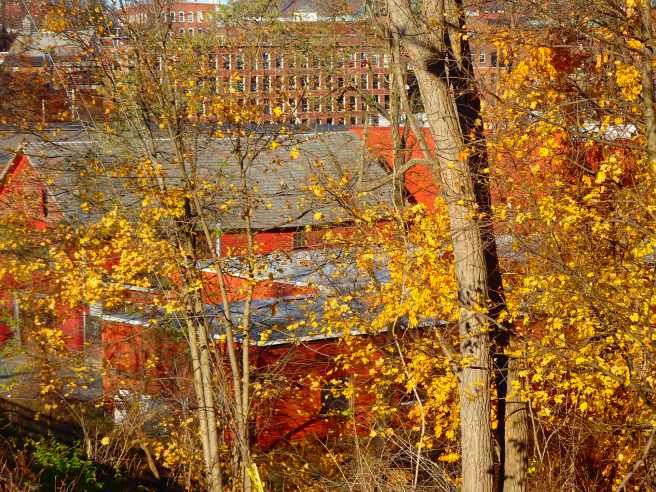
PLACES OF RETURN

Years later, a friend relates an incident of telling his wife his intention of spending the day in a favorite place in the mountains, countered by her question of what makes him return there. Even though he’s a photographer, he replies by acknowledging that many of his writer friends have answered the question simply, saying it’s the surprises that draw them back.

Somehow, as one of his writer friends, I find the word “surprise” in this context jarring. For surprises, one would be better served by trips to new locations, rather than returning to an old favorite. Novelty, rather than familiarity. Upheaval or intoxication, rather than purity or sobriety. Even so, as I consider my own places of return, her question becomes increasingly kaleidoscopic.

First, there’s the very demand of naming a favorite place. In this context, he invokes wilderness, where return is a kind of pilgrimage. Here, return may be once or twice a year, if that frequent. I could counter that with an evening stroll, as I used to do along the canal bank at the back of the desert orchard, or sitting at the café downtown in the small New England city where I now dwell — activities that could take place daily. We could add to that an opera house or concert hall, museum gallery, or even places of dedicated labor: a studio, cabinetry shop, garden, kitchen, or laboratory. Even, though rarely for me, shopping destinations: a boutique or farmers’ market, perchance. A fair or festival.

So the question soon turns to a matter of one’s intention. What is one attempting to escape or encounter? What is one leaving behind and what does one face instead?

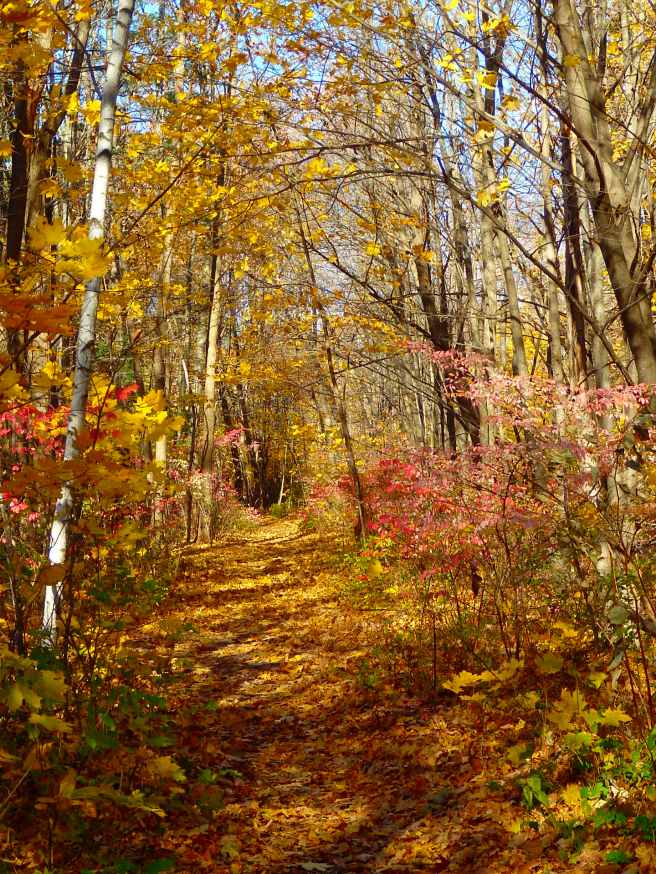
Continue reading “PLACES OF RETURN”

DRIVING NAILS

near the waterline, someone’s hammering
throughout the day, someone’s always
hammering

a staccato telegraph
of winter’s approach or gratitude
so little demands repair
or just some old goat’s survived

though when the hammering ceases
he may be eating a sandwich
or sawing a board to be hammered
yes, two taps secure its position

in the quiet, he’s
gone off to the supply house
for a another box of nails, another size
a door slams from another direction
where new hammering erupts

before the man puts his hammer down
on a leather tool belt
and then orders a beer

you’ll find boxes of hammering
in the tool shed, brown paper bags
of hammering in the mud room
old jars of hammering
on his truck bed

open any one
and his arm and shoulder
begin moving
the whole world as his anvil

Poem copyright 2016 by Jnana Hodson
To see the full set of seacoast poems,
click here.

PENOBSCOT BAY PARTICULARS

1

what if the tide never turns
but waits to be submerged
in the next high tide
one after another until
the whole city is inundated?

sailboats would go under
on their moorings, perhaps still
rocking mostly one side
from perpendicular

the wharf and its autos
would mean nothing
while the moon ignores her orbit

2

masts sway
like speedometers

or gauges
missing their dials

3

a whirlpool, however large or compact
swirls within myriad currents
that knit the harbor

some talk of changing public opinion
or the incumbent party
but don’t reckon the vortex
swimmers approach
laughing to each other

any remorse
over their drowning
will ring hollow

3

while ducktrap is a fish
a store touts its Ducktrap Decoy

whether for some waterfowl or the fish
lingers in question

awaiting a retort
from Daffy, Donald, or Daisy

as for the fish? only silent
disdain

Poem copyright 2016 by Jnana Hodson
To see the full set of seacoast poems,
click here.

SAGE COUNSEL

Master intricate knots. Trout flies, for example. Especially in your dreams.

Be astounded by what any feather can do.

~*~

Mice, even snakes, leave their tracks in the dust.

Follow them, to their hideaway.

Knock at the entrance and enter.

Come home, explaining, “Last night my mind blossomed.”

~*~

Pulling into the barnyard, I find another paradox of spiritual discipline: the practitioner becomes simultaneously rooted in flight.

~*~

By now, I’ve been away so long I no longer feel the memory.

How large was that spider?

If we had looked at each other, I would have seen. I was free to go home, even if it took another forty years to get here. March straight into that horizon? And then?

~*~

In cloud wisps two soaring ravens turn about.

They wheel from great land in the sky.

The black rings under my eyes are gone.

~*~

For more insights from the American Far West and Kokopelli, click here.

STILL LOOKING FOR FOLIAGE?

No, we can’t ignore our glorious fall foliage.

My slide shows and Yankee autumn essays archived in the New England spirit category, August-November 2013, of my Chicken Farmer I Still Love You blog are well worth revisiting. Our regional character comes forth in the intense, all-too-brief flurry from summer into long winter.

Take the tour, if you haven’t already. No wonder we treasure the color! And feel free to react with your comments.

First, the slide shows, beginning with a hike before the color shifts and a taste of the apple harvest. And then the sequence of full autumn foliage:

And then, ponder the influence all this has on our emotions and thinking:

~*~

Click away as you will.

Just another mill town, right?

FIELD GUIDE

When you walk into the expanse, keep going. Maybe you’ll meet a dwarf at creekside. Maybe a bear. If you do, you must speak respectfully and listen closely to the reply. Even if they call you a yokel, as Kokopelli did.

~*~

A dust storm — sandstorm — and they close the highway.

You must wait. Cover your mouth and eyes.

~*~

On high ridges, bachelor Basque shepherds follow their flocks all summer. Each one and his dogs rarely encounter anyone who speaks Human.

~*~

Wilderness is about clouds, too.

Now what were you dreaming?

~*~

Guides do appear. Sometimes among fellow practitioners. Maybe even your landlord. Or Kokopelli.

~*~

“Who’s standing on my head?” a totem pole figure wonders.

Just like a typical office.

~*~

Blinking in my field of karma, the reminder:

PENDULUM
swinging
back
winter
NIGHTFALL

It’s not the first time.

Be faithful and wait.

~*~

Sometimes a lover becomes a place you want to enter.

Sometimes one’s the space the other envelops.

~*~

Where would I have been without her in that desolate expanse?

~*~

For more insights from the American Far West and Kokopelli, click here.

LATE AFTERNOON AUTUMN SUN

1

180-degree
sweep of ocean
seen from a cliff

great slow curve
of our planet

eight vessels
are barely
specks on this expanse

two seals so close
Rachel observes their features

“here I am”
the great breaking surf

2

toddler tracks
bird tracks
out for the show

car tires
looping over bicycle
beside shoe
gull, dog, and mouse
imprints in sand
leaving the parking lot

everybody’s
been to the beach

parasailing / surfing
weekend

3

Juan skirts New England
slams New Brunswick as a tropical storm

a danger of frost on Thursday
or we may be spared

by our proximity to the sea

4

moonlight

couples
entwined
on sand

man, we’re getting older, America
still ill-at-ease in this dwelling

Poem copyright 2016 by Jnana Hodson
To see the full set of seacoast poems,
click here.

DIMENSIONS OF ARTISTRY

The space of art also works in other dimensions. The artists themselves are rarely of the same social class as their benefactors or audience. We repeat the cliché of starving artist, even when some become comfortably wealthy and dwell in chic locales. Still, they’re employed in ethereal fields — actors, musicians, painters, the stagehands and gallery owners, box office managers, and a host of others. They work different schedules from the general populace. Many sleep late or stay up through the night.

There are even the spaces as a work moves away from its creator into other locations. A painting, for example, appears one way in the studio, another way on one’s walls, and still another way in a gallery — none of them resembling what happens when the same piece is hung in a major museum. Musicians and actors know the difference between the intensity and argument of rehearsal and the propriety of performance itself. An author can observe how different a piece appears in manuscript, in galley-proof, in a magazine or literary review, or in a bound book. A poet or a poetry supporter becomes aware of the differences between viewing a piece on the page, voicing it on the lips (either in a public occasion or for one’s own private pleasure), or performing it in a formal reading.

We can move outward, of course. Into ballparks or arenas. The loud crowds. But those are other spaces, in some ways overlapping fine arts and religion.

We might consider as well the ways the fine arts have been acceptable as civic religion. An Oscar or a Grammy is more valued than a Crucifix in our society. A comedian is a better master of ceremonies than a preacher or priest. We’re nervous about civic events held in houses of worship. A wedding or funeral, perhaps, though it carries a sense of crossing into something private.

On the other hand, as religion has retreated largely from public awareness, or perhaps simply to the suburbs and better parking, it has abandoned earlier houses of worship, especially those downtown or in the inner city. Some have been converted to arts spaces — galleries, concert halls, night clubs, theaters, restaurants. I regard these as being somehow different from structures designed and built for arts uses. It’s more than recycling, I’d say.

For more insights from the American Far West and Kokopelli, click here.

YES, ‘TIS DEEPLY INGRAINED IN THE NEW ENGLAND SPIRIT

Autumn truly is New England’s premier season, and I’ve spent much time pondering its influence. Here are some of my reasons:

~*~

~*~

Click away as you will.

The color suits our settlements.