And now, gardening is all the rage

In this time of social distancing and shelter-in-place, many of us would go stir crazy if we couldn’t get out for long walks. Seeing so many other people also out strolling – with or without their dogs – has been a bright side of our lives lately.

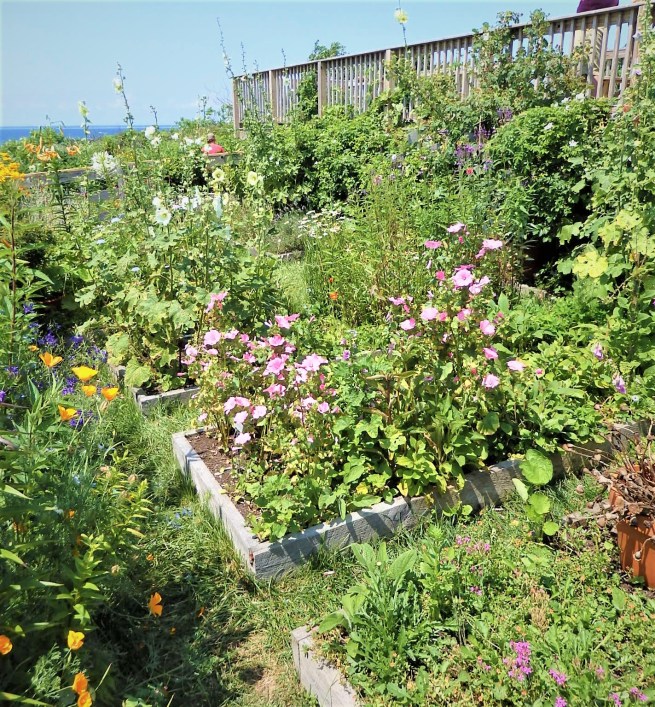
Where we live, a highlight of those treks has often come in checking out others’ gardens, landscaping, and flowerbeds. I don’t know about you who live in apartment complexes or high-rise developments, but I’m curious. Maybe something out on the deck, if you have one?

These days, I’m seeing a lot of raised garden beds going in. Fresh wood, reminding me of the time we were just getting started here. (Some of my earliest posts told of the reasons for raised beds when dealing with northern New England’s clay soils.) You’ve no doubt heard the stories of folks who have recently decided to grow their own food in the face of Covid-19.  Maybe you’re even one of them. Part of it, of course, is a concern about breakdowns in our food-supply system or even long lines just to enter the supermarket. Another might even be boredom, as in give me something new to do. From questions we’ve been getting from neighbors and passers-by, they’re really green and in for a lot of surprises, some of them harsh disappointment but a few real treats, too.

We could see this coming when some of our favorite seed catalogs announced they were running out of supplies and would not be selling to new customers; they felt it crucial to serve their longstanding commercial growers first and foremost, followed by their devoted regulars. Fair enough, that’s long-term loyalty. At least, seasoned as we are, we had our orders well in hand by mid-February.

As you know, gardening is a staple of the merry-go-round here at the Barn, but my posts aren’t the detailed advice kind for beginners – more just a taste of the experience, no pun intended. I’m hoping many of the neophytes will discover those of you who post expertly on growing and harvesting. You’re such an encouragement, truly.

Maybe we’ll get them in for the long haul, too, when it comes to things like composting (remember, those two cute bunnies you’ve been seeing featured here are big helps on that front … plus they prompt me to weed daily, just to keep them supplied in greens, which they then convert into their little composter pellets).

And, I should note, we just installed a new colony in our beehive and are anxiously waiting to see it the queen takes hold. If all goes well, our honeybees will be tending pollen in gardens in a radius of up to five miles.

Should we warn people what a few tomato plants can lead to?

The latest buzz … or lack of it

A local beekeeper group reports that 47 percent of its members’ hives died off over the winter, something largely blamed on a virus I’m dubbing Cobeed-18.

Alas, ours was one of the ones that didn’t make.

Uncertainties over the human Covid-19 outbreak, meanwhile, puts repopulating the hives in question. New colonies are trucked north from the Deep South, and who knows how long before things in that regard are back to normal.

Everything’s up in the air, except that some things aren’t.

Ten ways ‘What’s Left’ and ‘Nearly Canaan’ differ

I’m relieved to find these two novels have big differences.

Here are ten.

~*~

  1. Children and family. Cassia starts telling her tale from age 11, and she’s surrounded by her two brothers and a clutch of close cousins. No kids of note in Jaya’s tale.
  2. Greeks. Central to Cassia’s identity. None pop up in Nearly Canaan.
  3. Gypsies. Are they really a strand in Cassia’s background? Not a factor in Jaya’s.
  4. Ghosts. Cassia’s dealing with her family history, after all. Jaya isn’t.
  5. The cat. A key figure in Nearly Canaan. None by name with Cassia.
  6. Sexuality. More explicit in some scenes of Nearly Canaan.
  7. Infidelity. For Cassia, it’s an issue in her parents’ generation. In Jaya’s circle, it’s a more immediate threat.
  8. Wilderness. The desert is a major influence when Jaya and Joshua move west. Hardly noticeable for Cassia, even when she’s living in Las Vegas. In addition, much of Nearly Canaan veers off into the forests and mountains to their west.
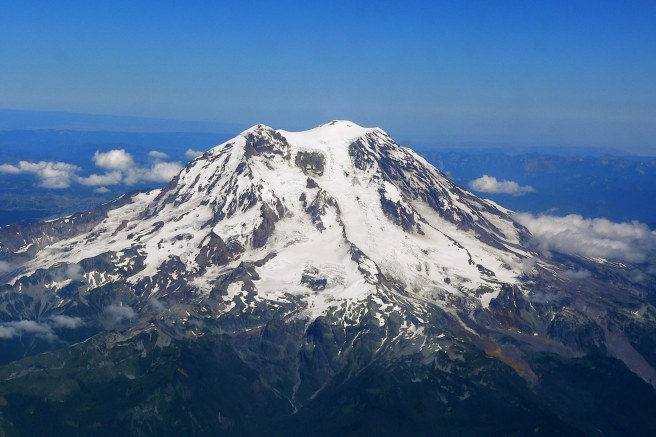
  9. The volcano. A turning point in Nearly Canaan. No geologic activity in What’s Left, apart from the mountain that triggers Cassia’s lifelong obsession.
  10. Photography. Her father’s archives become the key to Cassia’s discoveries. None to examine with Jaya.

~*~

Any of these strike your fancy?

What do you know about rocks?

In my novel Nearly Canaan, their neighbor Todd is a geologist. You know, a rocks guy. The Ozarks is where he and his wife Lucy meet Joshua and Jaya.

The place is a mineral-rich geological wonder.

Here’s part of the attraction he’d have where they are in Arkansas.

~*~

  1. Lead. The major ore that was mined. Still is.
  2. Zinc. The other major ore.
  3. Vanadium. Used in metal alloys.
  4. Diamonds. Mostly of industrial grade.
  5. Barite. The main source of barium.
  6. Tripoli. Used mostly as an abrasive in polishing and buffing compounds and as a filler in a variety of products.
  7. Quartz crystal. Used in electrical products, glassmaking, and for hardness in abrasives – in addition to its popularity in metaphysical healing circles.
  8. Gypsum. Used in a number of construction products.
  9. Chalk. Its range of uses include toothpaste.
  10. Bauxite. Used in the chemical, steel, petroleum, and cement industries, it’s also the principal source of aluminum.

~*~

What do you know about rocks?

Have you ever lived in a desert?

In my novel Nearly Canaan, Joshua and Jaya settle into a place unlike anything they would have imagined. It’s desert, for one thing, where nearly everything has to be irrigated, for another. Quite simply, it’s a lot like Yakima, in the middle of Washington state.

The city’s doubled in population since I lived there, but I’m not surprised. It’s mostly sunny.

Here are ten factoids.

~*~

  1. The name applies to the city, the county, the valley, and until recently, the Indians, too.
  2. The valley gets nearly nine inches of rain in a typical year, most of it in the winter. Almost every green thing that sprouts requires irrigation. And if that supply fails, everything goes kaput.
  3. The valley produces more than 75 percent of the hops used in American beer – and a quarter of the hops used worldwide. If you’re a beer lover, be grateful. The locale also raises a lot of barley, up in the Horse Heaven Hills.
  4. The valley has more than 70 wineries. It’s become a great place to grow varietal grapes, many of which are pressed into fermentation elsewhere. On the globe, it lines up quite well with France.
  5. The trolleys have been running for more than a hundred years. Fun trip, by the way, especially the ones that run out through the orchards.
  6. The original site of the city was renamed Union Gap, made famous by the rocker Gary Puckett.
  7. Yakima County leads the nation in apple production, with 55,000 acres of active orchards. It’s the state’s highest valued agricultural product. By the way, they’re no longer mostly Red Delicious.
  8. The average income of an apple picker is $6 a day.
  9. The Native Americans have renamed their tribe and reservation as Yakama. One letter makes a huge difference.
  10. I still miss living there, especially Mount Adams every morning.

~*~

So what’s special about where you live?