Still, the Old Sow can be seen about a mile away from Eastport if you time it right, about three hours before high tide on the biggest days of the month. The Western Hemisphere’s biggest whirlpool not only swirls but also shoots spouts into the air. As if I could capture that flash with my camera.
The current, though, often runs at seven knots, faster than an Olympic champion swimmer could manage in even a very short burst. It’s also treacherous for Scuba divers, waders, and sailors alike.
It’s by no means the only place to be mesmerized while watching the charge.
Tide pressing from the Atlantic into Dennys and Whiting Bays churns and ripples.
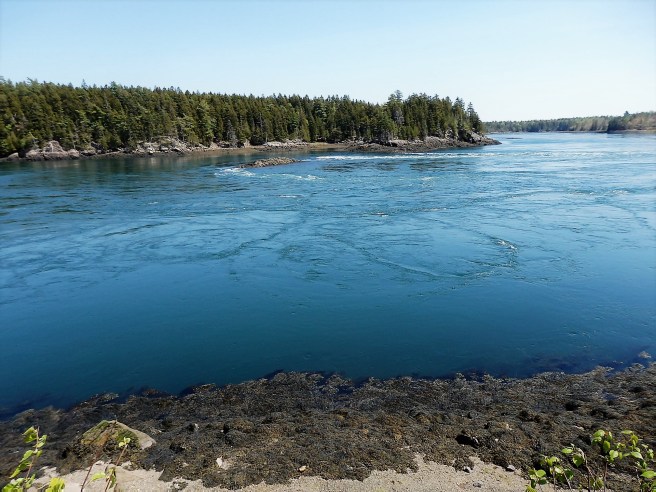
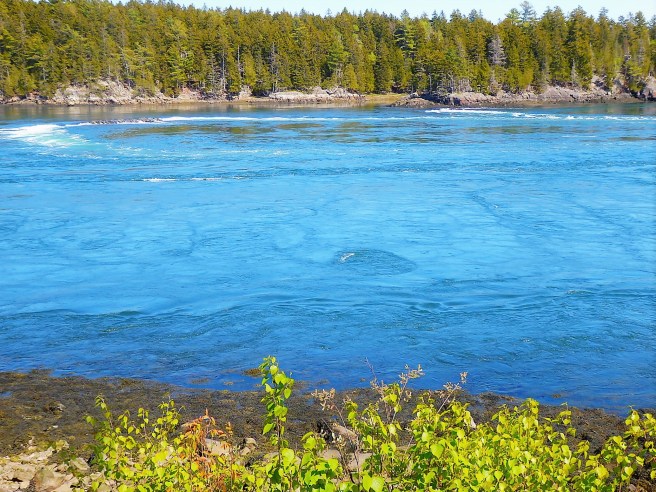
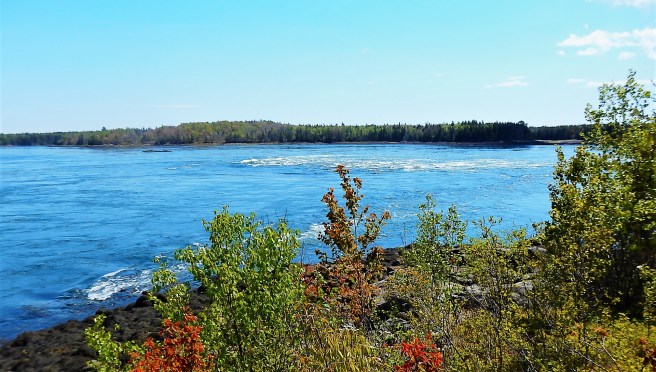
Another impressive sight is the Reversing Falls in Pembroke, though “rapids” would be a more accurate term. The sounds of the waters rushing from one bay to another are as mesmerizing as any waterfall, though.
As the level intensifies, a large whirlpool with a concave depression forms behind the rock ledge, setting off smaller whirlpools around it.The major action is a set of rapids I’d hesitate to call “falls,” though they’re just as noisy. Once the tide comes in, it has to go out, keeping the action going endlessly. As I was shooting this, a pair of seals lolled in the whitewater wings, diving and coming up with fish in their mouths.
Funded by a family trust, Cobscook Shores is preserving waterfront lands around Cobscook Bay and its subsidiaries for public use and pleasure. One of its 14 sites is Pike Lands Cove, facing Eastport’s west side across the water from the North Lubec peninsula.
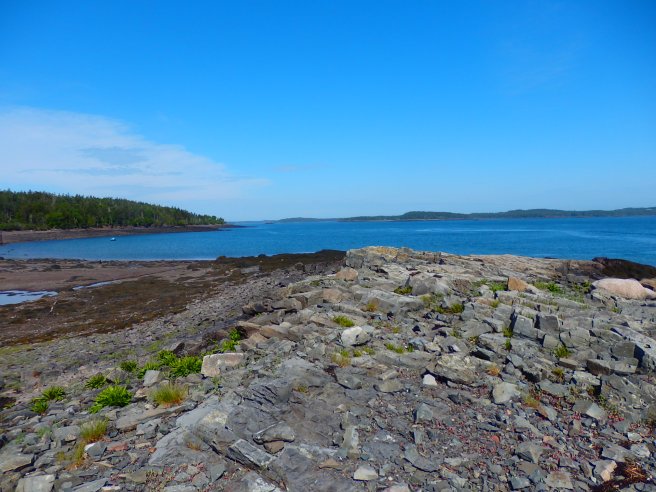
A trail leads out around tidepools I hope to investigate later.
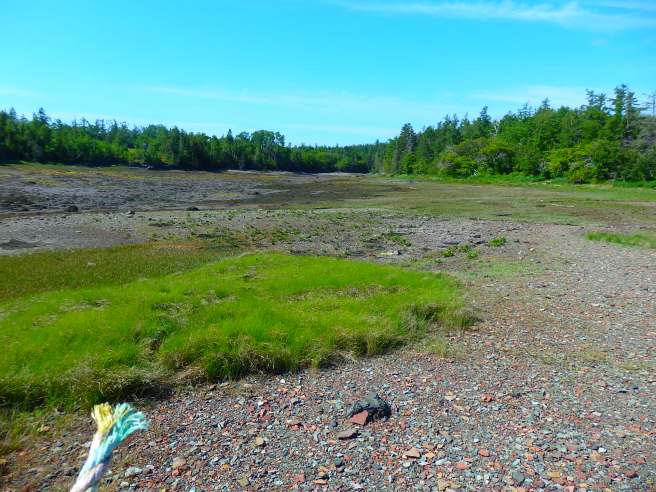
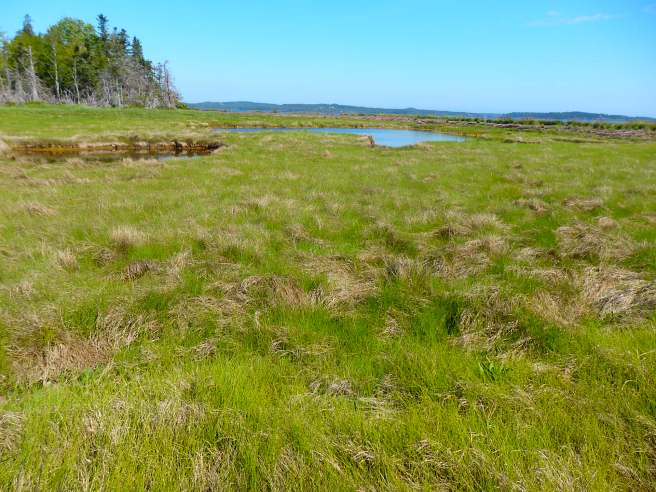
A saltmarsh can be explored up-close.
Here’s where that eagle nearly ran into me. It was being chased by an angry gull. Eastport is across the water.
When I moved to New England more than three decades ago, I tried to take in at least one whale-watch cruise each year, usually out of Newburyport, Massachusetts. But my first time of meeting a live whale came during my first-time ever time in a real sailboat, which was also my first time out on the Atlantic. At first, we saw minkes lolling along at a distance, some of them parallel to our course. And then, just as we were turning into the harbor on the Isles of Shoals, one came up right beside the bow, where I was standing. You can’t say this Ohio boy wasn’t impressed. Minkes may be the smallest of the whales around here, but our 32-foot craft wasn’t much bigger.
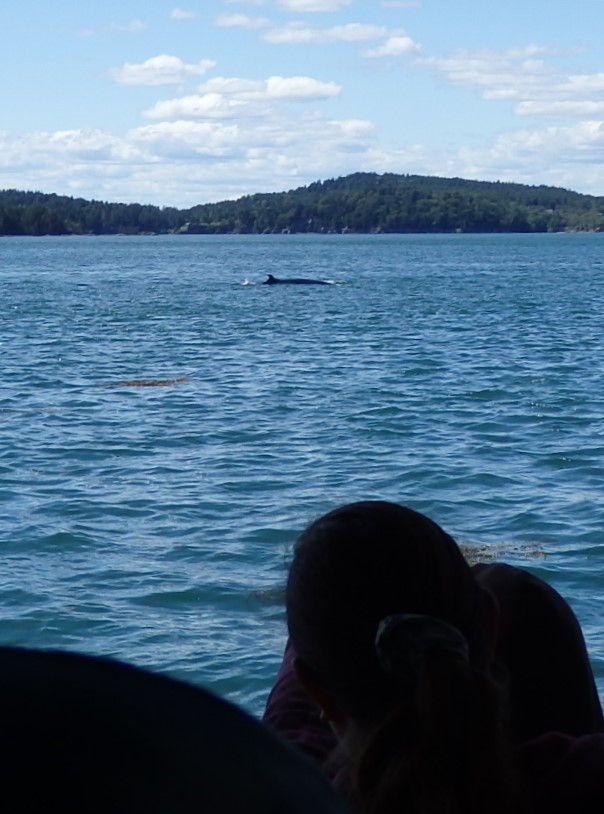
A minke is viewed between Campobello and Deer islands in New Brunswick on a cruise out of Eastport.
Whales migrate up the New England coast each May and linger in its nutrient-rich waters well into October.
One thing I quickly came to appreciate is that there are no guarantees about what you’ll encounter when you go out from shore. What I’ve often called a poor man’s cruise is an experience in itself, especially as you watch land recede and then disappear altogether behind you and there’s nothing save the expanse of sea and sky with occasional birds and boats as punctuation. On one outing, the only whales we found were a minke cow and her calf, which we followed at a leisurely pace. On another outing, so many minkes, humpbacks, and finbacks surrounded us – some close enough to be misted by their stinky blow, others breaching off in the distance – I lost count. Once, we had to be content with a trio of porpoises. You should be grateful for whatever presents itself.
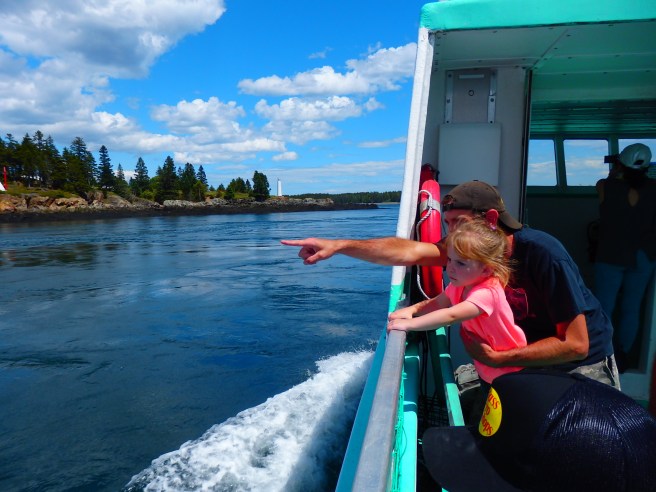
I was trying to get a good shot of the Cherry Island lighthouse but wound up with this moment of a father and daughter from Ohio.
Somehow, though, after I remarried, the annual event faded from the schedule – maybe a handful in 20 years, always with family and sometimes with the kids’ friends. I still have the memories.
Relocating to an old house a block from the ocean has now recharged that. I can walk to the whales. Seriously. In late season, they can even be seen from the shore here.
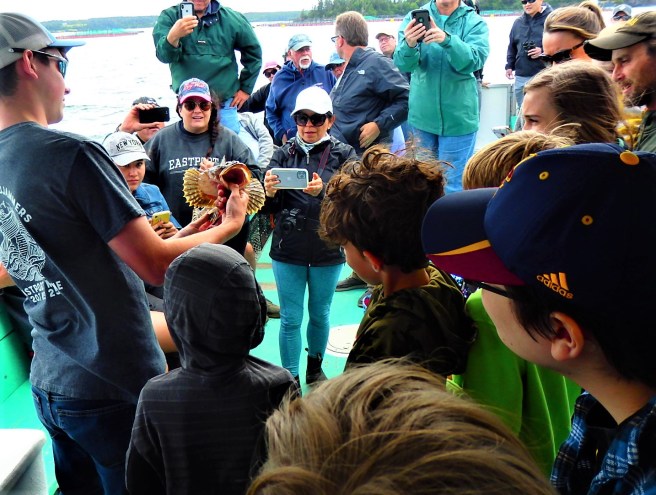
Here’s a sculpin fish that was in a lobster trap the cruise pulled up as part of its tour of the local waters.
More likely is walking down to Butch and Jana Harris’ Eastport Windjammers and setting forth in one of their refitted lobster boats. The vessels are smaller than the usual whale-watch models but put you much closer to the water. The route, from downtown Eastport out between Campobello and Deer islands in New Brunswick, doesn’t need to go into the open waters of the Bay of Fundy. On at least one of boats, you can even stand beside the captain – usually, but not always, Butch – and, on occasion, each of the kids on board gets to briefly take a turn steering at the wheel.
Don’t scoff when you connect “windjammer” with “lobster boat.” The enterprise comes by its name honestly. Up through 2014, its whale-watch cruises took place aboard Butch’s 118-foot, three-masted schooner, the Ada Lore. But on December 4 that year, a portion of the Breakwater collapsed, wrecking the schooner.
Pursuing whales from a wind-powered deck, I’ve been assured, is the most satisfying way of all to go forth.
I’m ready and willing, should the opportunity present itself.
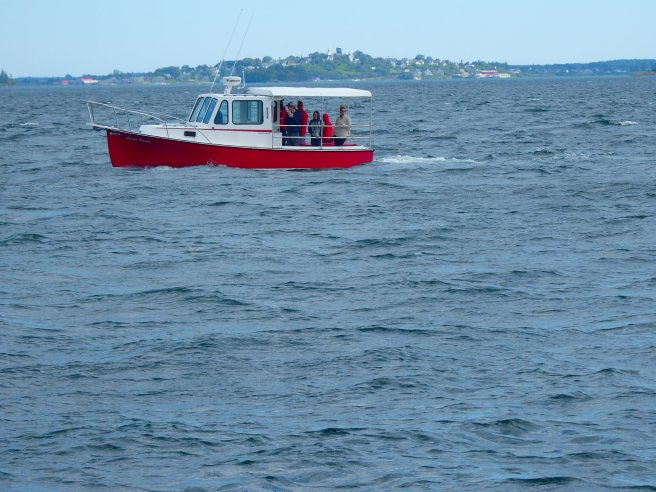
At times we were joined by what I jokingly call the world’s smallest whale-watch vessel, which sails out of neighboring Lubec. The captains work together by radio to share sightings and other info. Lubec is seen in the background.
What’s been your most memorable experience with the sea? Or some other body of water?
The Maine coast is 3,478 miles, not including islands. They raise the figure to 7,000 miles.
I live on an island.
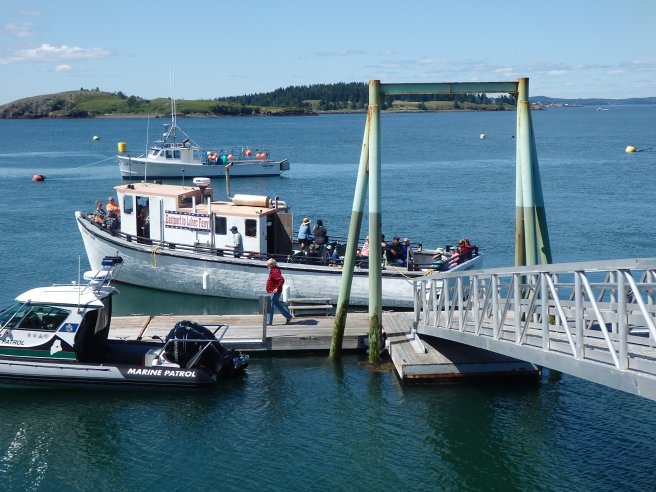
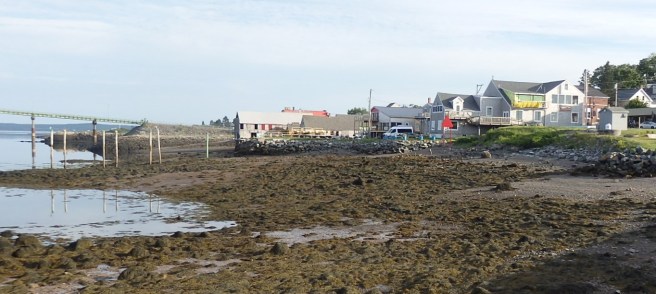
Just two miles away, as the crow flies, but an hour by land is the waterfront town of Lubec. One of the best ways for tourists to appreciate the coastal nature of Downeast is by taking the passenger ferry that runs between there and downtown Eastport. I promise you it’s much less crowded than Acadia.
We go down for a walkabout the town, a New Jersey-style pizza, and a sit in the brewpub’s beer garden. One day I watched seven gray seals cavort in the current. And then we catch a ride back, which runs along the other side of the channel from the one we followed down.
Folks from Lubec do something similar, including a stroll though Eastport’s art galleries.
Either way, you get fine insights the shoreline, history, and wildlife in a way you’d never get from land. There’s the Cargo Terminal, salmon farms, Roosevelt summer home, Treat Island. Maybe seals and eagles, too.
The ferry runs every two hours on Friday, Saturday, and Sunday, weather permitting.
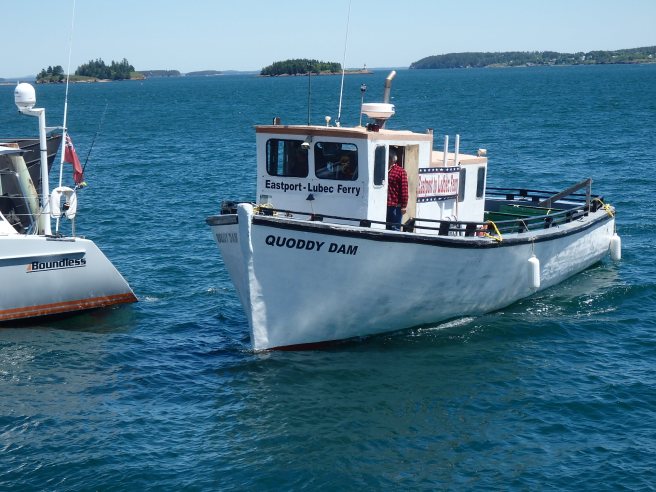
The Quoddy Dam is a friendly little vessel, named as a joke about the federal project that was quickly jettisoned.
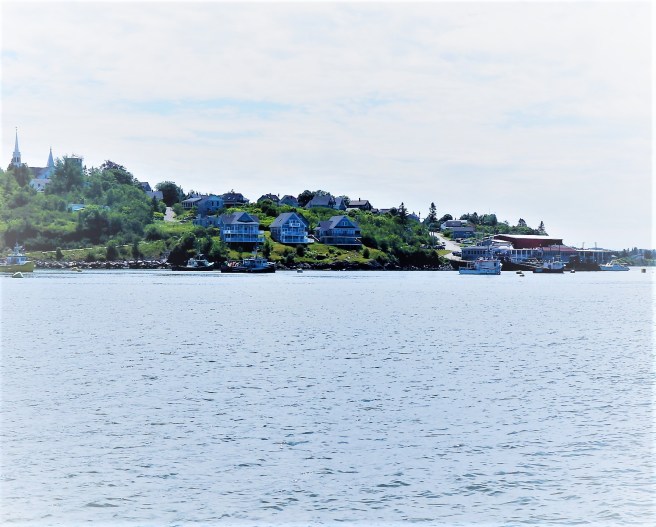
Approaching Lubec.
At the dock. Treat and Dudley islands are in the background, with Eastport sticking out to the right.
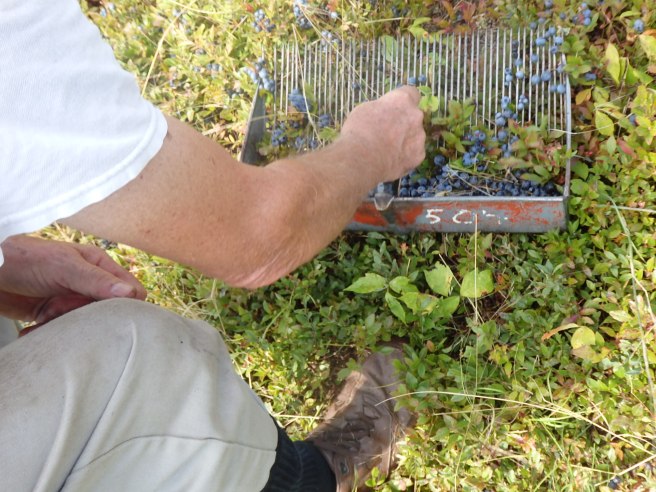
The handheld rake was invented in 1910. I can’t imagine trying to pick large quantities of blueberries without it.
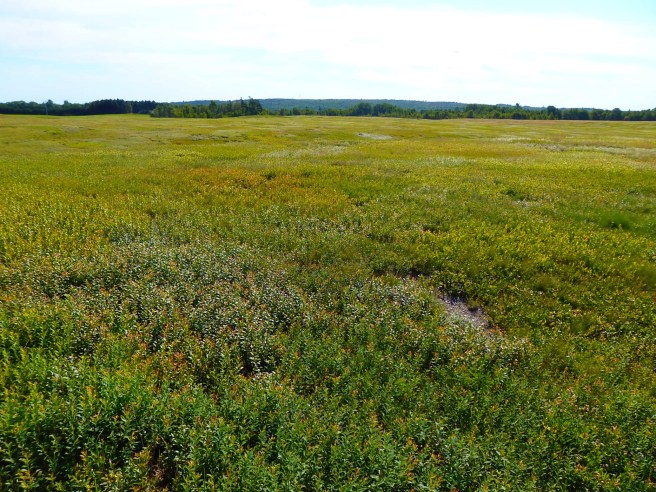
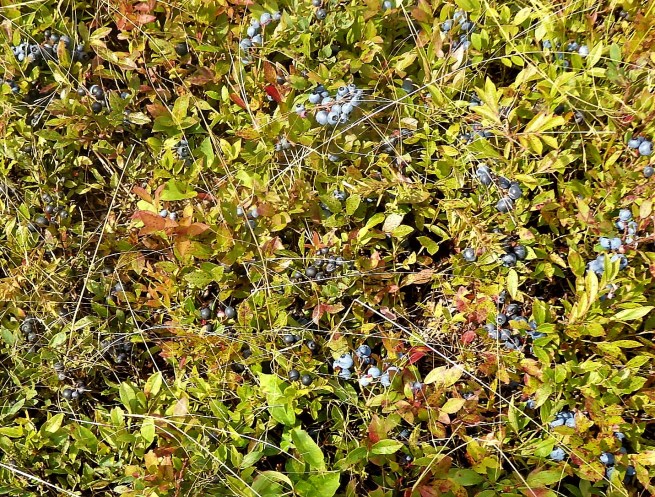
What’s harvested by the ton in Washington County is not just blueberries, but wild blueberries – lowbush, laced with small pellets of complex, concentrated flavor, rather than the big, juicy, cultivated highbush kind.
What grows here, I’ll argue, is tastier and richer than the more coddled kind I had previously known and even grown.
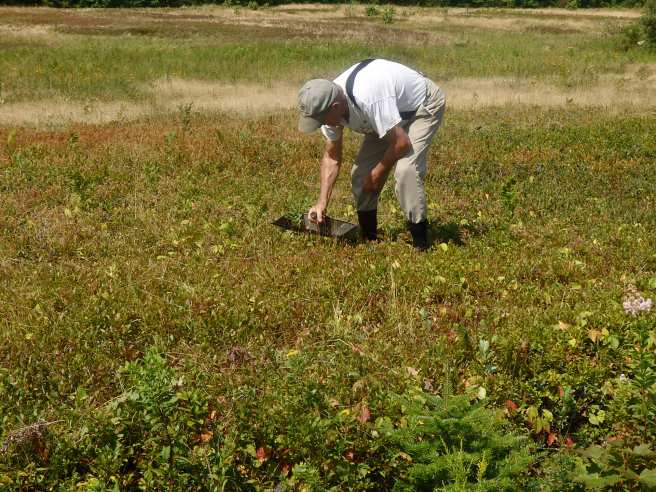
As you can see, traditional picking can be backbreaking work. But old-timers tell you it delivers better berries than the newer mechanized harvesters do.
Maine has a near monopoly in the production of the wild lowbush berries in the United States. Neighboring parts of Canada are also of note. Still, the output is only a fraction of what’s harvested from the domesticated highbush farmers in other states.
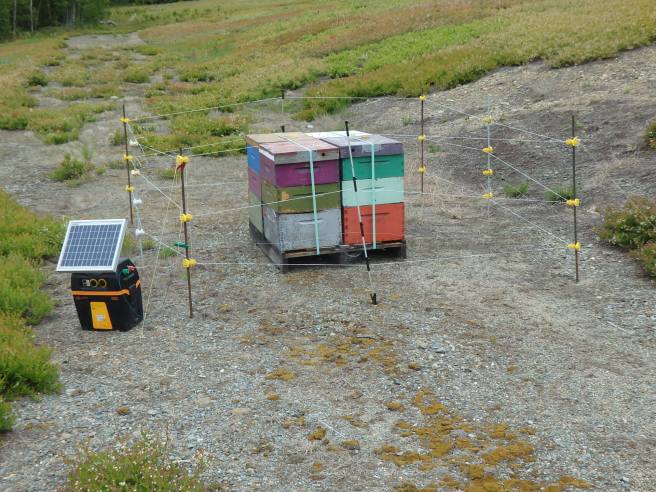
You can drive right past a blueberry barren like this and not know it’s loaded with ripe fruit.Here’s what a stop to look reveals.For a few weeks each spring, clusters of commercial honeybee hives are placed by the hundreds throughout the barrens. The electrical fencing is intended to keep bears out.
Just so you know.
What’s your favorite kind of berry? And your favorite way to eat (or drink) them?
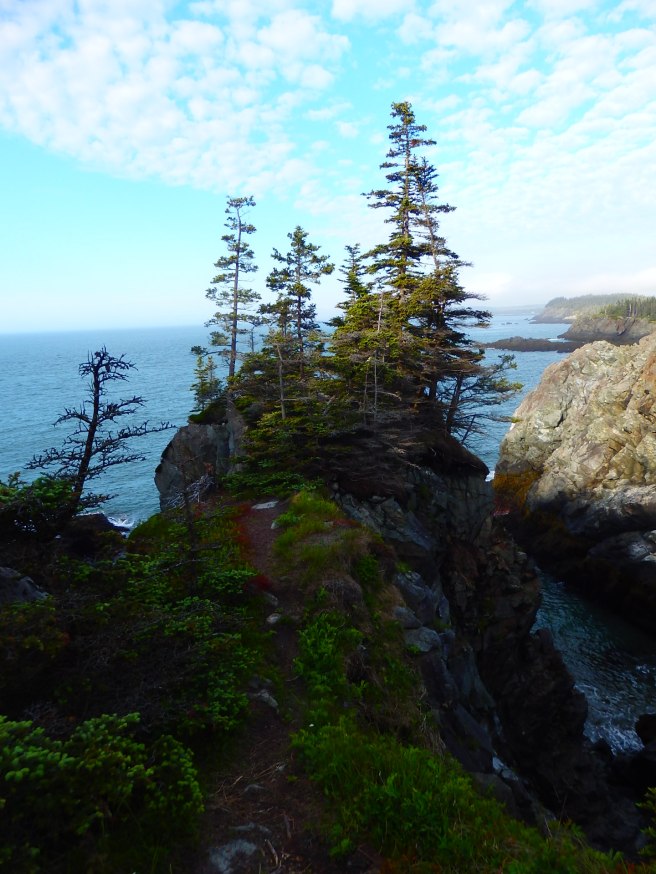
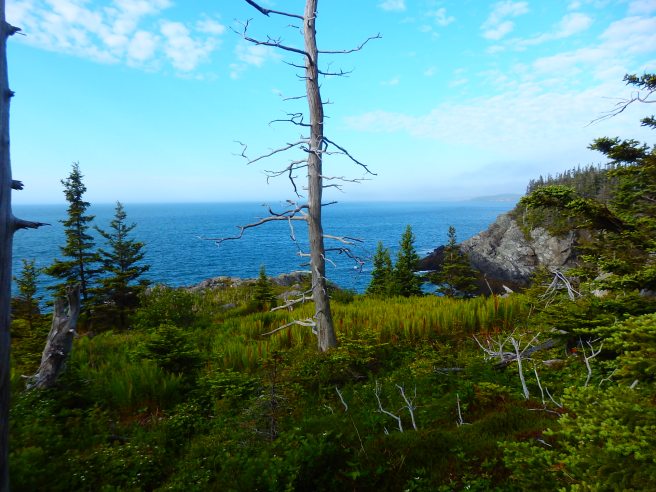
The day I shot these, I encountered only one other person in two hours … and that was just as I was leaving. Admittedly, I arrived around 7 as a foggy dawn lifted and then listened to a mournful foghorn in the neighboring Bailey’s Mistake cove much of the morning. How could I not be elated?
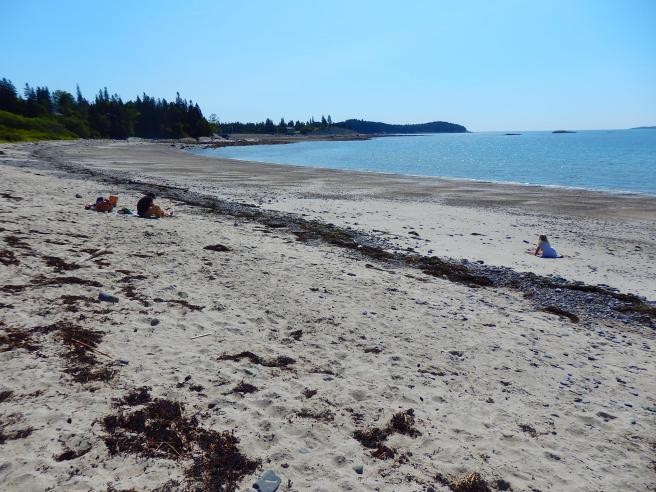
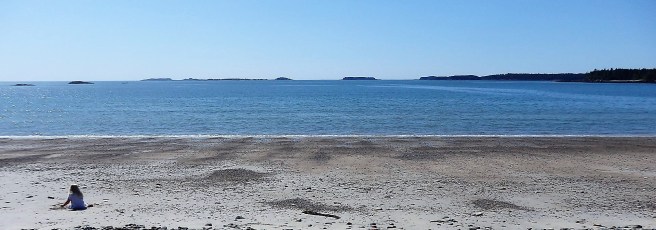
In 1988, the Maine Coastal Heritage Trust secured the property now known as Boot Head Preserve, saving it from a planned 35-lot subdivision and instead opening it to public enjoyment. It’s a gem that includes coastal hiking, a cove with a cobble beach, and an arctic peat bog.
Promise me you won’t tell anyone else.
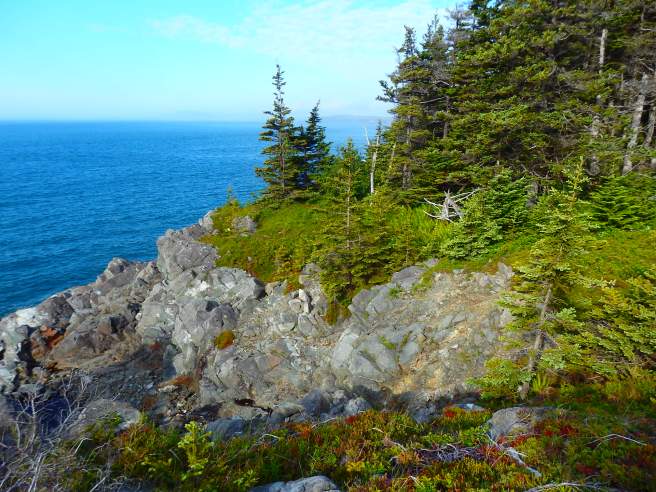
Just six-tenths of a mile from the parking lot, the trail opens out on this.
And this.
And passes beside wild iris.
To this.
And this.
And then this.
It really does need a soundtrack of the ocean’s endless crests striking the rocks below.
I’ve mentioned the impact of my rogue Boy Scout troop on my life via hiking. Camping was related. We used homemade square tarpaulins – three rows of muslin our mothers sewed together that we then dyed and waterproofed.
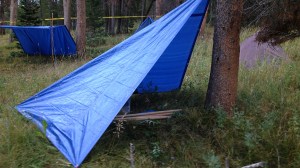
Here’s the general idea for pitching a trail tent.
We called them “trail tents,” though “tarp tents” seems to be more universal. They could be set up in any number of ways – a two-sided triangle with the front open was most common, using a second one as the ground cloth – or in good weather we could even roll our sleeping bags into one and stretch out in the open.
We took pride in our primitive camping abilities.
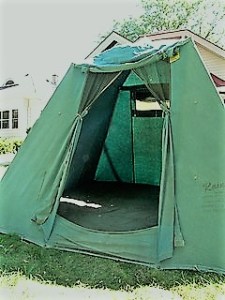
Our vintage umbrella tent was like this, with the poles inserted along the ridges inside.
My family, on the other hand, had a clumsy and often smelly “umbrella tent,” so named for the way you had to set it up from the inside and then remove the aluminum center post – well, they’re now called “cabin tents,” and apparently more flexible.
I inherited the tent and used it for many of my escapes in the Pacific Northwest, my complaints aside. It got a lot of miles over the years.
The result in either case was some memorable opportunities to get closer to nature. Among them:
Family summer vacations at Indiana state parks, especially Spring Mill with its limestone caves; Natural Bridge in eastern Kentucky with its old railroad tunnel at the base of a mountain with a stone arch at the top; Mammoth Cave in Kentucky; and Lincoln’s Old Salem in Illinois.
There was also a Florida trip we shared with a Chattanooga family Mom and Dad were fond of from his Army-Air Force days. At age 12, it was my first exposure to the ocean and a Southern belle a year or two older than me. Our trip back included a night 17 miles back from the highway in Okefenokee Swamp in Georgia, where we were surrounded by masses of mosquitoes, more than a few three-legged deer (the result of encounters with ‘gators), and raccoons that could open the doors to the porches of the camp headquarters and then raid the top-slider Coke coolers. Let’s say simply we heard a lot of eerie sounds in the darkness and escaped with our lives once the sun rose through the Spanish moss.
My first time in a trail tent was shared with another neophyte. We proudly set up our tent, tying the front line to an Osage orange tree – I remember the strange color when we split firewood. Alas, a storm blew in during the middle of the night and pulled up some of our stakes. I rolled enough of the ground cloth around my sleeping bag to get through the night. Not so, Jackson. He nearly froze and his bag the next day must have weighed a hundred pounds. After that experience, I always checked the wind direction before deciding where to raise the tent.
Another Scout outing, remembered vaguely, was in May or June in a farmer’s woodlot. It simply felt magical, nothing like a designated campground.
Our troop joined one or two others in the summer at a site in Lake Vesuvius State Park near Ironton, Ohio. This time we used wall tents, but it was still primitive. The park had the remains of an early stone blast furnace, and we spent a day in rowboats exploring the lake. One fall, we returned to plant trees in a strip mine. I’ve hated that form of mining ever since.
Out-of-state hiking trips also included overnights, usually two. I especially remember those of the Lincoln trails and others around Lexington, Kentucky. And there was the near-perfect night in Indiana when we rolled out under the stars only to be interrupted at midnight and having to hustle our gear under a nearby picnic pavilion when a harsh storm blew in. And then the rangers showed up and scolded our scoutmasters. But the next morning, and for much of our drive home, we saw tornado damage.
Roan High Knob, at the end of our week on the Appalachian Trail, turned into a festive array of unconventional trail-tent setups. It was like a camel caravan had moved in. At least until the big thunderstorm and repeated deluges.
Later, as an adult, there was a week circumnavigating the Olympic Peninsula, an event I celebrate in a longpoem.
Also in Washington state, a week I spent in the North Cascades – where poet Gary Snyder, especially, wrote extensively as a forest fire lookout. Silver Star Mountain was especially memorable and worth a return with my then-wife.
Another week in the North Cascades included time at the base of Mount Shuksan and Mount Baker. Washing my dishes in the small river, I recognized gold flecks in my bowl – not enough to pan, if I could, but the valley had been the scene of a big gold rush once upon a time. I also noticed that the river level kept rising through the day, a result of melting snow and glacier ice upstream, up above me.
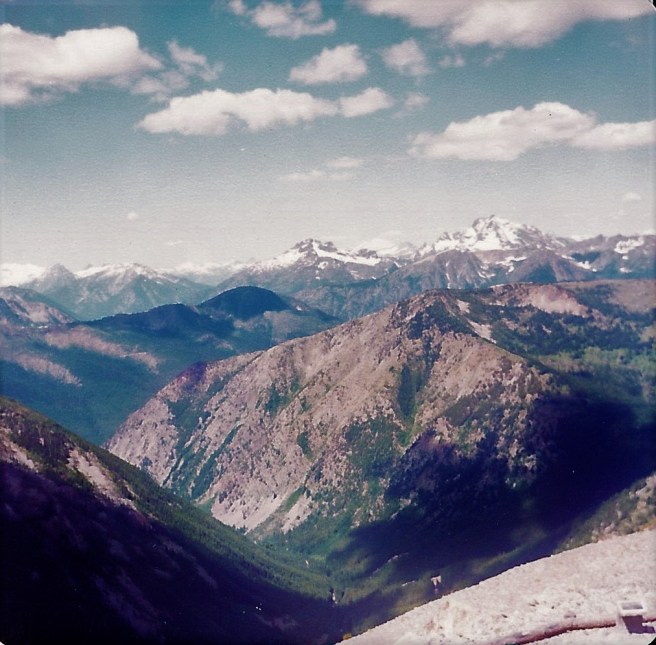
Imagine opening your tent flap and seeing this. I did, in the North Cascades.
Curiously, I haven’t camped since 1980, though there was a week I spent in a spartan, bare-bone cabin near Lake Sabago, Maine, in October ’99. That’s when I learned to canoe … and to steer clear of the middle of the water when it’s just me all alone.
Unlike the two most photographed and visited lighthouses around here – East Quoddy on Campobello Island, New Brunswick, and West Quoddy in Lubec, Maine, both of which have been featured here at the Barn – the remaining lighthouses I encounter locally are small-scale. They’re beacons, all right, but to call them houses may push the definition.
You be the judge. Here they are.
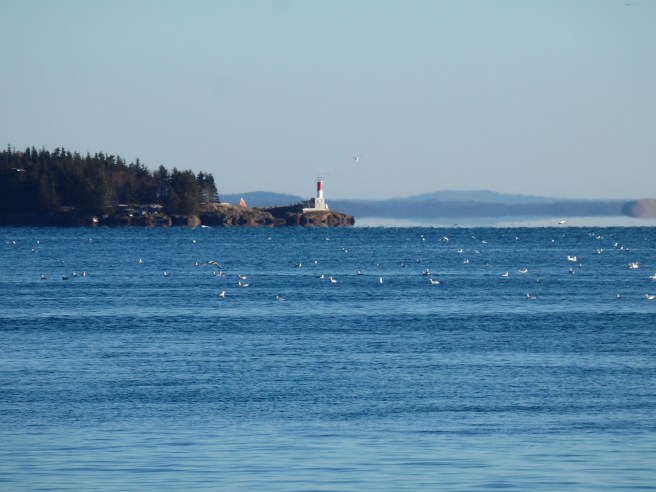
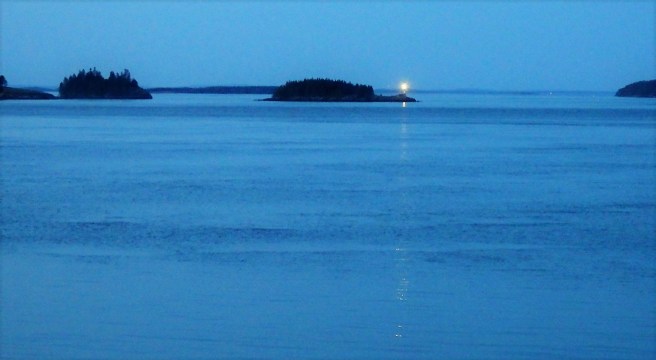
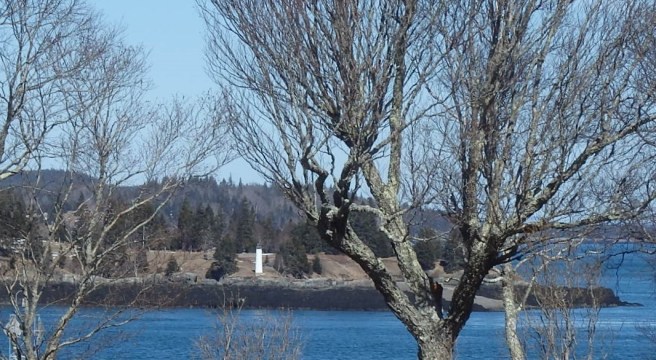
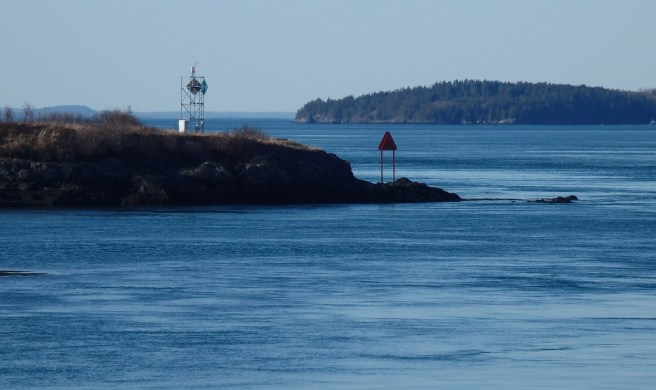
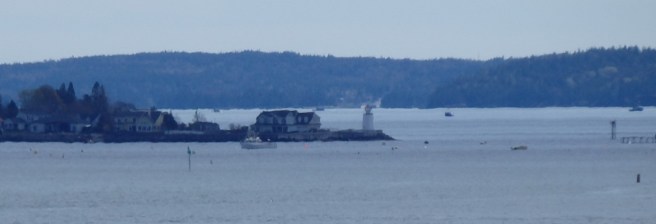
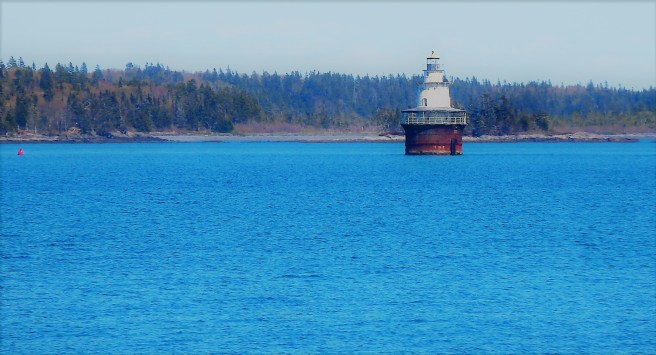
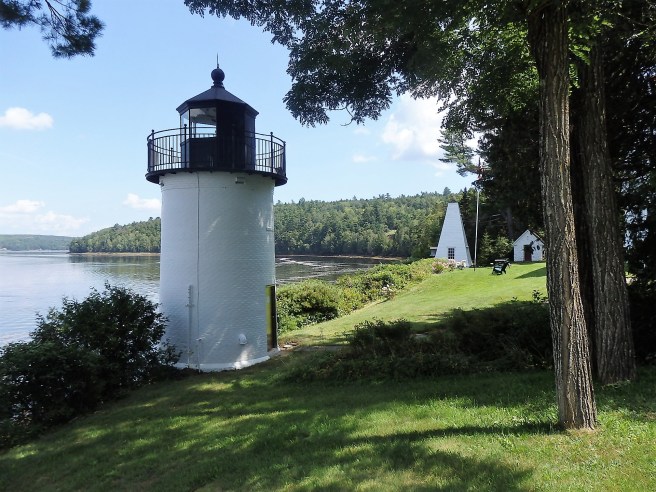
Cherry Island Light, New Brunswick, is the one we see most clearly. It’s an 18-foot-tall tower with a white flash every five seconds. As a lighthouse, it was first built in 1824.And at night it does this.Deer Point, New Brunswick, is a 20-foot tall tower with a two-second red flash every 10 seconds. The famed Old Sow, the largest whirlpool in the Western Hemisphere and second largest in the world, is just off its shore.Facing Deer Island, the Dog Island Light in Eastport flashes white/red every five seconds. As you can see, it’s no longer a house, much less manned.The Pendleberry Lighthouse, or St. Andrews North Point Light, in New Brunswick is glimpsed here from Robbinston, just up the Maine shoreline from Eastport.A “sparkplug” or “wedding cake” design, the Lubec Channel Light can be seen framed by the bridge from Lubec to Campobello Island from points in Eastport, though never this distinctly. I shot this in South Lubec, where it stands 53 feet above Mean High Tide and emits a flashing white signal every six seconds.Whitlock Mills Light on the St. Croix River in Calais is the northernmost light in Maine. It’s on private property, and I’m grateful to the owner who allowed me access. The second tower has both a bell and a foghorn. I find this 25-foot tower, despite its small size, particularly charming.







 Jnana's Red Barn