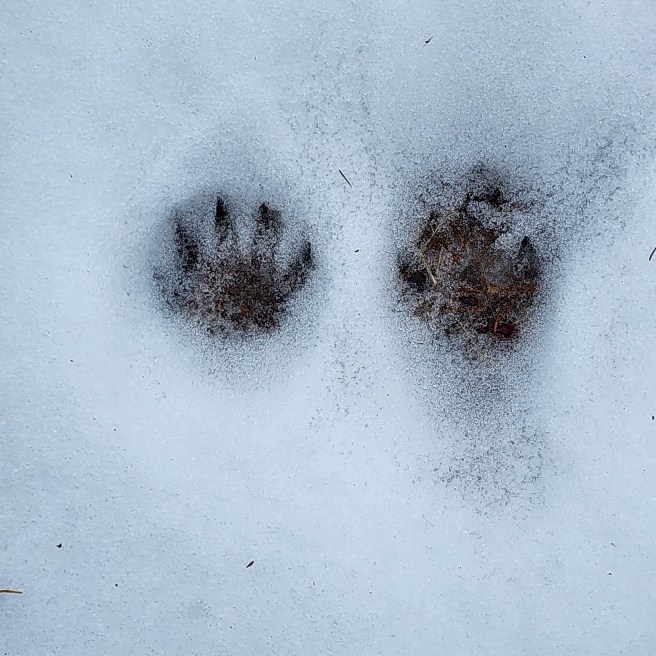
They haven’t quite matched anything I’m finding in my field-guide books.
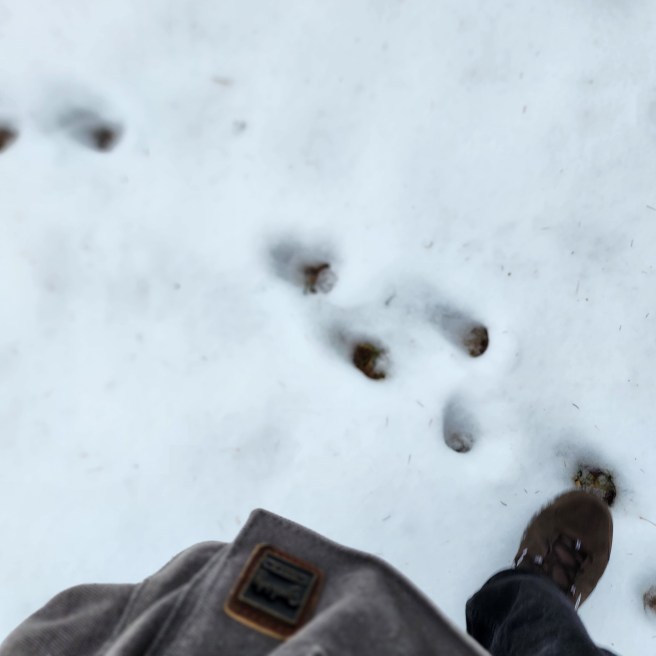
You never know what we'll churn up in cleaning a stall
They haven’t quite matched anything I’m finding in my field-guide books.
Some people sit down in the depth of winter to peruse seed catalogs and dream of harvests. We’ll be doing some of that in our household, and you’ll no doubt sample some of the results here.
Some find it a good time to revisit highlights from the previous year or further back. Yup, that too.
The snowy months also offer delightful travel opportunities, and not just to warmer climes. Even if you stay close to a wood fire or the equivalent, taking time to sift through brochures can stimulate plans for trips long or short later in the year. Consider my upcoming posts based on my week on the waters of Penobscot Bay at the beginning of autumn in that vein.
Quite simply, retirement and winters aren’t a blank stretch in my life.
~*~
One movie I viewed as a kid in the Dayton Art Institute’s tapestry-walled auditorium left a lasting impression on me. I think the film was scheduled to be shown outdoors but this was the rain site. What I do recall is its presentations of windjammers racing along under full sails. I was still far from any actual encounter with the ocean or sailing, but from that point on I did realize I had no interest in a traditional cruise, or what I’ve seen as a floating nightclub. No, if I went out on a cruise, it would be under sail. Not that the option quite came in front of me.
Instead, the closest over the years were jaunts on ferryboats in the Pacific Northwest and then the Northeast, along with whale watch daytrips and, especially, my boss’ 32-foot sailboat in the Gulf of Maine.
One impression I gleaned from those outings is how differently a geography fits together when it’s experienced from its waters rather than its land. That awareness certainly came into play in my history research for Quaking Dover.
Being on the water filled in some blanks.
~*~
As a lover of maps, from childhood on, I’ve also learned how the mere fact of being in a place transforms the charts. A location becomes real when I’ve walked around in it. Or, as I learned in my time on Penobscot Bay, if I’ve walked around in a boat just offshore.
Listening to new friends in Maine presented a series of towns I could place only vaguely – Castine, Stonington, Brooklin, Islesboro, Southwest Harbor – along with related locations like Vinalhaven, Isle au Haut, Blue Hill, Swan’s Island (not to be confused with Swan Island in the Kennebec River), or Little Cranberry. I could nod along with a blank look. My week on the water filled in more of that comprehension.
Now, let me fill in the name of the ship in question here – the Lewis R. French – and the fact she was a schooner, a very special distinction, as I would learn.
And as you’ll see.
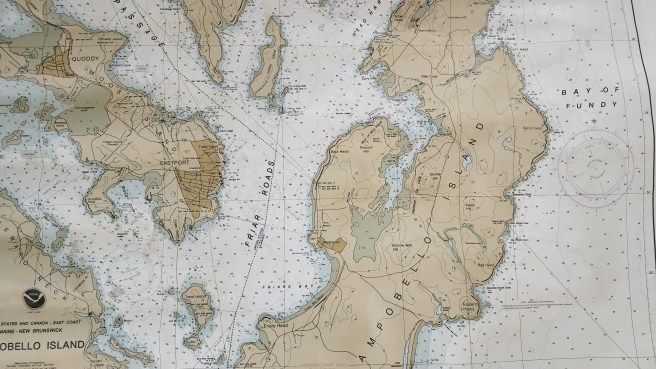
Eastport’s on the island to the left. Keep an eye out for gale warnings, too.
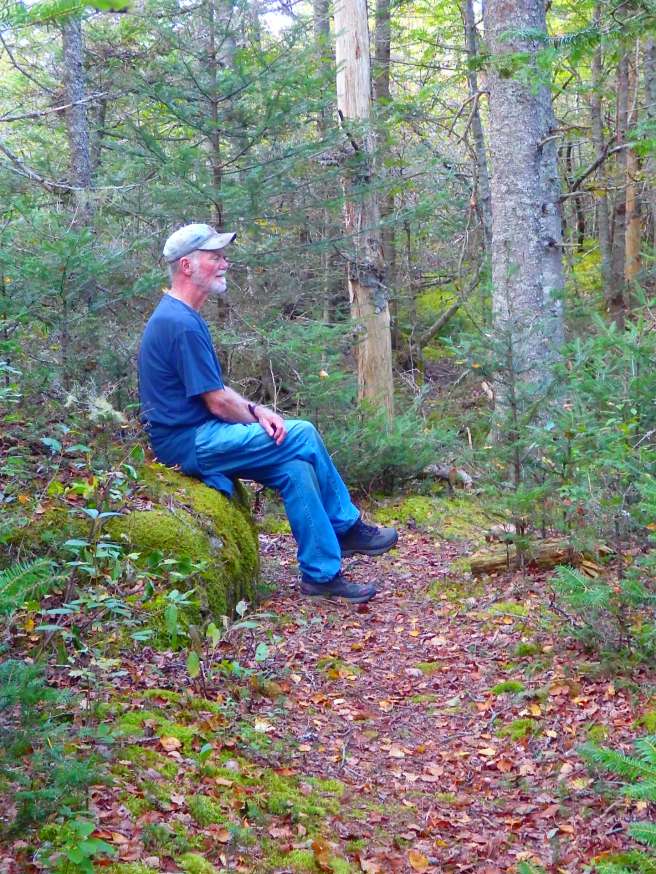
Dick in fine weather on a trail behind his farm.
You know, you drive past a thousand times and finally decide to explore a side street.
That’s what happened in Dover when I had a half-hour to spare before my presentation at the public library.
Upper Factory Road off Tollend was the excursion in question, and I was curious to see if I could actually get a glimpse of Kimball Falls in the Cochecho River through somebody’s back yard.
Yeah, suburban-style sprawl.
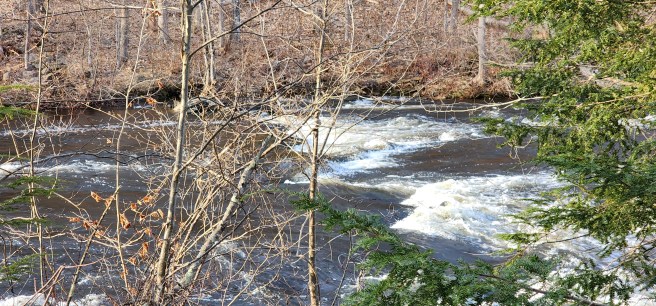
What first appeared was this falls, or rapids, at the foot of the trail. It’s the fourth of six falls as the river runs through Dover, though some of them are more accurately rapids. (I’m guessing there’s a nuance of meaning I hadn’t gotten previously – a waterfall seems to be a more clearly defined kind of “falls,” in contrast to fast-running streams like Jones Falls and Gunpowder Falls in Maryland as well as the Salmon Falls River abutting Dover.)
This one would have been the site of the Dover Cotton Factory, which bought the land before 1820, erected a dam, mills, and housing, and sold it in 1830, when the operation moved downstream to the first falls, now the heart of downtown.
Whittier Falls, which are discussed in my book Quaking Dover, were the second set going upstream.
To my surprise, Upper Factory Road actually leads to a small trail down to the water, along with a twist along the riverbank to a definite waterfall. Alas, that part was too wet to use at the time, but it is on my list for a future trip.
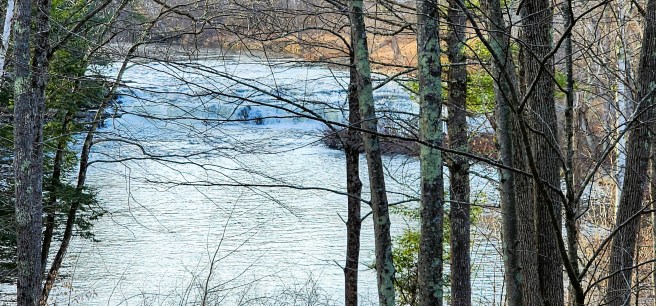

Checking the aerial map when I got home, I realized I had frequently passed the falls on the community trail on the other side of the river, but the path had veered too far inland for a direct view. But you can definitely hear them, as I recall.
It’s rather surprising how much you can find in what’s essentially your own back yard when you look. Or, perhaps more accurately, know what you’re looking for. I lived in Dover 21 years and found this 2½ years after I left.

By the way, there’s no Lower Factory Road.
What is it that makes a waterfall so appealing?
Lee blew down
all
the wild apples
to ferment
for crows
and deer
to turn tipsy

Yeah, all sunsets are in the west, but this looks like something out of a cowboy movie finale. Even if it’s in Downeast Maine.
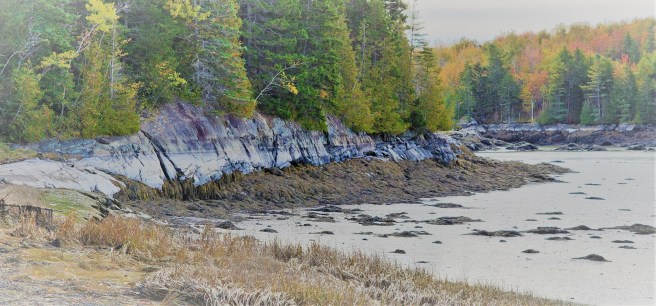
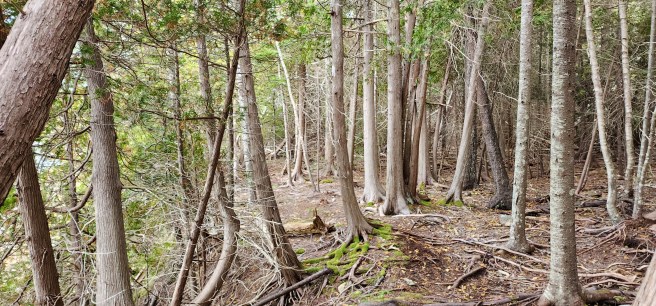


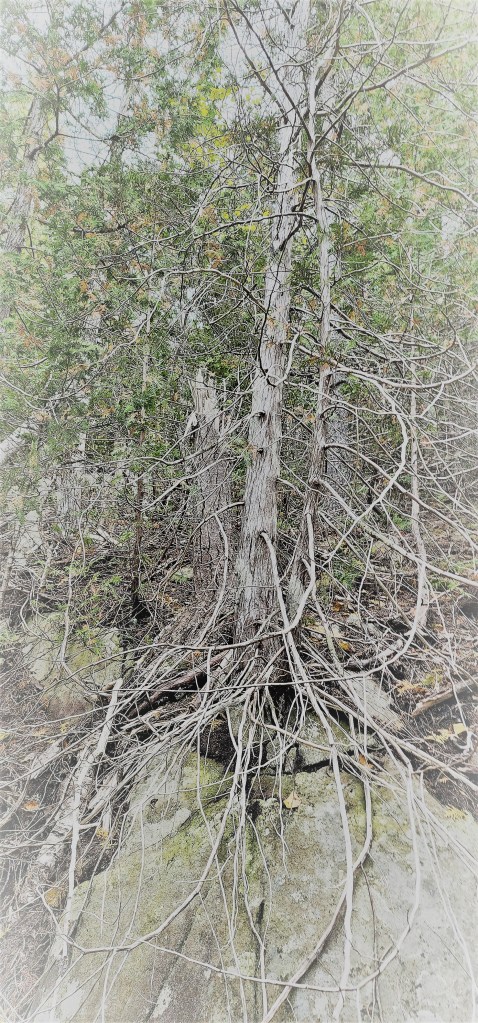

Cobscook Shore’s 15 well-maintained reserves around the bay offer the public prime opportunities for hiking, picnicking, fishing, and water access for kayaks and canoes. This is a personal favorite.
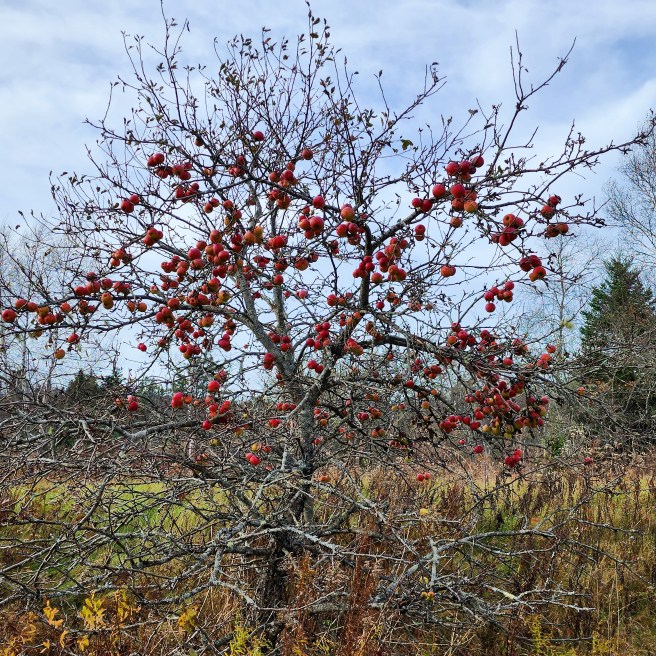

The trees are found everywhere around here. As are the deer that eat all the fruit they can reach.
 Jnana's Red Barn