
Growing up in Ohio, this would have blown my mind. Now I almost take it for granted.
You never know what we'll churn up in cleaning a stall
Growing up in Ohio, this would have blown my mind. Now I almost take it for granted.
how would square-riggers look on these waters?
Lost behind a small island

finally, a shadow
and a tinge of warmth
Informal racing out on the open waters was already a longstanding tradition when the Maine Lobster Boat Racing Association formed and launched its first races in 1964.
Fishing is a dangerous occupation, one luring a gnarly but dedicated gang into its ranks. It’s said they have salt water in their veins, or as I’ve heard them say of themselves, they’re either crazy or dumb – or both.
It should be no surprise, then, that here in Maine, lobstermen come together on summer weekends to race their boats. They have a pick of at least one every weekend.
Yup, race. Lobster boats don’t exactly look sleek or graceful – they’re built to work in all kinds of weather and take a beating. But they also have powerful engines. I had no idea just how powerful.
Besides, guys being guys, lobstermen have long boasted about their beloved boats – many are named after sweethearts and children, after all. Comparing theirs against their peers’ meant putting their words to the test.
All of that has led to a circuit of races starting in Boothbay and ending in Portland, with ten or so other sites along the way.
With that in mind, here are ten more bits to consider.

At low tide, the remains of the four-masted ship are fully exposed. Built in Shackford Cove, she had returned for maintenance when she caught fire and sank.

Here’s another perspective.
brought latest Paris Review and Harper’s
as reading along with Vincent Katz pages
maybe stimulation
didn’t read anything, really, apart from some entries
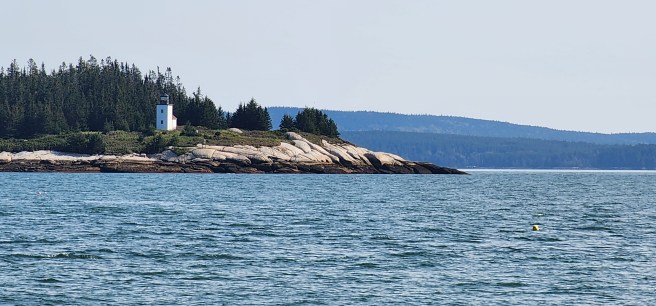
in the free guide to lighthouses I had picked up
nearly a decade earlier


So here’s the official advice before setting forth:
We are very relaxed and informal on board, so bring comfortable outdoor clothes. If possible, use a duffel or collapsible bag to pack your gear. Hard suitcases are sometimes difficult to store in the cabins.
The weather may be cool or warm, so include pants, shorts, long and short sleeve shirts, a sweater or sweatshirt and a jacket. When the wind picks up, things cool off, so think layers when you pack.
Don’t forget your bathing suit, either for sunbathing or a quick plunge in the ocean.
Soft soled shoes are best, and an extra pair may come in handy. Sandals also work well on board or on the beaches we visit.
If you have a rain slicker, bring it along just in case. We do have extra rain gear on board if you can’t bring your own.
Also, if you can, check the weather for Camden, Maine online before you pack. It may give you an idea of the specific weather for your trip. But remember that it is always slightly cooler out on the water.
We provide towels, linens, blankets, pillows, and all the food and non-alcoholic drinks. We have an icebox on board for passengers to use if they would like to bring along their own beer, wine, etc.
Bring a camera with extra batteries, sunglasses, lots of sunscreen, a good book, binoculars, a journal, and your musical talents/instruments (if they are transportable!). If you want to sleep on deck under the stars, bring along a sleeping bag. Some folks bring charts or GPS’s to keep up with our route.
Once we leave the dock, we operate on 12 volt DC power. There are USB outlets for charging phones – please bring your own USB cord. We do have limited 110 volt AC power (like in your house) that can be used for medical machines and for occasional charging of batteries. Please let us know when you book if you will be needing 110 volt AC power to operate a medical machine.

At the lower fish ladder.

do Fresnel lenses ratings run
up (from lowest)
to top, five (for highest)
or the other way around?
Turn’s out 1 is the strongest
5, the least
what are the others really thinking
or observing under their cheerful banter?

Those are salmon pen farms, should you be interested.

And that’s the point, in Cobscook Bay.

Cedar in Whiting, Maine
 Jnana's Red Barn