Have to admit to some envy for a young acquaintance who’s off to hike the Pacific Crest Trail.
It’s a strenuous trek, backpacking the 2,663 miles through Washington, Oregon, and California – the Western counterpart to the older, iconic Appalachian Trail.
And it’s bound to be a totally different experience than he had on the AT.
I became acquainted with Samson as one of our lifeguards at Dover’s indoor swimming pool. And now he’s away for the summer, starting just a few miles from the Canadian border and heading south.
He’s promised to update us on his blog, Samson PCT. (PCT is the in-name for the trail. FYI.)
Here’s an invitation for you to follow his progress, too.
Not bad for a kid from a little north of New York City. My, oh my!
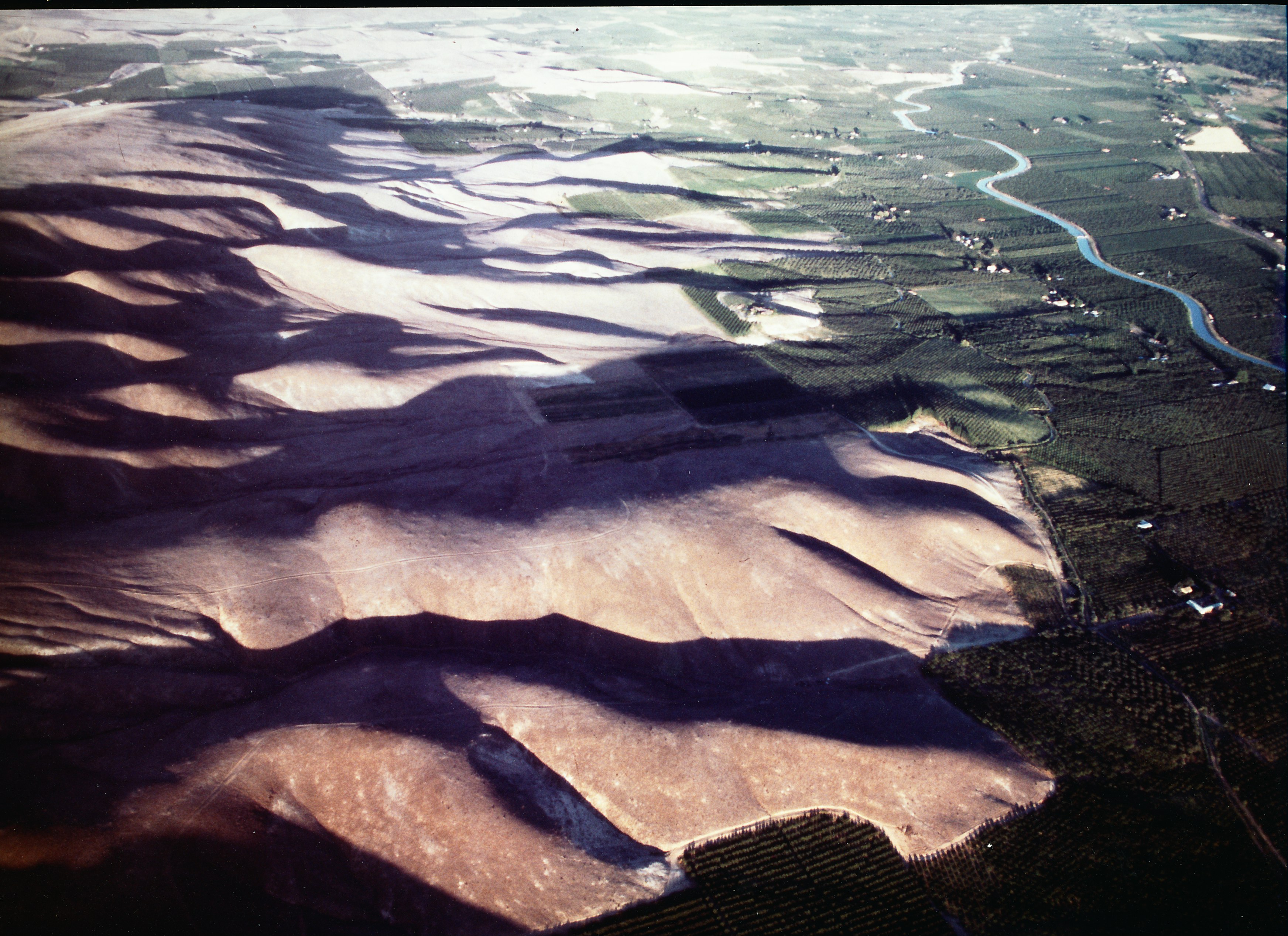
Aerial view of the desert ridge behind our the tenant shack where we were living when Mount St. Helens erupted. This is as green as it gets. The orchards are in the band close to the two irrigation canals seen here. With a magnifying glass, I could point out our place.
Thirty-five years ago today, we were buried in volcanic ash erupting from a summit 85 miles away. For days afterward, everything was buried in gray. Until then, it had been my Garden of Eden.
My fondness for asparagus arises in the years I lived in an orchard in the Yakima Valley, where, thanks to an earlier agricultural disaster, asparagus seeds had gotten into the irrigation water and spread everywhere. The green sprouts were often touted as “Local ’Grass.” As a consequence, we had about a month when we could take our knives and, being careful to avoid areas of pesticide use, return with a basket of stalks for lunch or dinner. I learned to glut out in season, realizing it would be another year before we’d indulge again.
Now that we have our own asparagus bed and repeat the ritual, albeit on a smaller scale, we’ve also come to regard the damage asparagus beetles inflict as well as the miracle appearance of lady bugs to the rescue. That, in itself, has convinced us of the value of organic farming.
As for Shiva, he’s the horny Hindu god of creation and destruction, and he wields a wicked blade.
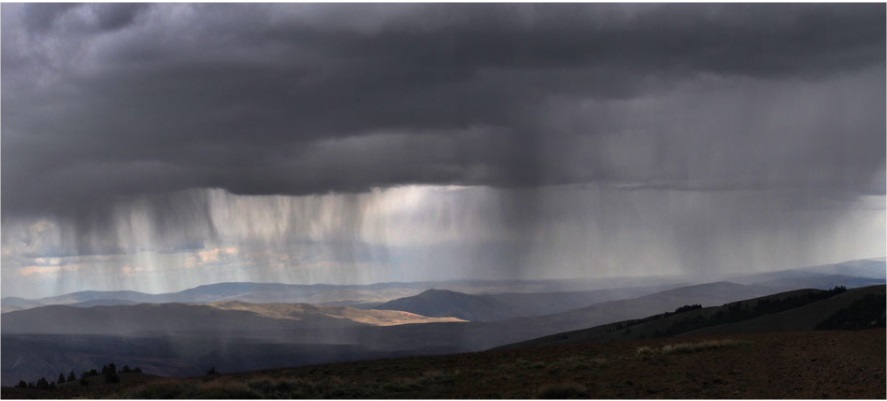
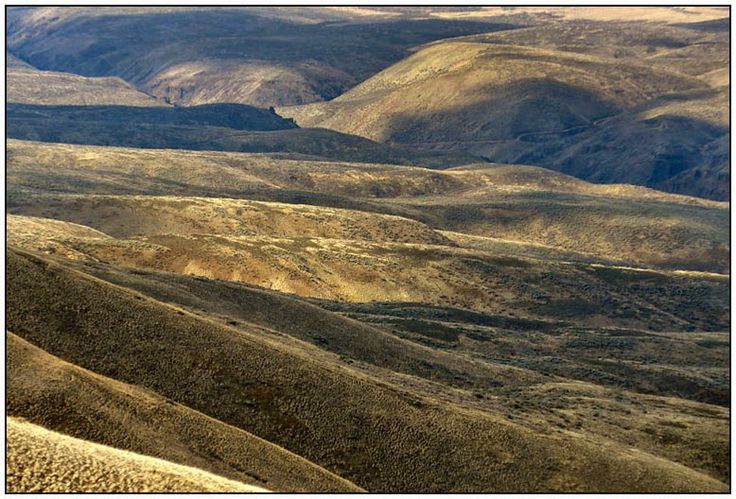
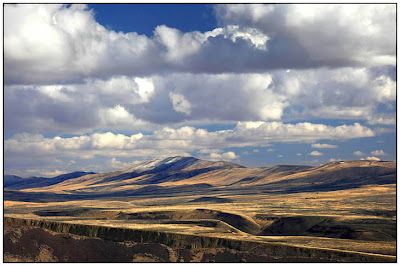
Trying to convey the experience of living in a desert to those who’ve known only moister climates often feels futile. It’s simply mindboggling, especially as you move away from the insulation of modern conveniences like air conditioning, automobiles, or even sunglasses. In its raw nature, this terrain is often life-threatening.
I’ve regretted not having a camera to record what I observed there, but one colleague from those years – another Ohio flatlander who relocated to the wet side of the Cascades after our journalist team was forced to scatter – has captured its essence better than anyone else I’ve come across.
Here are some of Kurt E. Smith’s images over the years of the land I call Katonkah Country. He has much more on his Seeing Small blog, which comes highly recommended. What he captures is sometimes enormous.
~*~
For my related poetry collections and novels, click here.
To grow a leafy tree requires more than thirty inches of rainfall or its equivalent each year. If you drive west across the United States, you can cross an imaginary line that passes through the Dakotas, Nebraska, Kansas, Oklahoma, and Texas, and beyond it deciduous, or leafy, trees are quite rare. Soon, so are conifers, the evergreens. Irrigation becomes a fact of life if you want to raise food or flowers or even a lawn.
The Great Plains eventually pass into desert – and you might be surprised to discover that most of Oregon, Idaho, and Washington state is actually desert. The rainy belt is little more than a thin band along the Pacific-facing side of the Cascade and Olympic mountains.
Quite simply, it’s a different world from the one most Americans know.
~*~
As for the Great Plains, let me recommend Kathleen Norris’ Dakota. It’s a unique and marvelous book.
One of my favorite passages in all of poetry comes from Howard McCord’s “Longjaunes His Periplus”:
A chest of maps is a greater legacy than a case of whisky.
Followed by:
My father left me both.
Like my younger one, I’ve always been fond of maps. My bedroom wall was lined with tacked-up National Geographic charts, which tended to sag in our humid summers.
I was reminded of this the other morning when I was looking for a Boston street map, just in case I lost my bearings. Yes, I could have gone to the maps at Yahoo or Google. Even looked for the satellite views and all of the scary ability to snoop that goes with it. I couldn’t, though, use a GPS, neo-Luddite that I partly remain.
So I opened the drawer and here’s what I found (I won’t give you the years, though many are from the early ’80s):
Connecticut.
Pennsylvania (Exxon).
Seacoast (New Hampshire).
Idaho.
New Jersey.
Sierra Club USA.
Pennsylvania (official).
AAA USA.
Long Island/New York City.
Saugus Iron Works.
Maine.
Historic Bath.
Delaware.
Audubon Flyways.
Walking Tours of Bath.
Strafford County.
Dover (0ne of a half-dozen varieties).
Maudslay State Park in Newburyport, Massachusetts. Has a great stand of mountain laurel overlooking the Merrimack River.
University of New Hampshire campus.
Museums of Boston.
Gonic Trails.
Doctors Without Borders global view (two copies).
Portsmouth, New Hampshire.
Paul Revere House in Boston.
Manchester, New Hampshire.
Vermont.
New Hampshire (one of several varieties).
National Geographic the Making of New England and another of Canada.
North Cascades.
Mount Rainier, including trails.
New York City subways (two versions, three maps).
Brunswick and neighboring Maine.
National Geographic Endangered Earth.
Virginia.
White Mountains trail guides.
Mount Agamenticus.
Lamprey River.
Pawtuckaway State Park.
Trumbull County, Ohio.
Baltimore (two versions).
Britain and Ireland.
Mohegan Island.
Historic New England properties.
Maryland.
Lake Champlain Ferries.
Maine State Ferry Service.
Ipswich, Massachusetts.
Portsmouth-Exeter-Hampton etc.
York (Maine) Water District trails.
Minute Man National Monument, a series of sites in Massachusetts …
They even take me places I haven’t yet been, as well as back to some old favorites. All without leaving the house.
And that’s before we get to the drawer of topographical maps, especially those from my Cascades years. Or the books and atlases. Or the genealogical maps, Guilford County, especially in those files.
Oh, the memories! And you want to tell me they’re obsolete? Fat chance!
I read – and write – not to escape the world but rather to more fully engage it. So literature for me hardly falls into the Entertainment category, even when it’s entertaining.
Likewise, my goal in the written word is to perceive some basic or essential connection with new clarity, understanding, and compassion.
This makes a world of difference, page by page. Maybe I’m just looking for holy scripture, even of a secular sort. Or at least the Holy One along with the mundane.
Often, my approach to writing and other fine arts resembles the essence of a dream – one foot in the present, the other in the past. Or, in another way, one foot in concrete reality, the other in fantasy of some sort, such as surrealism, as a way to engage more than I’d otherwise apprehend.
It’s now been 12 months since my first ebook appeared at Smashwords – a list that now presents six of my novels and a full-length poetry collection. That’s in addition to my poetry chapbooks appearing at other presses.
First, I want to thank all of you for your support and encouragement. What you’re seeing is the fruition of a lifetime of writing that’s now, finally, coming to light. I cannot imagine trying to write seriously without a desire to share it with others – especially when I hear you tell of ways it speaks of your own experiences or sparks related memories.
I also want to acknowledge the fact that these are not works I could write today, not for a decline in ability but rather because each of us evolves and changes over time. My energies, inspirations, perspectives, and focus are different now than they were 10, 20, 30, or 40 years ago. I look at these works and find much that is wonderfully baroque or surreal or passionately intense and realize I’m in a much different sensibility today – yes, I’m happy to have these souvenirs from the journey, these touchstones and treasures, but they come from my younger years and their visions and even the different companions who shared my life back then, in contrast to the household I cherish now. More than ever, I’m ever-so-grateful I set aside the time over the years to draft and revise then, rather than waiting for my retirement years as so many wannabe writers do.
Let me just say there’s much more coming in the next 12 months.


 Jnana's Red Barn