Come explore the Olympic Peninsula

When Jaya and Joshua set of for the Pacific Northwest in my novel Nearly Canaan, what they expect to find is something very much like the Olympic Peninsula rather than the fertile desert where they land.

Here’s some of the alternative.

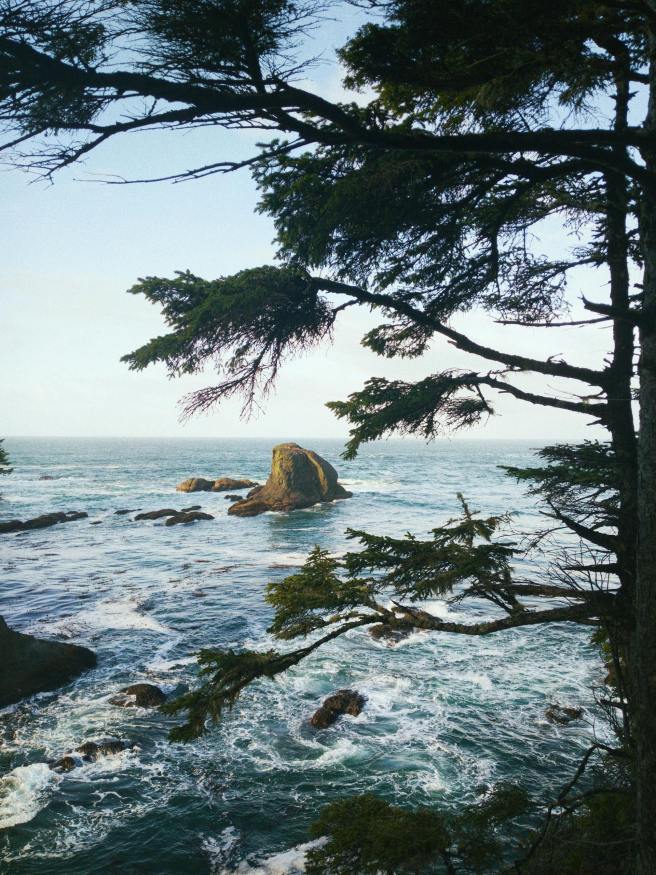
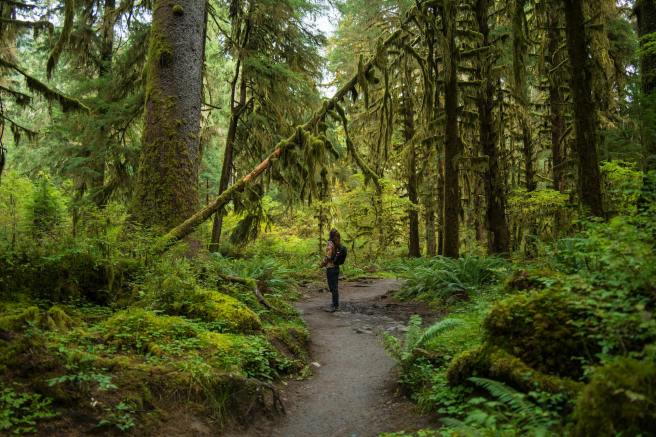
  1. Set on the far western end of Washington state, the Olympic Peninsula is an anvil of land comprising nearly 3,600 square miles – more than Rhode Island and Delaware combined. It has rare temperate rainforests, glacier-clad mountains, hot springs, timber-tangled shorelines, tall seastacks in the surf, hot springs, waterfalls, large lakes, and eight Native tribes and their reservations.
  2. Olympic National Park at the heart of the peninsula covers nearly a million acres and includes the state’s second-largest mountain range, crowned by 7,980-feet-tall Mount Olympus. Glacier-climbing skills are essential for ascent and descent. The park is the system’s sixth most popular, attracting more than 30 million visitors a year.
  3. The restoration of elk was so essential to the park’s mission that it was nearly named Elk National Park.
  4. The town of Forks gets 119.7 inches of precipitation a year – making it the wettest municipality in the continental U.S. And the nearby Hoh rainforest receives 140 to 170 inches a year.
  5. The peninsula abuts the Pacific Ocean on the west, the Strait of San Juan de Fuco on the north, and Puget Sound on the east. Its rugged interior shunts auto traffic toward the coastlines.
  6. The 300-mile, two-lane Route 101 loop around the peninsula is considered a three-day drive. More, for those who investigate scenic offshoots. There are no alternatives for traversing the peninsula.
  7. Hot springs access is available to the public at Sol Duc. Other sites are local secrets.
  8. Following the biggest dam removal in U.S. history, completed in 2014, the Elwah River once again runs wild for fish migration.
  9. There are more than 60 named glaciers.
  10. While the Olympics Range is seen prominently from Seattle on a clear day, its tallest point, Mount Olympus, is visible from no city.

~*~

Hope that serves as an introduction. We haven’t even touched on Port Townsend.


Hops, as in beer

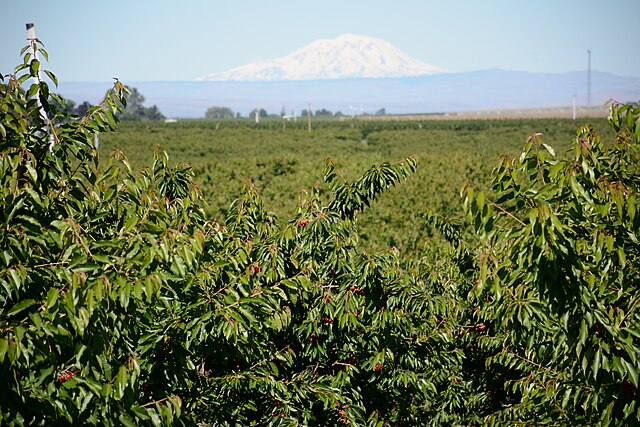
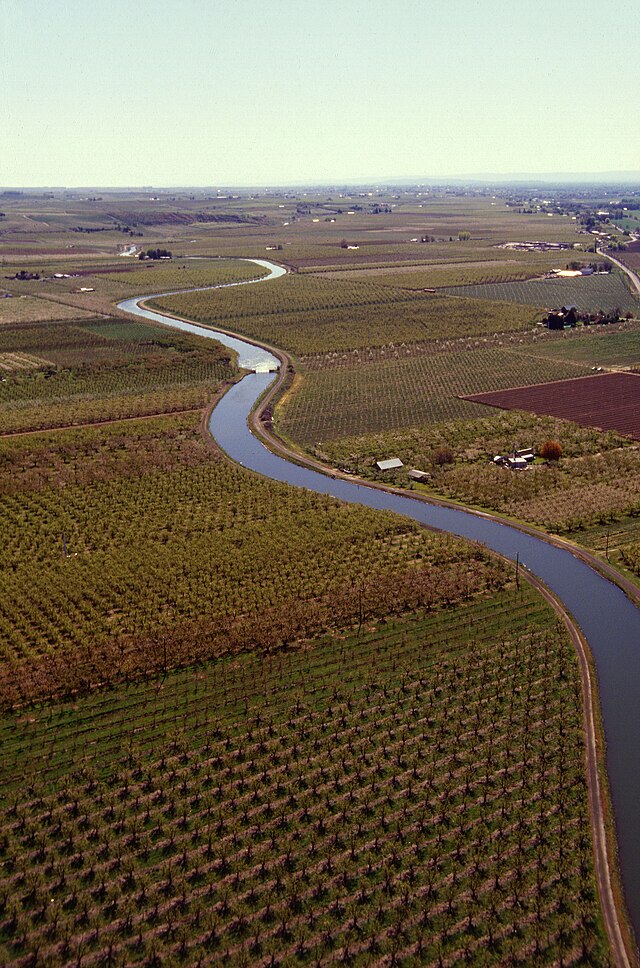
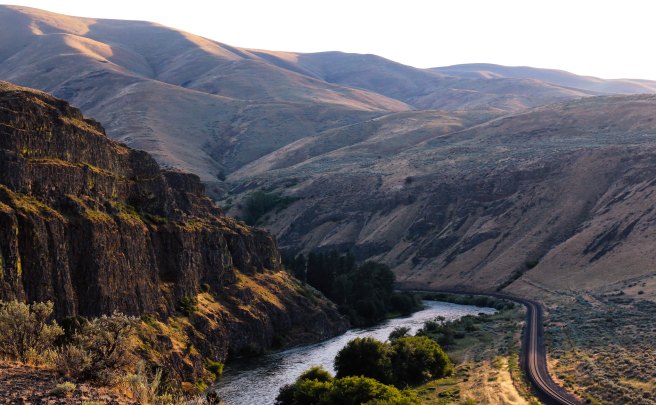
In my novel Nearly Canaan, Joshua and Jaya settle into a place unlike anything they would have imagined. It’s desert, for one thing, where nearly everything has to be irrigated, for another. Quite simply, it’s a lot like Yakima, in the middle of Washington state, where some of the world’s best hops are grown.

Did you know …

  1. The flowers (also called cones) are full of perishable resins that are dried and processed for use as a bittering, stabilizing, and flavoring agent in beer.
  2. Hops have a complex chemical composition leading to two distinct types. Bittering hops have higher concentrations of alpha acids and counter the sweetness of the malt base of a beer. Aroma hops, added toward the end of brewing, prevent the evaporation of essential oils, thus retaining and enhancing the taste.
  3. The choice of hops and techniques of hopping can give a particular recipe its unique taste, as today’s microbrewers are emphasizing. Quite simply, some hop varieties are much better than others in creating a distinctive brew. Think of the way wine lovers describe a bottle, and then apply it here.
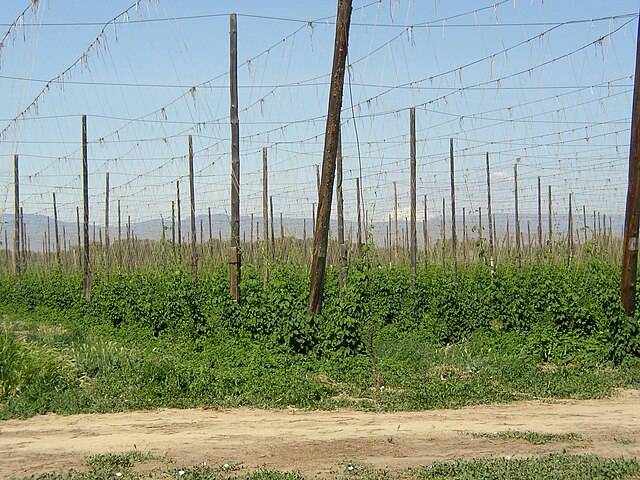
  4. The vines (or technically, bines – vines without tendrils) are typically grown on strings or cables to overhead wires, maybe 15 to 20 feet in the air, and cut down for harvest. They’re loaded onto wagons and taken to the hop house for processing and packing.
  5. They grow best in a soil type that is also highly suited for potatoes.
  6. The United States is the world’s leading grower, followed by Germany, together accounting for more than four-fifths of the global hop supply. Despite its fame in the field, the Czech Republic is a distant third.
  7. Three distinct districts in the Yakima Valley, each uniquely different in their output, together produce more than 77 percent of the nation’s hop crop. Most of the farms are third- and fourth-generation family operations.
  8. Pollinated seeds are deemed undesirable for beer. Only female plants are grown in commercial fields. So much for sex discrimination.
  9. Harvesting is a labor-intensive effort, dependent on migrant workers.
  10. They’re in the hemp family, though I don’t know of anyone smoking them.

~*~

Cheers!

Some Native names regarding the Cascades mountains

Many of the Pacific Northwest’s most prominent features are known by the names of Europeans or their descendants, rather than their earlier Native designations. Since the tribes on one side of the Cascade mountains had a different language stock than those of the other side, the names could be quite different.

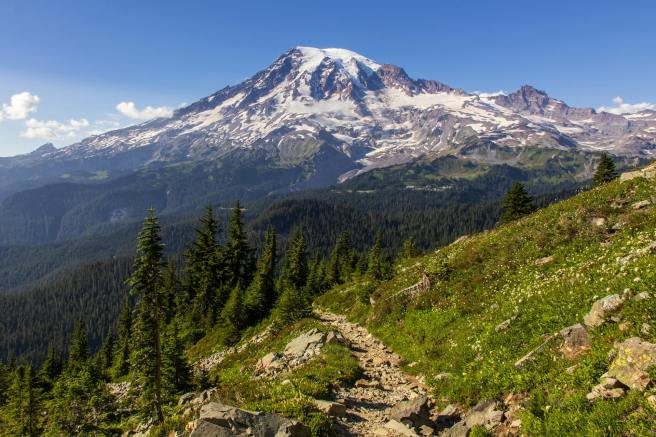
  1. Mount Washington: Tahoma or Tacoma
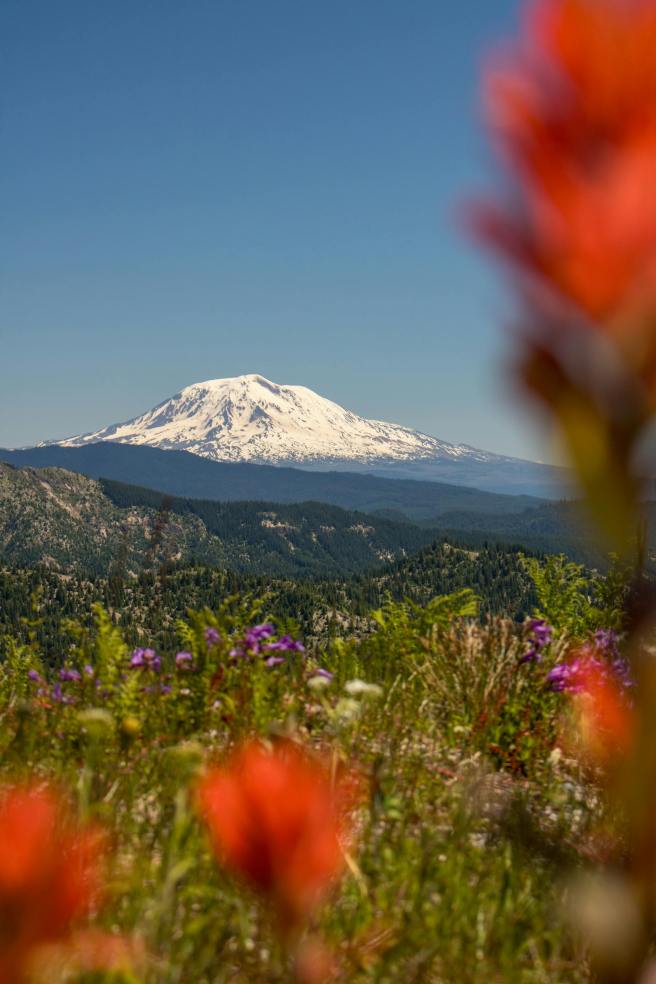
  2. Mount Adams: Patoh or Klickitat
  3. Mount Hood: Wy’east
  4. Mount St. Helens: Loowit or Louwala Clough
  5. Mount Baker: Kulshan
  6. Mount Jefferson: Seekseekqua or Kuassal Teminbi
  7. Mount Shasta: Ako-Yet or Yeh te che na or Et ti ja na
  8. The Cascade Range: Yamakiasham Yaina
  9. Columbia River: Wimhal or Wimal, Nch’I-Wana or Nichi-Wanna, Swah’netk’qhu
  10. Bridge of the Gods: Tanmanhawis

~*~

There’s some rich mythology involving these names and their personalized characteristics. For instance, the brothers Patoh/Klickitat and Wy’east, after traveling down the Columbia River from the far north to resettle, entered into some heated rivalry for the fair maiden Loowit/Louwala Clough. Their volcanic eruptions of jealousy and earth quaking even resulted in the collapse of the Bridge of the Gods across the river, producing a series of rapids.

There’s plenty more, if you chose to investigate. Any to share from where you live?  


What you should know about Dungeness crab

In my novel Nearly Canaan, Joshua and Jaya settle into a place unlike anything they would have imagined. It’s desert, for one thing, where nearly everything has to be irrigated, for another. Quite simply, it’s a lot like Yakima, in the middle of Washington state. But it’s also close to fresh Dungeness crab, a shellfish with a heavenly taste all its own.

What you should know.

  1. It draws its name from Dungeness, Washington, on the Olympic Peninsula.
  2. It’s not King Crab, mind you, an Alaska specialty, but it is threatened by ocean acidification.
  3. It has five pairs of legs. (I haven’t counted the ones on a lobster.)
  4. It is found largely between Alaska’s Aleutian Islands and Santa Barbara, California. But don’t overlook that Washington state connection, right in the middle.
  5. About one-quarter of the crab’s weight is meat. One crab usually satisfies one person, though sometimes it will be shared by two.
  6. It has a delicate flavor and a slightly sweet taste. Don’t ask me to compare it to chicken or anything else. Not even lobster. It’s as different as cod is from salmon.
  7. It’s the State Crustacean of Oregon. What else do they have?
  8. If you go out at night trying to find one with a strong light focused in the water, you can likely rake up one right next to a decaying starfish.
  9. You really can’t get it here, wherever that is, outside of the Pacific Northwest.
  10. If you haven’t guessed, I really do miss them. They don’t travel well.

Some things about NW grunge

Although I’ve concentrated a lot on the hippie end of the counterculture revolution, I’m not that conversant in many of its more recent manifestations.

Considering the events in my novel Nearly Canaan, when Joshua and Jaya settle into a place unlike anything they would have imagined, out in the desert on the other side of the mountains from Seattle, I see I need to pay attention, especially since grunge entered the scene just a little later.

Here are ten points.

  1. Sometimes called the Seattle Sound, grunge was a blend of punk and heavy metal revolving around the local independent record label Sub Pop and featuring a distorted electric guitar sound. (I’ll let others define both punk and metal.) And then it took off into the ’90s and mainstream.
  2. The lyrics are typically angst filled of a socially alienated sort. Apparently, we could do a Tendrils right there.
  3. Kurt Cobain’s suicide in 1994 likely played into its demise.
  4. Its mundane, everyday style of clothing sharply contrasted to punk’s mohawks, leather, and chains. It also featured Doc Martens boots, wool flannel plaid shirts, and thermal underwear befitting the Pacific Northwest.
  5. It was seen as anti-consumerist. The less you spent, the cooler you were. Cobain’s widow Courtney Love was the embodiment of the thrift-shop philosophy.
  6. Males, especially, had unkempt hair.
  7. Espresso, beer, and heroin have been cited as its three main drugs.
  8. It led to a distinctive graphic design based on “lo fi” or low fidelity imagery, with intentionally murky lettering, photography, and collage enhanced by desktop publishing and digital image processing on Macintosh computers.
  9. The appearance of ‘zines, often of a literary sort, blossomed as an off-shoot of this. I’ve appeared as a poet in many of them, mostly photocopied and stapled.
  10. Some see the movement as introducing non-binary sexual awareness to the wider culture.

~*~

Can’t help thinking this sounds like hippie on a downer trip to me.

What’s your take on grunge?


Distances from Seattle to … it really is a world apart

In my novel Nearly Canaan, Joshua and Jaya settle into a place unlike anything they would have imagined. It’s desert, for one thing, where nearly everything has to be irrigated, for another. Quite simply, it’s a lot like Yakima, in the middle of Washington state. The closest big city was Seattle, three or four hours away. And that, too, was far from much else.

Just consider these in miles, apart from flying time, even when you could fly direct.

  1. Anchorage: 1,448 miles. Alaska has a spiritual affinity in the Pacific Northwest, like it’s just up the road, more or less. Plus, it had good summer jobs on the crab boats, forget the riskiness.  
  2. Honolulu: 2,680. Naturally, driving isn’t an option. As a vacation destination, though, this was a highly popular option, especially considering the sunshine.
  3. San Francisco: 679. Like this was the next town south, and like a grown-up version of Seattle, a few decades back. It’s still a long way to drive.
  4. Las Vegas: 871. Seemed close, especially in winter. Say a weekend getaway. Again, factor in the sunshine, if you ever left your hotel/casino.
  5. Denver: 1,024. While many think of the Mile High City as Western, we thought of it as Out East. Our awareness largely skipped right over it. See next item.
  6. Chicago: 1,737. Alaska was closer, and more of a kindred nature.
  7. New York: 2,408. Largely didn’t matter in our eyes.
  8. Washington: 2,306. Ditto.
  9. Tokyo: 4,792. Psychologically, it felt as close as the East Coast of the U.S. and about as influential. We shared an ocean, after all.
  10. Atlanta: 2,182. And you still had to get to Florida, which didn’t matter since we had Hawaii when you added it all up. Blah! 

Ten things ‘What’s Left’ and ‘Nearly Canaan’ have in common

Considering that they were drafted 30 years apart, I thought these two novels would have nothing in common.

Boy, was I wrong.

Here are ten overlaps.

~*~

  1. American Midwest. Southern Indiana for Cassia. The Great Plains or somewhere similar for Jaya and Joshua.
  2. Asian spiritual practice. Tibetan Buddhism for Cassia’s father. Hindu-influenced yoga for Jaya.
  3. Relationship and family focus. Five generations for Cassia, including her close cousins known as the Squad. Three same-age couples for Jaya, plus her in-laws and landlords out west.
  4. Livelihood. Family-owned restaurant and real estate for Cassia’s clan. Nonprofit public services for Jaya.
  5. Women in business. Cassia’s whole family, from her great-grandmothers down to herself. Jaya in nonprofits management.
  6. Career uncertainty. Cassia’s cousins have difficult decisions to make about whether to stay with the family business or find other livelihoods. Three of the spouses in Nearly Canaan struggle in their search for suitable employment, while the other three are caught up in their professions.
  7. Far West. As a young adult, Cassia works with clients across the western half of America, while Jaya and Joshua eventually relocate to the Pacific Northwest.
  8. Death and loss. They’re central to both books.
  9. Food. Cassia has all of that Greek heritage. Jaya and Joshua move to a land of orchards and fresh seafood.
  10. Restaurants. Cassia’s family owns a landmark café. Jaya is introduced to Joshua where he’s a flippant waiter.

~*~

Any of this appeal to you?

WITH THE LOCO IN LOCOMOTION

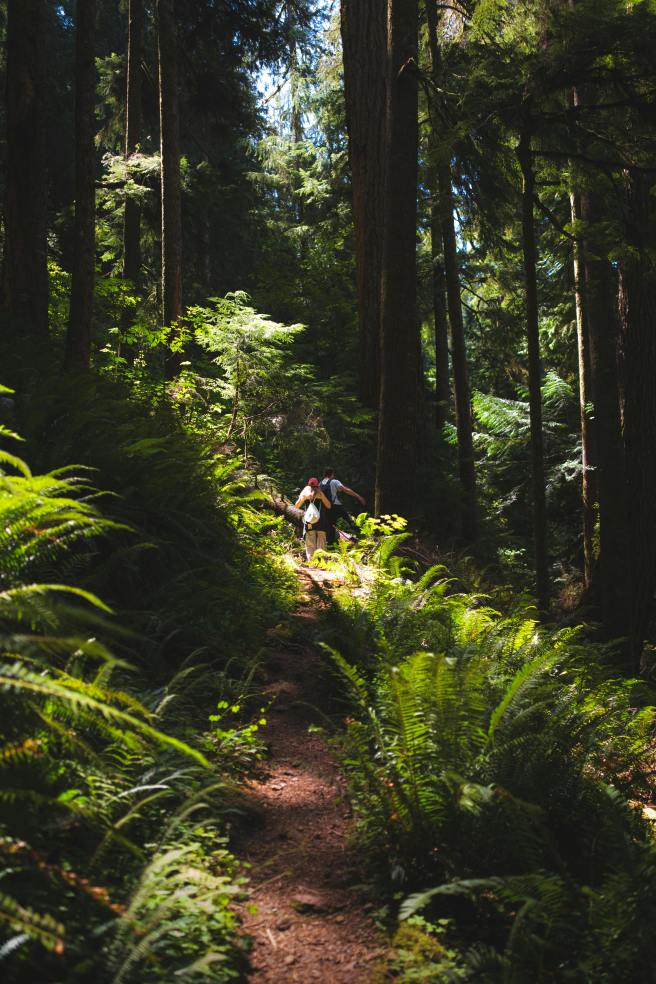
My awareness of the importance of forested trails of my own sanity and balance has evolved slowly. I see two parts at work here.

First is the aspect of locomotion. I could begin with the fact I’ve never been an athlete. As a youth, I delighted in speed — as in running or riding a bicycle — or in swimming, with its parallel of flying suspended in space. But I’ve never enjoyed the repetition of exercise for its own sake, gym class was a bore, and team sports have largely eluded me. Since I existed largely within mental activities, such as science or the arts, the idea of doing something that involved a mindfulness to my own body in motion did not register with me, at least until I took up yoga after college. I could add to this a recognition that I’ve also been filled with nervous energy and general restlessness. Sitting still — and focused — is something I’ve had to learn in the course of practicing meditation and attending Quaker meeting for worship.

Second is an encounter with natural history. Somehow, at an early age, I was introduced to geology, birding, tree identification and the like. I’ve also been interested in maps and map-making. Human history, too, which often turns up as discards in places returning to the wild.

What I’ve come to appreciate, though, is largely an esthetic response in walking through places of repose. If forest trails are the symbolic ideal here, I must admit they are not the only examples. Walking miles along the Atlantic on the outer Cape Cod shoreline, for example, serves well (although walking on sand always presents an effort) or trekking above treeline or through wild meadow can be heavenly. Even a stroll through a wooded cemetery or a city park can be recommended. But I speak of forest because of its timeless nature, in both senses of the phrase; this is what this land would remain at climax, forever. Everything is in balance or harmony. There are, of course, seasonal changes, but these are within a rhythm or cycle of returning, much like the movements of a symphony played over and over. Somehow, this begins to merge with the rhythm of walking, which itself begins to pace my own thoughts and emotions. Nothing too rushed, too overwhelming: everything, one step at a time. Uphill or down, all within reach. Walking along a city street or even a country highway can induce some of the step-by-step rhythm, but the balance is off: traffic rushes past, always as a threat, especially at intersections; there’s too much commotion or stimulation; my soul’s not at rest. Look around and notice all the trash and discard, all the waste as a social illness. The wilderness, in contrast, is continually healing. “Come to the woods for here is rest,” John Muir counseled. “There is no repose like that of the deep green woods.”

For more insights from the American Far West and Kokopelli, click here.

PLACES OF RETURN

Years later, a friend relates an incident of telling his wife his intention of spending the day in a favorite place in the mountains, countered by her question of what makes him return there. Even though he’s a photographer, he replies by acknowledging that many of his writer friends have answered the question simply, saying it’s the surprises that draw them back.

Somehow, as one of his writer friends, I find the word “surprise” in this context jarring. For surprises, one would be better served by trips to new locations, rather than returning to an old favorite. Novelty, rather than familiarity. Upheaval or intoxication, rather than purity or sobriety. Even so, as I consider my own places of return, her question becomes increasingly kaleidoscopic.

First, there’s the very demand of naming a favorite place. In this context, he invokes wilderness, where return is a kind of pilgrimage. Here, return may be once or twice a year, if that frequent. I could counter that with an evening stroll, as I used to do along the canal bank at the back of the desert orchard, or sitting at the café downtown in the small New England city where I now dwell — activities that could take place daily. We could add to that an opera house or concert hall, museum gallery, or even places of dedicated labor: a studio, cabinetry shop, garden, kitchen, or laboratory. Even, though rarely for me, shopping destinations: a boutique or farmers’ market, perchance. A fair or festival.

So the question soon turns to a matter of one’s intention. What is one attempting to escape or encounter? What is one leaving behind and what does one face instead?

Continue reading “PLACES OF RETURN”