THIS OLD HOUSE DISILLUSIONMENT

One of the downsides of owning an old house is an awareness of just how expensive any repair is. (And it’s always more than you’ve planned.) Add to that just how many repairs are needed. (Remember, most of them are for things you don’t even see.) And that’s before we get to any upgrades.

The awareness has also afflicted many of my dream-house observations, especially when I’m nearing the ocean. Where I would have admired a stone retaining wall under construction or a long pier from a private boathouse or deck to the mooring, what I now see is dollar signs. Often, more than I would have made in a year. It’s crushing.

It can make you wonder what people do for that kind of income. Or what kind of wealth they were born into. Or how long it will last.

One thing I know is that fishermen used to live in some of these coastal communities. But not anymore. Not by a long shot. Some of them live closer to me.

 

A TURN IN THE GARDEN

As the hot, humid weather kicks in, we shift gears. Our weeding turns lazy, and our plants will just have to fight it out for survival. If we’re diligent, we’ll water, though the utility bill frightens.

Maybe it’s all part of the relationship.

~*~
Of Devis and Other Spirits

A garden without a woman is lamentable

unfolding from Eve
and the Singer of the Song of Songs

 all this color and excitement

my Woman wears no cosmetics
she’s organic
but oh so much better for me
than health food

my Lady leads me in unanticipated ways
she’s so unlike the ones before her
she works with wise fingers without hesitating
to get dirt under her nails

still, as the younger one said,
“you’re a mean mommy:
you’re as mean as the thorns in a buckle bush”

In constructing her garden

sod, roots woven tight, close together
the way I thought we would

overlooking the fact we both flower
quite conspicuously

our stems woody or thorny
even through winter

 poem copyright 2014 by Jnana Hodson

BUSINESS AT HAND: IN THE MINUTES

Much in our Quaker practice seems quaint, none more than our practice of minuting. It’s not the same as taking minutes of a company board meeting or city council session, but has a dimension all its own. Originating in the recording of persecutions in the initial decades of the Quaker movement, and in the subsequent petitions for redress and justice, our earliest minutes tell of “sufferings for Truth’s sake” and soon lead into the efforts of determining just what it means to live as a people of conscience.

Sometimes today we find the practice burdensome or unnecessary. Friends who follow the Old Ways in this matter will draft and read aloud the record on that part of the agenda, moving ahead only after that minute has been revised to satisfaction and approved. It’s slow and tedious, but it does focus the deliberations.

Here, the concept of clerking – especially for the recording clerk – has a meaning related to “clerk of court,” where the official records decisions from the bench above. In our case, Friends traditionally feel the high judge as Christ, and the meeting gathered as witnesses who would voice the sense of the resolution. I suppose we might see Friends attending our business sessions as a jury, then. If it were only as simple as guilty or not guilty!

Revisiting historic minutes, as I’ve done as a genealogist in the archives at Swarthmore and Guilford colleges, opens an appreciation for the practice as an art form. Perhaps no other records in America before the 1850 Census offer as much genealogical information as ours do. Even so, one discovers how faulty even the best efforts become. A individual simply fades from sight, a family moving away is recorded simply as “Robert and Sarah and children,” rather than naming them individually, as another clerk might have done, or the records might be lost to a house fire, as Centre, North Carolina’s, were, or simply lost altogether, as the first half-century of Dover’s were or West Epping’s were in our own lifetime. You might see an erasure, from first cousin to second, or a misspelling – and suddenly, you find yourself sitting with that clerk, somewhere in our history. This becomes something other than quaint, but personal engagement.

SKINK, I HOPE

A small lizard, part of a family of reptiles informally called skinks, rests on the roadway. At least I assume it's a skink. I'll leave the final identification to others. It's under two or three inches in length.
A small lizard, part of a family of reptiles informally called skinks, rests on the roadway. At least I assume it’s a skink. I’ll leave the final identification to others. It’s under two or three inches in length.
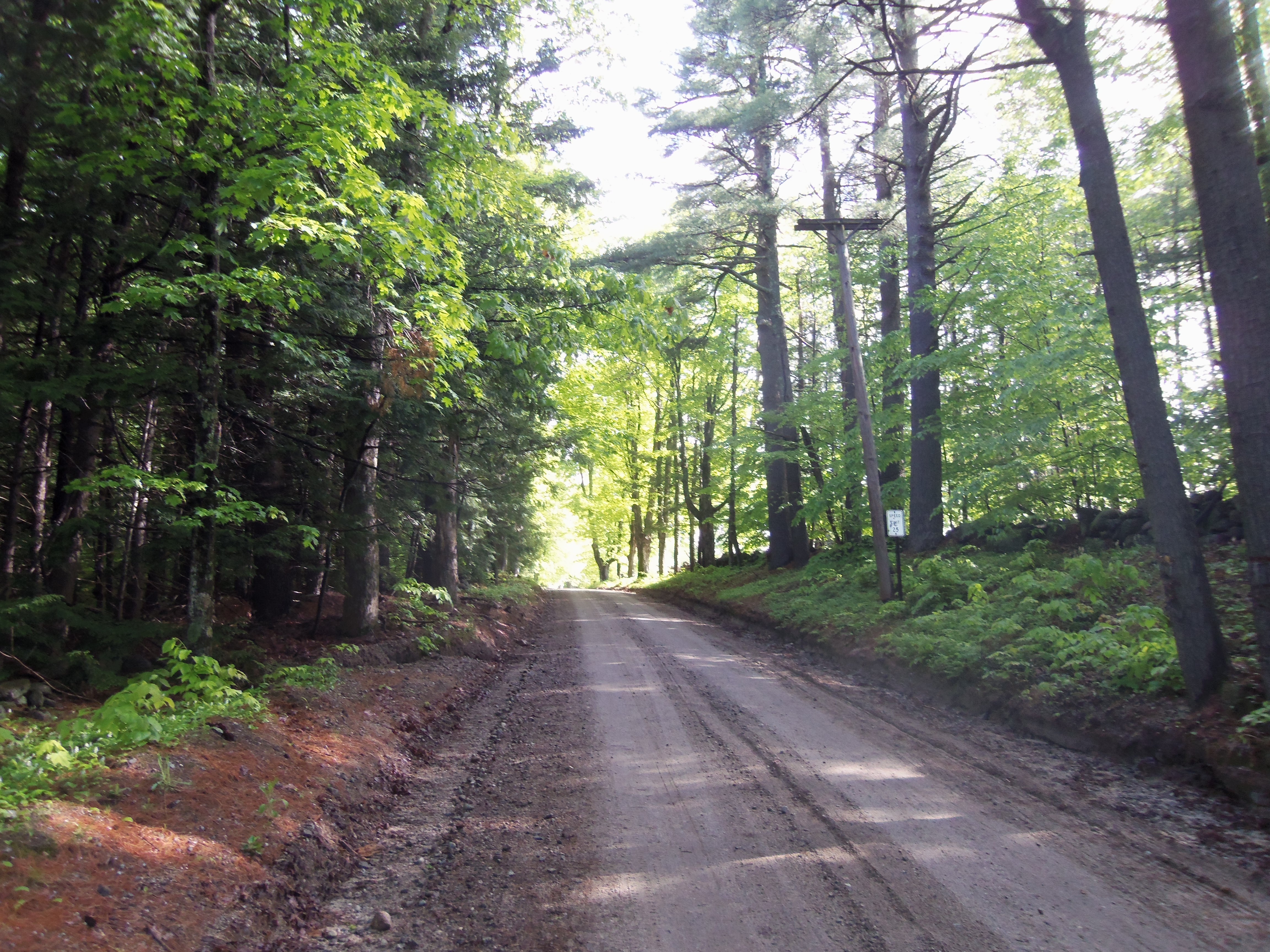
I encountered the critter at the top of this incline while walking in Henniker, New Hampshire.


IVAR’S PAINT QUIP

I wish he hadn’t said it. My former landlord in the Yakima Valley, visiting us here in New England, remarked on how many of the houses he saw that were in need of new paint. That was before he saw ours, too.

Now, in this seemingly picturesque location, everywhere I turn, I see houses with peeling paint. Or worse.

I wish he hadn’t said it.

At least he said nothing about roofing.

FRESH EGGS

Quaker 5 156

Buying “free-pastured” eggs from a coworker produced one of those Eureka! observations in our kitchen. Just look and you see how different organic or natural food can be. The yolks were bigger and brighter than anything we got at the supermarket. Tastier, too, which isn’t always the case with the back-to-nature examples.

The shells, I should add, came in lovely pastels, depending on the breed. The light green was my favorite.

And then he moved on, and so did I. Or maybe winter came first, with the annual drop-off in hen productivity.

Still, we see a difference in the free-range eggs we’re buying these days, rather than the supermarket’s own brand.

ABOUT THOSE ROMANTIC MOONLIGHT WALKS ON THE BEACH

If we can believe their proclamations, two things single women in this part of the country typically seek with a partner are romantic candlelight dinners and long strolls on a moonlit beach.

The dinners, we can suppose, are either at elegant restaurants or in his dwelling (where he displays his gourmet cooking skills to her fullest appreciation), either way with suitable wine in sparkling stemware. Let’s just hope he remembers to ask her beforehand if she enjoys his signature dishes. (Mea culpa, on my end.) I don’t think hamburger and fries, by the way, go with her candlelit setting.

From observation, let me add that the restaurants often wind up as intimidating experiences for the would-be couple. When my wife and I go out, we expect to laugh, to banter with the wait staff, to be entertained by the possibilities of food and ambiance. When we were reviewing dining spots, even the disasters turned into fun-filled adventures – OK, if we’d been paying full fare, we would have been justifiably miffed. As columnists, though, we got our revenge.

The nighttime beach, though, is another matter. Having had opportunities to spend time approaching midnight on local beaches, I can tell you few couples are found strolling there, much less romantically. Except for a few nights in prime summer – the days hovering around the century mark, the night’s nippy and windy. The moon, for its part, is in its fullest stages only a few nights each summer, and many of those are cloudy. Without a bright moon, it’s impossibly dark near the water – even spooky, with or without sea fog rolling in.

You can come to love the ocean that way, but it’s a stark environment.

For romance, though, I think you need a driftwood fire. Plus the right wine and a corkscrew.

Wine? It’s the one thing both events seem to have in common.

NO MATTER THE PRICE

Inscribed on gravestone of John P. Hale (1806-73) in Dover:

He who lies beneath surrendered office, place, and power rather than bow down and worship slavery …

He was the first United States senator to take a stand against slavery.

Earlier, while serving in the federal House of Representatives, he refused to follow the New Hampshire legislature’s directive to support the admission of Texas as a slaveholding state. In the following election, barred by his party from running under its banner, he ran as an independent; none of the three candidates won a majority and the district went unrepresented.

Kodak26 071

Kodak26 068