THERE WENT THE WEEK

A call to my cell phone the other Monday threw me for a loop. I was on the way back from my daily swim when I got the news that the first round of three cords of stove wood was on the way.

What it meant was that one end of our driveway would soon be buried in cut and split wood and my plans for the rest of the week would drastically change. Except for one day of thunderstorms and rain, I’d be stacking – always a lesson in the process of writing and revising, actually, including its exercises in structure and observation. Do it right, and it’s solid for seasoning into several winters. Sloppy, and it all falls apart.

Among my other thoughts was the question of how many more years I might be doing this. The wood felt heavier than I remembered. Even with my new routine of daily exercise, achy muscles and joints started appearing. At least I had the perspective of knowing how long you just have to keep plugging away before you notice any progress – and then, somewhere in a sensation of futility, you might experience that flash of realizing you’re making progress. The second half usually seems to go faster than the first half, too, unless you get overly anxious.

Now I sit back and admire that wall of stacked fuel – the one I’ll take down, piece by piece, all too quickly some winter.

REACHING FOR A HEADLINE

Being employed as a newspaper editor meant I had to be scrupulous about avoiding the slightest appearance of partisanship in public. Too many people assume bias on any pretext and extend that to an assumption you cannot hear their position fairly. In reality, these are the ones who want you to be actively in their group rather than neutral in reporting both sides.

Admittedly, I’ve long felt a tension between avoiding any appearance of having a position and upholding moral values. Can you be objective without any sense of what’s true or how it all fits together?

For many of us, there are unwritten rules about what’s acceptable and what’s not, and the code I followed came largely from the Kansas City Times, where your community participation is limited largely to your church. I wonder how it would have handled my joining a denomination known for its social justice witness – one where I could gently encourage others in the congregation to activism, even if I could not act with them.

Early on, as a cub reporter, I learned you cannot wear a candidate’s button or apply the bumper sticker, even if you can distance yourself in critical thinking. Some fine journalists refrain from even voting in elections, which in turn raises some questions about democratic responsibility in the aftermath.

Retirement, though, is allowing me to slowly move away from that, and this is the first time in my quarter-century-plus in the Granite State I’m attending presidential primary events – on both sides of the political divide, at that.

It’s been eye-opening.

My wife, on the other hand, is an old-pro at these things and often explains nuances to me, the one with the degree in political science. (OK, my focus was on political theory and policy analysis rather than the nitty-gritty of campaigning, elections, and legislative maneuvers.) And one daughter, seasoned in the behind-the-scenes work of running a candidate for office, has convinced me of the importance of organization, planning, and staff discipline.

It’s still early in the fray – a wonderful opportunity to observe, actually. And it’s as much fun to watch the crowd, large or small, as it is the candidate or staff. They cover the range.

One thing I notice, though, is the working press and the video crews. CNN, C-SPAN, and, I’m guessing, MSNBC News have a trio of cameras side by side staffed by college-fresh crews just about everywhere. Just in case? Who knows. The metro reporters, in their suits and loose ties (if that), are looking for the telling detail, likely for a wrap-up later, while the frumpier local papers just want a story for the next edition, daily or weekly.

And that’s had me wondering just how I would cover the typical event. Most of these appearances, after all, are pretty standard repetition of policy positions easily available online. There’s nothing new there – and thus no news.

Well, the Q-and-A portion in what many bill as a town meeting can be interesting, if the questioners are actually from the public and not just campaign plants.

We got a flash of that yesterday at Dover City Hall when Hillary Clinton was heckled by a juvenile but orchestrated ban-fracking group. From everything we saw, she responded admirably, calmly, professionally – and got a loud, standing ovation in response. Not that you’d know that part from the headlines or news stories.

The strident outburst seized the coverage and nearly hijacked the event. But it was also allowed to remain, standing silently, with its banner, in one corner of the hall. Did it advance its cause?

I doubt it. We come to these appearances to hear positions, not to dictate their answers. We want honesty, not pandering.

As we heard Ohio Governor John Kasich say earlier in the week, in front of a much smaller gathering, New Hampshire voters serve as an X-ray machine, looking at both a candidate’s outer and inner qualities. He’s right. It’s not a responsibility we take easily. Just consider standing more than an hour in a long line snaking through the steamy summer confines of a city hall corridor before standing another hour-and-a-half through the event itself, as the audience did for Hillary.

I’d urge the protesters, by the way, to take their banner and voices to stand outside the Republican hopefuls’ events and see where that goes.

In the meantime, I’m reminded of the gap between what is often experienced in a situation like this and what we read of it in the news story. What I experienced and what I read aren’t the same. And, no, I wouldn’t accept a campaign sticker – I was there to watch and listen.

As for that public responsibility? We’d hoped to get up to Laconia later in the afternoon, where the Donald was to appear at a rally – no Q-and-A, I presume. But we agreed, we’d had enough for one day. You can absorb only so much at a time. And, as I search for that coverage this morning, apparently there was nothing newsworthy to report there.

NOT MINE

New Hampshire has more than its share of vanity license plates, a practice that often provides amusement in the thick of traffic or parking lots. For a number of years, mine said QUAKER, which spurred some lively conversations — to say nothing of what happened when parked next to Bob McQuillen’s QUACKER plate. (His goes back to his days of teaching high school shop classes — the result of one day when a student I will not name accused him of sounding like a duck when he got angry.)

So we were driving through downtown the other day when we noticed this plate:

We need to talk.
We need to talk.

Only in the photo do I notice the second D rather than O — representing another variant on the root surname Hodgson. Still, it can be unsettling when you have a rather uncommon one to see another around.

NEWMARKET

Like Dover, the town of Newmarket flanks Durham and its state university campus, and as a former textiles mill town, it, too, is home to a number of University of New Hampshire students and the kinds of businesses one would expect as a consequence – small restaurants, bars, pizza parlors, bookstores, yoga studios, nightspots, and so on. The Stone Church Meeting House has long been a venue for emerging musical acts.

The Stone Church Meeting House sits atop a steep street downtown.
The vibe says it all.

The town of approximately 9,000 also has a strong blue-collar side, which also feeds into a distinctly funky feel.

But to me there’s always been a sensation that the place isn’t fully New England. It somehow reminds me more of small cities in central Pennsylvania or even Galena, Illinois, near the Mississippi. I think that has to do with the way the central street twists through downtown and the prevalence of stonework rather than the traditional brick in the mills and a few prominent houses. It’s picturesque, all the same.

Key to its industrial development was a large inland saltwater estuary that allowed extensive shipping. In generic usage, Great Bay also encompasses Little Bay and a host of small-town waterfronts where humble rivers fall to sea level. These include Durham and its Oyster River; Exeter and the Exeter/Squamscott; and Newmarket, with the Lamprey River, before passing Dover Point and emptying into the Piscataqua River on its way to the Atlantic. It’s a major breeding ground for fish populations all along the East Coast, and the current at Dover Point is always intense.

Hope you enjoy this quick tour.

100_1331

100_1342

100_1284

ANSWERING THE CALL OF DEMOCRACY

It’s started. It’s definitely started. The 2016 presidential race.

Those living in New Hampshire can assure you by one indicator, the sudden rise in home phone calls. If you’re registered to one political party or the other and have a number listed somewhere, you’re getting invitations to meet its hopefuls — even the ones who haven’t yet filed. And if you’re registered as an independent, you get them all. And everyone’s asked to express opinions, though not all of the surveys are scientifically neutral. Did I mention the pleas for donations?

We view it as our quadrennial state sport – as well as an obligation to serve as guinea pigs for the rest of the nation. We’re not as rural as many think — much of the state’s really an outer suburb of Boston, so we get our share of big-city problems. And we’re more diverse, as well. We’re small enough to give deserving underdogs an ear – rather than just those who already have the most money. In face-to-face encounters, some of them in neighbors’ living rooms, we work to look through the mass-media image – and often we see somebody quite different than what you’ve assumed. Some highly qualified individuals are warm and witty in intimate settings but stiffen up in front of a big crowd or the television cameras — while some who look great on a tightly scripted screen are truly uncomfortable, even incoherent, in an everyday setting. We’re diligent enough to recognize the congestion of clown cars can be wildly entertaining, so we pay close attention. Besides, we know that just because these hopefuls can pay the registration fee doesn’t mean they can manage anything, but we still hope they enjoy their extended vacation in New England. They do put the rest of the crowd in perspective.

I’ll let folks in Iowa weigh in with their version of this winnowing process, but this is something we in the Granite State take seriously, no matter how eccentric or even lunatic the messenger. It’s a job somebody has to do, and staying informed isn’t always easy. We’ll be ready to kick back when it’s over.

Oh, would you excuse me? The phone’s ringing again. It just might be …

SAWYERS MILL

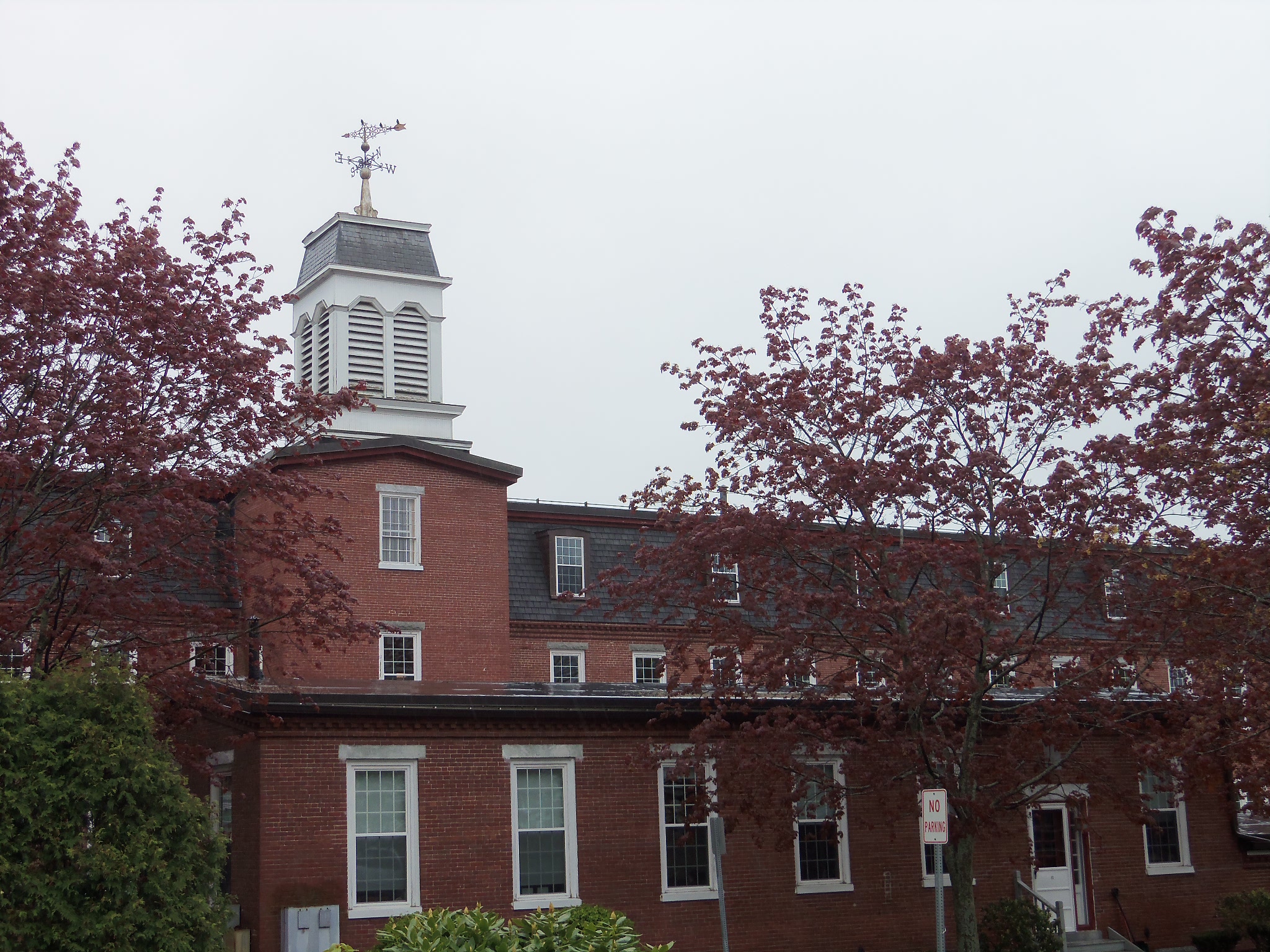
Always, a central weathervane.
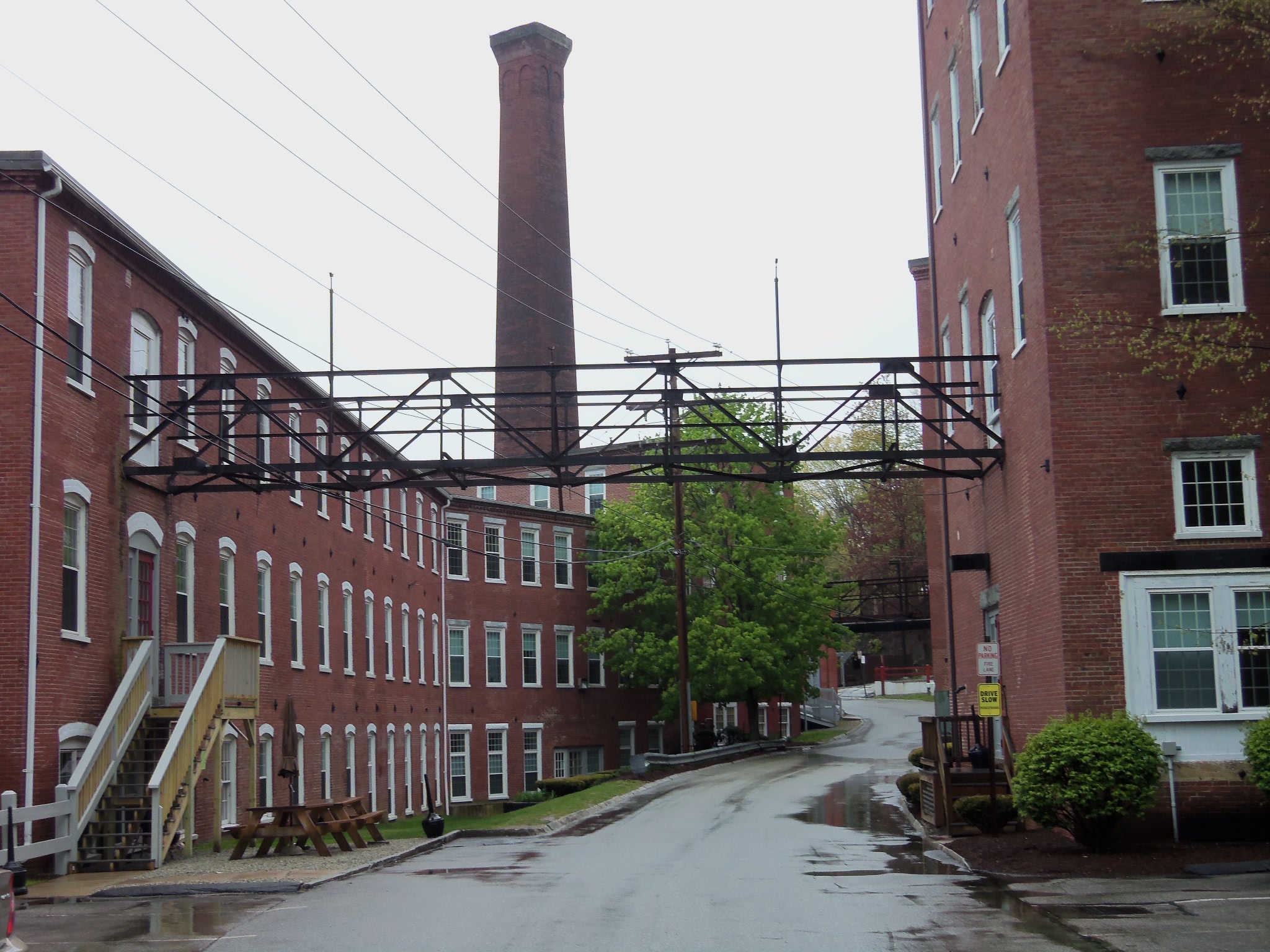
The street winds through the old complex.

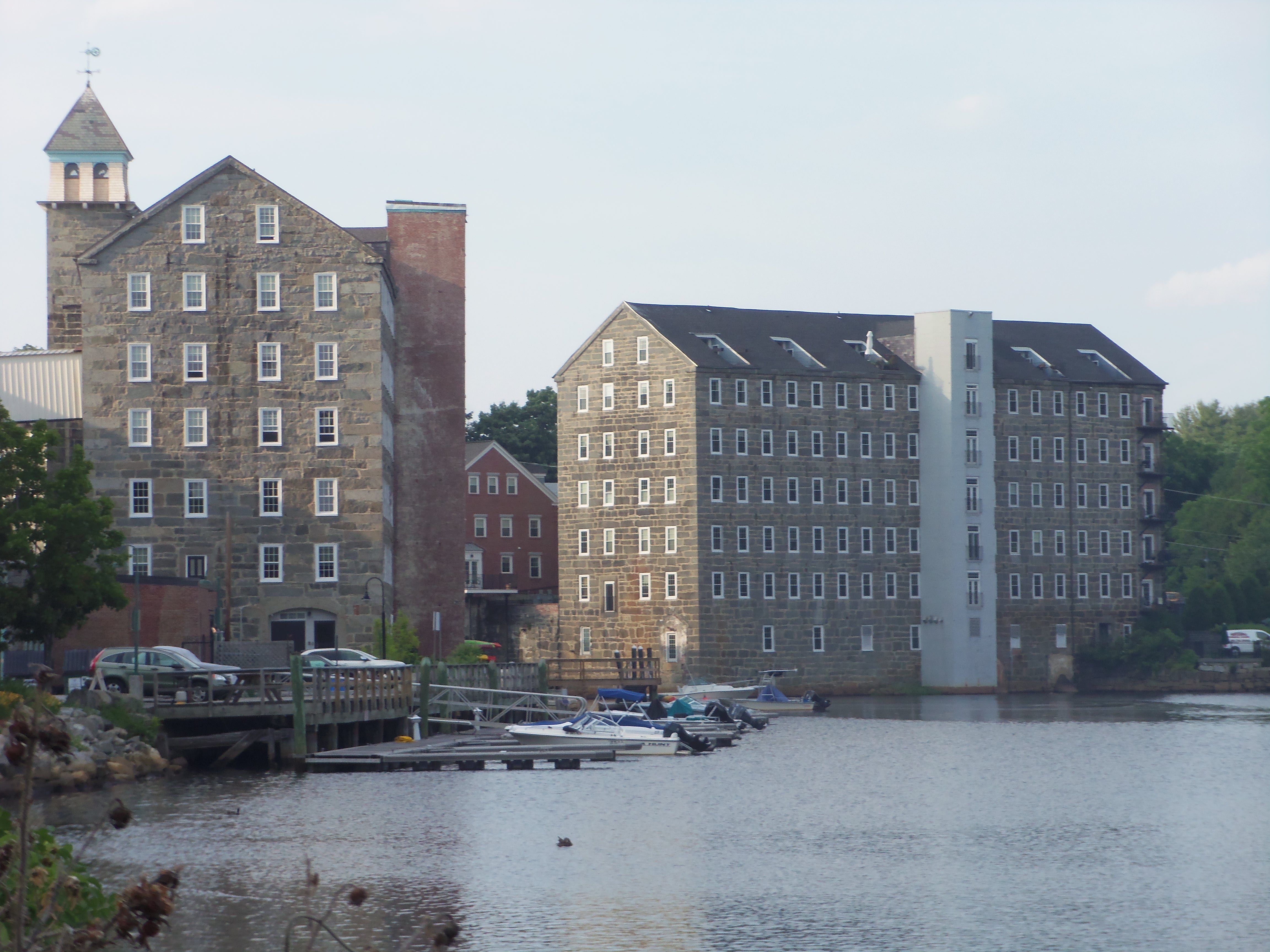
While the Cocheco Millworks in downtown Dover anchor the center of the town, the Sawyers Mill complex is tucked away on the Bellamy River.

Both the Cocheco and Bellamy form the flanks of Dover Point as they flow toward the sea.

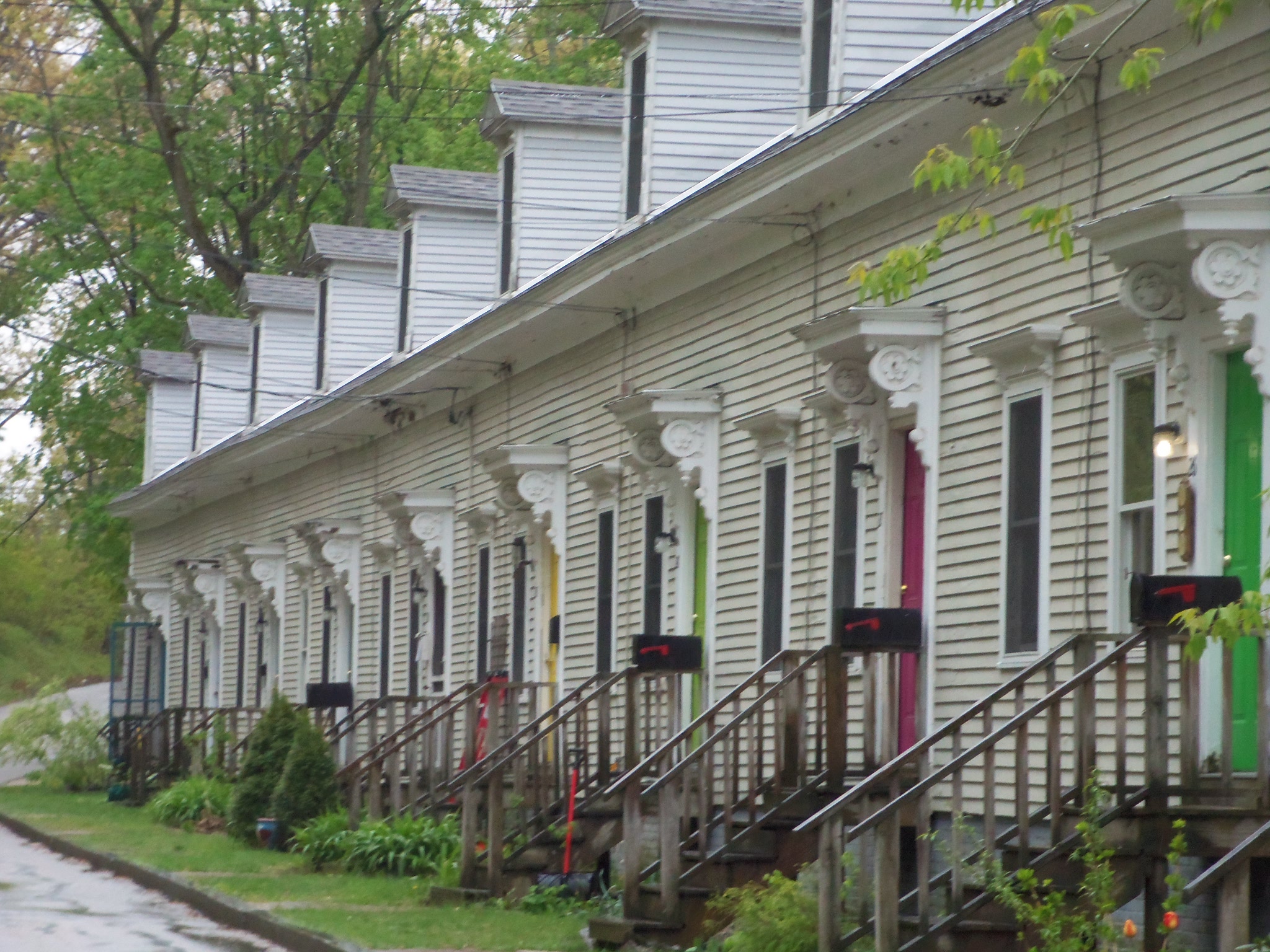
Worker housing.
Worker housing.

ROUND AND ROUND WE GO

Fair warning, especially when there's no backup.
Fair warning, especially when there’s no backup.

Drivers from other parts of the world are often terrified by New England’s use of traffic circles at busy intersections. We’re not the only people to use them – Washington, D.C., has some of the worst – but they do become landmarks. In New Hampshire, for instance, a set of directions might mention the Portsmouth Traffic Circle, or the one at Epsom or Stratham or Alton or Lee, shown here.

It's when you add traffic that things get fun.
It’s when you add traffic that things get fun.

Other terms for the routing around a central island include “rotaries” and “roundabouts.” What Romans call theirs would be unprintable in a family-friendly blog like this.