In their early days, New England towns built enclosures like this to constrain livestock that had been captured on the lam and impounded. These days such sites are altogether nostalgic.

You never know what we'll churn up in cleaning a stall
In their early days, New England towns built enclosures like this to constrain livestock that had been captured on the lam and impounded. These days such sites are altogether nostalgic.
Many of these Red Barn postings have illustrated the historic seacoast region of New Hampshire where I live. While our downtown is 16 or 17 miles inland from the Atlantic, the tides roll in all the way up to the waterfalls and mill dam at the heart of our city, and then roll out, usually twice a day. In fact, Dover was an active seaport until floods and silting took their toll early in the 20th century.
Situated on the Cocheco River, as well as the Bellamy and a stretch of the Salmon Falls, Dover was once a major textiles manufacturer and railroad center. It’s part of a cluster of small cities and adjacent towns, each with its own character, that drain into the Piscataqua River before it, in turn, pours into the ocean.
In contrast, downstream on the full Piscataqua, Portsmouth boasts of an active port – one with iconic red tugboats, oceanic freighters, and active passenger cruises around the harbor, its islands, and coastal sights – stretches familiar to us from both the shoreline and ventures out on water. On the Maine side of the river, the Portsmouth Naval Shipyard builds and repairs nuclear submarines.
Upstream, however, has remained far more mysterious. Since it’s hard to glimpse much of the waterway from public roads, we’ve long wondered how the route would appear. Long ago I discovered how different a shoreline fits together when viewed from a boat rather than the lands around it. This is, after all, a major part of where we live.

At last, hearing of the Inland River Fall Foliage Cruise offered each September and October aboard the 49-passenger MV Heritage, my wife and I got a chance to see for ourselves. Depending on the timing of high tide, its daily two-and-a-half hour trip ventures from downtown Portsmouth to downtown Dover 11 or 12 miles upriver or, as an alternative, into Great Bay, itself a remarkable estuary.
It was an eye-opener. Once we left the familiar, picturesque Colonial-era Portsmouth Harbor, we began passing all of New Hampshire’s industrial waterfront, which includes three electrical power plants, the world’s largest lobster operation, an oceanic underwater cable producer, oil tank farms, and the like – each with major docking facilities for oceanic freighters or other vessels. I hadn’t envisioned the extent of this activity. Nor had we anticipated the width of the passageway, in many places approaching three-quarters of a mile. Not what most folks would call beautiful, but it was impressive, even if we were grateful Aristotle Onassis failed in his attempt to put an oil refinery a bit upstream.
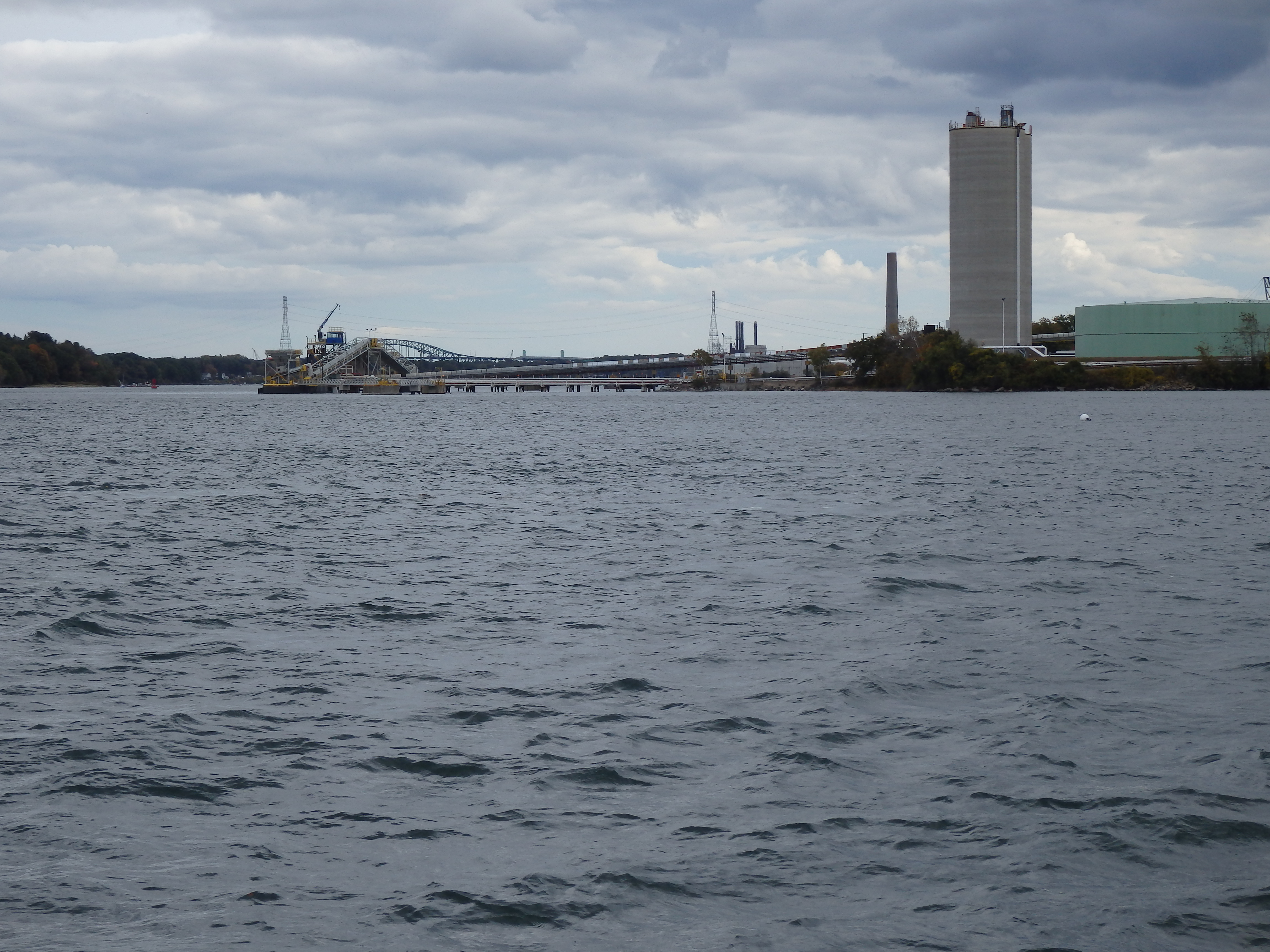
Once we’d passed the mouth to Great Bay, we were surprised by how much of Dover itself sits on the Piscataqua – and how much very expensive waterfront housing with expensive docks to match have been built there, mostly, as we were told, in the past two decades, now that the river’s been cleaned up from its earlier industrial pollution. In fact, looking at this and at the Maine side of the river gave the impression of passing high-profile lake shores with their ever more imposing year-round mansions. To be frank, we were a bit stunned by the wealth we were witnessing – where are these people in our otherwise modest city and what’s their source of income? Theirs is a different world, we’d say.
That’s not to say there weren’t stretches of colorful foliage or fascinating wildlife. In addition to a host of herons, gulls, and cormorants (we most loved the ones who stood atop mooring buoys marked “private,” as if the birds defiantly owned them), we viewed a soaring osprey and then a bald eagle in flight, an impressive hawk high in a pine overlooking the river, and a seal or two – all close to home.
The Pisacataqua originates at the fork of the Salmon Falls and Cocheco River, which we then followed as it narrowed on its way to downtown Dover.
What a contrast!
At one broad pool, we were told that tall-mast ships turned around here before reaching the mills by being poled by hand on high tide or pulled by oxen the final few miles. And, at the upper narrows, we appreciated a friend’s work with the Army Corps of Engineers in dredging power-plant tar from the river to reopen the passage. (That could be another posting in its own right.)
We passed the marina at the edge of downtown and circled, to retrace our journey.
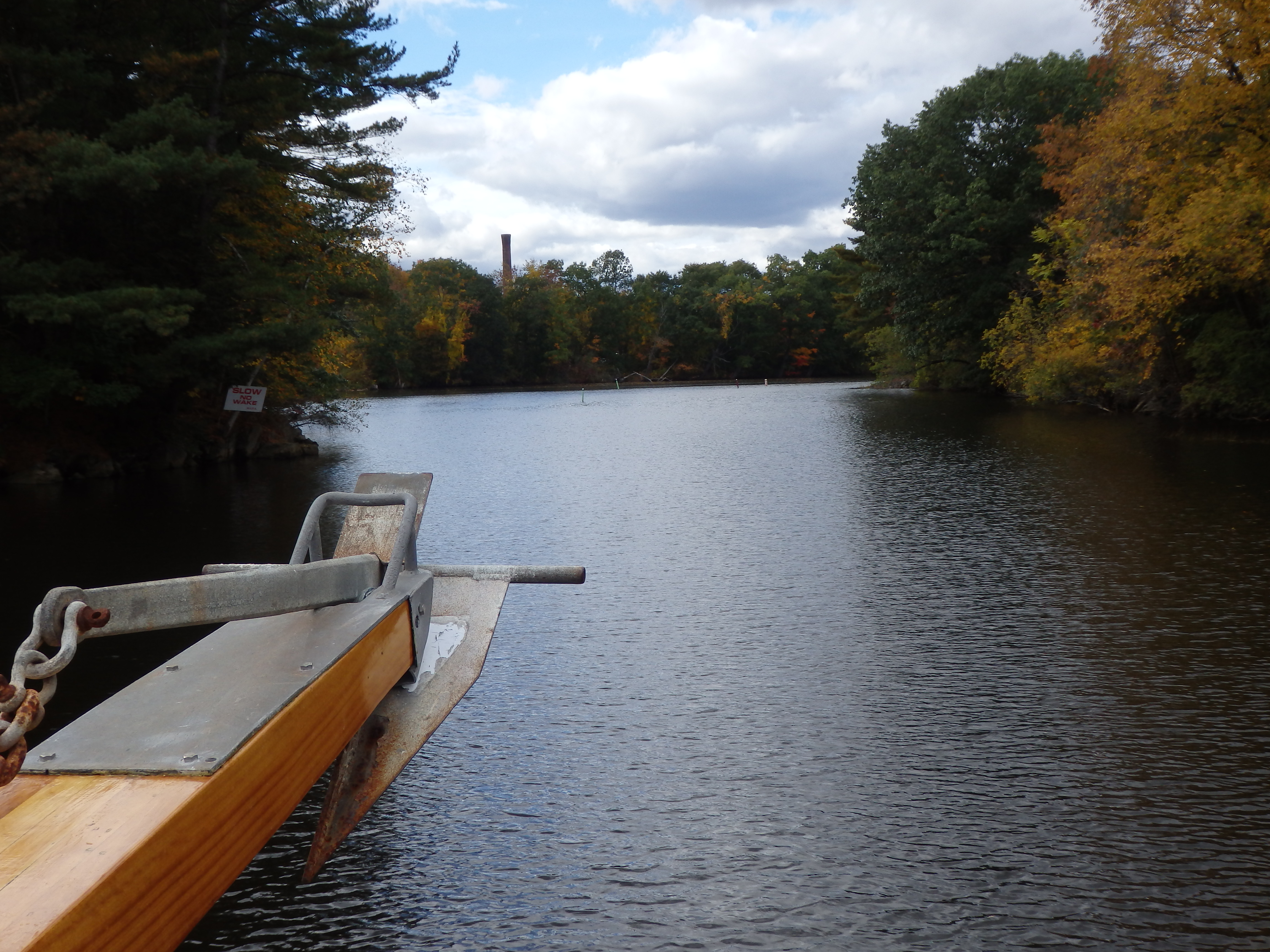
Why is it, the return always seems to go faster than the first part, outward?
On our drive home after debarking, we stayed close to the rivers. Surprising how discrete the lanes to the big houses! You’d never, ever, suspect they were there if you hadn’t taken the cruise. Makes us wonder how much more is hidden just out of view.


As another bronze plaque nearby proclaims, this is the 1818 home of the oldest Freewill Baptist congregation in America. Situated near the conjunction of Alton, New Durham, and Farmington, the site has a breathtaking view of New Hampshire’s White Mountains.

As I blogged during the summer of 2014, the No. 1 topic of discussion across much of New England concerned the dramatic battle for control of the Market Basket supermarket chain. In an unprecedented reaction to moves by one-half of the family owning the company to sell the popular stores to more expensive rivals, its management, devoted workers, trusted suppliers, and loyal shoppers united to bring the enterprise itself to a halt. A grinding halt. And it worked.
After months of earlier rebuffs and daily headlines, the part of the family actually running the stores announced an agreement to buy the entire operation from its hostile relations.
It was a complicated story, with some long-festering feuds in the not-so-recent background. The kind of story that’s bound to show up as movie adaptations. Maybe even as a television mini-series. Maybe not Dallas in Boston, but as rich in its material.
We’ve been waiting for the book-length analyses, and the first one is finally making the rounds: We Are Market Basket (the title comes from a slogan at the time) has been published by an American Management Association affiliate.
Authors are frequently advised to “know their audience,” with the implication of tailoring their work to assumed demands. In this case, the book can be seen aiming at two audiences: New Englanders who remember the revolt and likely participated in some part of it, and then business majors and managers around the world. It’s both a strength and weakness for the volume.
Reading the text, it’s easy to see which part was written by which coauthor: Lowell Sun newspaper reporter Grant Walker drafted the day-by-day narrative, while associate business professor Daniel Korschun provided the chapters on business management. It’s all good stuff, though a bit repetitive, as one might expect from daily news reports that have to recap earlier developments. And I started wishing Walker had more sources to draw on. Still, they underscore the point of their book.
As the subtitle says, The Story of the Unlikely Grassroots Movement That Saved a Beloved Business, this was a remarkable event. Korschum uses it as a platform to argue for an awareness of stakeholders in a company – not just stockholders. It’s a theme Bernie Sanders has been pressing in his presidential campaign, and he’s not alone it saluting its importance. Workers, suppliers, and entire communities have investments of one sort or another in the companies that operate in our presence. For Market Basket, with prices typically 16 percent lower than its major competition, customers have a definite reason for supporting the stores, which, as it turns out, are remarkably profitable, despite or (as Korschum argues and others of us believe) because of their culture of contrarian instincts.
You can read the book for the reasons why. The list of down-to-earth practices throughout the operation, where the lowest level workers are encouraged to find ways to improve the business, is worth the read alone. You won’t walk through any store quite the same afterward.
My interest in the topic goes back decades before this, as I saw the operations of a smaller but similar grocery operation run by my then-girlfriend’s father. His own father had started out with a produce cart that went door to door. Besides, my own inclination has been for smaller, typically family, operations rather than monolithic corporations – as I demonstrate in my novel Hometown News and pursued for most of my employment as a journalist.
As I was perusing We Are Market Basket, I kept thinking of business books like Tom Peters’ In Search of Excellence series. They’re fun to read and make their point, though there just might be more to the story. In this case, I definitely feel there is.
Yes, when we come to the stakeholders argument, we can look to John Henry Patterson’s benevolent leadership at the National Cash Register Co. in Dayton, Ohio, or the glory years of the cereal makers in Battle Creek, Michigan, or Aaron Feuerstein’s moves in the aftermath of the Polar Fleece fabrics’ devastating factory fire in Malden, Massachusetts. Essentially, these provide similar models of enlightened leadership along the stakeholders’ ideal. But this book also leaves me wondering about the next generation after Arthur T. Demoulas’ leadership – he is, after all, pictured riding a white horse. So there’s a need for a management text on maintaining leadership a generation or two down the pike, which this book glides over as one of simply maintaining the historic company culture. There’s a lot of repetition on Market Basket’s culture in these pages, perhaps to drive the point home or, as I suspect, perhaps because of slack editing. But will that culture be enough?
On another front, there’s a volume yet to appear that puts the Market Basket experience in perspective with other leader-defined companies. Yes, we love our heroes, but they’re hardly the stuff of corporate America these days. More often, they’re anonymous and invisible. What kind of executive would be needed to fill Arther T.’s shoes?
And there’s another round of writings that might relate Market Basket to other family-owned companies and their survival or failure in moving from one generation to another. Family ownership issues have become a distinct subset of a business school curriculum. You don’t get fired from being a brother or a sister or cousin or grandkid — it’s a lifetime position.
We Are Market Basket skims over the earlier family conflicts that erupted into ugly, protracted, and costly court battles only years before the events at the heart of this book. To understand the bitterness of the most recent round, I’d love to see a volume – or at least one more open to both sides – more detailed than what this one presents. Not that the other side made itself in any way sympathetic in the 2014 accounts. Even so, the events were not quite as black-or-white as they seem to appear. An astute reader senses the authors’ desire not to antagonize their sources, meaning the book’s told basically from one side.
Another fascinating dimension also appears in corporate ownership that’s not quite split evenly 50/50. Television viewers may remember an episode of Ed Asner’s Lou Grant series where the newspaper was threatened by such a division – not that much different from the Seattle Times, actually, where one percent held the sway vote.
When it comes to Market Basket, we have one crucial family voter who switched. Why? Everyone wants to know.
So I’m still hoping for a more definitive volume than this entry. Maybe by the crack team from the Boston Globe, which could throw far more reporters at the story than the suburban Lowell Sun could – reporter/author Welker at least had the advantage of having the Demoulas family grocery stores originating in Lowell and putting their headquarters one town over, in Tewksbury, but he was a Lone Ranger in the face of a large reporting and editing staff in Boston.
Another of the case studies waiting to happen would look at Market Basket since the uprising. Can it sustain the large debt load and still maintain its generous employee bonuses and profit-sharing, along with its low prices? A year-after report by the Globe found that the company is indeed prospering in its rebirth. But long-term questions remain.
Will the fuller story ever come out?
For me, more and more, I’m looking for another current example, somewhat the way scientists want an experiment that can be replicated — another stakeholder over stockholder victory.
In the meantime, we’re still shopping – almost religiously – at Market Basket.
In remarking about the failure of the presidential candidates to get out and do the ground-level face-to-face meet-and-greets that are the foundation of New Hampshire’s first-in-the-nation primary, I’ve failed to notice a conspicuous change in this particular campaign. I live in a county seat, one of ten in New Hampshire, and usually by this point in the campaign, we’d have prominent campaign headquarters downtown.
Not this time.
No, it finally dawned on me. Nada!
(Well, since drafting this, we got a phone call saying Hillary just opened an office here, just not downtown. Still, something’s akimbo.)
In fact the Republicans, who ought to be the most active in staking out territory, had only eight offices across New Hampshire by mid-September – all in Manchester, the largest city, an hour away from where I live. Much more from the further reaches of the state.
Contrast that to the Democrats: eight offices for Hillary Clinton alone, at the time, four for Bernie Sanders, and two for Martin O’Malley. Fourteen in all. And Joe Biden’s still waiting in the wings.
The local office is where a candidate’s organization offers literature and answers questions to passers-by, does its phone-banking, encourages supporters to meet, plans canvassing and visibility events. It’s where each candidate gains visibility – and credibility – every time a driver or pedestrian comes past.
Maybe the Republicans think advertising will fill the gap. It won’t. Each region of my adopted state is different. I’ll leave it at that.
I’ve also mentioned the lack of living room meetings and am surprised to see the only ones listed on the Republican side are all in Scott Brown’s Rye home – that is, the former U.S. Senator from Massachusetts. Hardly bread-and-butter invitations to the faithful, right?
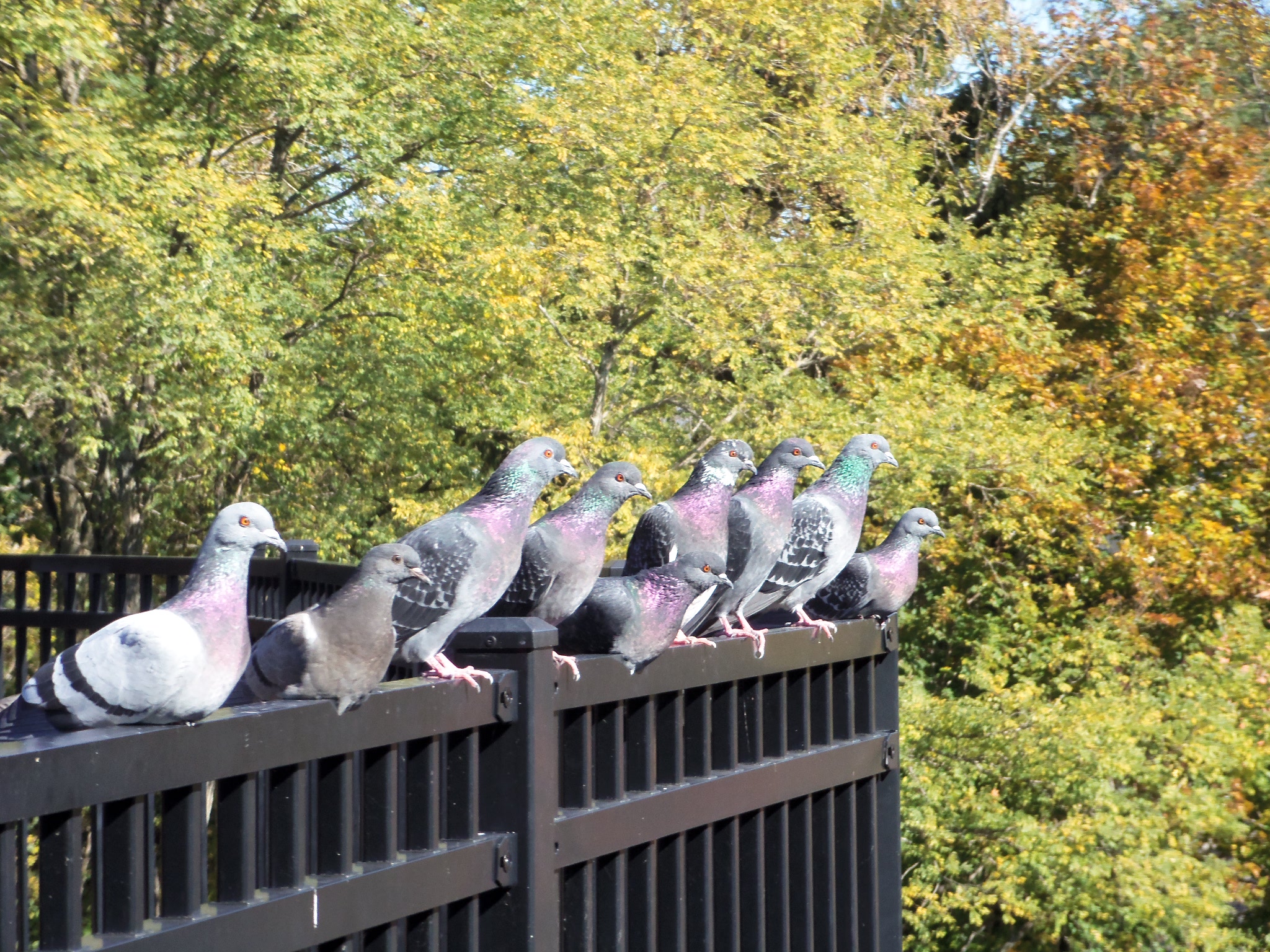 All in a row on the bridge rail overlooking the river.
Anyone else fascinated by the post mortems following the collapse of Scott Walker’s presidential campaign Monday? Each one seems to be bringing another facet to light on what was supposed to be one of the leading candidates.
From a newsroom perspective, writing the headlines could have been fun, playing with the surname:
Walker
quits
race
or
Walker
ends
run
for instance, except that officially he’s only suspended his campaign – the technical difference meaning he can still accept financial contributions. So maybe it’s more
End of the road for Walker.
One of the telling strands for me is that the Wisconsin governor spent most of his campaign chest building a national organization rather than concentrating on the face-to-face opportunities of the first-round states. I haven’t heard much about the traditional New Hampshire living room presentations by White House hopefuls so far this round, and after last weekend’s Michigan straw poll, in which the winners were all folks who showed up, unlike the so-called frontrunners, let me return to the importance of building a following one voter at a time rather than by flooding the airwaves with ads.
In other words, this Walker didn’t lose much shoe leather walking from household to household making himself a household name around here. Or, apparently, in Iowa, which borders on his own Wisconsin.
From a campaign finance point of view, it costs peanuts to rent a motel room and move about, if you’re serious about running. Or, for the more committed, renting an apartment.
The national stories, as you may have seen, are raising detailed questions about his integrity, spending, organization, preparation, demeanor, inner character, inability to lead, and so on. One that I’d add spins off from his assertions that God had called him to run – a claim supported by his pastor. From my perspective, that just might violate the Fourth Commandment, taking the name of the LORD in vain. As the New Jerusalem Bible translates the text (Exodus 20:7), “You shall not misuse the name of Yahweh your God, for Yahweh will not leave unpunished anyone who misuses his name.” (Name meaning power, rather than a word alone.) Admittedly, nobody really expects humility from a campaigner, no matter how much the faithful are supposed to practice it. Still! A dose of it wouldn’t hurt.
Some other interesting examinations are focusing on the failure of big money, meaning the super PACs, to deliver public support thus far in the race. Well, it’s still early. Just wait.
~*~
The other hot development involves the GOP’s two leading candidates at the moment. Surely the Donald didn’t expect to get through this unscathed, did he? Carly Fiorina’s getting traction in her attacks on him, but it comes at a price. As a Washington Post headline put it today: “Trump’s sexism vs. Fiorina’s dishonesty.” A Slate headline, meanwhile, crowed her “days as GOP star are numbered.”
This fight could be riveting, especially if it drags out or others jump in. Want to talk about entertainment value and combative style?
~*~
While things are still relatively quiet here in the Granite State, it does have some of us wondering. Jeb Bush seems to be managing his funds prudently, has significant Establishment connections, and is still plodding away. Is it possible he might be the last man standing when it comes time for the nomination? Or are there other twists in the plot ahead? Someone, say, meeting folks where they live?
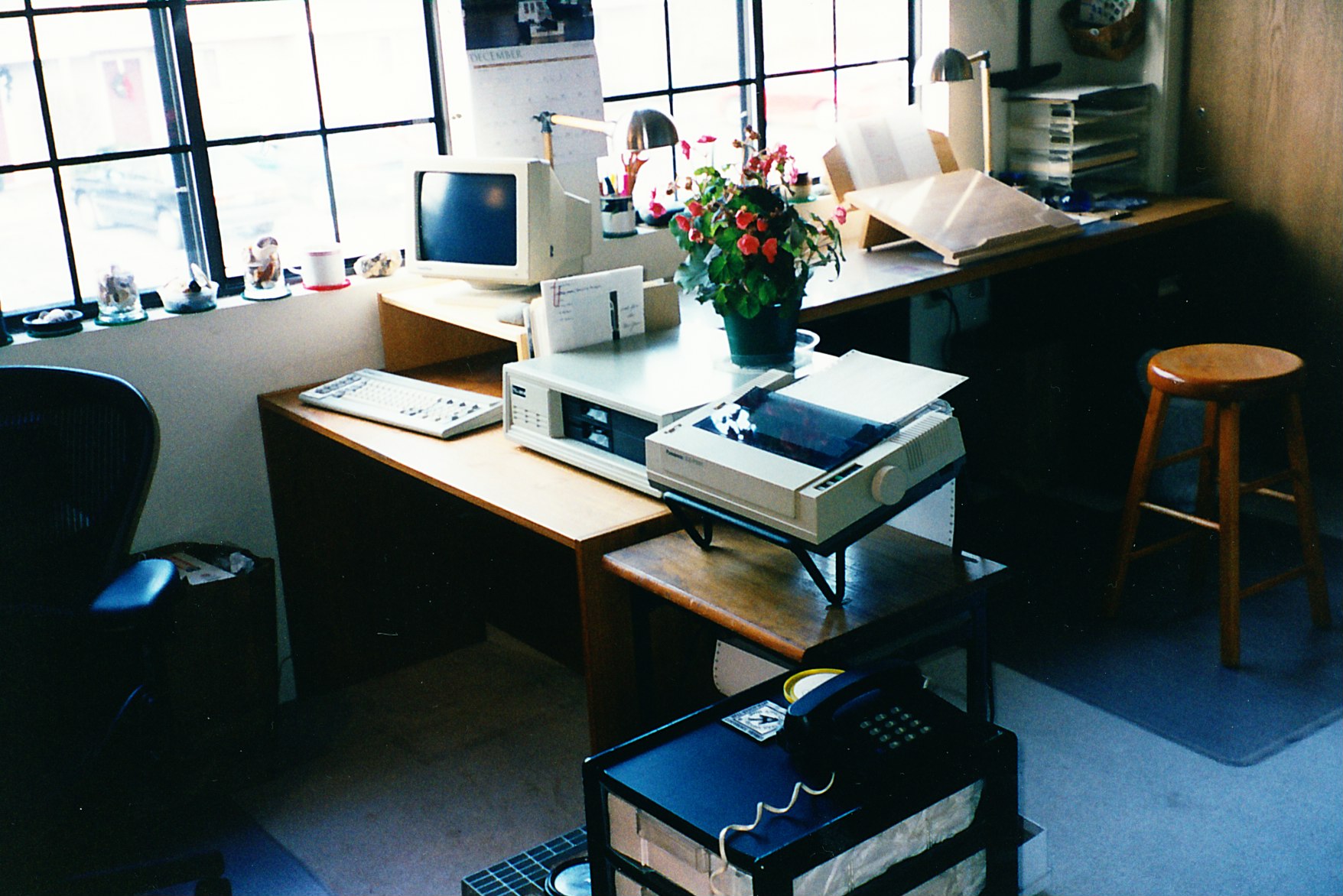
For a decade, I lived on the highest point in the city of Manchester. Sometimes I called the development Yuppieville on the Mountain, but its views of sunsets could be stupendous. There was even a city-run ski lift on the other side of the freeway.


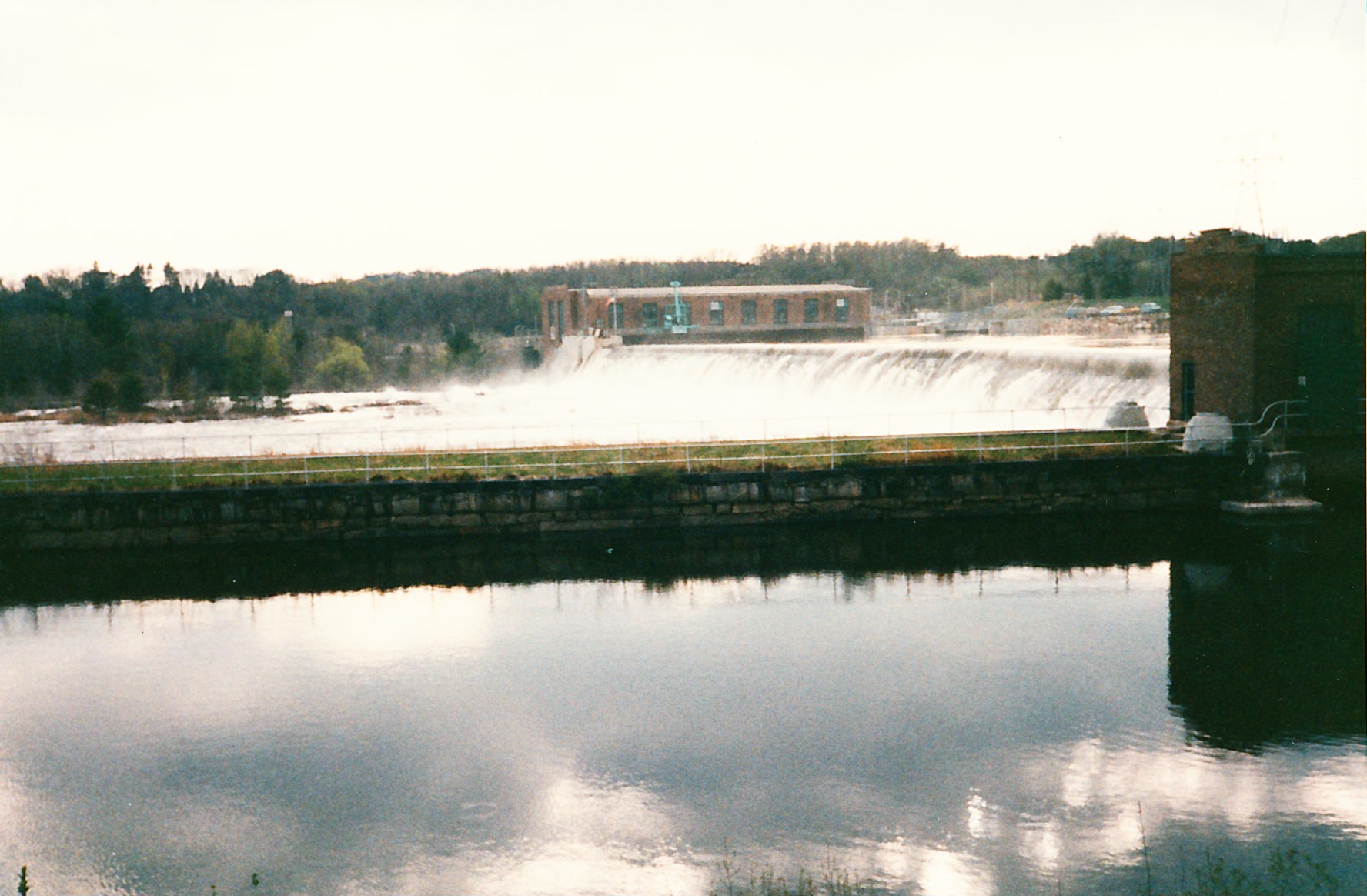
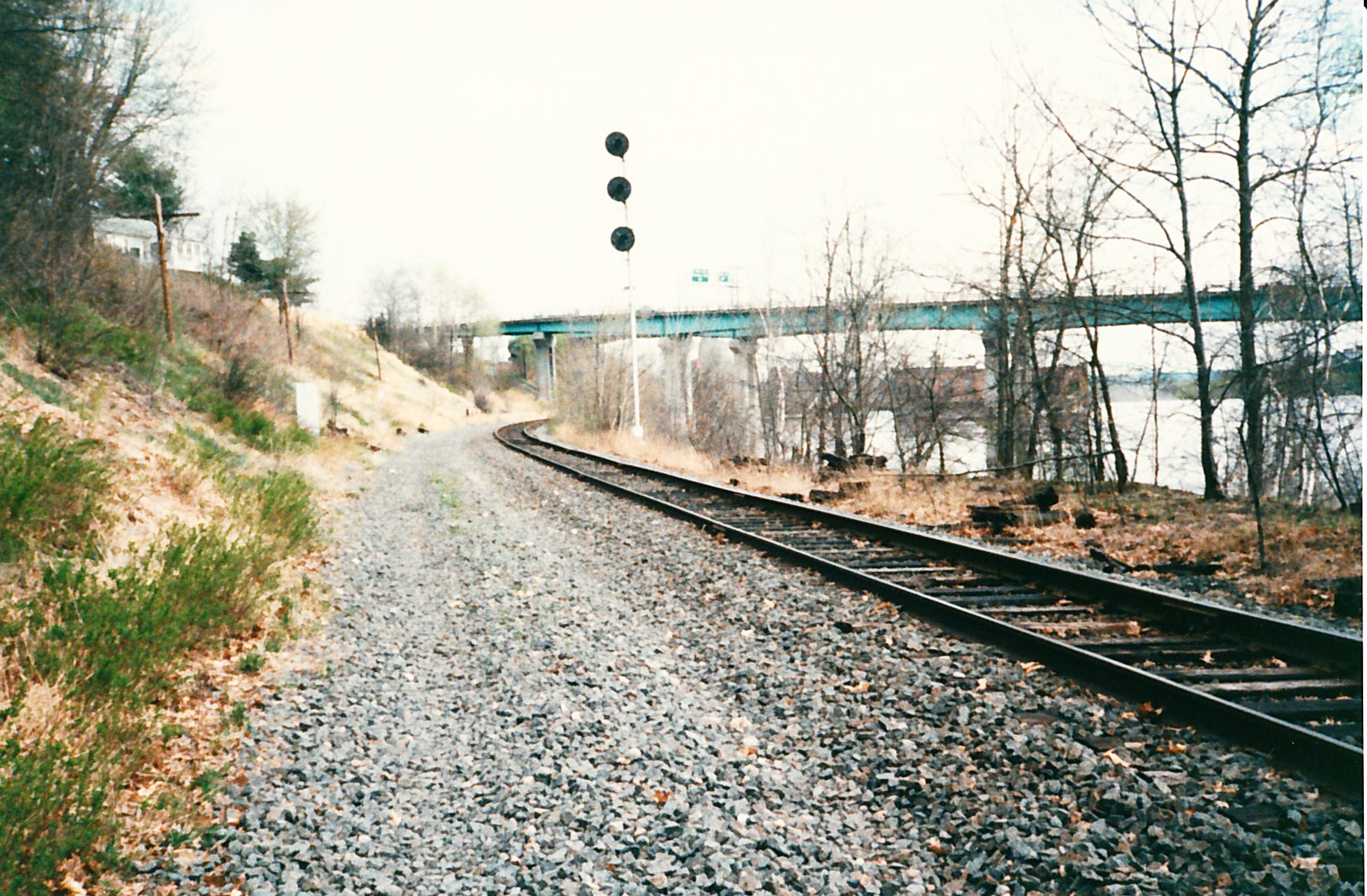
For three years I lived along the banks of the Merrimack River, a primary energy source for 19th century New England industry.

Having all of the presidential hopefuls at hand, as we in New Hampshire do during our unique primary season, comes at a price. Not just the traffic congestion as candidates race from one site to another or the advertising that clutters on the airwaves or the willingness to venture as outsiders into hotbeds of supporters. No, the more vigilant and responsible of us spend hours of personal time and gallons of fuel driving to scheduled events to meet the hopefuls in the flesh and see how they respond to public concerns. It often means arriving early to get a seat while knowing all too well the star of the show will arrive late, and not just by minutes.
And then, sometimes, you get there only to find the parking lot’s empty – the event just got cancelled. We could name names here but won’t.
Let me say, though, you get a much different view of them up-close and in-person than what you’d otherwise obtain. Especially when they’re off-camera and pulled away from the script.
 Jnana's Red Barn