Missing the news cycle with a big story

Let me admit that hearing about Joe McQuaid’s recent book on Bill Loeb stirred a range of reactions in me.

The first was a yawning, “Who cares? Who cares now?”

The second was a recognition that most stories have short shelf lives, and Loeb was ancient history now, even in New Hampshire.

For background, you must understand that I spent the second half of my journalism career at the statewide newspaper Loeb had owned and notoriously thrust into the national spotlight from Manchester, New Hampshire. When I arrived, he had been dead six years and the paper was in transition from one known more for its vitriolic front-page editorials than for its reporting. The editorials had retreated mostly to the opinion page, and I was among the hires intent on improving the professional quality of the coverage. Or, as I overheard three figures accuse the managing editor my first week on the job, of already being “liberal media.” (That’s how far right much of the state was – and in some parts remains.)

McQuaid, under the wing of Loeb’s widow, Nackey, was a hometown boy on his ascent as executive editor and after her death, publisher. His father, Bernie, had been Bill Loeb’s righthand man in the newsroom – and Loeb kept a loaded revolver in his desk drawer, as I heard a few years before my move to the paper. In many ways, their arrangement was like family and a family business. I had worked for enough newspaper chains to appreciate the differences, as well as to appreciate Loeb’s determination to keep the paper independent of chain ownership.

There was always gossip, of course, which now gave me a sense that that if Joe could look hard and candidly at his subject, he might have enough inside dope to open fresh material for historians while also doing a bit of self-therapy in his retirement years. To me, his project looked something like my own attempt to better understand my grandfather and his legacy, pro and con – the man who labeled himself Dayton’s Leading Republican Plumber. What I had was mostly genealogy and local history, one where my remaining living sources could openly differ with each other and with what I had collected from those now passed.

Joe, on the other hand, was dealing with a once well-known rabid anti-communist archconservative who was credited with derailing more than one presidential candidate and leaving a long shadow over local and state politics. New Hampshire politicians still dare not speak of income or sales taxes as a funding option. People either adored him or hated him – reader and advertiser aversion to his approach had killed several other papers he owned – but he was largely a curiosity and enigma, one sometimes seen as a big joke with occasionally fatal consequences. Take Loeb seriously? For starters, Joe had to go beyond Kevin Cash’s 1975 Who the Hell IS William Loeb, a fat blast that nobody I’ve met ever finished reading, even during Loeb’s last years on the throne.

The result was William Loeb and His Times: Provocative Publisher, Private Paradox by Joseph W. McQuaid, published by New Hampshire-focused Plaidswede Publishing in Concord at the beginning of the year.

Joe’s tome faces several huge challenges.

Loeb died 41 years ago and few readers remember him or the era. Why should folks care about someone others have tagged a pipsqueak? Quite simply, he’s no longer news. Move on to today.

Newspapers are no longer the powerful institutions they were, diminished both by the right-wing attacks of Loeb’s ilk and by internet sapping of readership and advertising. Who’s interested in their internal operations? Or even of Loeb’s uneven track record in advancing his causes and candidates?

Politics itself has become toxic, a consequence of unchecked right-wing shenanigans. Informed folks are still shell-shocked by the daily scandals from the Trump White House.

Joe’s attempt to make sense of Loeb’s sordid personal life and financial dealings could be of importance, not so much as something that happened “back then” but rather in the ways it seems to foreshadow the emergence of Trump and his ilk and of Fox television’s slanted presentation of public affairs.

Not that Joe can quite make the connection from the late 1940s and ‘50s that gave Loeb his rise to today’s quagmire. He can’t honestly paint Loeb as a hero, though the publisher’s diatribes fit that role for many, so that omission costs Joe potential readers on the right. But his revelations about Loeb’s personal life make an already repulsive subject even less attractive to potential readers in the middle and left. Even morbid fascination has its limits. Besides, these days it fits a pattern. Clarence Thomas? Ted Cruz? Newt Gingerich? Mitch McConnell? As for New Hampshire? It’s still seen as too tiny to matter across much of the nation.

And as a footnote, Clem Costello, publisher of the newspaper just downstream in Lowell, Massachusetts, could provide a similar subject for the era, if only to round out the history.

Mortality and the passage of time

Realizing I really did need to get some regular physical exercise last winter, I finally caved in and ventured into the senior center for fitness class twice a week. It took three friends to nudge me into it, and it’s embarrassing to have to admit what 50 years of neglect have done to my body. I’m a long way from my yoga glory. Well, I’m also the only male in the circle, not that it inhibits the lively, enlightening, and laughter-riddled banter that occurs while we’re plodding through the routine. Their hour-plus dialogue could fill a hit sit-com or bestseller novel, if only I could find a plot. Well, much of the running commentary there is also about ailments afflicting folks in the community, sometimes leading to offering rides to their specialists or food deliveries – what I’ll call “good gossip.” And, oh yes, I much prefer to refer to the place as the Old Firehouse, skirting around the stigma of “senior center.”

That has me recalling an aside years ago when our managing editor told of a phone call he’d received from a reader complaining about being referred to as elderly.

“How old are you,” my boss asked and was told 78. “I see,” was the best he could respond with.

After that, I always struck “elderly” from news copy, along with “little” from child or kid.

Getting older is a multistage passage, most notably with the skin and stiffening joints, but the physical changes are only part of the experience.

One part is an awareness of being on borrowed time. Even when I was editing obituaries, I noted how many of the deceased were younger than me, and that was a little more than ten years ago.

Moving around the country has lessened some of the impact of aging, since I haven’t had to watch us grow older together. My high school classmates, for instance, will always never be more than 18 in my mind. Ditto for others left behind, they’re all frozen in time, even the few who are still in correspondence.

So another part is hearing that more of these colleagues of my generation are passing – a situation akin to personally knowing more people who have had been diagnosed with Covid and the recognition that it’s not just multiplying “out there” somewhere – that is, knowing only the abstract – but close at hand.

I recently posted two memorial minutes of Friends I worked with clerking Dover Meeting and have been reflecting on others in my Quaker circles.

Now I get word of the passing of an esteemed reporter who was six years younger than me, and somehow it hits more than those from the workplace who died earlier. To my surprise, it has nothing to do with how close we were in our daily interactions. (He and I weren’t, apart from a comment or two in passing. I should note that he produced “clean copy,” requiring little editing, and that meant little interpersonal friction.)

In his case, I think the blow comes as a sense of an end of an era. He carried institutional weight in covering the New Hampshire’s political scene and soared nationally during the first-in-the-nation presidential primary. With the decline of newspapers in general, his replacement at the statewide Union Leader will never achieve such prominence or influence.

Negative environmental impacts quickly followed

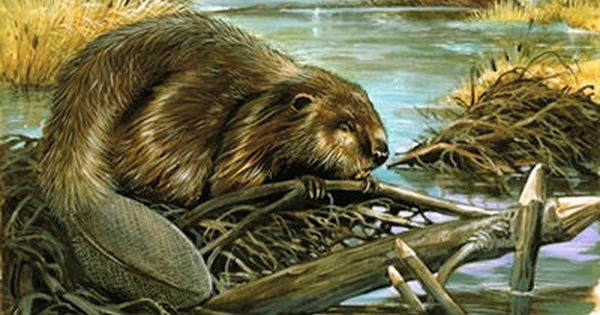
The fur traders’ hot market for beaver pelts in colonial New England soon reduced beaver populations, and fewer beavers meant fewer beaver ponds, an important source of the local Native diet, including roots and waterfowl.

Beavers were only the first of many species afflicted by European settlement in the Piscataqua watershed.

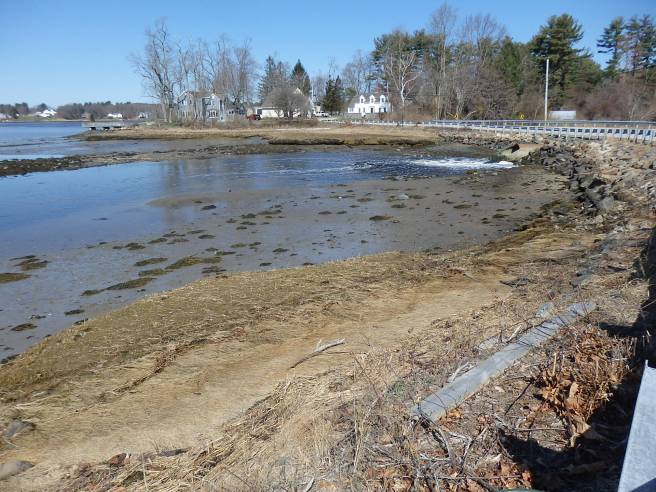
That was followed by the construction of mills, which were powered by water, and that meant dams. Some impounded incoming tides for release a few hours later. These were tricky to operate, though, and changed speeds depending on the strength of the incoming tide or the level of the water during its release.

Dams at the waterfalls became more common.

Either way, dams impeded upstream migrations of fish trying to return from the sea to their spawning grounds. These included salmon, sturgeons, eels, and river herring. Their reduced stocks afflicted both the Natives and the English inland fishing industry.

The mills also produced copious amounts of sawdust that choked river bottoms, reducing and killing off additional species.

The demand for timber itself cleared land all the way back eight to ten miles from the riverbanks, further eliminating wild game. The wood was needed not only for the sawmills but also as fuel for brickmaking, domestic cooking, and warmth through winter. Heating a house commonly required 40 cords of wood a year – no small feat of labor.

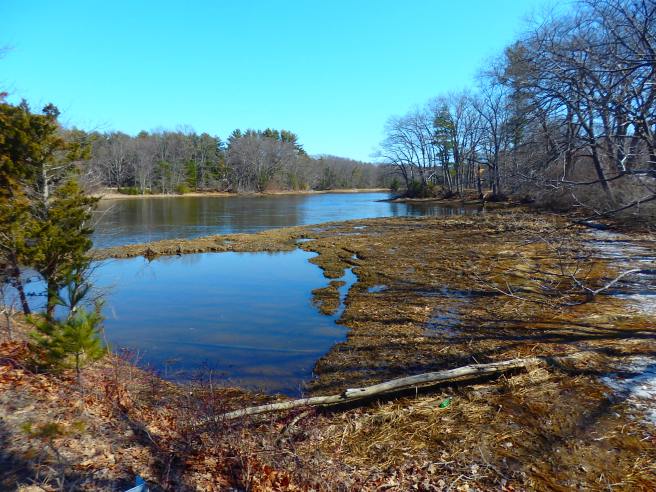
And runoff muddied and silted the streams.

Let’s not get too sentimental about the bucolic nature of the era, OK?

~*~

Welcome to Dover’s upcoming 400th anniversary.


Be among the first to read my new book … for free!

If you’re a reader of ebooks and fascinated by history, I’d love for you to get an advance copy of my new book, Quaking Dover.

In fact, as a follower of this blog, you’re getting a limited-time invitation to pick up a copy of the book for free.

Check it out at Smashwords and its associated digital ebook retailers.

All you have to do is speak up in the comments section of this post, and assuming that your address includes an email (visible only to me) or other contact info, I’ll send you a coupon to download the book in the digital format of your choice within the next 30 days.

It’s one of the advantages of ebook publication at Smashwords.com.

In the world of commercial book publishing, a printed edition typically appears in an Advanced Reading Copy run that allows reviewers, bookstore dealers, and other insiders a chance to hop on before the official publication. In the meantime, the author and editor have time to make fixes and set the stage for an auspicious opening day, one boosted by the buzz of the ARC readers.

So what I’m doing is the equivalent for a digital edition.

The release date on this book isn’t until September 8, but folks who preorder now can get in the front of the line at half-price. That strategy is one step for boosting the book in the crucial first-week sales algorithm.

Today’s offer, however, gives you a chance to own a copy now. In a way, you’ll even be getting involved with the preparations for the tiny city’s upcoming 400th anniversary.

My hope, of course, is that you’ll be excited by my story and happily post a brief review or two in response. If you don’t like it, of course, you can tell me directly and we’ll still have time to rectify that. It won’t even change my perception of you (insert Smiley Face.) From your end, it’s a no-risk proposition.

From my end, I might even gain a fan.

Now, who’s first?

Sawmills, before those for grain

One of the first thing the colonists typically built was a sawmill. From what I’ve seen to date, it always came before a gristmill. I would have thought food would have been the priority, but there are suggestions they imported their flour or even bread instead.

That raises questions of just exactly what their meals were. The Puritans were devoted to their beer and tobacco – and that extended to even their children.

For that matter, how early was Beantown a synonym for Boston?

More than a dozen years after the settling of Hilton Point just across the river, Alexander Shapleigh built the first of two tide mills at his Kittery House estate. Water from the incoming tide was impounded and released later in the day to power the mills. Here’s the site today.
The mill pond remains in today’s Eliot, Maine.

So why sawmills? The early settlers along the Piscataqua apparently erected log cabins, along with fortifications. For that matter, the sole surviving garrison house, preserved at the Woodman Institute, was essentially a log cabin built around 1675.

But flat boards were needed for shipbuilding, wharf planking and bridges, and barrels – for shipping dried fish, especially. Perhaps lumber itself was also an export to Barbados, the Bahamas, and the West Indies.

Let’s remember, too, the construction of dams and mills and their operation required sophisticated skills.

I’m guessing that few of the early English settlers along the Piscataqua were menial day laborers.

~*~

Welcome to Dover’s upcoming 400th anniversary.


Take a sneak peek at my next book’s cover

For several months now, you’ve been getting tastes of my upcoming book, but I have kept much of project under wraps, including the title.

The curtain goes up on that right now.

So roll the drums, please, and take a deep breath of anticipation. Here’s what I’m rolling out:

Do the title and image intrigue you? Pique your curiosity? Hold you for more than a split-second?

As I’ve discussed in previous posts, book covers – and magazines, too – are a specialized design challenge.

The ebook version has to work as a postage stamp, sizewise.

Print editions often get cluttered with pitches of all sorts, just in case one hooks a reader.

An effective title, of course, is a huge consideration, but not the only one.

~*~

Creating a compelling image that matches the content has been especially difficult in this case. The book spans more than 400 years, and I couldn’t find anything that quite reflected the place or its people, now or then, or that extended an appropriate emotional appeal.

A seismograph didn’t do it, though several geometric zig-zag patterns looked cool.

One design that excited me featured a portrait of John Greenleaf Whittier’s mother, but others saw her as forbidding. What I saw calm and collected they viewed as sorrowful and inhibited. Oh, well.

But then, while going through my own photos, I came across a late-autumn photo of the Cochecho River, scene of much of the action. I loved its timeless mystery and beauty and the fact it didn’t look generic to just about anywhere else in the world.

One of my earlier posts pointed out that the cover should promise the reader something rather than mirror the story. It’s a matter of eliciting a gut-level attraction.

Somehow, I hope you feel this cover leads backward into time, with the drama of a storm on the way. Just what is around that bend, anyway?

~*~

Please stay tuned for the release details in the days ahead.

Those who lived here for millennia need to be acknowledged, too

One of the things the Dover 400 project is doing is raising an awareness of the Indigenous peoples who inhabited the region for millennia before European colonists arrived.

The tribes were far more varied than the generic “Indian” label conveys. Sometimes they were in open conflict with each other, and there were many differences in language, culture, and lifestyles. There were also alliances with other tribes, creating subtle but significant relations across the region.

Some lived in permanent villages, often along streams. Others ranged from ancestral site to site through the year in a cycle of fruit, vegetable, and animal fare.

As hunters and fisherfolk who often traveled by water and lived in villages along the shores, many of their names for places are often translated as some variation of “water,” with distinctive nuances that are lost to Western ears but still hint of sharp observation of the character and advantages of each site.

Their name for Hilton Point, for example, is something along of the lines of “place encircled by water,” while Cochecho is more like “foaming falls,” each one, however, unlike other points or coves or waterfalls.

As for our own names applied to these places? I doubt we give them a second thought other than perhaps their spelling.

And, to our loss, we have none of their mythopoetic stories in their original richness – narratives rooted in their unique environment. At least we can begin to listen to those told by surviving tribes in neighboring Maine.

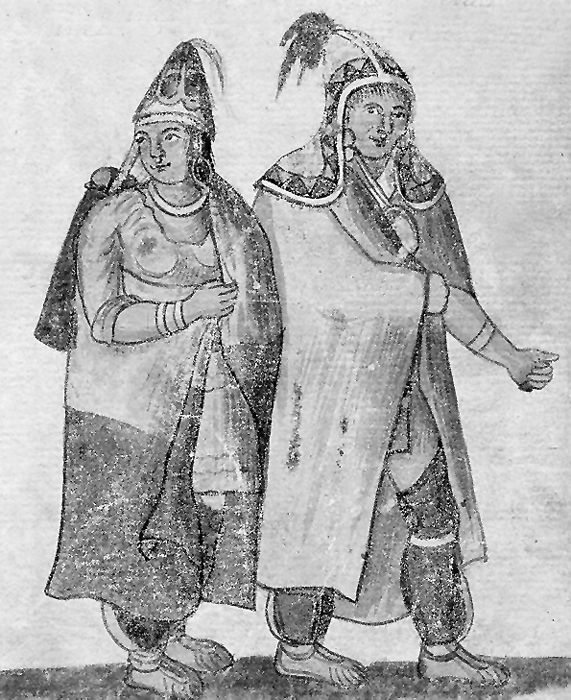
There are good reasons the Abenaki and other New England tribes didn’t dress like the High Plains Natives far to the west.

  ~*~

WHEN THE ENGLISH ARRIVED in New England, most of the tribes had been decimated by pandemics, many of the illnesses resulting from contact with earlier explorers and traders. The sharp loss of population gave the Pilgrims an opening in their settlement at Plymouth.

The first traders brought items the Natives appreciated as useful – metal pots, knives, blankets – that could be obtained in exchange for furs.

As we know, the dynamic changed. We’ve rarely heard the Indigenous voices tell their side of the struggles. The English, French, and Dutch all have barbaric actions to atone for.

The marker at Ambush Rock on Route 101 in Eliot, Maine, for example, makes it sound like the victims were an innocent party on its way home from church one Sunday in 1697. There’s no mention that the prime target, Major Charles Frost, was Richard Waldron’s cohort in the notorious “games” of 1676 that ended up in the arrest of nearly 400 Natives who were then executed or sold into slavery. The Natives waited 21 years for revenge. Frost was the highest-ranking militia officer in Maine.

For me, the missing details change my view of the event entirely. It’s not an isolated instance.

~*~

DOVER WAS IN PENNACOOK COUNTRY, a tribe closely related to the Abenaki – the identities are sometimes merged, suggesting change over time. The Pennacook spanned over much of New Hampshire, neighboring Maine, and parts of Massachusetts. The English jurisdictions didn’t match theirs.

Another consideration is how many of the English settlements occurred at earlier Indigenous villages, as seems to be the case both at the falls in today’s downtown Dover or neighboring Exeter, Newmarket, Durham, Rollinsford, Somersworth, and South Berwick.

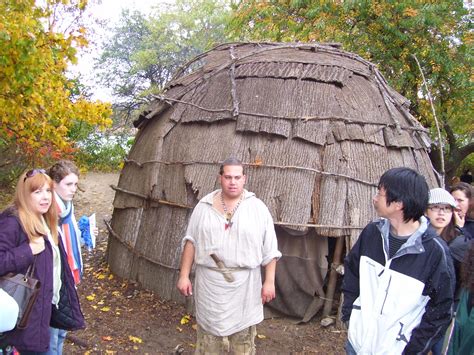
A wigwam at the Plimoth Plantation living history museum allows visitors to explore a typical Indigenous winter dwelling. The interior is bigger than you’d expect. (Photo by Swampyank via Wikimedia Commons.)
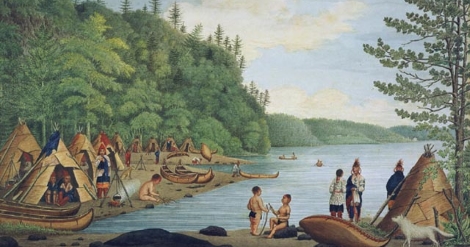
A Pennacook encampment much like those in the Piscataqua watershed.

~*~

ONE THING THAT WAS OBVIOUS TO ME in a visit to the Plimoth living history museum in Massachusetts was how superior the Wampanoag’s communal wigwams were for living through winter compared to the Pilgrim’s drafty cottages of 1630.

I’m sure the same can be said of the shores of the Piscataqua.

~*~

Welcome to Dover’s upcoming 400th anniversary.

A map is seen much differently from the water

One awareness I’ve gained living in New England is that when you’re out on the water – say in a sailboat, fishing boat, whale watch, or ferry – the geography fits together quite differently than it does on the land.

For example, where I now live in Maine, it’s only four miles or so from our downtown to the one just south of us. That is, if you’re just looking, going by water, or a bird. To drive, though, you have to head north and loop around Cobscook Bay, a distance of 38 miles and about 46 minutes. At least it has no traffic lights.

The water perspective is especially important in understanding the dynamics of early Dover, centered as it was at Hilton Point and Dover Neck between the Piscataqua River and Great Bay. For example, the heart of the town of Kittery was in today’s Eliot, just a mile away by water but 18 miles by land. And today’s Kittery was ten miles downstream or even longer by land.

Hilton Point was just to the left of the “cat” in Piscataqua, while the Shapleigh Kittery House was just to the cat’s right. Getting there by land, though, means going all the way up to the Salmon Falls River. Even finding a map like this of the watershed can be a challenge. Usually, it’s divided by the state line that runs up the river.

Oyster River, or today’s Durham, was only four to eight miles to the west, depending whether you were stopping at wharves along the way or going all the way to the Lamprey River’s falls and the landing.

A trip by boat between Eliot/Kittery and Oyster River/Dover was – and still is – no big deal.

In fact, by water they were closer to Hilton Point than was the village at Cochecho Falls, today’s downtown Dover.

For perspective, I’ve read that a man on the Isles of Shoals thought nothing of rowing ten miles – six of them on the open ocean – for an evening in Portsmouth and then ten miles back in the dark.

In comparison, the relocation of families from Eliot/Kittery to Oyster River becomes much more sensible than a land-based movement would suggest, and much less puzzlingly.

Also, the boundary between New Hampshire and Maine largely dissolves. The watershed becomes the defining perspective.

In terms of understanding history, “Piscataqua” can mean not just the original settlement at Hilton Point but also the expansion across both sides up and down the river. That seems to be the case when Portsmouth, Kittery, and New Castle all claim a 1623 founding.

You might even say it muddies the water.

~*~

Welcome to Dover’s upcoming 400th anniversary.


Selling Natives into slavery was not an isolated instance  

One of the more disquieting things my examination of early Dover and New England stirred up for me is an awareness of a prevalent expression of white supremacy.

It starts out as fear, expressed in the emphasis on fortifications. The Plymouth settlers, for instance, spent much of their first year on building palisades rather than farming, which led to a nearly disastrous shortage of food through the winter. The defenses were apparently intended against Native raiders more than the Spanish, French, Dutch, or pirates.

Later, Puritans required palisades around their houses of worship as well, as happened at Dover’s second meetinghouse, and ordered that all men carry arms, which were lined up against the wall during public assemblies such as religious services.

~*~

THE PREMISE OF WHITE SUPREMACY COMES THROUGH CLEARLY embedded in descriptions of the Indigenous as savages or pagans and is intensified in the resolution of legal conflicts in an unjust system of jurisprudence. Natives always came out on the losing end, with no means of appeal.

Especially telling is the reaction to the killing of John Stone and seven of his crew in 1634 in retaliation for his kidnapping and murder of the Pequot sachem Tatobem. Even though Stone had previously been banned from Boston for drunkenness, adultery, and piracy, and news of his death brought outright joy to some residents in the city, officials demanded the Natives turn over the warriors responsible to face trial. The Pequot, however, refused, even after paying atonement.

Simmering tensions erupted in 1636 after the killing of trader John Oldham and several of his crew on a journey to Block Island, Rhode Island. Even though Oldham was a troublemaker banished from the Plymouth colony, his death caused sermons across Massachusetts and prompted military action that quickly escalated into war.

Telling of the implicit racism is Roger Williams’ line of congratulation to John Winthrop in 1637 for disposing of “another drove of Adam’s degenerate seed.”

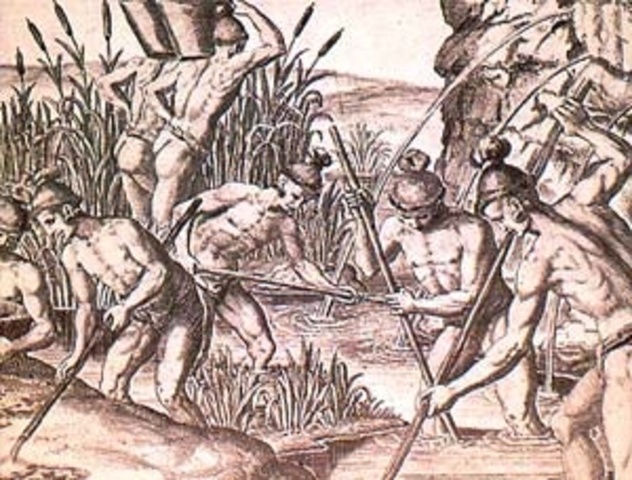
Natives being hunted down and captured.

~*~

BY 1638, MOST OF THE PEQUOT had been massacred or sold into slavery in Bermuda or the West Indies. An estimated 1,500 warriors had died in battle or been hunted down. And what followed was a landgrab by the colonists.

Military leader John Underhill, responsible for the massacre of Pequot women and children fleeing their burning village, then came to Dover, where he was briefly governor of the upper province, meaning Dover.

Bluntly? From the colonists’ perspective, a bad white man was worth more than a noble Native.

~*~

SLAVERY WAS PART OF NEW ENGLAND from the beginning.

When David Thomson settled at Pannaway in 1623, he had a Native as a slave, presented to him by an Indian leader. Yes, there was slaveholding among the Indigenous, too.

And whites could be enslaved as well, as was seen in threats to sell Quaker children in the late 1650s.

A key turn in the emergence of Merrymount in 1625 was the sale of some of the project’s indentured English male servants to Virginia and the impending sale of more to the tobacco estates, where death within a year was likely. Thomas Morton used the situation to rally the remainder to resist and stay put, leading to his libertine colony south of today’s Boston.

The origins of African slaves in New England are murky, but Pequots were exported so that they could not escape and return to their families or be freed in retaliatory raids. Instead, they were exchanged for Blacks, who could be held at less risk.

Natives labored in Barbados and the West Indies after being exchanged for Africans as slaves.

In 1637, during the Pequot War, the first American-built slave ship, the Desire, was constructed in Marblehead, Massachusetts, outfitted with leg irons and bars, and armed. She set sail to the British West Indies carrying Boston rum, dried fish, and captive Pequots, and returned seven months later with tobacco, cotton, salt, and enslaved Africans from the Caribbean plantations.

Thomson’s friend Samuel Maverick bought two Blacks as slaves in 1638. Another prominent slaveholder was John Winthrop.

In 1641, the Massachusetts Body of Liberties document included a formal recognition of slaveholding.

~*~

UP TO THE AMERICAN REVOLUTION, despite opposition, some Quakers held slaves, and Dover was not exempt. Up to ten were manumitted, likely with the equivalent of a year’s wages. There’s more on this in my book.

~*~

Welcome to Dover’s upcoming 400th anniversary.


As the story goes, he’s a perfect villain

The three Quaker women who come to Dover in 1662 and 1663 are tormented principally by Major Richard Waldron. He and his brother William arrived from a staunchly Puritan family in Warwickshire in 1635, and after returning to England to marry a woman against her family’s wishes, Richard returns to Dover. History does not record her name, only his second wife’s. In 1642 he buys up rights around the dramatic waterfalls of the Cochecho River about five miles north of Hilton Point.

In building mills there and establishing a village, Richard consolidates power and wealth. He has, for one thing, obtained a monopoly on fur trade with the Natives and, for another, rises to head the colony’s militia, a politically powerful position. In addition, he serves 22 years as a deputy of the General Court of Massachusetts, its assembly, seven of them as its Speaker. He votes to impose the anti-Quaker acts of 1656 and 1657.

Richard Waldron was influential in the passage of the anti-Quaker Cart and Whip act and other punishments.

Dover is not his only residence – at least three of his children are born in Boston and he has ships on the sea. He’s also the magistrate who imposes the Cart and Whip sentence on the Quaker women who come to Dover – in effect, a death sentence if constables in towns down the road follow through on his order. Even his wife is appalled by his cruelty.

He’s also the mastermind behind the invitation to the Natives to participate in a mock war game and festivities in 1676. After the 20 armed Natives fire their weapons, they are surrounded and arrested, along with 350 or more, mostly women and children. Seven or eight of the leaders are sent to Boston and executed. The rest are sold into slavery in the Barbados or West Indies.

Major Richard Waldron masterminded the sham war game that led to the captivity of local Natives who came in peace.

The Natives do not forget Waldron’s deceit and cunning. Knowing they cannot trust the English, they form an alliance with France. Many of them convert to Catholicism under French priests.

In 1689, they take their revenge, attacking and burning garrisons at Cochecho village, killing 23 and taking 29 captive to Canada. Quakers are not spared. Waldron, however, is singled out for torture and death.

The early morning raid is the beginning of devastating violence large and small across northern New England that does not end until the end of the French and Indian Wars in 1763.

Every family in Dover would suffer losses. They were far from the only ones.

Major Waldron was singled out in revenge.

Behind the scenes, an ominous shift in the settlement’s character had been occurring, centered on Waldron. The sixth son of a well-off Puritan family, he was “immensely able, forceful, and ambitious,” arriving with his oldest brother in 1635, when he was barely twenty. In 1637, he returned to England, married a young gentlewoman despite her parents’ opposition, and brought her to Dover. Her name and dates are unknown. He then married Anne Scammon and had eleven children.

By 1642, he had accumulated the rights to land around the falls in today’s downtown Dover and erected his first sawmill. Emerging as the town’s central figure, he eventually controlled much of the Native trade and amassed large land holdings. In pressing for Dover to submit to Massachusetts jurisdiction, Waldron placed himself in opposition to Thomas Roberts, who then lost office when the Dover province was subsumed by the Massachusetts Bay colony.

Waldron, in contrast, became a deputy to the Massachusetts General Court, or legislature, in 1654, where he served for the next twenty-two years, seven of them as its general speaker, one of the most powerful political posts in New England. How much time was he spending in Boston during this period, and how much in Dover? At least three of his children – Elnathon, Esther, and Mary – were born in Boston.

Brother William also held public office and eventually purchased a part of the Shrewsbury Patent in today’s town of Stratham. He was, according to Massachusetts governor John Winthrop, “a good clerk and a subtle man,” one who “had an inclination toward drink and contention,” which leaves me wondering about Richard as well. While crossing a small river at Kennebunk on his way back from Saco, Maine, in 1646, William drowned. Whatever his skills as a public official, his business dealings left him in debt to many creditors. Like the Hilton brothers, we have a case where the younger brother fared more successfully than his elder.

After his death, another brother, George, showed up in Dover after 1650, when he was a chandler in London. From 1659 through 1677, he was taxed as a resident of Dover. His domestic life, however, was strained. In June 1661, he was in court for being absent from his wife, and again in the fall of 1662, when she was reported dead twelve months. In June 1680, he petitioned the court to be rid of his son, “who instead of holding me hath rather destroyed me and what I had in drinking.” Impoverished, elderly, and nearly blind, he appealed for a guardian. Mrs. Richard Waldron took him in until her husband’s return.

Richard, on the other hand, flourished, not just in politics. He traded widely, as is seen in the death in Algiers around 1669 of his son, Paul, “probably on board one of his father’s vessels.” Another son, Timothy, died while a student at Harvard. Daughter Esther died on the Isle of Jersey. Quite simply, his family wasn’t stuck on the banks of the Cochecho or Piscataqua rivers.

The Cochecho Falls and the village that grew up around them were part of Richard Waldron’s power base.

As Jere Daniell observed, “By the 1670s the portion of Dover known as Cochecho had become something like Waldron’s personal fiefdom, and citizens in the other areas of settlement rarely challenged his social authority.”

A man like that had to have enemies and a capacity for revenge.

From everything I’ve seen, he was quite unlike Nicholas Shapleigh just across the river.

~*~

Welcome to Dover’s upcoming 400th anniversary.