You never know what we'll churn up in cleaning a stall


When my private-time writing returned to poetry shortly after relocating to New England three decades ago, my attention turned to this unfamiliar place where I was now living. Quite simply, it felt much different than any of my previous locales, and the spirit of specific locations has always been a central concern in my literary ventures.
My personal writing has often been a way for me to assemble thoughts and impressions. In many ways, it’s the way I work through a problem or gain focus on an issue. So when it came to the exercise of looking at my new environment, I soon envisioned a set of poems along the line of a monthly almanac or even a calendar of words rather than color photographs.
I’ve long had a fondness for those large monthly calendars anyway, and by the time I got serious in pushing the almanac, I had a good selection of images to draw from as additional inspiration. Just what images does the region conjure up, anyway?
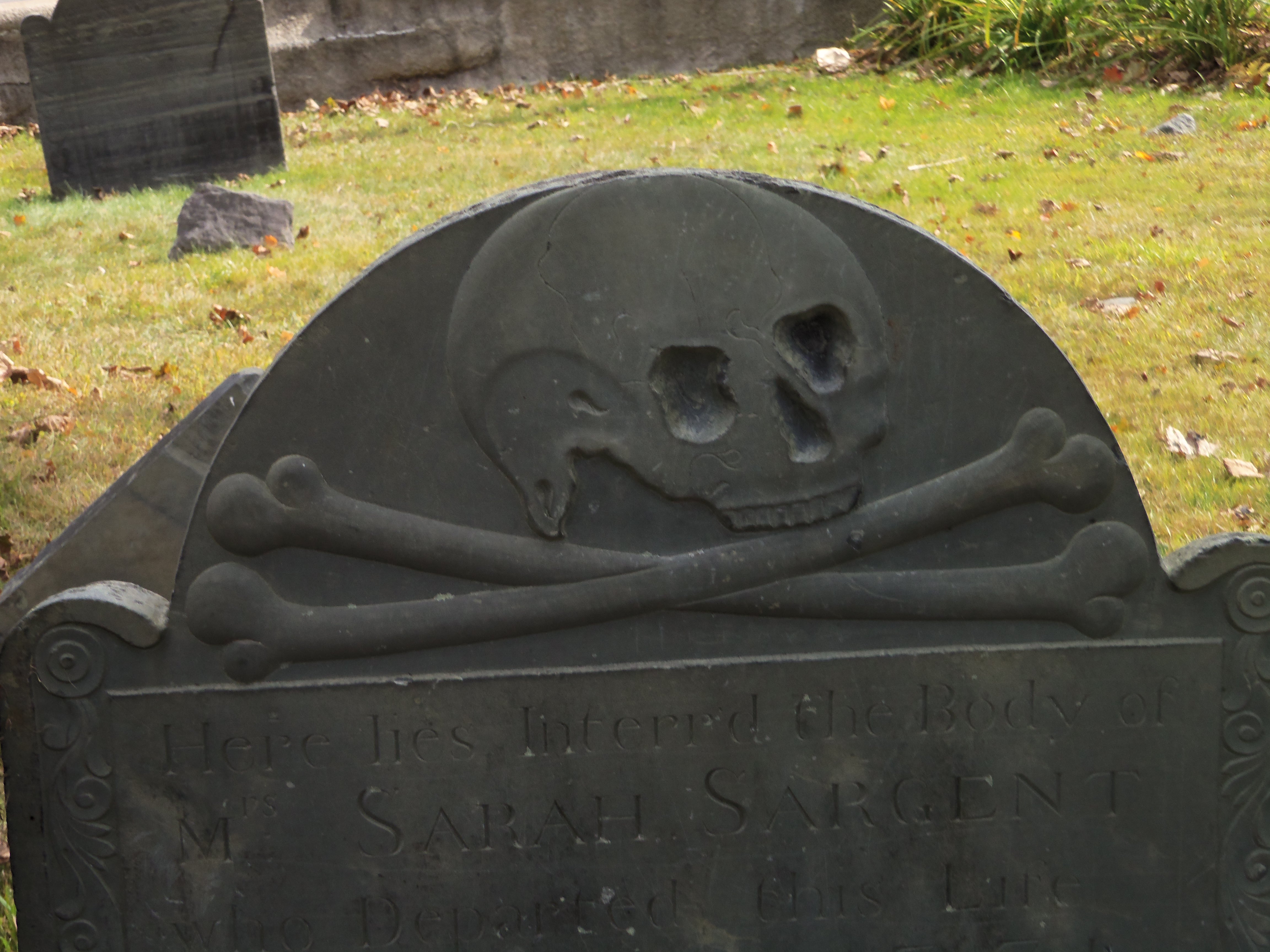
That’s when New England’s famed Winged Death headstone engravings came into play, and each month began to compress the overlapping centuries this corner of the United States embodies – more so than other parts of the nation, at least.
New England also has a strong tradition of authority and dissent. The Puritans, after all, came to these shores in their dissent from the Church of England, and Samuel Gorton, Roger Williams, Anne Hutchinson, and their followers in and around Salem, just north of Boston, were soon challenging the Puritan hegemony before being banished, in waves, to Rhode Island. Early Quaker firebrands were soon adding to that upheaval, and that’s included in my spiritual legacy.
What emerged from all this is a craggy, even Baroque, collage that reflects the evolution of the Yankee character in its landscape of harbors and mountains. It’s now available as a free PDF as my latest Thistle/Flinch edition. To read more, click here.
One of my favorite passages in all of poetry comes from Howard McCord’s “Longjaunes His Periplus”:
A chest of maps
is a greater legacy
than a case of whisky.
Followed by:
My father left me both.
Like my younger one, I’ve always been fond of maps. My bedroom wall was lined with tacked-up National Geographic charts, which tended to sag in our humid summers.
I was reminded of this the other morning when I was looking for a Boston street map, just in case I lost my bearings. Yes, I could have gone to the maps at Yahoo or Google. Even looked for the satellite views and all of the scary ability to snoop that goes with it. I couldn’t, though, use a GPS, neo-Luddite that I partly remain.
So I opened the drawer and here’s what I found (I won’t give you the years, though many are from the early ’80s):

And that’s before we get to the drawer of topographical maps, especially those from my Cascades years. Or the books and atlases. Or the genealogical maps, Guilford County, especially in those files.
Oh, the memories! And you want to tell me they’re obsolete? Fat chance!
Can’t drive through the Big Dig – the tunnels that take Interstate 93 under Boston’s downtown – without thinking of the story of Remington the Rabbit.
Seems his first owner, a teen, named him after her favorite TV show at the time, Remington Steele, in honor of its star. The one she had a crush on.
And then, when she and her mother moved to England, Remington became a feature in another household, at least until they, too, had to move, this time into an apartment that didn’t allow pets.
So Remington, in his long life, spent his final days surrounded by three children who, from all accounts, treated him well and found their delight returned.
And then, when Remington’s days ended, their father provided the crowning touch. Seems Daddy was an engineer working on the Big Dig in Boston. And that’s where Remington was clandestinely buried.
Somehow seems fitting, amid all that steel, knowing there’s a rabbit in the works, somewhere over my head.

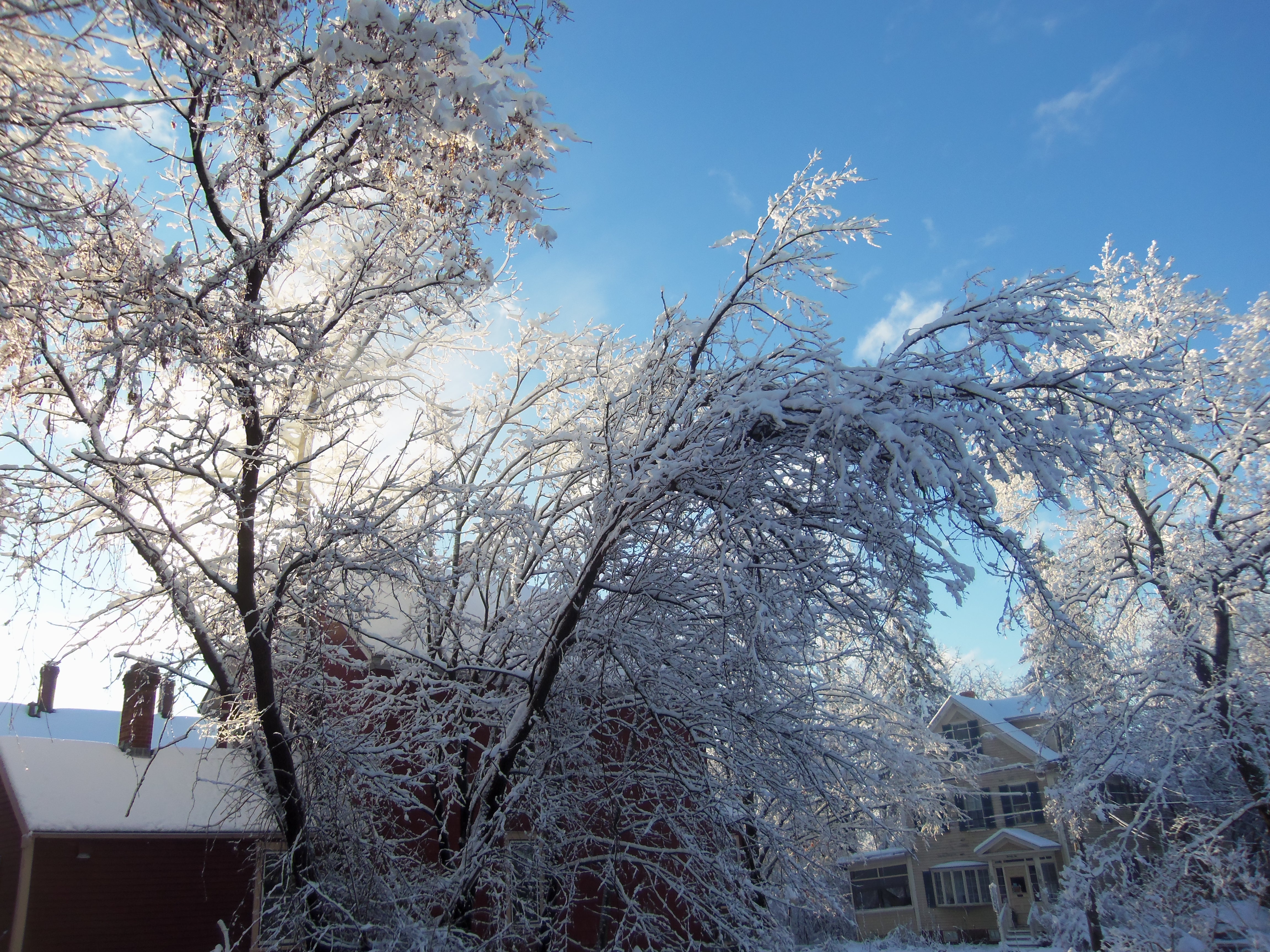
It’s pretty but also heavy, wet, dense — you much prefer the lighter, fluffy stuff when it comes to shoveling. Still, you can’t help but admire it as the sunlight starts strumming through the branches.
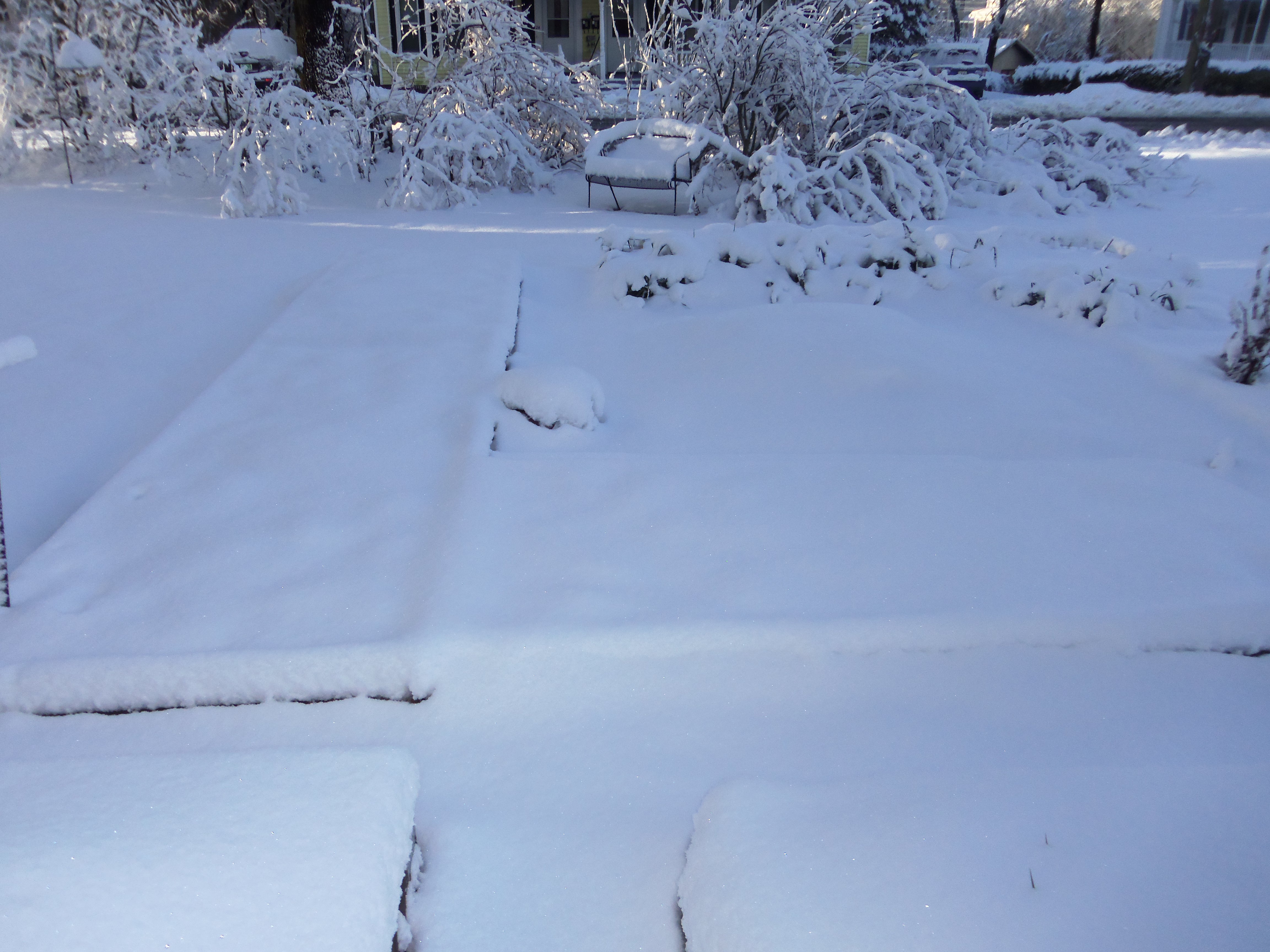
We’ve had several rounds of flurries before this, when some of the neighboring towns found their ground covered. Real snow, in my book, means digging out the driveway.


Here in New England, the battle for control of the Market Basket supermarkets remains the biggest news story – but with a storybook twist. Rather than ending up as another soulless corporate bottom-line victim, there’s been a resurrection.
The bitter DeMoulas family feud finally led to an agreement less than a week ago in which the Good Guy (aka Arthur T) buys out the other half for roughly $1.5 billion. Ownership stays here at home. And, yes, there have been cheers all around in this remarkable alliance of stakeholders – managers, workers, loyal shoppers, and their communities – against the faction that fired the Good Guy and his visionary leadership.
The boycott held through August. The parking lots were vacant. Workers saw their hours cut. Some managers were fired … and now they’re back.
There’s almost a party atmosphere in the stores, but nobody’s slacking. Managers began showing up to work at midnight just an hour after reports of the agreement surfaced. Suppliers offered to deliver goods directly to the stores, rather than the distribution center, to speed the restocking of depleted shelves.
Many details remain to be ironed out, and a lot of damage will take time to repair. But at least there’s also a rainbow.