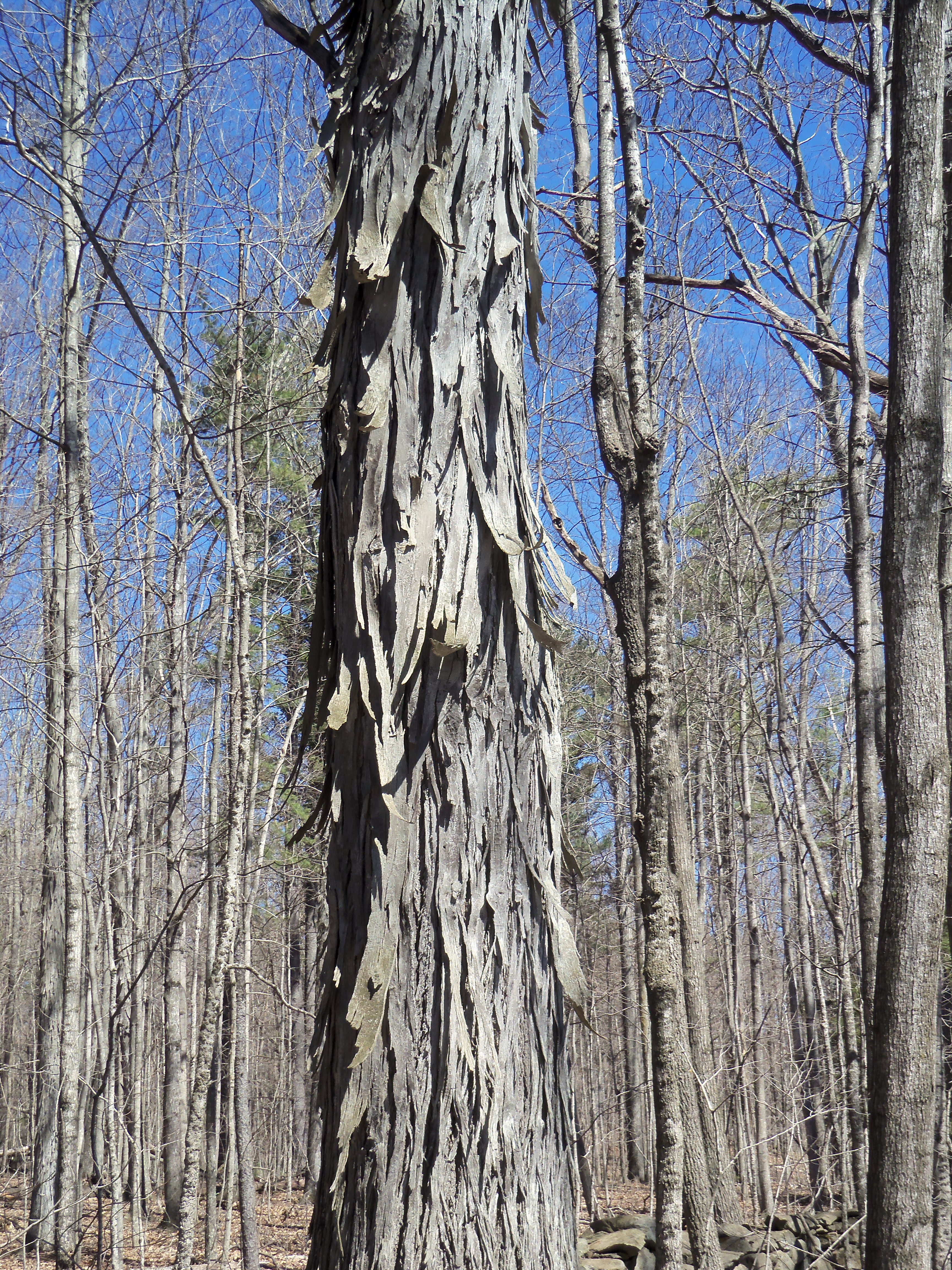
SHAGBARK HICKORY
You never know what we'll churn up in cleaning a stall

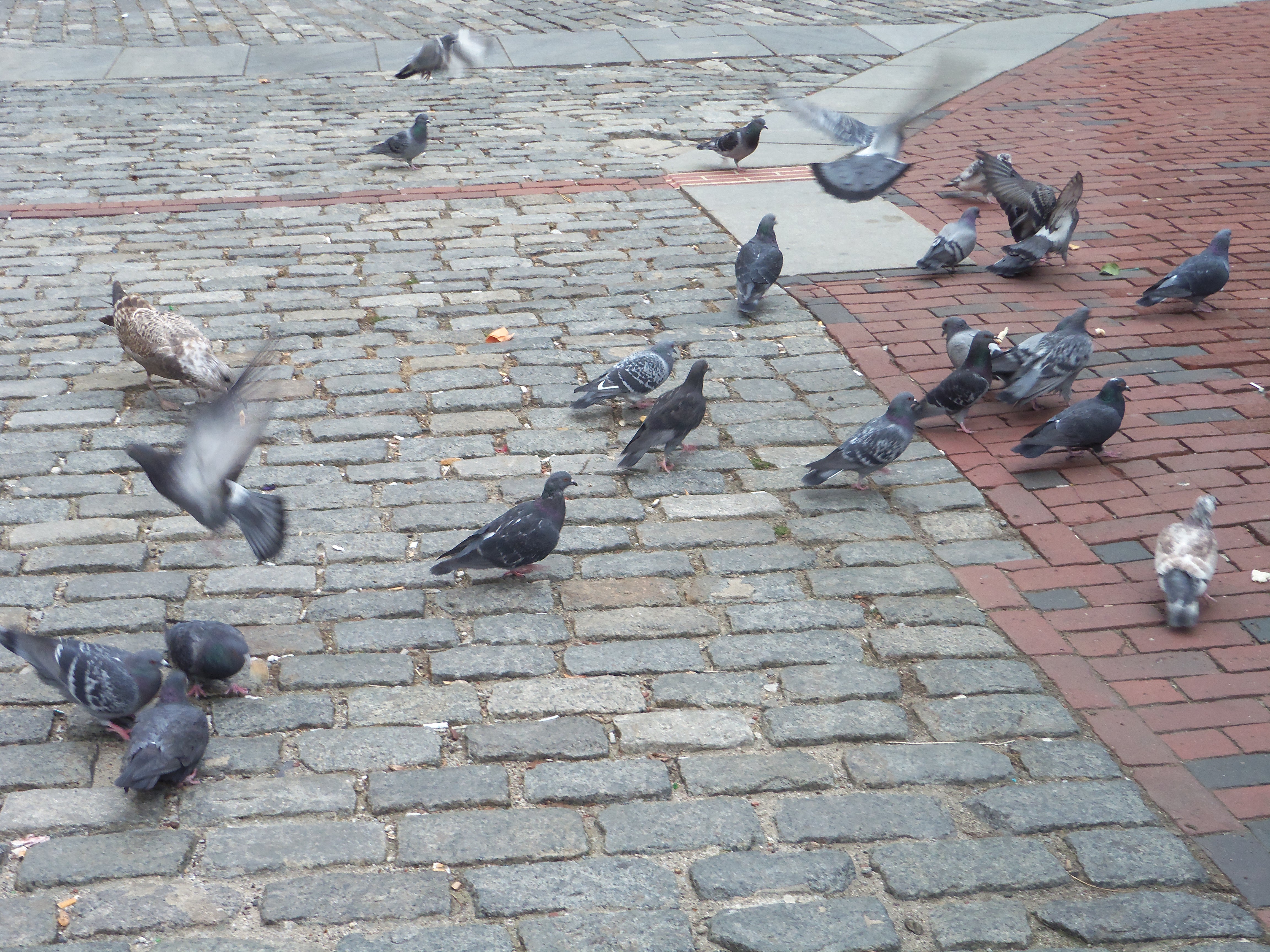
It’s a common urban street scene, abetted by sympathetic, feed-bearing humans. This one was outside historic Faneuil Hall in Boston.
One set of my poems of return, discovery, and loss is centered on the Leonard Springs which were hidden a half-dozen miles from the university I attended in my first sustained leap from my native Ohio.
On my return, we lived at the edge of town rather than on campus, and the springs were in a ravine just over the edge of our view from the kitchen. Few knew of their existence. Now, as I find online, they’re a public park and treasure.
~*~
Much of southern Indiana sits atop a thick limestone bed, some of it quarried for the construction of large-scale buildings worldwide. Over the ages, the bedrock has been riddled as slightly acidic water chiseled passageways and cave systems below the ground surface. Learn to read the landscape with this awareness and you come to recognize the widespread karst features, including sinkholes where cavern roofs have collapsed – some could easily hide a large truck or even a barn. There are also the sinking streams that vanish back into the earth as well as open mouths concealed in fields and forests that would swallow an unwary trespasser. So this hardness is laced with underground mystery and motion.
I already possessed some familiarity with this terrain from childhood camping and hiking trips, and had even crawled through some small caves in nearby state parks. Commercial caverns had also instilled an awareness of the otherworldly character of underground chambers and passageways. But this time, as I now lived off-campus on Leonard Springs Road, far to the other side of town, I was newly married and free to explore. After residing and laboring in the foothills of Upstate New York, the Pocono Mountains of Pennsylvania, and the flats of what had once been the Great Black Swamp of northwest Ohio, I had come back to Bloomington as a research associate. This sojourn would be all too short – a little more than a year and a half, though not by design – but long enough to acquaint me with the hardscrabble backcountry and its peculiar character.
Our garden sat in one sinkhole, and our waste water probably flowed into another (there’s no accounting for our landlord’s septic system). While I’m not a caver (as many spelunkers prefer to be called), I did become intrigued by the meandering channels beneath the meadows and woodlands beyond our house. From what Roger Pfingston writes more recently of his neighborhood on Stouts Creek, a similar locale a few miles to the north, I can suspect that much of the Leonard Springs terrain has since been ripped up and developed into housing.
What I leave, then, are field notes of the layering I experienced then, and a testimony. The poems in Green Repose present these. For your own copy, click here.

Nothing has demonstrated to me how varied growing conditions can be, even in a small plot, more than the six pussy willows we planted our first year here. Some of it is the amount of light each receives, and some, how much water. The soil itself varies widely as well.
One of the sprigs died within a year. One, planted where we thought we had a natural spring at the head of the Swamp, has proliferated – so much, in fact, we must harvest drastically early each spring to keep it from becoming a full-blown tree shading the garden.
After a decade, two others, in the berm along the sidewalk, were finally established enough to begin lopping off budding branches.
The last one, close to the house, is no bigger than when it was first planted.
My wife is always elated by the soft gray budding. I remember both my third-grade teacher, who brought them into the classroom, and the Japanese artists and poets who laud the seasonal marker.
We have so many we give them away, at work, at school, at Quaker meeting.
One March, yes, I still remember so many crows in flight while I cut pussy willow against an incredibly blue sky. Those artists and poets are right.
I’ve contended that locale can be beautiful. But the reality is that many are stripped of the opportunity.
As my wife points out, a town where the railroad tracks run down the middle of the main street through town is, well, bound to be ugly.
Put another way, the presence of beauty or ugliness is a reflection of other values. Is there a degree of generosity and restfulness, for instance, or is it more stingy and pinched? There’s rarely any financial return in planting flowers, after all, and even trees take years to mature.
Still, even when I lived in some pretty gritty factory towns, small corners of beauty could be found, even if they were the exception rather than the rule. And Dover, where I am now, has undergone a renaissance from its days of boarded-up abandoned textiles mills downtown only decades ago.
To have a sense of beauty and grace proliferate, I’m sensing, is really a matter of religion – or at least heightened spirituality. Where would a community be, after all, without artists and skilled crafters who embody their holy visions?
 Jnana's Red Barn